 Fairhaven Siding
 Decks in Edgemoor Face a Different Set of Problems
Edgemoor sits close enough to the water that homes here take on a version of weather that inland Whatcom County neighborhoods simply don't deal with. Salt-laden air off Bellingham Bay accelerates corrosion on fasteners and hardware. Wind-driven rain gets pushed sideways under railings and against ledger boards instead of falling straight down. And the long, mild, damp stretch of fall through spring gives moss and algae months to establish themselves on any surface that doesn't dry out quickly. None of this means a deck in Edgemoor is doomed — it means the repair work has to account for conditions a generic deck crew might not think twice about.
We work on decks throughout the Fairhaven area, and Edgemoor jobs consistently show the same pattern: the structure itself is often sound, but the connection points — ledger boards, post bases, joist hangers, railing posts — are where the damage concentrates. That's where water sits, where salt air does its slow work on metal, and where moss holds moisture against wood long after a dry afternoon should have let it air out.
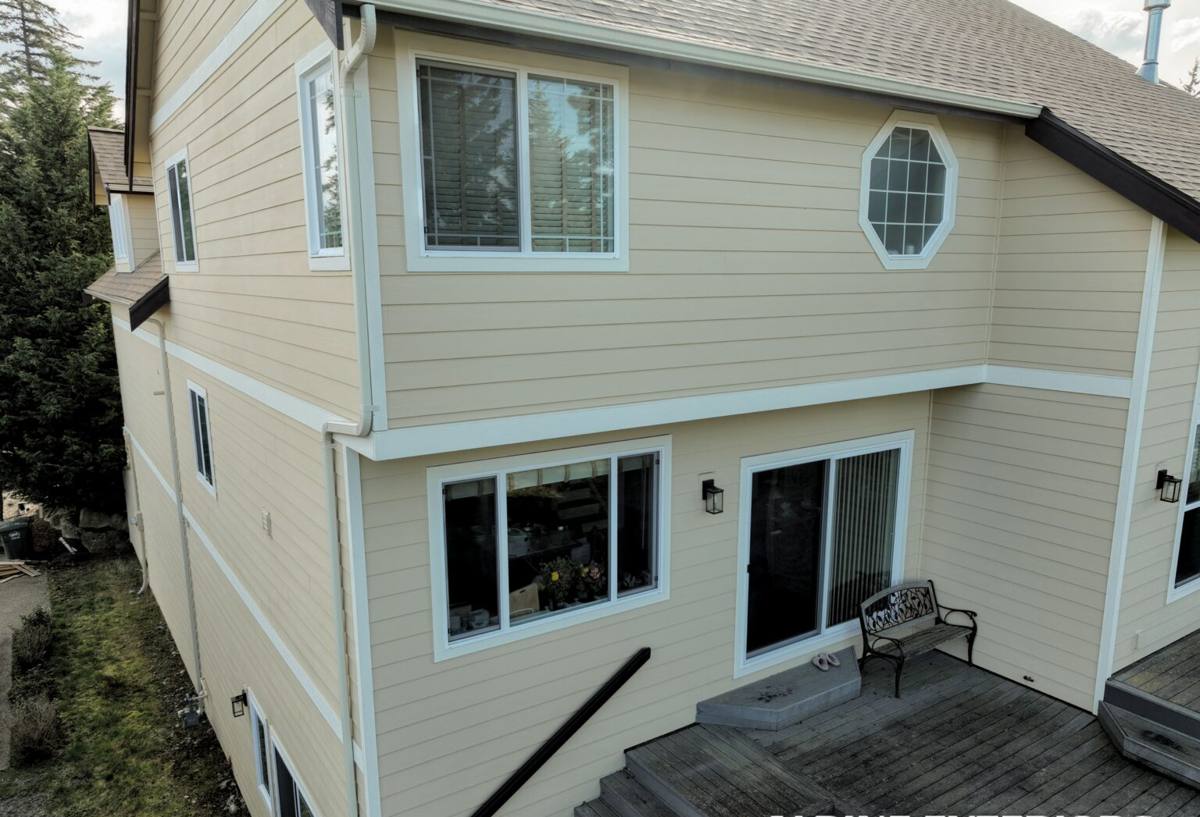
What Salt Air and Moisture Actually Do to a Deck
Fastener and Hardware Corrosion
Standard galvanized fasteners and connectors hold up fine in a lot of climates, but proximity to salt air speeds up corrosion well beyond what the coating is rated for. Once a nail, screw, or joist hanger starts to rust, it loses holding strength gradually and invisibly — the wood around it can still look fine while the connection underneath is weakening. This is one of the most common findings when we open up an older Edgemoor deck for repair.
Moss, Algae, and Trapped Moisture
Moss doesn't just look bad. It holds water against the deck surface and structural framing long after the rest of the yard has dried out, which keeps wood fibers wet for extended stretches. That constant damp cycle is what leads to soft, spongy boards and slow rot in framing members that would otherwise last for years. In Edgemoor's shaded, moisture-retentive microclimate, moss establishes faster than it does on more exposed, sun-facing lots elsewhere in Fairhaven.
Driving Rain at Ledger Boards and Rail Posts
The ledger board — where the deck attaches to the house — and the base of railing posts are the two spots most exposed to wind-driven rain intrusion. Water pushed sideways by wind finds its way behind flashing, into post bases, and along the top of the ledger where a small gap or aging sealant lets it in. These are slow, hidden leaks, and by the time they show up as visible damage, there's usually been months or years of moisture working underneath.
Signs an Edgemoor Deck Needs Repair, Not Just Cleaning
- Boards that feel spongy, springy, or slightly soft underfoot, especially near the house or along the perimeter
- Railings or posts that wiggle more than they used to, even slightly
- Rust streaking below screw heads, joist hangers, or metal connectors
- Persistent moss or dark staining that comes back within weeks of cleaning
- Gaps opening up where the deck meets the house siding or ledger board
- Stairs that feel less solid than the rest of the deck
- Visible daylight or soft wood where a support post meets its footing
Any one of these on its own might be minor. Two or more together, particularly involving the ledger board or a support post, usually means it's time for a real inspection rather than another round of pressure washing.
What a Correct Deck Repair Actually Involves
A repair that just replaces the boards you can see is treating the symptom. A correct repair starts underneath.
1. Structural Inspection First
Before we touch a single board, we check the framing: joists, beams, posts, footings, and the ledger connection. We're looking for soft spots, corrosion on hardware, and any place where water has been sitting rather than draining. This tells us whether we're doing a surface repair or a structural one, and it's the step that gets skipped most often by crews trying to move fast.
2. Address the Water Path, Not Just the Damage
If a deck is rotting at the ledger board, replacing that section without fixing the flashing or drainage behind it just buys a few more years before the same failure happens again. We trace where water is actually getting in and correct that path as part of the repair, not as an afterthought.
3. Match Hardware to the Environment
Given the salt air exposure in Edgemoor, we use fasteners and structural connectors rated for coastal or high-corrosion environments rather than standard-grade hardware. It costs a little more up front and saves the homeowner from redoing the same repair in five years because the connectors failed before the wood did.
4. Rebuild to Current Code Where It Applies
Deck framing and railing standards have tightened over the years, particularly around guardrail attachment and stair stringer support. When we're already opening up a section for repair, we bring that section up to current requirements rather than simply replacing like-for-like with an outdated detail.
Repair vs. Full Rebuild: How We Help You Decide
| Factor | Points Toward Repair | Points Toward Rebuild |
|---|---|---|
| Extent of rot/damage | Isolated to one or two areas (ledger, one post, a few boards) | Found in multiple structural areas or spreading |
| Age of the deck | Under 15 years, built to a reasonable standard | Original construction is old or was never code-compliant |
| Footing condition | Footings solid, no movement or settling | Footings undersized, cracked, or shifting |
| Framing material | Structural framing still solid under any surface wear | Framing itself is soft or corroded throughout |
| Budget priority | Extend usable life at lower cost now | Willing to invest once for a longer-term solution |
Most decks we're called out to in Edgemoor fall into the repair category — the framing is sound and the damage is concentrated at a handful of predictable spots. A full rebuild only makes sense when the structural problems are widespread or the deck is old enough that patching it would just be delaying the inevitable.
Decking Material Choices for a Coastal Fairhaven Lot
When boards do need replacing, the material decision matters more here than it would inland. Pressure-treated wood remains a solid, economical option, but it needs consistent maintenance — cleaning, sealing, and moss control on a regular schedule — to hold up against Edgemoor's moisture and salt exposure. Composite decking asks less in terms of ongoing maintenance and resists moisture absorption better, which matters given how long boards can stay damp in this climate, though it carries a higher upfront cost and needs correct fastening details to perform well over time. We'll walk through the honest trade-offs for your specific deck rather than push one option across the board.
Our Deck Repair Process in Edgemoor
- On-site assessment — we inspect the full structure, not just the visibly damaged area, including framing, hardware, and the ledger connection
- Clear scope and estimate — you get a straightforward explanation of what's failing, why, and what it will take to fix it correctly
- Repair or rebuild the affected areas — using hardware and materials suited to the salt air and moisture exposure specific to this part of Fairhaven
- Correct the underlying water path — flashing, drainage, or grading adjustments so the same failure doesn't recur
- Final walkthrough — we show you what was done and flag anything worth keeping an eye on going forward
Why a Crew That Already Works Edgemoor Makes a Difference
A contractor who mainly works drier, inland properties may not think to spec coastal-grade hardware or to check the ledger board first as a matter of habit — because in their usual work, that's rarely where the problem starts. A crew that regularly works Edgemoor and the rest of the Fairhaven waterfront area already knows where salt air and driving rain tend to cause trouble on this type of home, and builds the repair around that from the start rather than discovering it partway through the job. That local pattern recognition is often the difference between a repair that lasts and one that needs revisiting in a couple of years.
Maintaining an Edgemoor Deck Between Repairs
Whatcom County's long wet season means deck maintenance here is less "once a year" and more "a few times through the wet months." Keeping moss knocked back, clearing debris from between boards so water can drain, and checking railing posts periodically for movement will catch small problems before they become structural ones. A deck that gets this kind of basic attention between professional inspections tends to need far less invasive repair work over its lifetime.
If you're noticing soft spots, rust, persistent moss, or a railing that doesn't feel as solid as it used to, we're happy to come take a look. We offer free, no-pressure estimates for Edgemoor homeowners — just fill out the form below and we'll get in touch to schedule a time that works for you.