 Fairhaven Siding
 Edgemoor's Setting Is Beautiful — and Genuinely Hard on Siding
Edgemoor is one of the most desirable pockets of Fairhaven, and it's easy to see why: mature tree canopy, proximity to the water, and a quieter, more residential feel than the busier parts of town. But that same setting works against exterior siding in specific ways. Homes here sit close enough to Bellingham Bay to catch salt-laden marine air on a regular basis, and the wind that comes off the water tends to drive rain sideways into walls rather than letting it fall straight down. Add in the shade from tall evergreens that keeps north- and west-facing walls damp long after a storm has passed, and you have a near-perfect recipe for the two problems we see most on Edgemoor siding calls: moss and algae staining, and moisture that never fully dries out between rain events.
None of this makes Edgemoor a bad place to own a home — it just means the siding on that home has to be chosen and installed with these conditions in mind, not treated the same as a dry, sun-exposed lot on the other side of Whatcom County. A product and installation method that would be fine in a drier climate can fail faster here if the details aren't right.
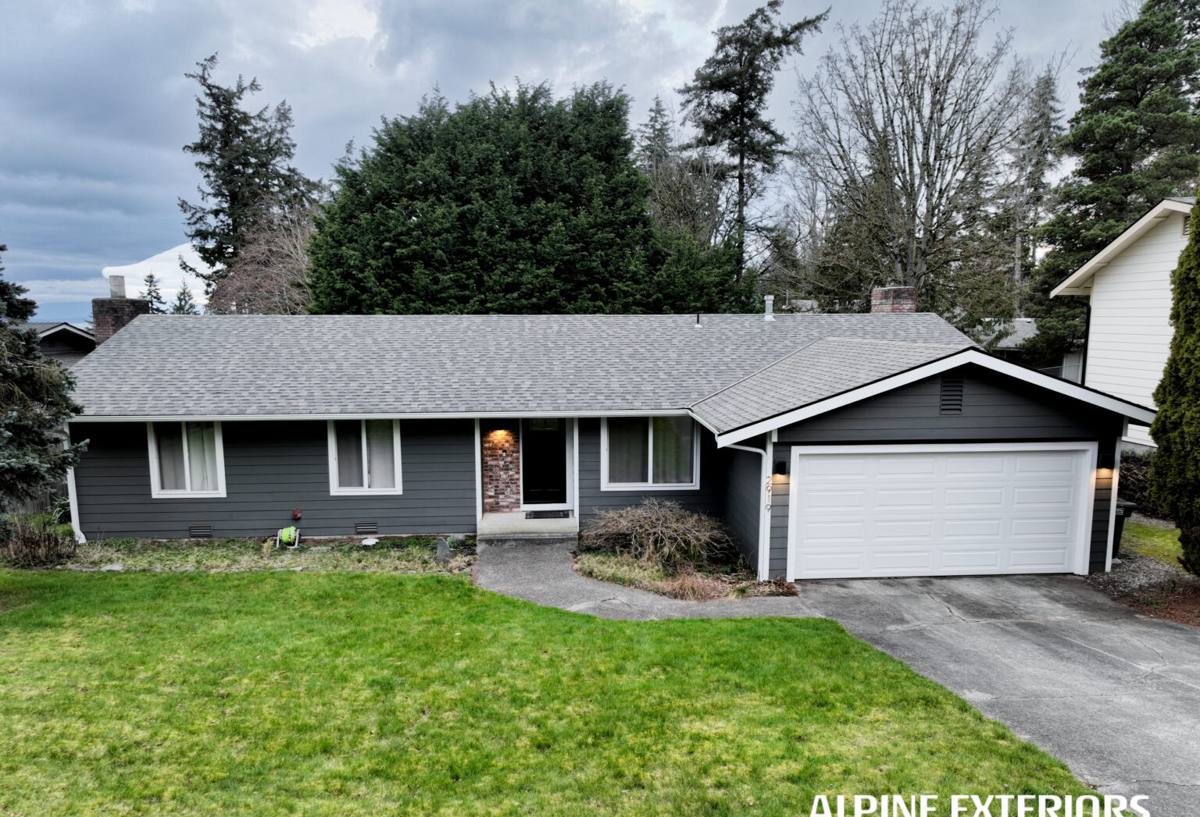
What Correct Siding Installation Has to Account For in This Climate
A siding job that looks good on install day but wasn't detailed for Edgemoor's moisture load will show problems within a few wet seasons — usually starting with staining, soft trim, or paint failure at the bottom courses and around windows. Here's what we treat as non-negotiable on every Edgemoor installation.
A Real Drainage Plane and Weather-Resistive Barrier
Siding is not the waterproofing layer of your home — it's a rain-shedding layer that sits over a weather-resistive barrier (WRB) designed to manage the water that inevitably gets past it. On a home exposed to driving, wind-blown rain, the WRB has to be installed with proper shingle-lap sequencing (upper layers overlapping lower ones) and sealed correctly at every seam. Skipping or rushing this step is invisible on install day and expensive to discover later.
Flashing at Every Penetration
Windows, doors, hose bibs, light fixtures, and vents are the most common points where water finds its way behind siding. Each one needs its own flashing detail — not just caulk — so that water is directed back out rather than trapped against the sheathing. This matters more in Edgemoor than in drier parts of Whatcom County simply because there's more water hitting the wall over the course of a year.
A Rainscreen Gap Behind the Siding
A small ventilated gap between the WRB and the back of the siding gives any moisture that does get through a path to drain and dry, instead of sitting against the wall assembly. On shaded, moss-prone elevations, this airflow is also what keeps organic growth from taking hold in the first place. It's a detail that costs little at install time and does a lot of long-term work.
Fastening to Manufacturer Specification
Nail placement, spacing, and type affect how siding performs in wind and how well it resists the freeze-thaw and wet-dry cycling common to this part of the Pacific Northwest. Manufacturer fastening specs exist for a reason, and we follow them exactly rather than treating them as a suggestion.
Why We Install Only James Hardie Fiber Cement in Edgemoor
We made a deliberate decision as a company to install James Hardie fiber cement siding exclusively — not vinyl, not LP SmartSide, not cedar or primed spruce, not other fiber cement brands. In a climate like Edgemoor's, the reasons show up clearly:
- Fiber cement doesn't feed moss and algae the way untreated or lightly treated wood siding can, since it isn't an organic material for growth to root into.
- James Hardie's ColorPlus factory finish is baked on under controlled conditions and holds up to salt air exposure and UV far better than field-applied paint, which tends to chalk and fade faster near the water.
- Hardie's HZ5 product line is engineered specifically for climates with high moisture exposure, which fits the Pacific Northwest better than a one-size-fits-all product.
- It's non-combustible, which matters during the dry summer stretches Whatcom County still gets despite the marine climate the rest of the year.
- The warranty is a transferable, manufacturer-backed warranty on both the substrate and the ColorPlus finish — not just a limited materials warranty that leaves labor and finish issues uncovered.
That doesn't mean other products are without merit — vinyl is inexpensive and low-maintenance in mild climates, and cedar has real aesthetic appeal. But we've seen how each performs over time in exactly this kind of coastal, shaded, high-moisture setting, and we'd rather stand behind one product we trust completely than install several we have reservations about.
| Factor | Vinyl Siding | Wood / Cedar Siding | James Hardie Fiber Cement |
|---|---|---|---|
| Moisture tolerance | Doesn't absorb water, but can trap it behind panels if installed poorly | Absorbs moisture; prone to cupping and rot without diligent upkeep | Engineered to resist moisture-related damage when installed to spec |
| Moss / algae resistance | Can host surface growth, especially in shaded areas | Organic material; readily hosts moss and algae in shade | Factory finish and non-organic material resist growth |
| Salt air / coastal performance | Can become brittle and discolored over time | Finish breaks down faster; more frequent refinishing needed | ColorPlus finish holds color and integrity longer near the water |
| Maintenance cycle | Occasional cleaning; can crack or warp with age | Repainting/staining every few years, plus rot inspection | Periodic rinsing; no repainting needed during the finish warranty period |
| Fire resistance | Can melt or ignite under heat exposure | Combustible | Non-combustible |
Our Installation Process for Edgemoor Homes
On-Site Assessment
We start by walking the property and looking at how it sits relative to sun, shade, and prevailing wind and rain direction — this tells us which elevations need the most attention to moisture detailing and which are driving the moss or staining the homeowner called about in the first place.
Tear-Off and Substrate Check
Once the old siding comes off, we inspect the sheathing underneath for any hidden rot or moisture damage. This is often the first real look anyone has had at the wall assembly in decades, and it's the point where problems get fixed properly instead of covered back up.
Weather Barrier and Flashing Installation
New WRB goes on with correct shingle-lap sequencing, and flashing is installed at every window, door, and penetration before any siding goes up.
Rainscreen and Hardie Panel Installation
We install the rainscreen furring, then the James Hardie planks or panels, fastened to manufacturer spec, with attention to consistent reveal lines and correctly staggered joints.
Trim, Caulking, and Final Finish
Trim boards, corner details, and caulking are finished last, using products compatible with the ColorPlus finish so the whole system performs and looks consistent for years, not just on install day.
What to Expect for Maintenance After Installation
James Hardie siding installed correctly is genuinely low-maintenance, but "low" isn't "none" — especially in Edgemoor's environment. A yearly rinse-down helps clear salt residue and moss spores before they establish, particularly on shaded, north-facing walls. It's also worth a periodic look at caulking around trim and penetrations, since caulk is the one component that ages faster than the siding itself and is cheap to refresh before it fails. Beyond that, you're not on a repainting schedule the way you would be with wood — the ColorPlus finish is designed to hold its color for the length of its warranty without a repaint.
What to Ask Before Hiring Any Edgemoor Siding Contractor
- Do they install to the manufacturer's published fastening and clearance specifications, or their own shortcuts?
- Will they show you the weather-resistive barrier and flashing details before siding goes over them, not just the finished exterior?
- Is a rainscreen gap included, or is siding going straight over the WRB?
- What does the warranty actually cover — materials only, or materials, finish, and labor?
- Have they worked on homes in Edgemoor or similar shaded, water-exposed sites in Whatcom County before?
- Are they licensed and insured to work in Washington State, and can they provide proof without hesitation?
Why Local Experience in Edgemoor Specifically Matters
Every neighborhood in Fairhaven has its own microclimate quirks, and Edgemoor's combination of tree cover, bay-facing exposure, and older housing stock is distinct from, say, a sunnier inland lot elsewhere in Whatcom County. A crew that has worked this neighborhood already knows which elevations tend to hold moisture, how tree cover affects drying time after a storm, and what to look for when tearing off older siding on homes of this vintage. Some properties in and around Edgemoor also carry neighborhood design expectations worth checking on before work begins — a local crew is used to having that conversation early rather than after materials are ordered. That familiarity translates into fewer surprises during the tear-off and a finished installation that's actually suited to the lot it's on, not a generic approach applied everywhere.
If your Edgemoor home's siding is showing moss staining, soft spots, or you're simply planning ahead for a replacement, we're happy to take a look and give you a straightforward, no-pressure estimate — no fake urgency, just an honest read on what your home needs. The form below is the easiest way to get started.