 Fairhaven Siding
 Deck Replacement in Edgemoor: What This Neighborhood Actually Needs
Edgemoor sits close enough to the water that its decks live a harder life than decks a few miles inland. Salt-laden air corrodes fasteners and hardware faster than most homeowners expect, driving rain off Bellingham Bay finds its way into every joint and seam that isn't detailed correctly, and the long wet season that settles over Whatcom County each fall and winter keeps deck surfaces damp for months at a stretch. That combination is exactly why so many Edgemoor decks that look fine from the yard turn out to have soft framing, corroded connectors, or a substructure that's been quietly failing underneath a deck board surface that still looks presentable.
A deck replacement here isn't just about swapping old boards for new ones. It's about correcting whatever let the old deck fail in the first place, so the next deck doesn't repeat the same slow decline. That means looking hard at ledger attachment, joist protection, fastener selection, drainage, and moss control — not just picking a new decking color.
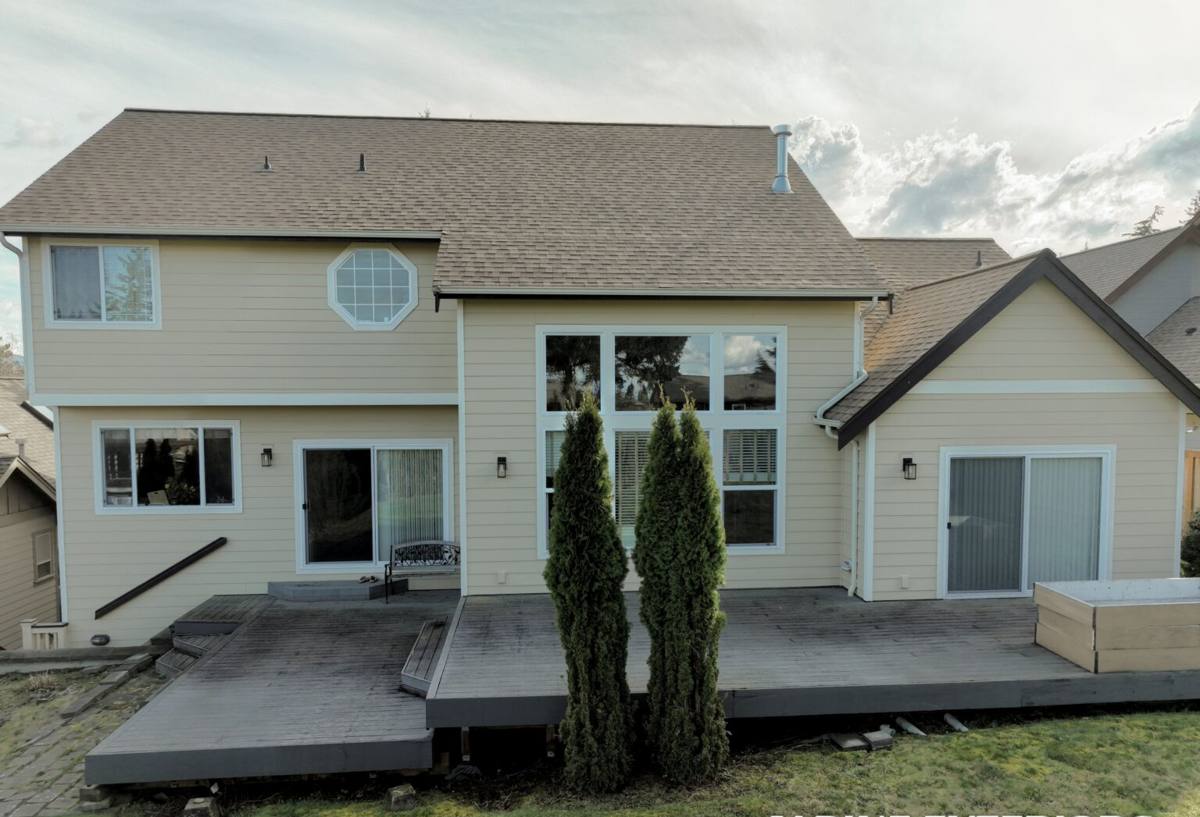
Why Decks Fail Faster Near the Water
Salt Air and Metal Fatigue
Salt air accelerates corrosion on any exposed metal — joist hangers, structural screws, post bases, railing hardware. Once a hanger starts to rust, it loses holding strength well before it looks obviously bad, and that's a structural problem hiding behind a cosmetic one. On homes closer to Fairhaven's shoreline, we treat fastener and hardware selection as a first-order decision, not an afterthought.
Driving Rain and Wind-Driven Moisture
Storms coming off the bay don't just fall straight down — wind pushes rain sideways, into ledger connections, under poorly flashed rim joists, and behind railing posts that weren't properly sealed at the base. Water that gets behind a deck's structure dries slowly in our climate, and slow-drying wood is exactly what rot needs.
Moss, Shade, and a Long Wet Season
Whatcom County's wet season runs long, and many Edgemoor lots carry mature tree cover that keeps decks shaded and slow to dry. Moss and algae take hold on any surface that stays damp, and beyond looking bad, a mossy deck surface holds moisture against the boards and turns into a slip hazard the moment it rains.
Signs an Edgemoor Deck Needs Replacement, Not Just Repair
- Soft or spongy spots underfoot, especially near the house or around posts
- Visible rust staining or hardware that's crumbling instead of solid
- Persistent moss or dark staining that comes back within weeks of cleaning
- Gaps opening up between deck boards and framing that weren't there a few years ago
- A ledger board attachment you can't confirm was flashed correctly when built
- Railings that flex or feel less rigid than they used to
- A deck more than 15-20 years old that has never had its substructure inspected
Any one of these on its own might be a repair. Two or three together, especially on an older deck, usually means the framing has been compromised long enough that patching the surface would just be covering up a problem that's still getting worse underneath.
What a Correct Deck Replacement Involves
Starting With the Ledger and Framing
The ledger board — where the deck attaches to the house — is the single most important connection on the whole structure, and it's also the one most likely to have been done wrong or under-flashed on an older build. We check it first, because a deck that's beautiful on top but poorly attached at the house is a liability we won't leave in place.
Fastener and Hardware Selection
Given the salt air this area sees, we don't treat hardware as a commodity choice. Stainless or heavily coated, corrosion-resistant fasteners and connectors cost more up front but hold their strength for years longer than standard hardware in a coastal-influenced climate, and replacing corroded hangers years down the road is far more disruptive than specifying the right hardware the first time.
Framing Protection
Joist tape and proper flashing over framing members keep rainwater from soaking directly into end grain and fastener holes — the two places wood rots first. It's a small material cost relative to the whole project and one of the best insurance policies against the driving rain this area gets.
Drainage and Slope
A deck surface needs a slight slope away from the house and gaps between boards sized to actually shed water rather than trap it. On shaded, moss-prone lots we also think about airflow underneath the deck, since a structure that can't breathe stays damp long after the rain stops.
Choosing Decking Materials for This Climate
There's no single right answer for every Edgemoor home — it depends on budget, how much upkeep the homeowner wants to take on, and how shaded the lot is. Here's how the common options actually compare in a wet, salt-air, moss-prone setting.
| Material | Moisture & Moss Behavior | Maintenance | Typical Lifespan Here |
|---|---|---|---|
| Pressure-treated wood | Absorbs moisture readily; needs sealing to resist moss and staining | Annual cleaning and periodic re-sealing | 10-15 years with upkeep |
| Cedar | Naturally moisture-resistant but still needs surface protection near the water | Regular cleaning, re-staining every few years | 15-20 years with upkeep |
| Composite decking | Doesn't absorb water the way wood does, but can still grow surface moss in heavy shade | Periodic washing; no staining or sealing | 25-30 years |
| PVC/capped composite | Best moisture and moss resistance of the group | Low — occasional washing | 25-30+ years |
On heavily shaded Edgemoor lots, we'll often steer homeowners away from bare wood toward a capped composite specifically because moss control on wood in constant shade becomes a recurring chore rather than a one-time decision. That's a maintenance trade-off we're honest about upfront, not a claim that any one product is flawed.
Railings, Fasteners, and the Details That Get Skipped
Railings take direct weather exposure and see constant hand contact, so post connections and baluster fastening matter as much as the decking itself. We seal post bases against standing water, use corrosion-resistant hardware throughout, and make sure every railing meets current code height and spacing requirements — an easy thing to overlook on a like-for-like replacement of an older deck built to older standards.
A Quick Pre-Project Checklist for Homeowners
- Ask whether the ledger and framing will be inspected, not just the surface boards
- Confirm what fastener and hardware grade is being used, and why
- Ask how drainage and airflow under the deck will be handled on a shaded lot
- Get a clear material comparison, including realistic maintenance expectations
- Confirm railing height and spacing will meet current code, not just match the old deck
- Ask what warranty structure applies to materials versus labor
Our Process for an Edgemoor Deck Replacement
We start with an on-site walkthrough and an honest assessment of what's actually happening under the surface — not just a quote based on square footage. From there:
- Full removal of the old decking and inspection of ledger, posts, and framing
- Replacement or reinforcement of any compromised structural members
- Installation of flashing and joist protection sized for this climate's rainfall
- Corrosion-resistant fastener and hardware installation throughout
- Decking and railing installation to current code, with attention to drainage slope
- A final walkthrough so the homeowner understands what was done and why
Because we already work in this neighborhood, we're not guessing at how Edgemoor's shoreline exposure, tree cover, and rainfall patterns affect a deck's long-term performance — we've seen it directly on other projects nearby, and we build accordingly.
Why Local Experience Matters More Than It Sounds
A crew that mostly works inland can build a technically sound deck that still underperforms here, simply because they're specifying materials and details for a different set of conditions. A crew that already works Edgemoor and the broader Fairhaven area knows which lots hold moisture longest, which fastener grade actually holds up against the salt air off the bay, and which shaded corners of a property need extra attention to drainage. That local pattern recognition is the difference between a deck that needs attention again in eight years and one that holds up for decades.
Timeline and What to Expect
Most single-level deck replacements in this area run from a few days to about two weeks depending on size, framing condition, and weather windows — Whatcom County's wet season can add scheduling flexibility into any plan, since we won't rush framing work in the rain when it compromises the result. We'll walk through a realistic timeline for your specific project before work starts, including what happens if weather pushes a work day.
If your Edgemoor deck is showing any of the signs above, or you just want an honest read on whether repair or full replacement makes more sense, we're happy to take a look. Reach out for a free, no-pressure estimate using the form below.