 Fairhaven Siding
 Deck Repair Built Around How Sudden Valley Weather Actually Works
Sudden Valley sits back from the water but doesn't escape the moisture load that defines this corner of Whatcom County. Between the marine air pulled in off Bellingham Bay, the long stretch of driving rain from fall through spring, and a moss season that can run eight months or more under tree cover, decks here take a beating that inland decks in drier states never see. A deck that would last two decades in Spokane can show real structural trouble in half that time out here if it wasn't built or maintained with our climate in mind.
We're a Fairhaven-based crew, and Sudden Valley is inside our regular service area — not a stretch job we drive an hour for once a year. That matters for deck repair specifically, because the failure patterns in this neighborhood repeat themselves: ledger board rot where the deck meets the house, moss-choked boards holding water against the frame, and fastener corrosion from salt-tinged air working into old hardware. We've seen the pattern enough times to know where to look first.
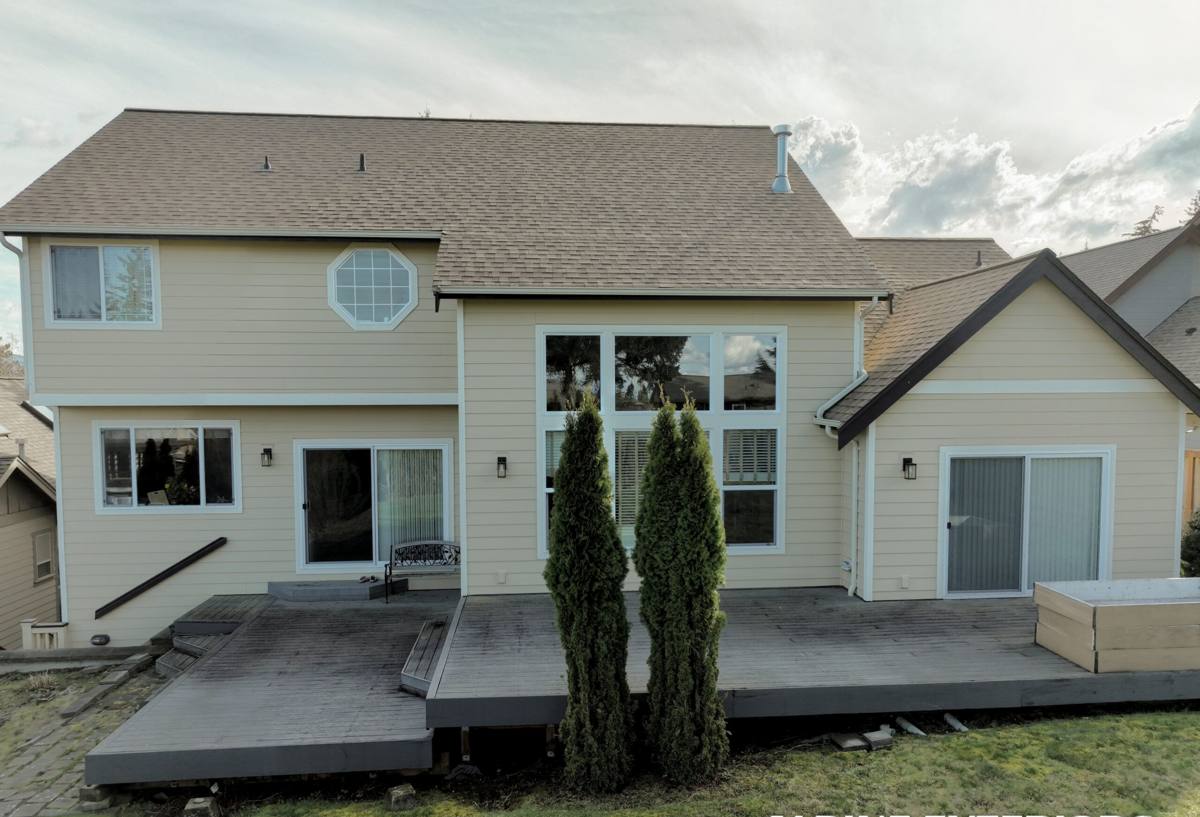
What Salt Air, Rain, and Moss Do to a Deck Over Time
Moisture Intrusion
Western Washington doesn't get hard freezes often, but it makes up for that with sheer volume of wet days. Water that sits on a deck surface, in a ledger board joint, or between overlapping boards doesn't just sit there — it wicks into end grain, works past failing finishes, and eventually reaches the framing. Once framing lumber stays damp for weeks at a stretch, rot sets in whether the wood is treated or not.
Moss and Organic Growth
Moss isn't just a cosmetic problem. A mat of moss on a deck board holds moisture against the wood constantly, blocks the board from ever drying out between rains, and can trap acidic organic matter that accelerates decay. Shaded sections of a deck — under overhangs, near trees, on the north side of a house — are almost always the first place we find soft or spongy boards.
Fastener and Hardware Corrosion
Salt-influenced coastal air corrodes exposed screws, joist hangers, and structural connectors faster than it would inland. Corroded fasteners lose holding strength quietly — a deck can look solid on top while the connections underneath are failing. This is one of the reasons a proper deck repair includes checking hardware, not just replacing boards you can see are damaged.
Signs a Sudden Valley Deck Needs Repair, Not Just Cleaning
- Boards that feel spongy, springy, or noticeably softer underfoot than the rest of the deck
- Visible gaps, cracking, or splitting where deck boards meet at joints
- Rust streaks running down from screw heads or around joist hangers
- A ledger board (where the deck attaches to the house) that shows dark staining, separation, or gives when pressed with a screwdriver
- Railings or posts that wobble or flex more than they used to
- Persistent moss or algae that comes back within weeks of cleaning
- Stairs that feel less solid, or noticeable settling at the base of support posts
- Standing water that doesn't drain within an hour or two after rain stops
Any one of these on its own might be minor. Several together usually mean the deck has been absorbing moisture for a while and the repair needs to go past the surface.
What a Correct Deck Repair Actually Involves
A lot of deck "repair" in this region amounts to pressure washing and a coat of stain over problems that are still there underneath. That buys a season, maybe two, before the same spots fail again. We approach it differently:
1. Structural Inspection First
Before we replace a single board, we check the framing — joists, beams, posts, and especially the ledger connection to the house, since that's the single most common failure point we see on older decks in this area. We probe suspect wood rather than guessing from appearance, since rot can travel further under a sound-looking surface than it looks.
2. Fix the Cause, Not Just the Symptom
If a deck is rotting because water isn't shedding properly — poor board spacing, missing flashing at the ledger, grade or drainage issues underneath — replacing boards without addressing that just resets the clock on the same failure. Flashing at the house connection in particular is something we check closely, since a missing or failed flashing detail is behind a large share of the ledger rot we find in this climate.
3. Match Materials to the Repair, Not the Cheapest Fix
Depending on what we find, a repair might mean sistering a joist, replacing a section of ledger, swapping corroded hardware for stainless or coated connectors rated for coastal exposure, or replacing deck boards with material suited to constant damp conditions. We'll walk you through the honest trade-offs — wood needs upkeep but is easy to spot-repair later; composite costs more up front but handles moisture with less maintenance. Neither is automatically right; it depends on the deck.
4. Address Moss at the Structural Level
Beyond a cleaning, that can mean improving airflow under and around the deck, trimming back vegetation that keeps sections shaded and damp, and choosing board spacing or materials that don't trap growth the way tightly fitted old boards do.
Repair vs. Replacement: How We Help You Decide
| Factor | Repair Usually Makes Sense | Replacement Usually Makes Sense |
|---|---|---|
| Framing condition | Joists and posts are structurally sound, isolated soft spots | Widespread rot in joists, beams, or multiple posts |
| Ledger board | Localized staining or minor separation | Significant rot, pulling away from the house, or no flashing at all |
| Deck age | Under 15-20 years, built with reasonable materials | Original construction pre-dates current fastening and flashing standards |
| Board condition | Scattered damaged boards among otherwise sound decking | Majority of boards cupping, splitting, or soft |
| Cost pattern | Repair cost is a clear fraction of full rebuild | Repairs would touch most of the structure anyway |
We'll give you a straight answer on which side of that line your deck falls on, and we won't recommend a full rebuild if a targeted repair will genuinely hold up.
Our Process for Sudden Valley Deck Repair Jobs
- On-site inspection: We walk the deck, probe suspect areas, and check the ledger, framing, and hardware — not just the visible boards.
- Written scope and estimate: You get a clear explanation of what's failing, why, and what we recommend, with an honest cost range before any work starts.
- Repair work: Depending on scope, this covers board replacement, framing repair or sistering, ledger and flashing correction, hardware upgrades, and railing or stair fixes.
- Finish and protection: Where wood repairs are involved, we make sure surfaces are properly sealed or finished before we consider the job done — an unfinished repair in this climate starts failing again fast.
- Walkthrough: We go over what was done and what to watch for going forward, especially around moss-prone areas.
What Repair Costs Depend On
- How much of the framing versus just surface boards needs work
- Whether the ledger connection and flashing need correction
- Deck size and how much of it is affected
- Material choice for replaced sections (wood versus composite)
- Access — decks over sloped ground or tucked against tree lines can take more time
We won't quote a number without seeing the deck, since two decks with the same square footage can need very different amounts of work depending on what the framing looks like underneath.
Why It Matters That We Already Work in Sudden Valley
A contractor who's never worked this neighborhood is starting from zero on every job — figuring out how the local moisture and shade patterns behave, what typical construction from the area's build era looks like underneath, and how far moss and rot tend to travel before they're visible. We've worked Sudden Valley and the surrounding Fairhaven and Bellingham area enough to walk onto a deck with a good idea of where the trouble usually is before we start probing.
Being based in Fairhaven also means we're not squeezing your job between long drives from somewhere across the county. If a repair needs a follow-up visit, or if weather pushes a step of the work, we're close enough that it doesn't turn into a scheduling problem.
Maintaining a Deck Repair So It Lasts in This Climate
A repair is only as good as the upkeep afterward, and coastal Whatcom County conditions don't forgive neglect for long.
- Sweep debris and standing leaves off the deck regularly, especially in fall
- Address moss as soon as it appears rather than letting it establish
- Reseal or restain wood decking on a schedule appropriate to the product — don't wait until finish is visibly gone
- Keep an eye on the ledger board area after heavy rain seasons
- Trim back vegetation that keeps sections of the deck shaded and slow to dry
- Check railings and stair connections periodically for looseness
If you're seeing soft boards, a wobbly railing, or moss that keeps coming back on a deck in Sudden Valley, it's worth having someone look at the framing before it turns into a bigger job. We offer free, no-pressure estimates — fill out the form below and we'll get a look at what's actually going on.