 Fairhaven Siding
 Silver Beach Windows Take a Different Kind of Beating
Silver Beach sits close enough to Bellingham Bay and the rest of Puget Sound that homes here deal with a different weather load than a house twenty miles inland. The air carries salt. The rain doesn't fall straight down, it drives sideways off the water on a windy afternoon. And for a good chunk of the year, everything that isn't in direct sun grows moss. Windows are one of the first parts of a house to show what that combination is doing, because a window is really a hole in the wall with moving parts, seals, and finished surfaces that all have to keep working together.
A window that would last thirty years in a dry inland climate can start failing in half that time here if it wasn't built or installed with this kind of exposure in mind. That's the whole case for treating window replacement in Silver Beach as its own job, not a generic swap-the-glass-and-go project.
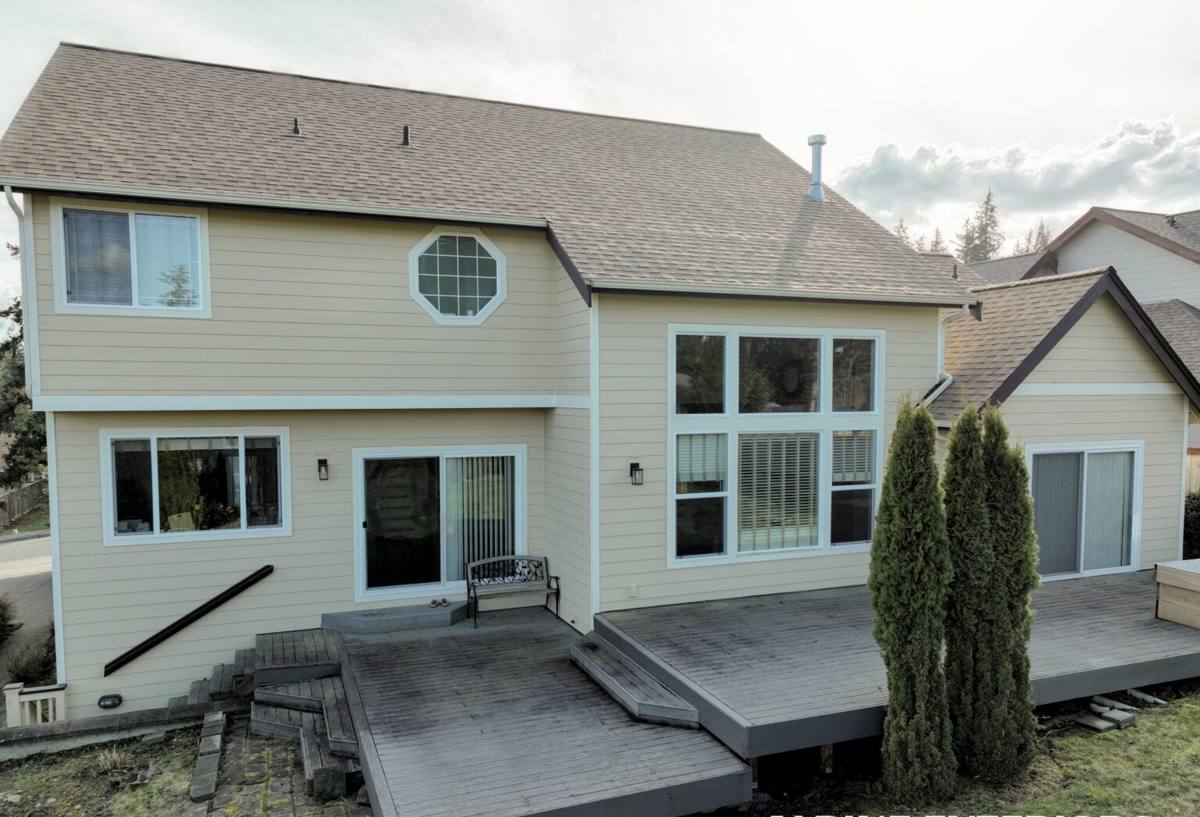
How Salt Air, Rain, and Moss Actually Wear Windows Out
Salt-laden air
Salt in the air isn't just a coastal postcard detail — it's a slow corrosive. It settles on metal hardware, screws, and window frame components, and it accelerates oxidation on anything that isn't rated for a marine-adjacent environment. On older aluminum-frame windows especially, you'll see pitting and corrosion around hinges, locks, and cranks well before the glass itself fails.
Driving rain
Whatcom County gets plenty of rain, but it's the wind-driven rain off the water that causes the real problems for windows. Water pushed sideways under pressure finds any gap in flashing, any degraded sealant bead, any place where the original installer cut a corner. It doesn't pool and evaporate the way a light vertical rain does — it gets forced up and under trim, where it can sit against sheathing and framing for days.
Moss and constant dampness
The long moss season here isn't just a roof and gutter issue. Moss and algae take hold on window sills, in corner joints, and along the bottom of frames wherever moisture lingers and sunlight is limited — which describes a lot of shaded elevations on Silver Beach lots. Beyond looking bad, moss holds moisture against the frame and finish, which shortens the life of both wood components and exterior sealants.
Signs a Silver Beach Home Needs Replacement, Not Just Repair
Not every window problem calls for a full replacement. But there's a point where patching stops making sense — the labor to keep re-sealing and re-glazing a failing window often costs more over a few years than doing the job right once. Here's what tends to tip a window from "repair" into "replace" territory in this climate:
- Fogging or a visible haze between panes on double- or triple-glazed units — the seal has failed and the gas fill is gone
- Soft, discolored, or spongy wood at the sill or lower corners, especially on the sides that catch prevailing wind and rain
- Visible corrosion, pitting, or seized hardware on metal-frame windows
- Moss or dark staining that keeps returning to the same spot on the frame within weeks of cleaning
- A window that's noticeably harder to open, close, or lock than it used to be — frames can swell, warp, or shift out of square
- Drafts or a cold patch near the window even when it's fully latched
- Peeling or bubbling paint on wood trim that keeps coming back after repainting
- Interior condensation on the glass or sill on cold, damp mornings
What a Correct Window Replacement Job Actually Involves
Getting the old unit out without hiding damage
The first real test of a window job happens before the new window ever shows up — when the old one comes out. That's the point where we can see the condition of the rough opening, the sheathing, and the framing underneath. In a wet climate, it's common to find some degree of moisture staining or soft wood around an older window, especially on walls exposed to prevailing wind and rain. That has to be dealt with before a new window goes in, not covered over.
Flashing and the moisture barrier
This is the detail that separates a window installation that holds up from one that fails quietly for years. Proper flashing — at the sill, jambs, and head — has to shed water outward and downward, layered correctly with the house's weather-resistive barrier so water is always directed out, never trapped behind the trim. In a climate with regular wind-driven rain, sloppy flashing is usually the actual cause when a "good" window still leaks.
Sealing, insulation, and fit
A window that's the right size but poorly shimmed and insulated will still perform badly — drafty, prone to condensation, and harder on your heating bill. We insulate the gap around the frame properly, use exterior sealants rated for sustained damp and UV exposure, and make sure the unit is plumb, level, and square so it operates smoothly and seals tightly for years, not just on install day.
Choosing the Right Window Material for This Climate
Every window material has real trade-offs, and honest advice depends on the specific wall, exposure, and budget. Here's how the common options generally compare for a coastal Whatcom County home:
| Material | How it handles salt air & rain | Maintenance | Trade-offs |
|---|---|---|---|
| Vinyl | Won't corrode or rot; handles damp exposure well | Low — occasional cleaning | Frame color and trim options are more limited than wood or fiberglass |
| Fiberglass | Very stable in temperature swings and damp conditions; resists warping | Low to moderate | Higher upfront cost than vinyl |
| Wood or wood-clad | Handsome, especially in Fairhaven's older homes, but exposed wood is vulnerable to moisture and moss without diligent upkeep | High — needs regular inspection, refinishing, and caulking | Best reserved for protected elevations or homes committed to ongoing maintenance |
| Aluminum | Prone to corrosion and pitting in salt-influenced air over time | Moderate | Our standard for this area is to steer clients away from bare aluminum frames given the corrosion risk near the water |
For most Silver Beach homes, vinyl or fiberglass frames hold up the best against salt air and constant dampness with the least ongoing maintenance. Where a homeowner wants the look of real wood, we'll talk through what it takes to protect that investment — it's a legitimate choice, but it's an honest, higher-maintenance one in this climate, not a set-it-and-forget-it one.
Our Process for a Silver Beach Window Replacement
- On-site assessment. We look at each window's exposure, current condition, and the framing behind it — not just the glass.
- Honest scope and options. You get a clear picture of what's failing, what's still sound, and which materials make sense for that wall's exposure.
- Careful removal. Old units come out without tearing up more of the wall than necessary, and we flag any moisture or rot we find before covering anything up.
- Proper flashing and moisture barrier tie-in. This is the step that determines whether the job holds up through years of wind-driven rain.
- Installation, shimming, and sealing. Every unit is set plumb, level, and square, insulated correctly, and sealed with exterior-rated materials.
- Final check and cleanup. We test operation on every window, walk the job with you, and leave the site clean.
What Window Replacement Typically Costs Here
Pricing depends on window size, material, number of openings, and how much of the surrounding wall needs attention once the old unit is out. Broad factors that move the number up or down:
| Factor | Effect on cost |
|---|---|
| Number and size of windows | More or larger openings raise total cost, but per-window pricing often improves with volume |
| Frame material | Vinyl is generally the most budget-friendly; fiberglass and wood run higher |
| Condition of the rough opening | Rot or moisture damage found during removal adds repair work before the new window goes in |
| Wall exposure | Elevations facing prevailing wind and rain sometimes call for extra flashing detail or sealant work |
| Access and site conditions | Upper-story or hard-to-reach windows can add labor time |
We won't quote a number without seeing the actual openings, but we'll always explain what's driving the price so there are no surprises once work starts.
Why a Crew That Already Works Silver Beach Makes a Difference
Anyone can install a window on a calm, dry day. The real test is whether that window is still sealing tight three winters later, after it's taken repeated wind-driven rain and sat through another moss season. A crew that regularly works this part of Whatcom County has already seen how local homes fail — which elevations take the worst of the weather, where moisture tends to hide behind older trim, and which materials and details actually hold up here versus which ones look fine on paper. That's not something you can fully substitute with a general contractor working from a standard install checklist meant for a drier climate.
It also means faster, more accurate estimates. We're not guessing at how Silver Beach's exposure will treat a given product — we've already installed and followed up on similar jobs nearby.
Keeping New Windows Performing After Installation
A correctly installed window in the right material for this climate needs very little from you, but a little seasonal attention goes a long way:
- Rinse frames and sills periodically to keep salt residue from building up, especially on windows facing the water side of the house
- Clear moss or algae as soon as it appears rather than letting it establish — it's far easier to remove early
- Check exterior caulking once a year, particularly after a hard winter, and have any cracked or shrunken sealant redone promptly
- Make sure gutters and downspouts near window headers are clear so water isn't overflowing onto the frame below
- Operate each window a few times through the year so hardware doesn't seize from disuse in damp weather
If you're weighing whether it's time to replace windows on a Silver Beach home, we're happy to take a look, tell you honestly what we see, and put together a no-pressure estimate. There's a short form below to get started.