 Fairhaven Siding
 Siding Repair in Sudden Valley: A Different Set of Conditions
Homes around Sudden Valley deal with a specific combination of stressors that doesn't show up the same way everywhere in Whatcom County. The lake-adjacent, tree-shaded lots that make this area desirable also keep siding wet longer than open, sun-exposed streets. Add in the salt-tinged marine air that reaches inland from Bellingham Bay, months of driving rain each winter, and a moss season that can stretch from fall through spring, and you get siding failures that look cosmetic at first but are almost always moisture problems underneath.
We're a Fairhaven-based crew, and Sudden Valley is one of the neighborhoods we get called into regularly for repair work — not big remodels, just siding that's failing at a seam, a corner, or a section that's been shaded and damp for years. This page is about that specific job: what causes it here, what a correct repair looks like, and how we handle it.
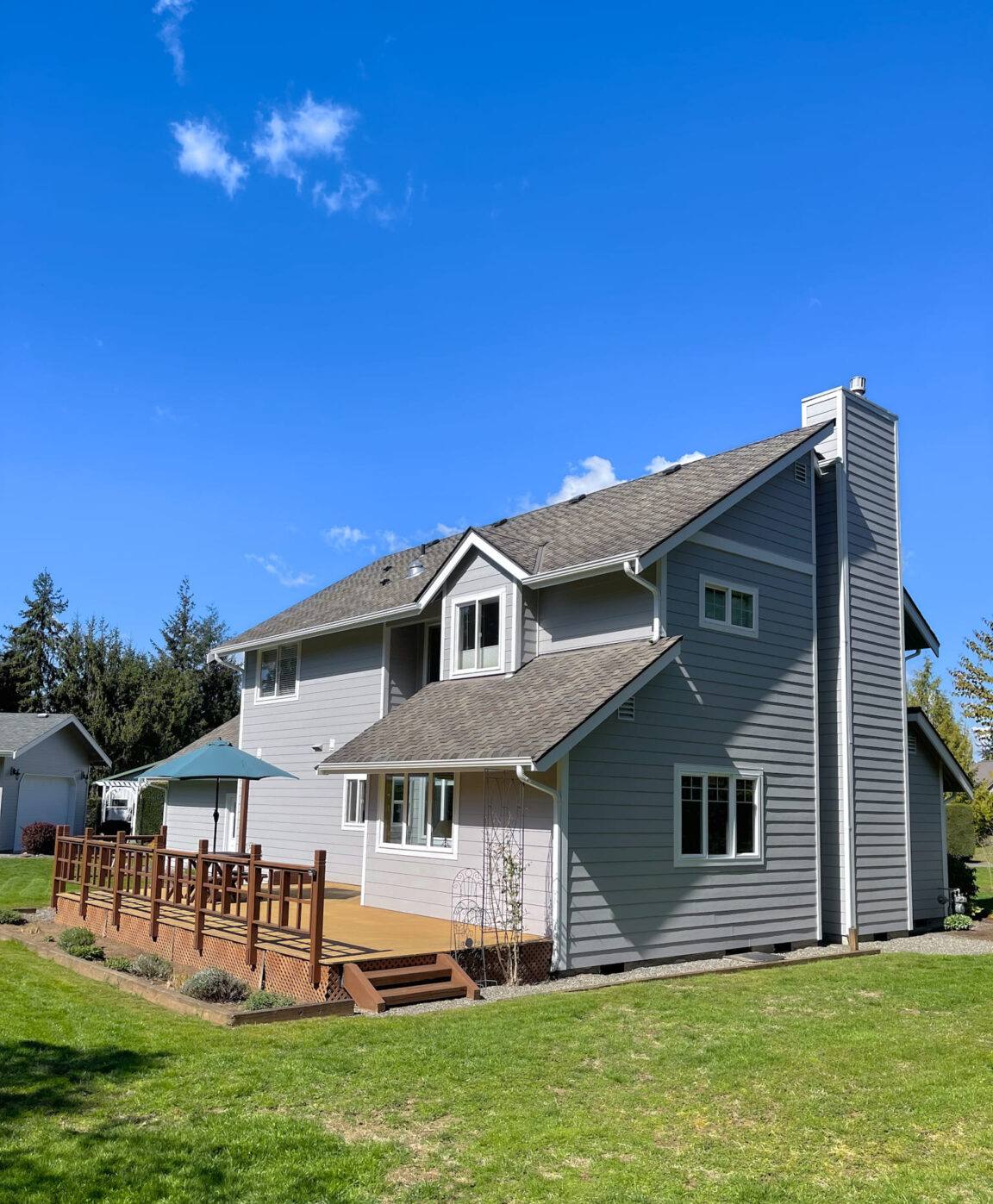
Why Siding Fails Faster in Shaded, Lake-Adjacent Settings
Moss and Trapped Moisture
Moss itself doesn't eat through siding, but it holds water against the surface far longer than bare siding would dry on its own. On wood-based products, that constant dampness is what starts rot at seams, butt joints, and anywhere caulk has failed. On fiber cement, moss is mostly cosmetic, but it's still a sign that a section of wall isn't drying properly — and that's worth investigating even if the siding itself is holding up.
Driving Rain and Wind-Driven Wetting
Storms off the Sound don't just fall straight down — wind pushes rain sideways into walls, especially on gable ends and second-story sections with less roof overhang protection. Repeated wind-driven wetting finds any gap in caulking, flashing, or panel overlap and works it wider over time.
Salt Air's Slow Effect on Fasteners and Trim
Salt-laced air corrodes exposed metal fasteners, flashing, and trim faster than it does further inland. Once a nail head or flashing edge starts to corrode, it stops sealing the way it did when it was installed, and that's often the entry point for the water damage we get called to fix.
Signs a Repair Call Is Overdue
Most siding repair calls we get in this neighborhood start with one of these:
- Soft or spongy spots when you press on a panel or board, especially near the bottom courses
- Visible gaps opening up at seams, corners, or where trim meets siding
- Paint that's bubbling, peeling, or discoloring in one section while the rest of the wall looks fine
- Persistent moss or dark staining that keeps coming back in the same spot after cleaning
- A musty smell or visible staining on an interior wall that lines up with an exterior problem area
- Panels that have visibly warped, cupped, or separated from the wall
Any one of these, caught early, is usually a contained repair. Left alone through another wet season, it tends to spread — water travels sideways and downward behind siding far more than most homeowners expect.
What a Correct Siding Repair Actually Involves
Finding the Real Cause First
The failure point you can see is rarely the only story. Before we touch a panel, we're looking at what's feeding the moisture — a gutter overflow, a flashing gap above a window, a missing kick-out at a roof-wall intersection, or just a shaded section that never fully dries between rain events. Replacing damaged siding without addressing the cause just buys a few years before the same repair is needed again.
Opening It Up to Check the Sheathing
Once siding has been wet long enough to fail, there's a real chance the water barrier or sheathing behind it has also taken damage. A repair that only addresses the visible siding and skips this step is incomplete — we open the area up enough to confirm what's underneath is sound, or repair it if it isn't, before anything new goes back on.
Matching Material and Finish
On homes already sided in James Hardie fiber cement, matching is straightforward — Hardie's factory ColorPlus finish is consistent across production runs, and profiles are standardized, so a repaired section blends in rather than reading as an obvious patch. On homes with other siding types, matching existing material exactly can be harder, and that's a conversation we have honestly up front rather than promising a perfect blend we can't deliver.
Correct Flashing and Sealant Detailing
The repair isn't finished when the new piece is nailed on. Flashing at the top of the repaired section, proper caulking at joints (not as a substitute for flashing, but alongside it), and correct fastener placement are what keep the same failure from recurring. This is the step that gets rushed on lower-quality repair work, and it's the one most likely to determine whether the fix lasts five years or fifteen.
Repair or Replace? How We Actually Decide
Not every damaged section needs a full re-side, and not every "small" repair should stay small. We look at extent, age, and cause together rather than defaulting to either answer.
| Factor | Leans toward repair | Leans toward replacement |
|---|---|---|
| Extent of damage | Isolated to one or two sections | Recurring across multiple walls |
| Age of existing siding | Still well within expected service life | Near or past the end of its practical lifespan |
| Cause of failure | A fixable, contained source (one flashing gap, one bad seam) | A systemic issue (widespread moisture behind large areas) |
| Material match | Existing product still available/matchable | Discontinued profile or color, poor match likely |
| Underlying sheathing | Sound once exposed | Rot or damage found behind multiple sections |
We'll tell you plainly which side of that table your situation falls on, including when a repair is the right, honest answer rather than upselling a full replacement you don't need yet.
Where James Hardie Fits Into a Repair Job
We install James Hardie fiber cement exclusively — we don't install vinyl, LP SmartSide, cedar, or primed wood siding as a company standard, for reasons of long-term moisture performance and maintenance burden that matter especially in a shaded, damp setting like this one. That standard shapes how we approach repairs, too.
If your home already has Hardie siding, repairs are usually the simplest case: matching panels and trim are available, the factory finish holds its color, and a well-executed patch section is very hard to spot once it's painted or has weathered a season. If your home has a different siding type and needs a repair beyond what can be reasonably matched, we'll walk you through what a full re-side in Hardie would look like as an option — not as a hard sell, but because for many homes with widespread failure, replacing rather than endlessly patching ends up being the more cost-effective path over a 10-15 year horizon.
Our Process for a Sudden Valley Repair Call
1. On-Site Inspection
We walk the exterior, check the areas you've flagged, and look at gutters, grading, and roof-wall intersections that could be feeding the problem — not just the siding itself.
2. Honest Assessment
You get a clear explanation of what's causing the damage, whether it's contained or spreading, and what repair (or, if warranted, replacement) actually involves — in plain terms, before any work starts.
3. Careful Removal and Inspection Behind the Siding
We remove only what's necessary to see the extent of the problem, check the water-resistive barrier and sheathing, and address anything compromised before new material goes back on.
4. Repair with Correct Flashing and Fastening
New or matched siding goes back with proper flashing, fastener spacing, and sealant detailing — the details that determine whether the repair holds up through the next several wet seasons.
5. Cleanup and Walkthrough
We clear debris, walk the repair with you, and point out anything worth keeping an eye on going forward.
Why a Crew That Already Works This Neighborhood Matters
Being based in Fairhaven and working Whatcom County's coastal neighborhoods regularly means we already understand how Sudden Valley's tree cover and lake proximity affect timing — moss and moisture-related repairs here often need to happen on a different schedule than repairs on an open, sun-exposed lot across town. We're not learning the neighborhood's quirks on your job; we've already seen how shaded siding behaves through a full wet season and what actually needs attention versus what's cosmetic. That familiarity means fewer surprises, a more accurate first assessment, and a repair plan built around how this specific setting behaves rather than a generic checklist.
Maintenance Checklist After a Repair
A repair done correctly should last, but a little seasonal attention protects that work and catches new issues early:
- Rinse moss and organic buildup off siding before it has a chance to hold moisture through the winter
- Check that gutters are clear and directing water away from the foundation and wall base, not overflowing onto siding
- Look at caulking around windows, doors, and trim once a year for cracking or gaps
- Trim back vegetation and tree branches that keep a wall section shaded and slow to dry
- Walk the exterior after major storms and note any new soft spots, staining, or gaps
- Have a professional look at any section that stays damp-feeling or discolored longer than the rest of the house
Cost Factors Worth Understanding
Repair pricing depends on a handful of variables more than square footage alone: how much of the wall needs to come off to properly assess and fix the cause, whether the sheathing underneath needs repair, how available a matching product or color is, and how much flashing and trim work is involved beyond the siding itself. A contained, single-section repair with sound sheathing behind it is a modest job. A repair that turns up rot behind multiple sections costs more because the scope has genuinely grown — not because of how the estimate is written. We'll always separate those cost drivers out clearly so you know what you're paying for and why.
If you're seeing early signs of trouble on a Sudden Valley home, or you already know a section needs attention, we're glad to take a look. The estimate is free, there's no pressure attached to it, and you'll get a straight answer about whether it's a repair or something more — just fill out the form below.