 Fairhaven Siding
 Sudden Valley Roofs Work Harder Than Most
Sudden Valley sits in a heavily wooded, hillside setting in Whatcom County, and that setting is exactly what makes roofing here different from a typical in-town job. Mature tree canopy keeps large sections of most roofs in shade for much of the year. Add in the driving rain that moves through this part of Washington for months at a stretch, plus the moist, salt-laden marine air that rolls in off Bellingham Bay and the wider Salish Sea, and you get a set of conditions that ages roofing materials faster than a roof out in the open sun ever would.
None of this means a Sudden Valley roof is doomed to fail early. It means the roof has to be built and maintained with these specific stresses in mind — moisture that lingers instead of drying off quickly, moss and organic growth that take hold in shaded valleys and north-facing slopes, and fasteners and flashings that see near-constant dampness rather than occasional rain. A roof replacement done right here accounts for all of that from the tear-off through the final inspection.
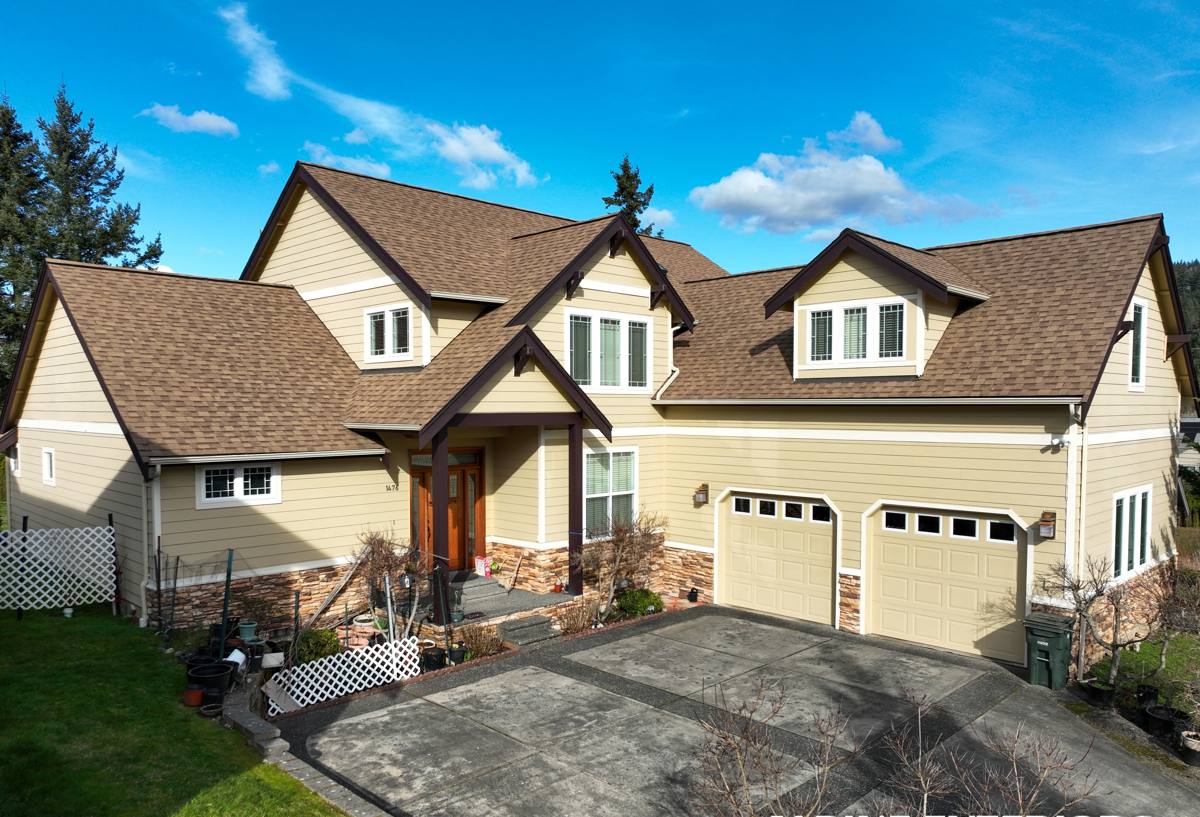
Signs a Sudden Valley Roof Has Reached the End of Its Life
Roofs rarely fail all at once. They tell you first, usually in ways that are easy to miss from the ground or dismiss as cosmetic. In a shaded, moisture-heavy setting like this one, watch for:
- Thick moss or algae growth across shaded slopes, especially where branches overhang the roof
- Granule loss visible in gutters or at the base of downspouts
- Shingles that are cupping, curling at the edges, or visibly lifting
- Dark streaking or staining that doesn't wash off with rain
- Soft or spongy spots underfoot when walking the roof, a sign the decking beneath is absorbing moisture
- Daylight visible through the attic or roof deck, or damp insulation near the eaves
- Interior stains on ceilings, especially after a stretch of heavy rain
- A roof that's simply reaching or past the manufacturer's expected service life for its material
Any one of these can sometimes be addressed with a targeted repair. Several at once, especially combined with an older roof, usually means repair costs start climbing toward what a full replacement would run — at which point patching stops being the economical choice.
What a Proper Roof Replacement Actually Includes
Full Tear-Off and Deck Inspection
We don't install new roofing over old material, and we don't recommend anyone in this climate does. A full tear-off is the only way to actually see the roof deck underneath — which matters here because chronic moisture and moss can quietly rot or delaminate plywood or plank decking over years without any visible sign from above. Every section of deck gets inspected once the old roofing is off, and any soft, rotted, or delaminated sections get replaced before anything new goes down.
Underlayment and Flashing
Underlayment is the roof's backup layer against wind-driven rain, and in a climate that gets as much of it as this one does, it's not a place to cut corners. Flashing around chimneys, skylights, valleys, and wall intersections is where the majority of roof leaks actually originate — not in the field of the shingles themselves — so these details get rebuilt correctly rather than reused or patched over old flashing.
Ventilation That Actually Balances
Intake at the eaves and exhaust at the ridge need to work together. A roof with strong ridge ventilation but blocked or insufficient intake doesn't actually ventilate the attic — it just pulls conditioned air out of the house. Balanced ventilation keeps the underside of the deck drier and more temperature-stable, which directly affects how long the new roof lasts, especially under a heavy tree canopy where the deck already has less help drying from sun exposure.
Matching the Material to the Site
There's no single "best" roofing material — there's the material that makes sense for a specific roof's pitch, sun exposure, tree cover, and the homeowner's maintenance appetite and budget. For a shaded, damp, wooded lot, here's how the common options generally compare:
| Material | Moss & Moisture Resistance | Typical Lifespan Here | Maintenance | Relative Cost |
|---|---|---|---|---|
| Architectural asphalt shingle | Good, especially algae-resistant lines | 25–30 years | Low to moderate | $ |
| Standing seam metal | Excellent — sheds moisture, doesn't hold moss | 40–50+ years | Low | $$$ |
| Cedar shake/shingle | Requires active upkeep in shade | 20–25 years with maintenance | High | $$ |
| Composite/synthetic shake | Good, doesn't absorb moisture like wood | 30–40 years | Low | $$ |
We install algae-resistant architectural shingles on most Sudden Valley replacements because they hold up well under tree cover and keep costs reasonable. We steer most homeowners away from traditional cedar in heavily shaded sections of a roof — not because cedar is a bad product, but because in constant shade it holds moisture longer than it would in full sun, which means more frequent treatment and a shorter practical service life than the same product would get on an open, sunny roof. That's a maintenance trade-off worth knowing before you commit, not a knock on the material itself.
Moss, Shade, and Long-Term Roof Health
Moss isn't just cosmetic. It holds moisture directly against the roofing material, works its way under shingle tabs and into seams, and over time can lift shingles enough to let water underneath. On a shaded roof, moss will come back — the goal of a good replacement isn't to promise it never returns, it's to build a roof that manages it well and stays easy to maintain:
- Zinc or copper control strips installed near ridges, which release trace metal ions that inhibit moss regrowth on the slopes below them
- Clean, properly pitched gutters that don't trap needles and debris where moisture collects
- Adequate ventilation so the deck itself dries between rain events instead of staying damp
- A material and color that doesn't hide early moss growth, so it gets addressed before it takes hold
None of this eliminates the need for periodic roof cleaning on a heavily shaded lot. It does mean the roof recovers well between cleanings instead of degrading every time moss is allowed to sit.
Our Replacement Process, Start to Finish
- On-site inspection and honest assessment — whether the roof genuinely needs replacement or a repair will hold
- Written estimate covering material options, scope, and timeline, with trade-offs explained plainly
- Permitting handled through Whatcom County before work begins
- Property protection — landscaping, siding, and windows covered before tear-off starts
- Full tear-off and deck inspection, with any necessary deck repairs called out before covering them up
- Underlayment, flashing, and ventilation installed to current code and manufacturer specification
- New roofing installed per manufacturer instructions to keep warranty coverage intact
- Full site cleanup, including a magnetic sweep for stray fasteners
- Final walkthrough so you can see the finished work and ask questions before we consider the job done
Cost Factors for a Sudden Valley Roof Replacement
Every estimate is specific to the roof in front of us, but the factors that move a price up or down are consistent:
| Factor | Why It Matters |
|---|---|
| Roof size and number of planes | More square footage and more valleys/hips mean more material and labor |
| Pitch and access | Steep or hard-to-access roofs (common on hillside lots) take longer and require more safety equipment |
| Layers of existing roofing | Multiple old layers mean more tear-off time and disposal |
| Deck condition | Rotted or delaminated sections found during tear-off need replacement before new roofing goes on |
| Material choice | Asphalt, metal, and composite carry different material and labor costs, as shown above |
| Tree cover and site access | Overhanging branches, limited driveway width, or private-road access can add setup time |
The honest answer to "what will this cost" is always "it depends on these specifics" — which is exactly why we walk the roof in person before giving a number, rather than quoting off a phone call.
Why Local Experience in Sudden Valley Matters
A roofing crew that already works in this neighborhood isn't guessing at conditions — they've seen how these lots drain, how shade patterns move across a roof through the seasons, and what the private-road and community access situation typically looks like before the trucks show up. That familiarity translates into fewer surprises on estimate day and a smoother job once work starts, whether that's scheduling around narrow driveways, coordinating dumpster placement on a wooded lot, or simply knowing which slopes on a hillside roof are going to need the most attention to moss and drainage.
It also means we're not applying a one-size-fits-all roofing approach borrowed from a flatter, sunnier part of the state. The recommendations in this guide — ventilation balance, moss control strips, material choices that account for constant shade — come from working roofs in exactly this kind of setting, not a generic checklist.
Ready to Talk About Your Roof
If your roof is showing moss, granule loss, or age, or you just want an honest opinion on whether repair still makes sense, we're glad to take a look. Fill out the form below for a free, no-pressure estimate — we'll walk the roof, explain what we find, and give you a clear, written recommendation with no obligation.