 Fairhaven Siding
 Storm Damage Roof Repair for Sudden Valley Homes
Sudden Valley sits in a different microclimate than a lot of the neighborhoods we work in around Whatcom County. The tree cover is heavier, the lots are shadier, and the lake air keeps everything a little damper for a little longer after a storm passes through. That combination doesn't just mean more moss on the north-facing slope — it means storm damage here often looks different than storm damage on an open, sunny lot, and it needs to be inspected differently too. This page covers what we actually look for, how we handle repairs, and why a crew that already knows this area does a better job of it than one that doesn't.
Wind, Rain, and a Long Moss Season
Whatcom County's marine climate brings salt-laden wind off the Sound, driving winter rain, and a moss season that can run nearly year-round on shaded roof slopes. Sudden Valley's tree-lined, lake-adjacent lots get more of the shade-and-moisture side of that equation than most — moss and moisture sit longer on a roof that doesn't get direct afternoon sun, and a windstorm that drops branches through a canopy of mature conifers does a different kind of damage than one that just lifts a few shingle tabs on an open roof.
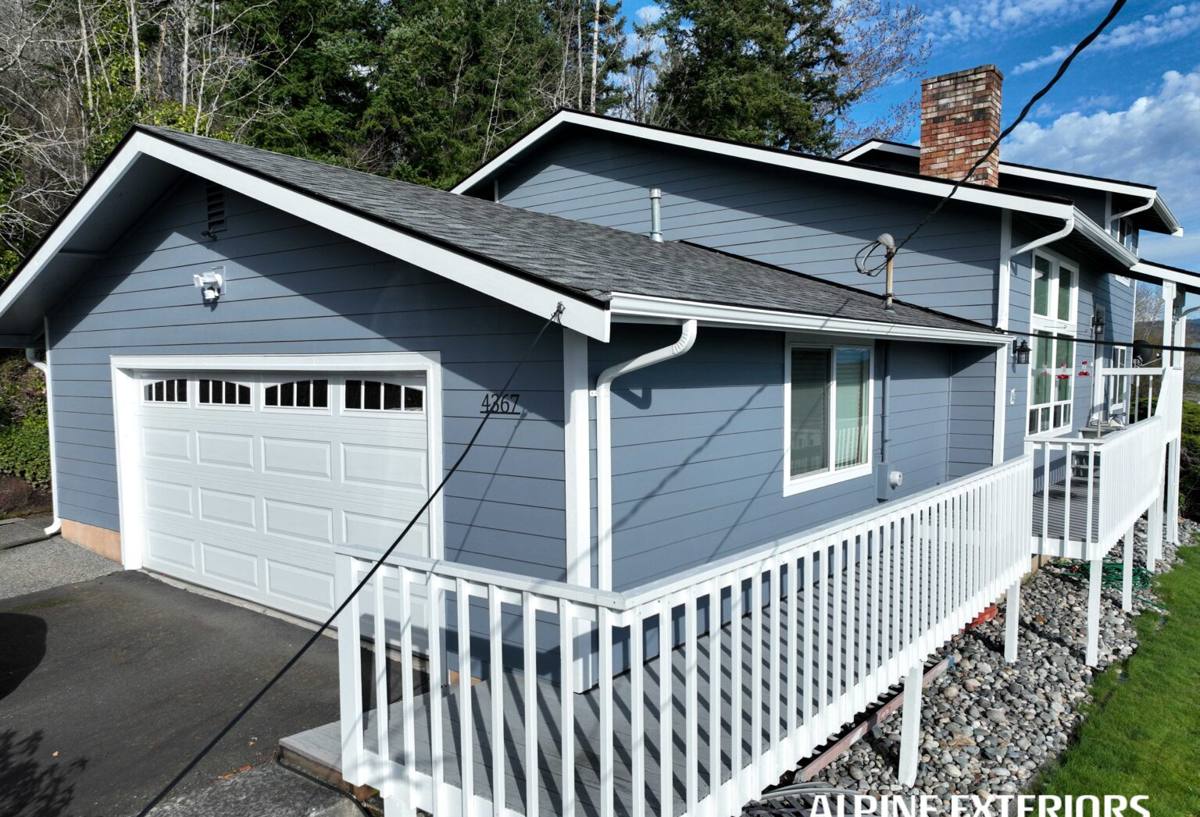
What Counts as Storm Damage
Not every roof problem after a windy night is "storm damage" in the way an insurance adjuster or an honest roofer means it. It generally falls into a few categories, and knowing which one you're dealing with changes both the repair and, often, whether it's covered by your homeowner's policy.
- Wind damage — lifted, creased, or missing shingles, usually starting at roof edges, ridges, and corners where wind pressure is highest.
- Impact damage — punctures, cracked shingles, or dented flashing and vents from falling branches or debris, common under heavy tree cover.
- Water intrusion — leaks that show up during or right after a storm because wind-driven rain found a gap that wasn't a problem in calm weather.
- Moss and debris-related damage — not caused by a single storm, but made worse by one, when moss mats or trapped leaves and needles hold water against the roof deck.
The distinction matters because a repair that only addresses the visible wind damage but ignores an existing moss mat, for example, is likely to leak again within a season or two.
The Hidden Damage Homeowners Miss
Most storm-damage calls we get start with an obvious sign — a leak, a shingle in the yard, a branch on the roof. But a proper inspection usually turns up more than what prompted the call. On a shaded, moss-prone roof like a lot of what we see in Sudden Valley, some of the real damage is easy to miss from the ground.
- Shingle tabs that lifted in the wind but sealed back down slightly out of place — they look fine until the next storm pulls them loose for good.
- Granule loss on the shingle surface, which shows up as bare or shiny patches and means the shingle's UV and weather protection is thinning.
- Soft or spongy roof decking under a spot where moss or debris has been holding moisture against the roof for months.
- Flashing around chimneys, skylights, and roof-to-wall transitions that's bent, pulled loose, or rusted through — often the actual source of a leak that seems to be coming from the shingles.
- Nail pops and small punctures from branch strikes that don't leak right away but will once the sealant around them breaks down.
- Gutters and downspouts pulled loose or clogged with storm debris, which sends water somewhere it shouldn't go instead of off the roof.
Our Storm Damage Repair Process
We approach storm damage repair as a sequence, not a single visit, because rushing the order of operations is how homeowners end up paying twice for the same repair.
- Inspection. We get on the roof (or use a pole camera where access or safety is a concern) and check every slope, not just the one where the damage is visible from the ground.
- Documentation. We photograph and note everything we find, which matters if you're filing an insurance claim and need clear evidence of storm-caused damage versus wear and tear.
- Temporary protection, if needed. If there's an active leak or exposed decking, we get it covered and dry before worrying about the permanent fix — a tarp done right is not a repair, but it buys time to do the real repair correctly.
- Repair plan and estimate. We tell you plainly what needs to be fixed now, what's worth watching, and what the options and rough cost ranges look like — no pressure to upsell a full replacement when a targeted repair will hold.
- The repair itself. Matching materials where possible, proper flashing and underlayment where the old materials failed, and attention to how the repair ties into the surrounding roof so it isn't a visible or vulnerable patch.
- Cleanup and final check. Debris cleared, gutters checked, and a walkthrough so you know exactly what was done.
Insurance Documentation Done Right
If your homeowner's policy covers wind or storm damage, the difference between a smooth claim and a denied one often comes down to documentation quality. We take enough photos and write detailed enough notes that an adjuster can see the storm connection clearly, and we're straightforward with you about what looks like storm damage versus what looks like ordinary aging — we're not going to write up a report that overstates the case, because that tends to backfire on homeowners later.
Repair vs. Replacement
Storm damage doesn't always mean a new roof, and it doesn't always mean a simple patch either. The honest answer depends on the roof's age, how much of it is affected, and what condition the rest of it is in. Here's roughly how we think through it.
| Factor | Favors Repair | Favors Replacement |
|---|---|---|
| Roof age | Under roughly half its expected service life | Already near or past its expected service life |
| Extent of damage | Isolated to one section or slope | Spread across multiple slopes or the whole roof |
| Underlying decking | Solid, dry, no rot | Soft, spongy, or water-stained in multiple areas |
| Shingle condition elsewhere | Rest of the roof is in good shape | Widespread granule loss, curling, or brittleness |
| Moss history | Minor, manageable with cleaning and maintenance | Heavy, long-term moss with signs of trapped moisture |
| Approximate cost range | A few hundred to a few thousand dollars, depending on scope | A larger investment, but resets the clock on the whole roof |
We'll tell you honestly which side of that table your roof falls on. If a repair is the right call, that's what we'll recommend — a roof doesn't need to be replaced just because it took storm damage once.
Materials and Methods We Use
A storm repair is only as good as what's underneath the shingles you can see. We match shingle type, profile, and color as closely as possible so a repair doesn't stand out, but the parts that actually determine whether the repair lasts are usually invisible once we're done:
- Flashing — we replace damaged flashing rather than resealing it, since a caulk patch over bent or rusted flashing is a short-term fix, not a repair.
- Underlayment — in valleys and around penetrations, we use self-adhering waterproof membrane, which holds up better against the kind of wind-driven rain this area gets than felt paper alone.
- Fasteners — proper nailing pattern and placement, since a lot of the wind damage we see traces back to shingles that were fastened a little too high or too few nails per shingle in the first place.
- Ventilation — we check that intake and exhaust venting are working, because a roof that can't breathe holds moisture longer, which feeds moss and shortens shingle life regardless of how good the repair is.
We don't push a specific shingle brand as the only acceptable option — most major roofing manufacturers make a solid architectural shingle. What matters more to us is installation quality and using the right underlayment and flashing details for a shaded, moisture-prone lot, since that's where roofs in this area actually fail.
Why Local Experience in Sudden Valley Matters
A crew that hasn't worked lake-community, tree-covered lots before tends to underestimate two things: access and moss. Steep driveways, limited staging space, and mature trees close to the house all change how a repair crew sets up safely and how much cleanup a job requires afterward. We've learned to plan for that instead of discovering it mid-job.
Local experience also means we're not guessing at how this area's climate behaves. We know which roof details tend to fail first on a shaded slope near the lake, we know moss season here doesn't really stop the way it might on a drier, sunnier lot, and we know the value of checking neighboring trees and drainage patterns, not just the roof deck itself, when we diagnose a leak. Many lake-community neighborhoods also have their own design or exterior guidelines, so if your property is subject to any, it's worth checking with your community association before work begins — we're happy to work alongside whatever process applies.
Preventing the Next Round of Storm Damage
Storm damage repair fixes what already happened. A little maintenance reduces how much happens next time, and on a shaded, tree-heavy lot that maintenance matters more than it does on an average roof.
- Keep gutters and valleys clear of needles and leaf debris, especially heading into fall and winter storm season.
- Have moss treated and removed before it mats thick enough to hold water against the shingles — a light, well-timed cleaning beats a heavy one after years of buildup.
- Trim back branches that overhang or brush against the roof, since contact points during wind are where impact damage concentrates.
- Walk the roofline (or have it checked) after any significant windstorm, rather than waiting for a leak to show up inside.
- Address small issues — a lifted shingle corner, a loose flashing edge — while they're small repairs instead of waiting for them to become water damage.
If a recent storm has you wondering whether your roof took damage, or you've just noticed something that doesn't look right, we're glad to come take a look. The estimate is free, there's no pressure attached to it, and you'll get a straight answer about what's actually going on up there — just fill out the form below to get started.