 Fairhaven Siding
 Asphalt Shingle Roofing Built for Sudden Valley's Conditions
Sudden Valley sits in a pocket of Whatcom County that gets its own version of Pacific Northwest weather. Tucked against Lake Whatcom and wrapped in mature timber, homes here deal with a combination of steady moisture, shaded rooflines, and heavy tree cover that a lot of standard roofing advice simply doesn't account for. A shingle roof installed the same way you'd install one on an open, sunny lot in a drier part of the state will not hold up the same way here. It needs to be built with this specific microclimate in mind from the first course of underlayment to the last cap shingle.
We install and repair asphalt shingle roofing throughout Whatcom County, and Sudden Valley is one of the neighborhoods we're in regularly. That matters because roofing problems here tend to follow patterns — the same north-facing slopes hold moisture longer, the same tree-lined lots collect the same organic debris, and the same driving rain off the lake finds the same weak points if a roof isn't detailed correctly. Working this area consistently means we're not guessing at what a Sudden Valley roof needs. We've seen what fails and why.
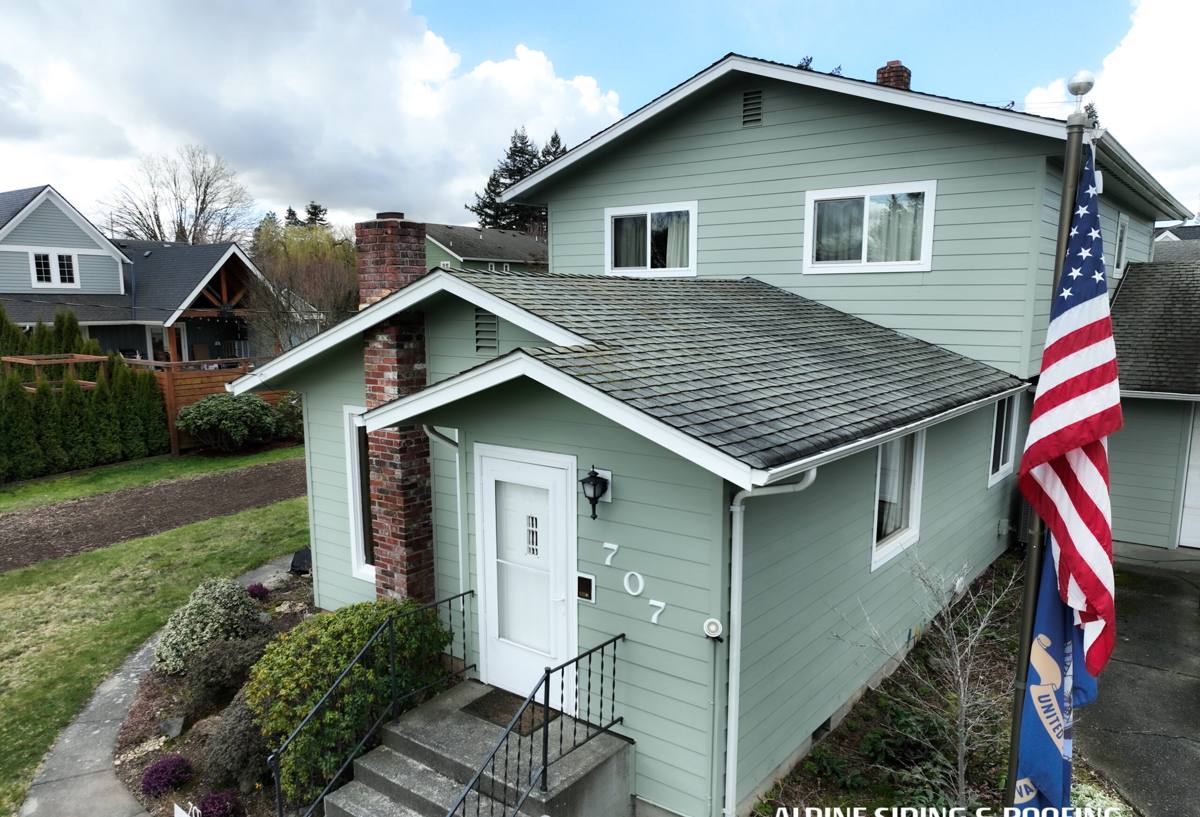
What the Regional Climate Does to a Shingle Roof
Western Washington's marine climate is hard on roofing in ways that are easy to underestimate. The moisture that moves through the Fairhaven area and up into the Lake Whatcom basin isn't just rain — it's a long stretch of damp air, fog, and shade that keeps roof surfaces wet far longer than a simple rainfall total would suggest.
Moss and Algae Season
Sudden Valley's tree canopy is part of what makes the neighborhood appealing, but it also means shaded, north-facing roof slopes stay damp for extended periods, especially through fall and winter. That's exactly the environment moss and algae need to take hold. Once moss establishes itself under shingle tabs, it lifts them, holds water against the roof deck, and accelerates granule loss — which is the beginning of the end for an asphalt shingle's service life.
Driving Rain and Wind-Driven Moisture
Storms moving through the county often bring rain at an angle rather than straight down, especially on exposed slopes and gable ends. That kind of weather pushes water sideways under shingle edges, into flashing laps, and behind poorly sealed valleys. A roof that isn't detailed for wind-driven rain can develop leaks in spots that look completely fine from the ground.
Salt Air and Material Fatigue
The same coastal air that moves through Fairhaven and the broader Whatcom County shoreline carries fine salt content that, over years, contributes to the breakdown of metal flashing, fasteners, and exposed sealants. It's a slower factor than moss or wind-driven rain, but it's part of why fastener and flashing quality matters as much as the shingle itself.
What a Correct Asphalt Shingle Installation Actually Involves
A shingle roof is only as good as the layers underneath it. Most leaks and premature failures we get called out for in Sudden Valley trace back to shortcuts taken below the shingle line, not the shingles themselves.
Tear-Off and Deck Inspection
We remove the existing roofing down to the deck rather than layering over old shingles. That's the only way to actually inspect the sheathing for soft spots, delamination, or moisture damage — issues that are common on shaded, moisture-exposed roofs and that get sealed in (and hidden) if you install over top of them.
Underlayment and Ice-and-Water Protection
A synthetic underlayment goes down across the full roof, with self-adhered ice-and-water membrane at the eaves, valleys, and around every penetration. In a climate that sees prolonged damp periods rather than isolated storms, this layer is what protects the deck when — not if — wind-driven rain gets past the shingle surface.
Ventilation
Proper intake and exhaust ventilation keeps the underside of the roof deck dry and at a consistent temperature, which matters for two reasons: it prevents condensation-driven rot in a damp climate, and it protects shingle warranties, most of which require adequate attic airflow to remain valid.
Flashing and Valleys
Step flashing at walls and chimneys, and properly woven or metal-lined valleys, are where the majority of leaks originate on older roofs. We install new flashing as part of every re-roof rather than reusing old pieces, since corroded or improperly lapped flashing is one of the most common causes of hidden leaks on tree-shaded roofs like the ones common in Sudden Valley.
Shingle Installation and Nailing Pattern
Shingles are fastened according to manufacturer specifications for nail placement and count, which is what actually determines wind resistance — not just the shingle's rated wind speed on the packaging. A correctly nailed standard shingle will outperform a premium shingle installed with a sloppy nailing pattern.
Choosing the Right Shingle for a Sudden Valley Home
Not every shingle product is a good fit for a shaded, moisture-heavy lot. We walk through these trade-offs honestly rather than defaulting to whatever has the highest margin.
| Shingle Type | Best For | Trade-Offs in This Climate |
|---|---|---|
| 3-Tab Asphalt | Budget-conscious re-roofs, simpler rooflines | Lower wind rating and shorter lifespan; shows granule loss and moss growth sooner on shaded slopes |
| Architectural (Laminate) Asphalt | Most Sudden Valley homes; a balance of durability and cost | Heavier and more wind- and impact-resistant; performs noticeably better under tree cover and wind-driven rain |
| Algae-Resistant (Copper/Zinc-Granule) Shingles | Heavily shaded, north-facing, or tree-surrounded lots | Higher upfront cost, but meaningfully slows the moss and algae staining that's common on shaded lake-area roofs |
| Impact-Resistant (Class 4) Shingles | Homes with overhanging branches or storm debris exposure | Premium cost; may qualify for insurance discounts depending on your carrier |
For most Sudden Valley properties, we recommend at minimum an architectural shingle, and we'll flag algae-resistant options specifically on lots with heavy overhead tree cover, since that's where standard shingles show premature staining and moss the fastest.
How Our Process Works
- On-site inspection. We look at the roof deck condition, current ventilation, flashing details, and how much moss or shade exposure the specific slopes are dealing with.
- Honest scope and estimate. We tell you what actually needs to happen — full tear-off versus repair, what shingle tier fits your budget and exposure, and what we're not going to recommend and why.
- Tear-off and deck repair. Old roofing comes off, damaged sheathing gets replaced, not patched over.
- Underlayment, flashing, and ventilation installed correctly. This is the stage that determines how the roof performs in five and fifteen years, not just in the first year.
- Shingle installation to spec. Correct nailing pattern, proper exposure, and attention to valleys and penetrations.
- Cleanup and walkthrough. Magnetic sweep for stray fasteners, debris hauled off, and a final walkthrough so you know what was done and what to watch for.
Problems We Commonly See on Sudden Valley Roofs
- Moss colonies under shingle tabs on shaded, north-facing slopes, often before any visible staining shows from the ground
- Valley wear from concentrated water flow, especially on roofs with woven rather than metal-lined valleys
- Flashing corrosion around chimneys and sidewalls where original flashing was reused during a prior re-roof
- Granule loss and bald spots from long-term moisture retention under moss or debris buildup
- Gutter and debris backup from overhanging trees, which holds moisture against the roof edge and accelerates rot at the fascia
- Under-ventilated attics leading to condensation staining on the underside of the deck, sometimes mistaken for a roof leak
Maintenance Checklist for Homeowners
Between professional inspections, a few habits go a long way toward extending the life of a shingle roof in this climate:
- Keep gutters and valleys clear of needles and leaf debris, especially heading into fall
- Have moss physically removed rather than pressure-washed, which can strip granules and shorten shingle life
- Trim back overhanging branches to reduce shade, debris, and physical abrasion on the roof surface
- Check attic ventilation isn't blocked by insulation or storage
- Schedule a roof inspection after any major windstorm, even if there's no visible damage from the ground
- Address small flashing or sealant issues early — they're inexpensive to fix and expensive to ignore
What Affects the Cost of a Sudden Valley Re-Roof
| Factor | Why It Matters |
|---|---|
| Roof size and pitch | Steeper roofs take longer to work safely and require more material overlap |
| Deck condition | Rotted or delaminated sheathing found during tear-off adds material and labor |
| Shingle tier | Standard architectural versus algae-resistant or impact-resistant shingles carries a real cost spread |
| Number of valleys, penetrations, and flashing details | More complex rooflines mean more flashing work, which is labor-intensive but critical to leak prevention |
| Access and tree cover | Limited access or heavy branch overhang can add setup and cleanup time |
We give a firm, itemized estimate before any work starts, so you know what you're paying for and why — not just a lump-sum number.
Why Hiring a Crew That Already Works Sudden Valley Matters
A shingle roof isn't a generic product — how it's detailed has to match the conditions it's going to sit in for the next twenty-plus years. A crew that mostly works drier, more open parts of the state may not think twice about ventilation sizing or algae-resistant granules, because it's not the problem they see every day. We work Whatcom County roofs regularly, including Sudden Valley's shaded, lake-adjacent lots, so those details aren't an afterthought — they're built into how we scope and install every job from the start.
If you're dealing with visible moss, a roof that's due for replacement, or you just want an honest read on how much life is left in your current shingles, we're happy to take a look. Reach out for a free, no-pressure estimate using the form below.