 Fairhaven Siding
 Building Decks That Hold Up in Sudden Valley
Sudden Valley sits inland from the saltwater shoreline but shares the same damp, moss-prone climate that defines exterior work across Whatcom County. Homes here deal with long stretches of driving rain off the water, heavy tree cover that keeps decks shaded and slow to dry, and a moss season that can run eight months or longer. A deck built without those conditions in mind will show problems fast — soft spots, slick surfaces, gaps that trap debris, and fasteners that rust before their time. A deck built for this specific setting can go decades without a structural surprise.
We build and replace decks for homeowners throughout the Fairhaven area, and Sudden Valley's mix of wooded lots, lake-adjacent humidity, and steeper terrain comes up often enough that we plan for it from the first site visit, not as an afterthought once the framing is up.
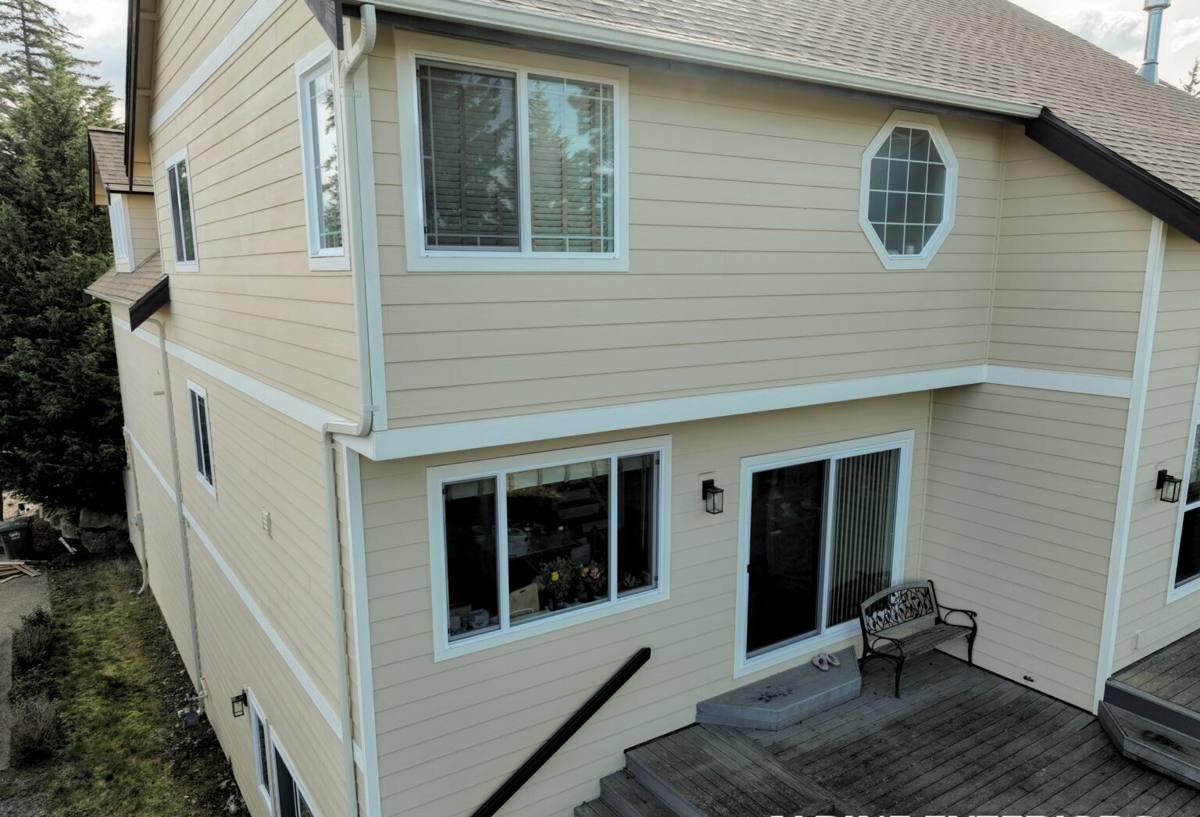
What This Climate Actually Does to a Deck
It helps to understand the specific failure points before talking about how to avoid them. This isn't abstract — it's the pattern we see when we're called out to inspect a deck that's failing early.
Moisture that never fully leaves
Tree canopy and hillside shade common to Sudden Valley lots mean a deck surface can stay damp for days after a storm passes. That extended moisture exposure is what drives rot in ledger boards, joists, and post bases — the structural pieces you can't see once the decking is down.
Moss and algae buildup
Any horizontal wood or composite surface in this region will grow moss and algae if it isn't ventilated and drained properly. Beyond looking bad, moss holds water against the surface and turns a deck into a slip hazard, especially on stairs and any north-facing section that never sees direct sun.
Fastener and hardware corrosion
Standard fasteners corrode faster in a consistently damp, acidic (tannin-heavy, from cedar and fir runoff) environment. Rust streaks bleeding down decking boards are almost always a sign the wrong-grade hardware was used.
Freeze-thaw movement
Whatcom County doesn't get deep winters, but it does get enough freeze-thaw cycling to work at any gap where water has been sitting. Ice expansion in a compromised joint accelerates damage that would otherwise take years to show.
What a Deck Built for Sudden Valley Requires
None of this means a deck here needs to be over-engineered — it means specific details matter more than they would in a dry climate. The difference between a deck that lasts 10 years and one that lasts 30 usually comes down to five things.
- Ledger board flashing done correctly — the single most common source of hidden rot is a poorly flashed or unflashed ledger connection to the house.
- Stainless or hot-dip galvanized hardware — matched to the decking material, not just "whatever's on the shelf."
- Proper board spacing and airflow underneath — decks that sit low and tight trap moisture; ours are built with drainage and ventilation as a design requirement, not an afterthought.
- Grooved or textured surface material where shade and moss risk is high — smooth-face boards on a shaded lot are a slip hazard within a season or two.
- Footings sized and set for the actual soil — Sudden Valley's terrain varies from level lots to steep drop-offs toward the lake, and footing depth and post spacing need to match the slope, not a generic plan.
Decking Material Options — Honest Trade-Offs
We install several deck surface materials, and each one behaves differently in this climate. There's no universally "best" choice — it depends on your budget, how much upkeep you want to do, and how much shade the deck sits in.
| Material | Moss/Moisture Behavior | Maintenance | Typical Lifespan |
|---|---|---|---|
| Pressure-treated fir/hem-fir | Absorbs moisture; needs sealing to resist moss and checking | Annual cleaning, re-seal every 2-3 years | 15-20 years with upkeep |
| Cedar | Naturally rot-resistant but still needs sealing in shaded areas | Cleaning and re-oiling every 1-2 years to hold color and resist moss | 20-25 years with upkeep |
| Composite (capped) | Resists water absorption; still needs regular cleaning to prevent surface moss/algae film | Periodic washing, no sealing or staining | 25-30+ years |
| PVC | Fully water-resistant; least prone to moss adhesion | Occasional washing | 30+ years |
We're honest about maintenance expectations upfront. A cedar deck under heavy tree cover in Sudden Valley is going to need real attention to stay ahead of moss — if that's not something you want to keep up with, composite or PVC is usually the better long-term fit for a shaded lot. If you love the look and feel of real wood and are willing to maintain it, cedar or a quality pressure-treated build is a perfectly sound choice; it just requires a different level of commitment.
Our Process, Start to Finish
1. Site visit and design
We walk the property, look at drainage patterns, shade exposure, and how the deck will connect to the house. Sloped lots common around Sudden Valley often change footing and post layout decisions, so this step matters more here than on a flat, open lot.
2. Material and layout selection
We go over decking material, railing style, and layout options against your budget and how much maintenance you actually want to do — not just what looks best in a photo.
3. Permitting
Deck work in Whatcom County typically requires a building permit, particularly for decks above a certain height or attached to the structure. We handle that process so you're not chasing paperwork.
4. Demolition and disposal (for replacements)
Old decking, ledger boards, and any rotted framing get fully removed — we don't build a new surface over compromised structure underneath.
5. Framing and structural work
This is where the climate-specific details get built in: correct ledger flashing, proper footing depth for the soil and slope, corrosion-resistant hardware throughout, and joist spacing suited to your chosen decking material.
6. Surface installation and finish work
Decking, railing, stairs, and any built-ins go in last, with attention to board spacing for drainage and airflow.
7. Final walkthrough
We go over the finished deck with you, including a straightforward maintenance rundown specific to the material you chose.
New Build vs. Deck Replacement
Not every project starts from bare ground. A lot of our Sudden Valley calls are for decks that are 15-25 years old and were built before flashing standards, hardware grades, or drainage detailing were taken as seriously as they are now.
Signs a deck needs replacing rather than repairing
- Soft, spongy spots anywhere on the surface, especially near the house connection
- Visible rot or rust at the ledger board or post bases
- Persistent moss that returns within weeks of cleaning, even in sunnier sections
- Railings or stairs that flex or feel loose under normal use
- Gaps between boards that have widened significantly from the original install
If the framing underneath is sound, sometimes a resurfacing — new decking and railing on an existing, structurally solid frame — is a reasonable and less expensive option. We'll tell you honestly which situation you're in after an inspection; we don't push a full rebuild when a repair or resurface will genuinely hold up.
Railings, Stairs, and Add-Ons
Railing material matters as much as decking material in this climate. Wood railings need the same upkeep as wood decking, while metal or composite railing systems hold up with far less attention. Stairs deserve particular care — they're the first place moss becomes a safety issue, so we pay close attention to tread material, spacing, and any lighting or grip-strip additions on shaded staircases. If you're adding built-in seating, planters, or a pergola, we plan those into the structural layout from the start rather than bolting them on after the fact.
Cost Factors to Expect
Every deck is priced around its own specifics, but the factors that move the number are consistent. We won't quote a number without seeing the site, but this gives you a sense of what drives cost up or down.
| Factor | Effect on Cost |
|---|---|
| Deck size and shape (multiple levels, curves, cutouts) | Larger and more complex layouts increase material and labor |
| Height above grade / slope of the lot | Taller decks and sloped Sudden Valley lots need more substantial framing and footings |
| Decking material | Composite and PVC cost more upfront than wood but less in long-term maintenance |
| Railing type | Metal, cable, and glass railing systems cost more than standard wood or composite balusters |
| Demolition and disposal | Replacing an existing deck adds teardown and haul-away costs |
| Permitting | Required for most attached or elevated decks in Whatcom County; adds modest time and fee cost |
Why a Crew That Already Works This Area Matters
A deck built to a generic spec sheet will look fine on installation day regardless of where it goes up. The difference shows up two or three winters later, once a full moss season and a stretch of driving rain have had time to find every shortcut. We work throughout the Fairhaven area regularly, which means we're not guessing at how a shaded, lake-adjacent lot in Sudden Valley behaves compared to an open lot closer to town — we've seen the framing come apart on decks that weren't built for it, and we build to avoid that outcome from the start.
If you're planning a new deck or looking at replacing one that's showing its age, we're happy to come out, take a look, and give you a straightforward assessment — no pressure, no obligation. Reach out using the form below to schedule a free estimate.