 Fairhaven Siding
 Deck Building in Sudden Valley: Built for the Weather You Actually Get
Sudden Valley sits back from open water, tucked under tree cover around Lake Whatcom, and that setting shapes what a deck out here has to survive. It's not the same exposure as a deck on the open coast, but it's not easy duty either. Between the shade from mature timber, the humidity off the lake, and the long stretch of wet months that define a Whatcom County winter, decks in this neighborhood take a slow, steady beating rather than one dramatic storm. A deck built to a generic spec — the kind that would be fine in a dry inland climate — tends to show problems here within a few seasons: soft spots, black streaking, loose fasteners, and boards that cup or split. A deck built for this specific setting holds up for decades instead.
This page covers what we've learned building and repairing decks in and around Sudden Valley: what the local conditions do to different materials and construction methods, what a properly built deck actually involves below the surface, and how we run the job from first look to final walkthrough.
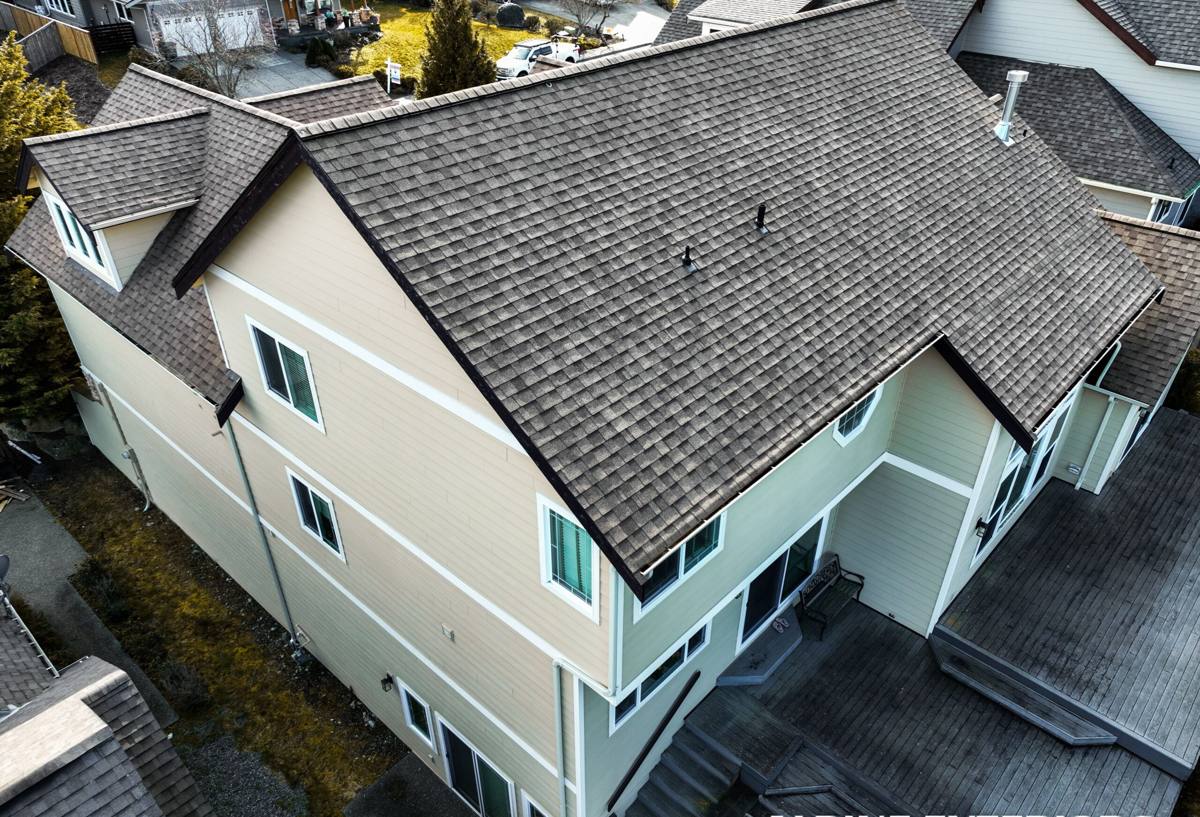
What Whatcom County Conditions Do to a Deck
Three things drive almost every deck failure we see out here, and they compound each other.
Driving rain and standing moisture
Whatcom County gets a long, steady rainy season, and wind-driven rain finds its way into every gap, seam, and fastener hole a deck offers. On a deck that isn't detailed correctly, water gets trapped between boards, around post bases, or behind ledger boards and just sits there. Wood doesn't need to be submerged to rot — it just needs to stay damp longer than it can dry out between rains, and in this climate that window closes fast.
Shade and a long moss season
The tree cover that makes Sudden Valley a nice place to live also means a lot of decks don't get much direct sun, especially on the north and east sides of a house. Without sun to dry surfaces out, moss, algae, and mildew get a long runway to establish themselves — often eight or nine months of the year. Beyond making a deck slippery and unattractive, moss holds moisture against the wood surface constantly, which accelerates rot at exactly the spots you'd want to stay dry.
Salt air and general coastal humidity
Sudden Valley itself is set back from saltwater, so it doesn't take the direct salt spray that decks closer to Bellingham Bay or the coast deal with. But the broader Whatcom County climate still runs consistently humid and mild, and that ambient moisture is enough to corrode uncoated fasteners, degrade cheap hardware, and keep wood surfaces from ever fully drying between rain events. We build the same way whether a deck is a mile from the water or set back in the trees — corrosion-resistant hardware isn't optional out here regardless of the exact address.
Choosing a Decking Material for This Setting
There's no universally "best" decking material — there's the right material for the site conditions, the maintenance appetite of the homeowner, and the budget. Here's how the common options actually perform in a shaded, wet Whatcom County setting.
| Material | How it handles moisture & moss | Maintenance | Typical lifespan here |
|---|---|---|---|
| Pressure-treated lumber | Resists rot chemically but surface still holds moisture in shade; needs sealing to shed water and slow moss growth | Annual cleaning, re-sealing every 1-2 years | 15-20 years with upkeep |
| Cedar | Naturally rot-resistant and handles our climate well, but soft surface stains and grays faster in constant shade | Cleaning and oil/stain every 1-2 years | 15-25 years with upkeep |
| Composite decking | Doesn't rot or absorb water into the core; capped composite resists moss staining far better than wood but low-quality boards can still trap surface moisture | Periodic washing, no sealing or staining | 25-30+ years |
| PVC decking | Fully non-organic surface, best moss/mildew resistance of the group, sheds water cleanly | Occasional washing | 25-30+ years |
For a shaded, moisture-heavy lot in Sudden Valley, we lean toward capped composite or PVC when a homeowner wants to minimize upkeep, and cedar when the look and feel of real wood matters more than low maintenance. What we steer clients away from is bargain-grade composite decking — the uncapped or thinly capped boards on the low end of that category can actually absorb moisture at cut edges and fastener holes, which defeats the purpose of choosing composite in the first place. If you're going composite, the quality of the cap matters more than the brand name.
What's Under the Boards Matters More Than What's On Top
Homeowners naturally focus on decking material, but the framing, connections, and flashing underneath are what actually determine whether a deck lasts. This is where we see the most corner-cutting in older or budget decks around the county.
Ledger attachment and flashing
Where a deck attaches to the house is the single most common failure point we find on inspections. If the ledger board isn't properly flashed to shed water away from the house band joist, water tracks behind it for years before anyone notices — often not until there's visible rot or a soft spot near the door threshold. Correct flashing detail here isn't optional; it's the difference between a deck that's structurally sound and one that's quietly rotting from the inside.
Joist protection
Every cut end and top edge of a pressure-treated joist is a place water can get into the wood faster than the treatment can protect it. We tape or cap joists so rain sheds off instead of soaking into end grain — a small step that adds real years to the structure's life in a climate this wet.
Footings and post bases
Undersized or poorly poured footings are a problem anywhere, but wet, sometimes clay-heavy soils around Lake Whatcom make frost heave and shifting more of a concern than in drier regions. Post bases need to sit clear of standing water and grade level, not buried in mulch or soil where they'll wick moisture continuously.
Fasteners and hardware
Everything below the decking — joist hangers, structural screws, post connectors — needs to be rated for treated lumber and coastal-grade corrosion resistance. Mismatched or bargain hardware corrodes years before the framing around it fails, and once fasteners let go, the whole structure is compromised even though the boards on top might still look fine.
Our Deck Building Process in Sudden Valley
- On-site assessment — We look at sun exposure, tree cover, drainage patterns, and how the deck will tie into the house before we talk materials.
- Design and material selection — We walk through the material comparison honestly, including maintenance trade-offs, based on how much shade and moisture your specific lot deals with.
- Permitting — We handle the permit process through Whatcom County, including engineering details where required for height, guardrails, or attachment to the structure.
- Footings and framing — Proper footing depth, joist layout, and ledger flashing come first, before a single deck board goes down.
- Decking, railing, and finish work — Board installation, railing systems, stairs, and any built-ins are completed and inspected for consistent gapping and drainage.
- Final walkthrough — We go over care and maintenance specific to your material choice so the deck actually gets the lifespan it's built for.
Living With a Deck in a Wet, Shaded Climate
Even a well-built deck needs some seasonal attention in this climate. The goal isn't to eliminate moss and moisture exposure — that's not realistic under tree cover in Whatcom County — it's to keep the deck's structure and surface ahead of it.
- Sweep debris and fallen needles off the deck regularly — trapped organic matter holds moisture and feeds moss growth
- Rinse or lightly scrub moss and algae off the surface before it builds up a slick film, ideally each fall and spring
- Check that gaps between boards are clear so water can drain through rather than pool on the surface
- Re-seal or re-stain wood decking on schedule — don't wait until it's visibly gray or dry
- Keep an eye on the ledger board area near the house for staining, softness, or paint bubbling, which often signals hidden moisture
- Trim back overhanging branches where possible to let more light and air reach the deck surface
Signs Your Existing Deck Needs a Closer Look
- Boards that feel spongy, springy, or soft underfoot in any spot
- Persistent moss or black staining that comes back within weeks of cleaning
- Visible gaps, rust streaks, or popped nails/screws around framing connections
- Railings that flex or wobble more than they used to
- Any staining or bubbling on the siding or trim directly above or around the ledger attachment
- Standing water on the deck surface after rain instead of draining off
Any one of these is worth a look before it turns into a bigger repair — moisture problems in this climate rarely stay small if they're left alone.
Why Local Experience on This Specific Terrain Matters
A deck built the same way you'd build one in a dry, sunny climate is set up to fail early here. Crews that don't regularly work shaded, moisture-heavy lots around Lake Whatcom and greater Whatcom County tend to under-detail flashing, skip joist protection, or recommend decking materials that aren't suited to a long moss season. We build and repair decks throughout this area regularly, which means we're not guessing at how a given material or detail will hold up under Sudden Valley's particular mix of shade, rain, and humidity — we've already seen how it plays out over years, not just at handoff.
If you're planning a new deck, replacing boards on an aging one, or just want an honest read on whether yours needs attention, we're happy to take a look. Reach out for a free, no-pressure estimate using the form below.