 Fairhaven Siding
 Sudden Valley's Climate Is Harder on a Deck Than It Looks
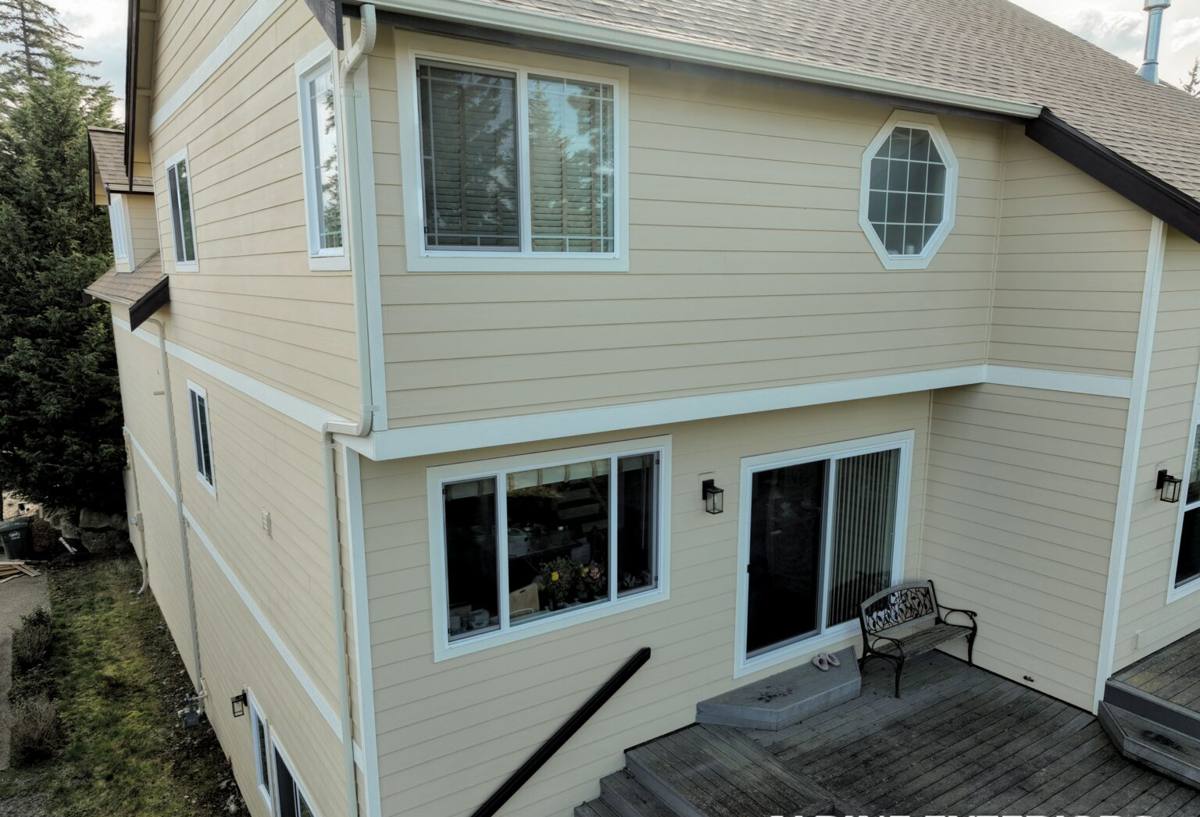
Whatcom County's marine climate is tough on exterior building materials in general — the salt-laced air moving in off Bellingham Bay accelerates corrosion on exposed metal, driving winter rain finds every gap in a poorly built structure, and moss season runs from fall through spring most years. Sudden Valley adds its own layer on top of that. Many lots sit under heavy conifer canopy near Lake Whatcom, which means shade most of the day even in summer. Shade keeps a deck surface damp long after the rain has stopped, and needle drop and leaf litter collect in board gaps and against the house, holding moisture right where you don't want it.
That combination — regional rain and humidity plus local shade and organic debris — is exactly the environment that wears out a traditional wood deck fastest. It's also why the details of a composite decking installation matter more here than they would on an open, sun-exposed lot on the other side of the county.
Why Composite Holds Up Where Wood Struggles
Capped composite decking doesn't absorb water the way solid wood does. It won't cup, crown, or split from repeated wet-dry cycling, and it doesn't give rot a foothold the way even pressure-treated wood eventually will once the surface coating wears through. For a shaded, moisture-heavy lot, that's the main reason composite makes sense: it removes the yearly maintenance cycle of sanding, staining, and sealing that wood decking demands to keep water out.
We'll be straight with you about the trade-off, because it's a real one: composite isn't maintenance-free, just maintenance-different. The board itself won't rot, but moss, algae, and pollen can still grow on the surface in a shaded, damp spot — same as they would on a sidewalk or a roof. Keeping a composite deck looking good in this climate is about periodic cleaning, not annual sealing, and that's a much smaller job.
What a Correct Composite Deck Installation Involves
Framing and Substructure
Composite boards are heavier and flex differently than solid wood, so joist spacing has to match the manufacturer's specification for the board profile and layout pattern — diagonal or picture-frame patterns often require tighter spacing than a standard straight-lay deck. The framing underneath still needs to be pressure-treated or otherwise protected lumber, because composite decking on top of a rotting substructure just hides the problem instead of solving it.
Moisture Management at the Ledger
Where a deck attaches to the house is the single most common failure point we see in this region, composite or not. Driving rain gets pushed sideways by wind and can work its way behind a ledger board that isn't properly flashed. On wooded lots with limited roof overhang shading the wall, that ledger connection stays wet longer between storms. Proper flashing, a drainage gap, and correct fastener placement at that joint matter more than the decking material itself when it comes to preventing hidden water damage.
Fastening and Board Layout
Hidden fastener clip systems give a cleaner look and avoid the screw-hole water traps that face-screwed boards can develop over time. Composite also expands and contracts with temperature more than wood, so board gapping has to account for that — too tight and boards buckle in warm weather, too loose and the deck looks sloppy and traps more debris.
Choosing the Right Board for a Shaded, Moss-Prone Lot
Not all composite is built the same, and the differences matter more on a lot like this than on a dry, sunny one. Capped composite — where a protective polymer shell is bonded around a wood-composite core — is what we recommend for Sudden Valley conditions specifically because the cap resists moisture absorption at the board's most vulnerable point: the cut ends and exposed surface. Uncapped or older-generation composite can still wick moisture at cut edges, which is a problem in a climate that rarely gives wood-based products a long dry stretch.
| Material | Moisture & Rot Resistance | Maintenance Needed | Typical Lifespan |
|---|---|---|---|
| Pressure-treated wood | Moderate — coating wears over time | Annual cleaning, periodic stain/seal | 10–15 years before major repair |
| Uncapped composite | Good on faces, weaker at cut edges | Low — occasional wash | 15–20 years |
| Capped composite | Very good, including cut ends when properly sealed | Low — periodic wash, no staining | 20–25+ years |
| PVC / cellular decking | Excellent, no wood content to absorb moisture | Low — occasional wash | 25+ years |
PVC is worth mentioning because it's an option for the shadiest, wettest spots on a property, but it comes at a higher cost and a different look and feel underfoot than a wood-composite blend. For most Sudden Valley decks, a quality capped composite is the right balance of durability and budget.
Our Process on a Sudden Valley Project
- Site walk and assessment — we look at sun exposure, tree cover, drainage, and the condition of any existing structure before recommending anything.
- Structural check — ledger connection, footings, and framing get inspected, since composite decking is only as good as what it's fastened to.
- Planning and approvals — many Sudden Valley properties fall under an HOA or architectural review process, and we build that step into the timeline rather than treating it as an afterthought.
- Tear-off and framing repair — old decking comes out, and any soft or rotted framing gets replaced before a single new board goes down.
- Installation — hidden fasteners, correct board gapping, and proper edge treatment at every cut end.
- Cleanup and walkthrough — site cleared, and we go over care and cleaning specific to a shaded lot before we leave.
Keeping a Composite Deck Clean Through Moss Season
A shaded, wooded lot means a composite deck still needs some seasonal attention — just far less than wood ever did. Here's what actually matters:
- Sweep needle litter and leaves off the deck regularly rather than letting them sit through a wet stretch
- Rinse or wash the surface a few times a year to keep pollen film and early moss growth from taking hold
- Keep gutters and downspouts near the deck clear so runoff isn't dumping extra water onto the surface
- Check that gaps between boards stay clear of packed debris, which holds moisture against the board
- Trim back overhanging branches where practical to get a bit more light and airflow onto the deck
- Inspect the ledger flashing and any fasteners once a year for early signs of movement or wear
Why a Crew That Already Works Sudden Valley Matters
A lot of what separates a deck that lasts twenty-five years from one that needs rework in five comes down to details a crew only learns by working the area repeatedly — how shaded a given lot really gets through the seasons, how HOA or architectural review steps typically run, how long wooded driveways and lot access affect material staging and delivery. None of that is complicated, but it's the kind of local familiarity that shows up in fewer surprises during the job and a deck that's actually built for the conditions it's sitting in, not a generic spec sheet.
Being a local Fairhaven-based crew also means accountability doesn't end when the truck leaves. If something needs a look after a hard winter storm, we're not a phone number in another state.
What Composite Decking Costs in This Area
Every deck is different, but the factors that move the price up or down are consistent. We'd rather walk you through these honestly than throw out a number that doesn't hold up once we see the actual site.
| Cost Factor | How It Affects the Project |
|---|---|
| Deck size and shape | Larger decks and complex shapes (angles, multiple levels) use more material and labor |
| Board layout pattern | Diagonal or picture-frame layouts need tighter framing and more cutting |
| Existing framing condition | Rotted or undersized substructure adds repair or replacement cost before decking goes on |
| Railing type | Composite, metal cable, or glass railing systems vary widely in cost |
| Ledger and flashing work | Older homes often need this brought up to current standards, which is worth doing right |
| Access and site conditions | Wooded, sloped, or hard-to-reach lots can affect staging and labor time |
As a broad range, composite decking installation in this region typically runs somewhere in the mid-to-high double digits per square foot installed, with the specifics landing higher or lower depending on the factors above. The only way to get a number you can actually plan around is to have someone look at your lot in person.
If you're weighing composite decking for a Sudden Valley property, we're glad to come take a look and walk you through what your specific lot needs — no pressure, no obligation. Use the form below to request a free estimate.