 Fairhaven Siding
 Why Siding Takes a Beating in Sudden Valley
Homes around Sudden Valley sit in one of the more demanding microclimates in Whatcom County. The community's tree cover and proximity to Lake Whatcom keep humidity high and sun exposure low on large sections of most lots, while the broader marine air pattern that moves through the region brings long stretches of driving rain and damp, overcast weather for much of the year. Add in the salt-tinged air that reaches inland from the Sound during storms, and you've got a combination that few siding products handle well over the long haul.
None of this is unique to any one house — it's the baseline condition every exterior surface in this part of Whatcom County has to deal with. The difference between a siding job that looks good for five years and one that still looks good in twenty comes down to two things: the material itself, and whether it was installed correctly for this specific environment.
Moisture That Never Fully Lets Up
Wood-framed homes in the Pacific Northwest are built to shed water, not resist it forever. When siding traps moisture against the wall assembly instead of shedding it, you get slow, hidden damage — swollen trim, soft sheathing, and paint that fails from the inside out. In a lake community with heavy shade and limited afternoon sun to dry things out, that trapped moisture has fewer chances to evaporate than it would on an open, south-facing lot elsewhere in the county.
Moss, Algae, and Constant Shade
Shaded, tree-lined lots are part of what makes Sudden Valley attractive, but they're also exactly the conditions moss and algae need to take hold on exterior surfaces. Once a siding material starts holding onto organic growth, it's usually a sign the surface is retaining moisture rather than shedding it — and that's a maintenance problem that only gets worse with each passing wet season.
Why We Only Install James Hardie in This Climate
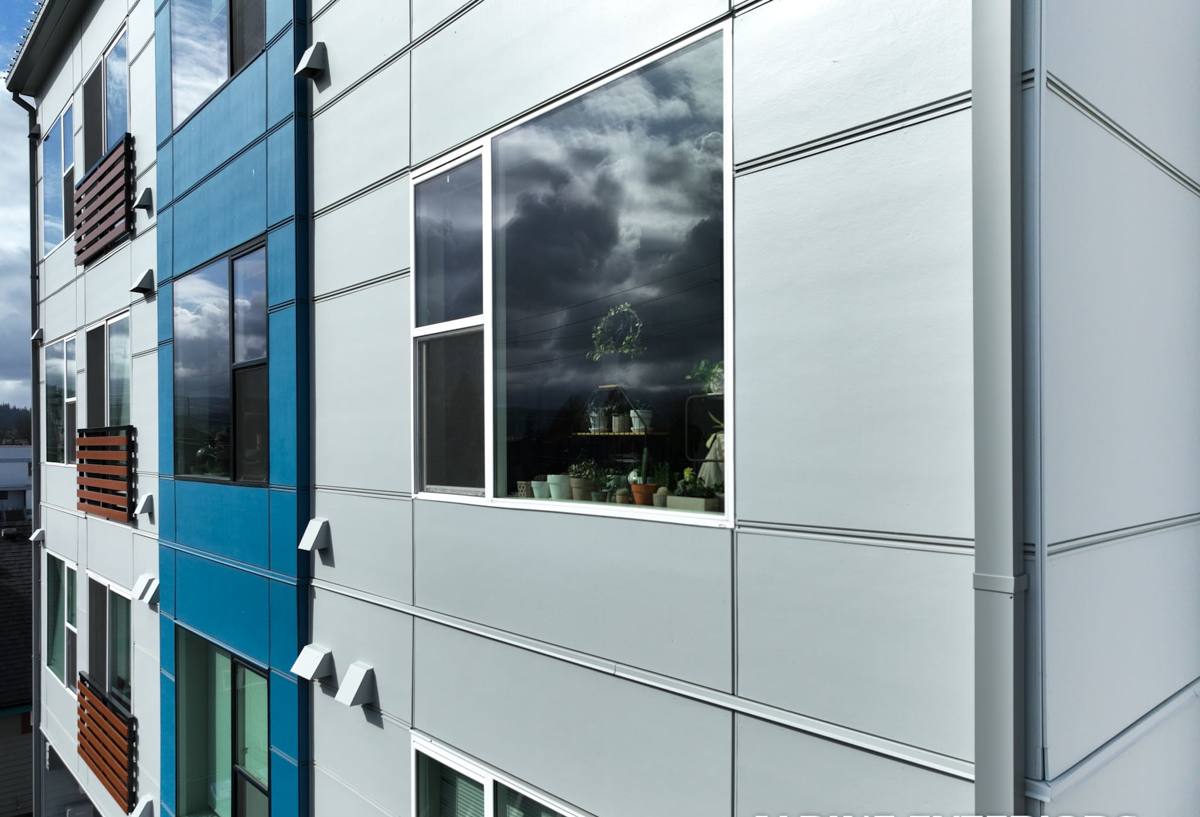
We install James Hardie fiber cement siding exclusively — not vinyl, not LP SmartSide, not cedar or primed spruce. That's not a marketing position; it's a decision based on what actually holds up under the conditions described above. Fiber cement is manufactured from cement, sand, and cellulose fiber, which means it doesn't absorb water the way wood-based products can, and it won't soften, delaminate, or feed fungal growth the way engineered wood siding is prone to in a consistently damp climate.
Fiber cement is also non-combustible, which matters given how many Sudden Valley properties border trees and dry brush during the summer months — wildfire exposure is a real consideration for wooded communities throughout Whatcom County, even in a generally wet climate.
ColorPlus Technology
James Hardie's ColorPlus finish is baked on in a factory-controlled process rather than sprayed or brushed on site. That matters here specifically because field-applied paint is far more likely to fail early when it's cured in cool, damp conditions — which describes most of the installation season in this region. A factory finish gives you a more consistent, longer-lasting color that isn't dependent on the weather the week your siding went up.
Engineered for This Climate Zone
James Hardie designs its HardieZone system around regional climate data, and the Pacific Northwest falls under the HZ5 product engineering, which accounts for higher moisture exposure and temperature swings. That's a meaningfully different product than what gets installed in a dry, hot climate — the substrate and moisture-management specifications are built for exactly the weather Sudden Valley homes actually experience.
What a Correct Installation Actually Involves
Fiber cement siding is only as good as the installation behind it. Hardie's own warranty terms hinge on installation following their published specifications, and in a high-moisture environment, the details that get skipped on a rushed job are the same details that cause callbacks two or three winters later.
Clearance and Drainage
Correct installation keeps siding held off the foundation, roofline, and any horizontal trim by the manufacturer's specified gap, so water has somewhere to go instead of wicking up into the board's cut edge. On shaded, slow-to-dry lots, skipping this clearance is one of the most common causes of early rot at the bottom course.
Flashing, Caulking, and Fastening
Every window, door, and penetration needs proper flashing integrated with a weather-resistant barrier behind the siding — not just caulk covering a gap. Fasteners need to be driven to the correct depth and spacing; overdriven nails crack the board's edge and create a moisture entry point that won't show up until the damage is already underway. None of this is visible once the job is finished, which is exactly why it has to be done right the first time.
Ventilation Behind the Cladding
A rainscreen gap or properly vented assembly lets any moisture that does get behind the siding dry out instead of sitting against the wall sheathing. In a community with as much shade and humidity as Sudden Valley, this detail does more long-term work than almost any other part of the installation.
Signs Your Current Siding Is Already Losing the Fight
Whatcom County's wet seasons make it hard to catch siding problems early just by looking at the surface. A few warning signs are worth checking for before they turn into structural repairs:
- Dark streaking or green-black growth that keeps returning within weeks of cleaning
- Paint that's bubbling, peeling, or chalking heavily, especially on north-facing or shaded walls
- Soft or spongy spots when you press on the siding near the bottom courses or around windows
- Visible gaps, warping, or boards that no longer sit flat against the wall
- A musty smell near exterior walls inside the home, which can indicate trapped moisture
- Caulk that has cracked, shrunk, or pulled away from trim and window edges
Any one of these on its own isn't necessarily an emergency, but a home showing several of them usually has a moisture problem that's been building for a while.
How Our Process Works for Sudden Valley Homes
Site Assessment
We start by walking the property and looking specifically at the things that matter most on lake-adjacent, tree-covered lots: shade patterns, existing moisture damage, roofline drainage, and how water currently moves off the house. Every lot around Sudden Valley handles sun and rain a little differently depending on tree cover and orientation, and that shapes some of our recommendations on ventilation and detailing.
Product and Color Selection
We walk homeowners through James Hardie's plank, panel, and shingle lines along with the ColorPlus palette, and talk through which profile fits the home's style and which colors hold up best against the moss and mildew growth common in this environment. Darker, saturated colors can show water spotting differently than lighter tones, and that's worth discussing before you commit to a color.
Installation and Cleanup
Our crews follow James Hardie's installation specifications on clearances, fastening, and flashing as a baseline, not an upsell — it's how every job goes in, because it's what keeps the manufacturer's warranty intact and keeps the siding performing the way it's supposed to. We keep job sites contained and clean up thoroughly at the end of each day, which matters more on wooded lots where debris and dust don't just disappear on their own.
Comparing Siding Materials for This Climate
| Factor | James Hardie Fiber Cement | Vinyl | Wood / LP SmartSide |
|---|---|---|---|
| Moisture resistance | Does not absorb water or rot | Won't rot, but seams and edges can trap moisture behind panels | Absorbs moisture; prone to swelling and rot if finish fails |
| Moss and algae resistance | Factory finish resists staining; surface doesn't feed organic growth | Can stain and discolor; growth harder to fully remove from textured panels | Wood fiber content can support fungal and moss growth once moisture gets in |
| Fire performance | Non-combustible | Combustible; can melt or deform near heat sources | Combustible |
| Finish durability | Factory-baked ColorPlus finish, long field life | Color molded through material but can fade over time | Field-applied paint or stain; more frequent recoating needed |
| Typical maintenance | Periodic washing; repainting only after many years, if ever | Low upkeep but limited repair options if cracked or faded | Regular recoating and moisture monitoring required |
What Ownership Actually Looks Like Afterward
One of the appeals of fiber cement in a climate like this is how little it asks of you once it's installed correctly. An occasional rinse to knock down surface dirt and organic buildup is usually enough — there's no annual recoating cycle to keep up with the way there is with wood-based products. That said, no siding is entirely maintenance-free in a climate this wet. Keeping gutters clear, trimming back vegetation that shades and dampens wall sections, and doing a yearly visual check around windows and the bottom courses will catch small issues before they become expensive ones.
James Hardie backs its products with a strong, transferable limited warranty, which matters for resale in a community where buyers increasingly ask what the exterior is made of and how old it is. A well-documented, correctly installed Hardie exterior is something you can point to directly in that conversation.
Why Hiring a Crew That Already Works in Sudden Valley Matters
Planned communities like Sudden Valley often carry architectural guidelines or HOA review requirements for exterior changes, so it's worth checking with your association before finalizing color or profile choices — we're glad to work within whatever approval process applies to your property. Beyond paperwork, a crew that has already worked lake-adjacent, tree-covered lots in this part of Whatcom County understands the access challenges, drainage quirks, and shade patterns that are common here, rather than treating every job as a first encounter with this kind of site.
We serve Sudden Valley alongside the rest of our Fairhaven and greater Whatcom County service area, and we install James Hardie only — no vinyl, no LP SmartSide, no exceptions. That focus means every crew member on your job has done this specific installation many times over, not occasionally between other products.
If your siding is showing wear, or you're planning ahead for a replacement, we're happy to walk your property and give you a straightforward, no-pressure estimate. There's no obligation — just an honest look at what your home needs.