 Fairhaven Siding
 Siding Built for What Chuckanut's Climate Actually Does to a House
Chuckanut sits where forested bluffs meet the water just south of Fairhaven — a setting that's beautiful to live in and hard on exterior siding. Homes here take on a combination most siding products aren't built to handle at once: salt-laden air moving in off the water, wind-driven rain that hits siding sideways instead of straight down, and heavy tree cover that keeps north- and west-facing walls shaded and damp for weeks at a stretch. That combination is why we treat siding replacement in Chuckanut as its own job, not a copy-paste of what we'd do somewhere drier or more open.
This page covers what Chuckanut homes specifically need from a siding replacement, what a correctly done job involves, and how our process works for this part of Whatcom County.
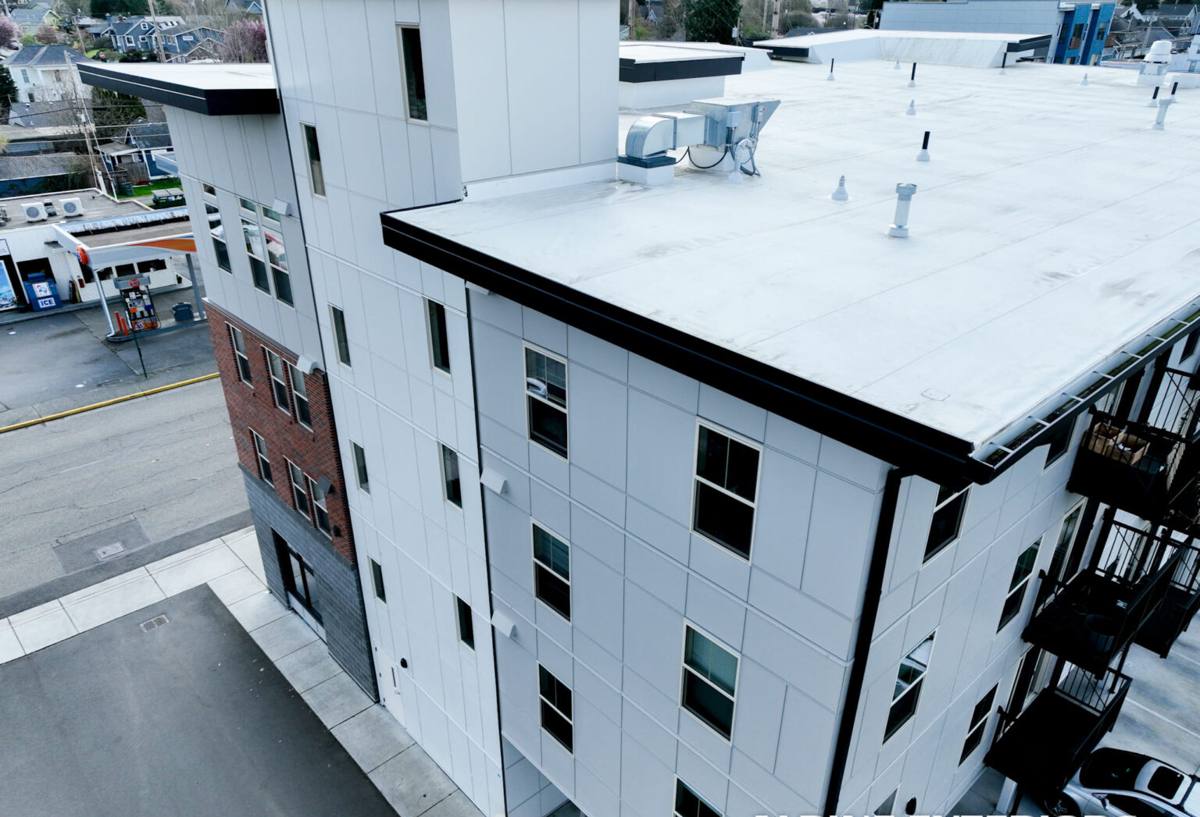
What Chuckanut Homes Are Up Against
Salt Air and Wind-Driven Rain
Proximity to salt water changes how fast exterior materials degrade. Salt air accelerates corrosion on fasteners and trim, and it speeds up the breakdown of paint films and coatings that aren't formulated to resist it. Add wind-driven rain — common on this stretch of Whatcom County shoreline — and water gets pushed up under laps and around trim in ways gentle, straight-down rain never would. Siding that relies on paint alone for its weather resistance, or that has loose seams and butt joints, is the first to show it: cracking, peeling, and soft spots at the bottom courses and around windows.
Deep Shade and a Long Moss Season
Chuckanut's tree cover is part of what makes the area desirable, but it also means many homes get long stretches of shade on at least one elevation. Shaded, damp wall surfaces are exactly where moss, algae, and mildew take hold, and once established they hold moisture against the siding surface even longer. Whatcom County's wet season runs long by regional standards, and on a shaded lot that translates into siding that rarely gets a real chance to fully dry out between rain events.
Signs a Chuckanut Home Needs Siding Replacement, Not Just Repair
Not every siding problem calls for a full replacement. But in this climate, a few specific signs usually mean the underlying material or the water management behind it has failed, and patching won't fix it:
- Soft, spongy siding when pressed, especially near the bottom edge or below windows
- Persistent moss or dark streaking that comes back within weeks of cleaning
- Paint that's bubbling or peeling in sheets rather than just chalking or fading
- Visible gaps, warping, or buckling at seams and butt joints
- Rot or soft framing discovered when trim or corner boards are removed
- Siding that's original to a home more than 20-25 years old, where the moisture barrier behind it has never been inspected
If you're seeing more than one of these, especially on a shaded or water-facing elevation, it's worth having someone look at what's happening behind the siding, not just the surface.
Why We Install Only James Hardie Fiber Cement in Chuckanut
We install James Hardie fiber cement siding exclusively — we don't install vinyl, LP SmartSide, Cemplank, Allura, primed spruce, or cedar. That's a deliberate standard, not a limitation of what we're capable of installing. In a climate like Chuckanut's, the differences between siding materials that show up in year one are minor; the differences that show up by year ten are not.
Vinyl siding is affordable and low-maintenance in mild, dry climates, but it can soften and warp under sustained heat reflection and become brittle in cold snaps, and its seams are a weak point for wind-driven rain to exploit over time. Wood-based products, including cedar and primed spruce, look good going up but require an ongoing paint and caulk maintenance schedule to keep water out — exactly the kind of upkeep that's easy to fall behind on with a shaded, hard-to-reach elevation. Engineered wood products like LP SmartSide use a wood-strand substrate that, if the factory coating is ever breached, is vulnerable to the kind of sustained moisture exposure this area produces every winter.
James Hardie fiber cement is cement, sand, and cellulose fiber — it doesn't rot, it isn't a food source for mold or moss the way wood-based products can be, and it's non-combustible. Hardie's ColorPlus factory finish is baked on and warrantied against fading and peeling, which matters on a house that's going to sit in salt air and shade rather than being repainted on a convenient schedule.
Material Comparison for This Climate
| Factor | James Hardie Fiber Cement | Vinyl | Wood / Engineered Wood |
|---|---|---|---|
| Moisture behavior over time | Doesn't rot or swell; engineered for wet climates | Won't rot, but seams can let water track behind it | Absorbs moisture if coating fails; can rot |
| Salt air / coastal exposure | Factory finish resists fading and chalking | Can become brittle and discolor over time | Paint and caulk degrade faster near salt air |
| Moss and algae resistance | Not a food source; washes off the surface | Moss sits on the surface, doesn't feed on it | Substrate can support mold and moss growth if damp |
| Maintenance burden | Occasional wash; no repainting for the life of the finish warranty | Low, but limited repair options if damaged | Regular repainting and caulking required |
| Fire resistance | Non-combustible | Melts and can contribute to fire spread | Combustible |
What a Correct Siding Replacement Involves
Tearing Off and Inspecting the Sheathing
Old siding comes off completely so we can see the wall sheathing and framing underneath. This is where we find out whether previous water intrusion has caused hidden rot, especially around window and door openings and at the base of walls — problems that get sealed in, not solved, if they're covered rather than repaired.
Installing a Proper Weather-Resistive Barrier
A correctly lapped, sealed weather-resistive barrier goes behind the siding, with flashing integrated at every window, door, and penetration so water is directed out and down rather than trapped behind the wall. This layer matters more here than in a drier climate — it's the backup system for the volume of wind-driven rain a shoreline-adjacent home like this takes on.
Installing Hardie Siding to Manufacturer Spec
James Hardie's installation instructions specify fastener type and placement, minimum clearances from grade, decks, and roof lines, and gapping at joints and trim — all details that affect how the product performs long-term. Installed off-spec, even the best material won't deliver the performance it's engineered for. We follow Hardie's published installation requirements as a baseline, not a suggestion.
Our Process for Chuckanut Projects
- Walkthrough and assessment — we look at every elevation, note shade patterns, drainage, and any visible signs of past water intrusion.
- Written estimate — a clear scope covering tear-off, sheathing repair contingencies, weather barrier, flashing, and the specific Hardie product and profile recommended for the home.
- Tear-off and inspection — old material removed, sheathing checked and repaired as needed before anything new goes up.
- Weather barrier and flashing — installed and inspected before siding starts, since this step is invisible once the job is done.
- Hardie siding installation — installed to manufacturer specification, with extra attention to the elevations that take the most wind-driven rain and shade.
- Final walkthrough — we go over the finished work with you before calling the job complete.
Cost Factors for Chuckanut Siding Replacement
Every home is different, and we won't quote a number without seeing the house, but the factors that typically move the price on a Chuckanut project are:
- How much of the existing sheathing needs repair once old siding comes off
- Home size, elevation complexity, and roofline detail
- Hardie product line and profile selected — lap siding, shingle-style panels, or trim and accent work
- Access — steep or heavily wooded lots can add setup and staging time
- Whether trim, fascia, or window flashing needs replacement alongside the siding
We'll walk through these specifics for your home during the estimate rather than guessing at a number up front.
Living With Hardie Siding After Installation
Fiber cement doesn't eliminate maintenance entirely, but it changes what that maintenance looks like. Because Hardie siding isn't a food source for moss and algae, seasonal growth on shaded elevations typically sits on the surface rather than working into the material, and a routine wash with a garden hose and soft brush is usually enough to keep it looking clean through Chuckanut's long wet season. The ColorPlus factory finish carries its own finish warranty separate from the product warranty, so you're not relying on a repaint schedule to keep water out. We still recommend an annual walk-around to check caulking at trim and window returns, since caulk is the one component in the whole system that wears out over time and needs periodic attention no matter what siding sits above it.
Why Hiring a Crew That Already Works in Chuckanut Matters
A crew that's replaced siding elsewhere in Whatcom County but hasn't worked this specific stretch of coastline and tree cover doesn't automatically know where water tends to collect on a Chuckanut lot, which elevations take the worst of the wind-driven rain off the water, or how much shade a given roofline creates through the wet season. That local pattern recognition shows up in small decisions — flashing details, product selection, where extra attention to drainage matters — that add up to a siding job that actually holds up here instead of one built for an easier climate.
If you're seeing early signs of trouble on your siding, or it's simply reaching the age where a look behind it makes sense, we're happy to come out, take a straightforward look, and give you a free, no-pressure estimate — no obligation, just an honest read on where your home stands.