 Fairhaven Siding
 Siding Installation in York: What the Climate Actually Does to a House
York is one of Bellingham's older established neighborhoods, sitting close enough to the water and to Fairhaven that homes here deal with the same coastal weather pattern that defines exterior work across Whatcom County: salt-laden air moving in off Bellingham Bay, long stretches of driving rain, and a moss season that can run from October through May in a wet year. None of that is unusual for this part of Washington. What matters is that siding installed without accounting for it fails in predictable, avoidable ways — and a lot of the siding problems we get called out to look at in York trace back to installation shortcuts, not bad luck.
Salt air is corrosive to exposed metal fasteners and trim flashing over time, especially on homes with a clear line to the water. Driving rain doesn't fall straight down here — wind off the bay pushes it sideways into wall assemblies, which means every seam, joint, and penetration is a potential entry point if it wasn't detailed correctly. And moss doesn't just grow on roofs. It colonizes horizontal siding laps, trim ledges, and anywhere moisture sits against a surface without a chance to dry, which in a York winter can be most of the exterior for weeks at a stretch.
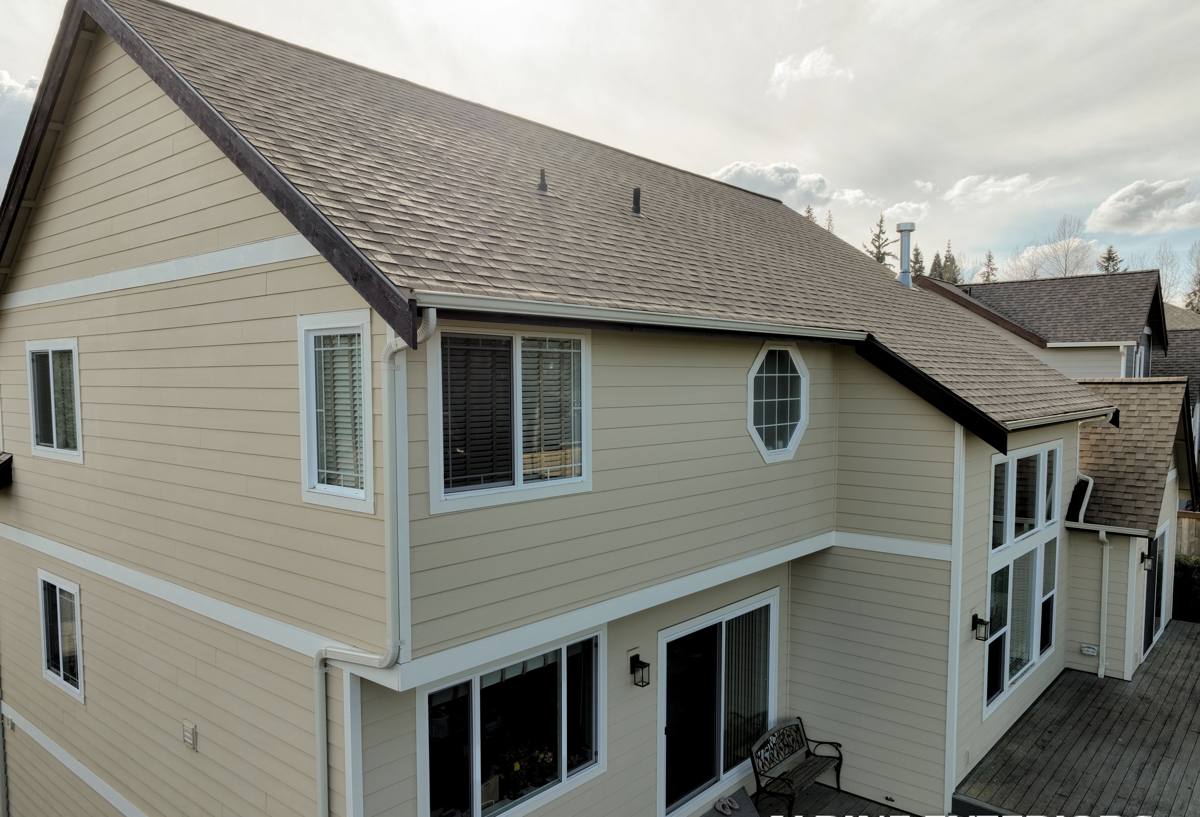
What Correct Siding Installation Actually Involves
Siding is a system, not a single layer. The visible boards get most of the attention, but the parts nobody sees after the job is done — the weather-resistive barrier, the flashing details, the fastening pattern, the clearances — are what actually determine whether a house stays dry for the next thirty years or starts showing rot in year eight.
The layers that matter
- A continuous, properly lapped weather-resistive barrier behind the siding, with all seams taped and every penetration (vents, hose bibs, light fixtures) flashed before the siding goes on
- Window and door flashing installed in the correct shingle-lap order so water sheds outward at every layer, never inward
- Rain screen gap or drainage plane where the assembly calls for it, so incidental moisture behind the siding has somewhere to go
- Fasteners set to the manufacturer's exact spacing and depth — overdriven or underdriven nails are one of the most common causes of early siding failure
- Minimum clearance from grade, decks, patios, and roof lines so splash-back and standing water don't sit against the bottom course
- Caulking and sealant used only where the manufacturer specifies it — not as a substitute for correct flashing
Skip or rush any one of these and the siding can look fine for a year or two while moisture is already working its way into the wall assembly behind it. That's the trap with a bad install: the failure is invisible until it isn't.
Why We Only Install James Hardie Fiber Cement
We install James Hardie siding exclusively, and York's climate is a big part of why. Fiber cement doesn't absorb and swell with moisture the way wood-based products can, it's non-combustible, and Hardie's ColorPlus factory finish is baked on rather than field-applied, which matters in a climate where paint and stain are constantly fighting salt air and prolonged damp. Hardie also engineers specific product lines, their HZ5 line for example, for regions with this kind of moisture exposure, which is a meaningfully different starting point than a general-purpose siding product.
We're not going to pretend fiber cement is maintenance-free or that installation quality stops mattering once you've picked a good product — it doesn't. But starting with a material engineered for coastal Pacific Northwest conditions, installed correctly, removes a whole category of problems before they start.
Our Installation Process in York
1. On-site assessment
We look at the existing wall assembly, wind exposure, roof lines, grade clearance, and any trouble spots — north-facing walls that stay damp longer, areas with heavy moss history, sections close to grade or landscaping.
2. Tear-off and substrate check
Old siding comes off and we check the sheathing underneath for rot or soft spots before anything new goes up. Covering damaged sheathing with new siding just hides a problem that gets more expensive to fix later.
3. Weather barrier and flashing
This is the step that determines long-term performance more than any other. Barrier, flashing, and drainage details go in before a single piece of visible siding is installed.
4. Hardie installation to spec
Panels, fasteners, and joints installed to James Hardie's published installation instructions and local code requirements — not generalized "close enough" spacing.
5. Trim, caulking, and final detail
Trim work and sealant applied only where specified, paying particular attention to any spot where two materials meet, since that's where most future leaks originate.
6. Walkthrough
We walk the finished job with the homeowner and point out anything worth keeping an eye on going forward.
Installation Mistakes We See on Older York Homes
A lot of our work in this neighborhood involves replacing siding that's failing not because of its age alone, but because of how it was originally put on. Common patterns:
- Missing or reversed flashing sequence around windows, letting water track behind the trim
- No rain screen gap on a wall assembly that needed one, trapping moisture against the sheathing
- Fasteners driven flush or countersunk into the face of the board instead of set per spec, cracking the material or breaking its water seal
- Siding installed tight to grade or a deck surface with no clearance, keeping the bottom course perpetually damp
- Caulk used to bridge gaps that should have been flashed, which fails long before the siding does
None of these show up in a drive-by look at a house. They show up five, ten, or fifteen years later as soft trim, staining, or rot — usually around windows and at the bottom few feet of wall.
What Drives Siding Installation Cost
| Factor | Why It Matters |
|---|---|
| Tear-off and substrate condition | Rotted or damaged sheathing found during tear-off adds repair work before new siding can go on |
| Wall complexity | Dormers, bump-outs, multiple gables, and cut-up wall lines take more labor and material than a simple rectangular elevation |
| Siding profile and trim detail | Lap width, panel style, and trim scope (corner boards, window casing, frieze detail) all affect material and labor cost |
| Wind and moisture exposure | Walls with heavier exposure to driving rain off the bay may call for additional drainage detailing |
| Access | Multi-story sections, tight side yards, or landscaping close to the house can slow the work |
Signs a York Home May Need New Siding
- Persistent moss or algae staining that returns soon after cleaning
- Soft spots, bubbling, or visible cracking in the siding surface
- Paint that's peeling or failing faster than it should on an exterior wall
- Warping, gaps, or boards pulling away from the wall
- Musty smell or visible staining on interior walls that share an exterior wall
- Rot or discoloration around window and door trim
Why Hiring a Crew That Already Works in York Matters
Fairhaven and the surrounding Bellingham neighborhoods share a climate pattern, but they don't share identical exposure — a wall that catches wind straight off the bay behaves differently than one tucked behind a hill or a stand of trees a few blocks inland. A crew that regularly works this area has already seen how that plays out on real homes: which walls tend to hold moisture, which details need extra attention in this specific microclimate, and what Whatcom County's permitting and code requirements actually look like in practice. That local pattern-recognition doesn't replace good installation practice, but it means fewer surprises and a job that's built for the conditions your specific home actually faces, not a generic weather assumption.
After Installation: Keeping Hardie Siding Performing
Correctly installed fiber cement siding is low-maintenance, not no-maintenance. A short seasonal routine goes a long way in this climate:
- Rinse the siding annually to clear salt residue and organic buildup before it gets a foothold
- Keep gutters clear so overflow doesn't run down the wall face
- Trim back plantings and landscaping so air can circulate against the wall and dry it out between rains
- Check caulking at trim joints periodically and have any cracked sealant replaced promptly
- Address moss on adjacent roof or deck surfaces before it spreads onto the siding itself
If you're planning new siding, a repair, or you just want an honest read on what condition your current siding is really in, we're happy to take a look. We offer free, no-pressure estimates for York homeowners — use the form below to get started.