 Fairhaven Siding
 Window Installation in Sehome: Built for a Specific Kind of Weather
Sehome sits up on the hill above Bellingham Bay, close enough to the water to catch salt-laden air off the Sound, high enough to hold onto cloud cover and shade longer than homes down near the flats. That combination — salt air, driving rain off the water, and a long moss season fed by tree cover and damp ground — is hard on window installations that weren't detailed for it. A window that's a perfectly fine product can still fail early if the flashing, sealant, and trim work around it weren't built for this climate. That's the part of the job most homeowners never see until something goes wrong.
We install windows across the greater Bellingham and Whatcom County area, and Sehome comes with its own quirks: older housing stock mixed with newer infill, mature tree canopy that keeps roofs and siding damp longer after a storm, and enough elevation change from block to block that wind-driven rain hits some walls harder than others. None of that is exotic, but it does mean a generic install — the kind that might hold up fine in a dry climate — isn't the standard we work to here.
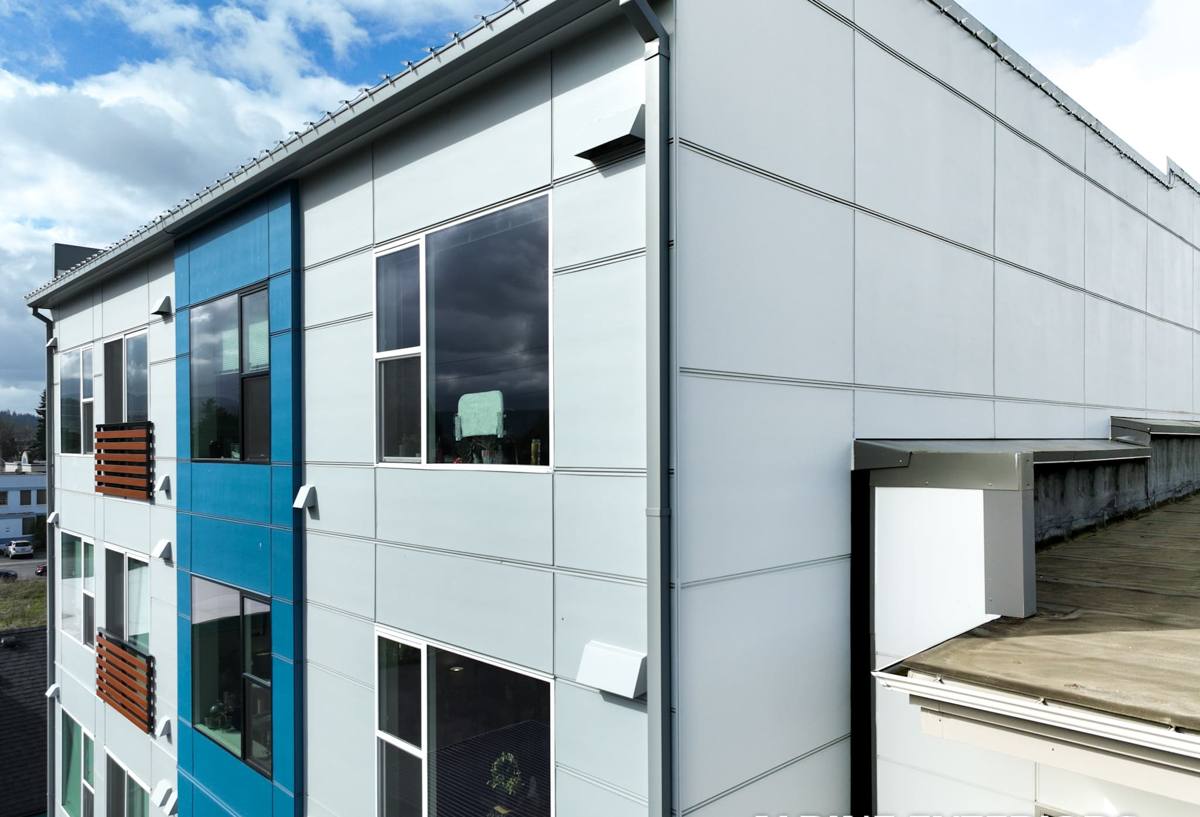
What Actually Wears Out a Window Installation Here
Salt Air and Metal Fatigue
Salt in the air accelerates corrosion on window hardware, screws, and any exposed metal flashing that isn't rated for coastal exposure. Cheap fasteners or bare steel flashing will show rust and pitting years before they would inland. It's a slow problem, which is exactly why it gets missed — nobody notices until a window won't latch cleanly or a flashing edge starts staining the siding below it.
Driving Rain and Wind-Driven Water
Storms off the Sound don't just fall straight down — wind pushes rain sideways into wall assemblies, especially on west- and southwest-facing exposures. If the window opening wasn't flashed correctly — house wrap lapped the wrong direction, no sill pan, sealant used as the primary water barrier instead of a backup — water finds its way behind the trim and into the wall cavity. You won't see it right away. You'll see it as soft trim, bubbling paint, or a musty smell a year or two later.
Moss, Shade, and Sustained Moisture
Sehome's tree cover is part of its character, but shaded walls and roofs stay wet longer after every rain. Moss doesn't just grow on roofs — it takes hold in window sills, on horizontal trim ledges, and in any spot where water sits instead of draining. Over time it holds moisture against wood trim and finish, which shortens the life of both.
What a Correct Window Installation Involves
A window installation is really a small, precise waterproofing project with a window in the middle of it. The window itself matters, but the work around the opening is what determines whether it stays weathertight for the next twenty-plus years.
- Proper opening prep — old caulk, rot, and failed flashing removed and the framing inspected before anything new goes in
- A sill pan or sloped sill flashing so any water that gets past the window drains back outside, not into the wall
- House wrap and flashing tape integrated in the correct shingle-lap order (bottom to top) so water always sheds outward
- Backer rod and quality sealant used as a secondary seal, not the only line of defense
- Corrosion-resistant fasteners and flashing appropriate for a marine-influenced climate
- Level, plumb, square installation with proper shimming so the window operates smoothly and the seal isn't stressed at one corner
- Interior and exterior trim reinstalled or replaced so the whole opening looks finished, not patched
Skip any one of these and the window can still look fine on install day. The problems show up later, and by then they're a repair instead of a five-minute inspection item.
Signs a Sehome Home's Windows Need Attention
Most homeowners call us for one of two reasons: comfort (drafts, condensation, rooms that never quite feel right) or something visible (rot, staining, a window that's hard to open). Here's what to watch for before either turns into a bigger repair.
| What You're Seeing | Likely Cause | Urgency |
|---|---|---|
| Condensation between glass panes | Failed seal in the insulated glass unit | Moderate — glass unit or window replacement needed |
| Soft or discolored trim/sill | Water intrusion behind flashing or sealant failure | High — investigate before it reaches framing |
| Drafts even with windows closed | Worn weatherstripping or a settling/shifted frame | Low to moderate |
| Window sticks or won't latch | Frame racking, swollen wood, or corroded hardware | Moderate |
| Moss or dark streaking on sills | Poor drainage, shade, and sustained moisture | Low, but treat as an early warning sign |
| Peeling paint near the window edge | Moisture escaping through the wall assembly | High — often a sign of a leak already in progress |
Our Window Installation Process
- On-site assessment. We look at each opening individually — exposure direction, existing flashing condition, framing health, and how the window ties into your siding.
- Honest scope and pricing. You get a clear plan for what each opening needs, not a one-size quote. Some openings are straightforward; others need more prep work if there's hidden rot or old flashing failures.
- Removal and inspection. Old windows come out carefully so we can actually see the framing underneath before anything new goes back in. This is where hidden problems get caught instead of sealed over.
- Flashing and water management first. Sill pan, house wrap integration, and flashing tape go in before the window does — this is the step that determines long-term performance far more than the window brand.
- Window installation. Set level, plumb, and square, properly shimmed and fastened, with insulation around the frame to close air gaps.
- Exterior sealing and trim. Sealant as a secondary barrier, trim reinstalled cleanly, and everything checked against the surrounding siding so the whole wall reads as one finished surface.
- Final walkthrough. We test operation, check the seal, and walk you through anything you should keep an eye on.
Choosing a Window for This Climate
There's no single "best" window — it depends on your home's exposure, budget, and how much maintenance you want to take on. What we focus on with Sehome homeowners is frame material and glass package, since those two decisions matter most in a wet, salt-influenced climate.
| Frame Material | How It Handles This Climate | Trade-offs |
|---|---|---|
| Vinyl | Won't rot or corrode; handles moisture and salt air well | Limited color/finish options; can expand/contract with temperature swings |
| Fiberglass | Very stable, resists moisture and corrosion, holds paint well | Higher upfront cost than vinyl |
| Wood (clad exterior) | Classic look, good insulator; exterior cladding protects the wood from weather | Highest maintenance if cladding is ever breached; more sensitive to installation quality |
| Aluminum | Strong and slim-profile, but conducts cold and is prone to condensation | Least suited to this climate unless thermally broken |
For most Sehome homes, we steer people toward vinyl or fiberglass for the exterior-facing performance, with glass packages that include a low-E coating and argon or krypton gas fill for comfort and condensation control. We'll walk you through the actual options and honest trade-offs for your home rather than pushing one answer for every house.
Windows and Siding Have to Work as One System
A window installation that ignores the siding around it is asking for trouble. The flashing at a window opening has to integrate with your house wrap and siding drainage plane — if those two trades aren't coordinated, water can bypass a perfectly good window through the wall around it. This is one advantage of hiring a company that does both siding and window work: there's no gap in responsibility between "that's the siding guy's problem" and "that's the window guy's problem." One crew, one water-management plan, for the whole wall.
What Drives Window Installation Cost
Every home is different, so we don't quote sight unseen, but these are the factors that actually move the number:
| Factor | Why It Matters |
|---|---|
| Number and size of openings | More or larger windows means more material and labor |
| Frame material and glass package | Fiberglass and upgraded glass cost more than basic vinyl |
| Condition of existing framing | Hidden rot or old flashing failures add prep work |
| Full-frame vs. pocket replacement | Full-frame replaces flashing and trim too; pocket reuses the existing frame and is faster but only appropriate when that frame is sound |
| Access and exposure | Second-story or hard-to-reach openings take more time and equipment |
| Trim and finish work | Matching existing trim profiles or repainting adds scope |
We'd rather walk your home and give you real numbers than throw out a broad range that doesn't mean much once we see the actual openings.
Why Hiring Local Experience for Sehome Matters
Window installation done right in Bellingham isn't the same job as window installation done right somewhere dry and inland. A crew that regularly works this part of Whatcom County already knows which exposures take the worst wind-driven rain, how shaded lots hold moisture longer, and which flashing details actually hold up against salt air year after year. That's not something you can fully substitute with a generic install checklist — it comes from doing the work here, on homes with the same climate exposure as yours, and seeing what holds up and what doesn't.
It also means we're not guessing at permitting expectations or how your home's age and construction style typically show up on the hill. Older Sehome homes often have different framing and trim details than newer infill nearby, and a crew unfamiliar with that mix can miss things a local eye catches immediately.
After Installation: Keeping Windows Performing
A correct installation should need very little from you, but a few habits extend the life of the work:
- Clear moss and debris from sills and tracks, especially on shaded sides of the house
- Check exterior caulk lines once a year and have any cracked sealant addressed before winter rains
- Keep gutters clear so overflow isn't running down the wall past your windows
- Operate windows periodically, even ones you don't use often, so hardware doesn't seize
- Watch for condensation between panes — it means a seal has failed, not that anything is wrong with your home
- Trim back vegetation that keeps a wall or window shaded and damp longer than the rest of the house
If you're weighing window replacement for a Sehome home, we're happy to take a look and give you a straightforward read on what your openings actually need — no pressure, no inflated scope. Use the form below to request a free estimate.