 Fairhaven Siding
 Why Columbia Roofs Take a Different Kind of Beating
Columbia sits close enough to Bellingham Bay that its roofs deal with a combination most inland neighborhoods never see: salt-laden air, wind-driven rain that comes in sideways off the water, and a moss season that can run nine months out of the year in a wet stretch. None of these three things is dramatic on its own. Together, over years, they wear a roof down faster than the shingle warranty label suggests. A storm doesn't usually create damage out of nothing — it finds the spot that was already weakened by salt corrosion on fasteners, moss holding moisture against the deck, or a flashing seam that's been flexing in the wind for a decade.
That's the frame we bring to every storm damage call in this neighborhood: the storm is often the trigger, not the whole story. A repair that only addresses the visible damage and ignores what let it happen tends to fail again in the next system that blows through.
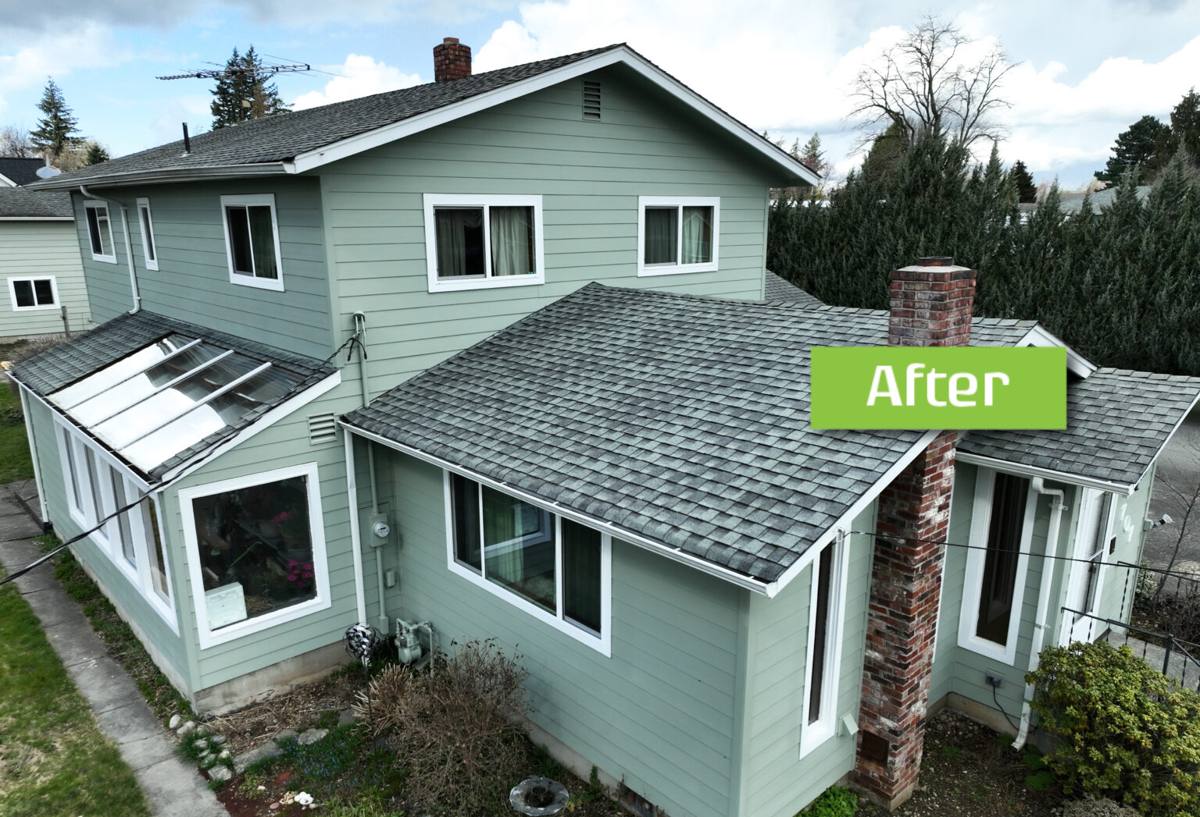
What Storm Damage Actually Looks Like on a Columbia Roof
After a wind event or a hard rain, most homeowners look for the obvious stuff — a missing shingle, a visible hole, water coming through the ceiling. Real storm damage is often quieter than that.
Wind Damage
Whatcom County's storm winds tend to come in gusts off the water rather than steady blows. That gusting motion is what lifts shingle tabs, breaks seals, and works fasteners loose without necessarily tearing anything off. A roof can look intact from the ground and still have a dozen compromised seals that will leak with the next rain.
Water Intrusion Points
Driving rain finds the weak points — flashing around chimneys and vent pipes, valleys where two roof planes meet, and the transition where the roof meets a wall or dormer. In older Columbia homes, these details were often built to a lower standard than current code calls for, and decades of freeze-thaw and moisture cycling make them the first thing to fail in a storm.
Moss and Debris Damage
Moss doesn't just look bad. It holds water against the shingle surface, which accelerates granule loss and can lift shingle edges enough for wind to get underneath. A storm that wouldn't damage a clean roof can do real harm to one with moss buildup, because the moss has already compromised the shingle's grip and shed capacity.
Granule Loss and UV/Salt Wear
Salt air accelerates corrosion on exposed fasteners, flashing, and metal roof edges. Combined with granule loss from age and moss, this leaves shingles brittle and more likely to crack or tear in high wind rather than flex.
The Difference Between a Real Repair and a Quick Patch
Anyone with a ladder and a caulk gun can cover a hole. That's not the same as a repair that holds up through the next storm season. A correct storm repair addresses three things every time:
The Deck Underneath
If water got past the shingle layer, the plywood or OSB deck underneath may be soft, delaminated, or already growing mold. Patching over a compromised deck just hides the problem for a season or two. We check deck condition at every repair, not just where the visible damage is.
The Underlayment
The underlayment is the actual waterproofing layer — shingles are the first line of defense, but underlayment is what keeps a roof dry if a shingle fails. Storm repairs that skip replacing damaged underlayment are repairing the cosmetic layer while leaving the functional layer compromised.
Flashing and Transition Details
Most roof leaks trace back to flashing, not shingle failure. A repair that reshingles around a chimney or vent without addressing the flashing underneath is very likely to leak again — often in the exact same spot.
Our Storm Damage Repair Process
- Initial inspection. We walk the roof (not just look from the ground) and document damage, including things that aren't visible from the yard.
- Temporary protection if needed. If there's active leaking or exposed deck, we get it covered and weather-tight before doing anything else — that stops the damage from spreading while repair materials and scheduling are worked out.
- Detailed assessment. We identify not just what the storm broke, but what condition let it break — moss buildup, aging flashing, worn granules — so the repair plan matches the actual problem.
- Repair or replace decision. Based on the scope, age of the roof, and extent of damage, we give a straight answer on whether a targeted repair makes sense or whether it's time to talk replacement.
- The repair itself. Deck, underlayment, flashing, and shingle work done in that order — not just shingles swapped on top of whatever's underneath.
- Cleanup and walk-through. Debris and old material hauled off, and we show you what was done and why.
Repair vs. Replace: How We Make That Call
Not every storm-damaged roof needs to be replaced, and not every roof that looks fine after a storm is actually fine underneath. Here's the general framework we use, though every roof gets its own honest assessment.
| Factor | Leans toward repair | Leans toward replacement |
|---|---|---|
| Age of roofing | Under 10-12 years | Approaching or past expected lifespan |
| Extent of damage | Isolated to one area or slope | Spread across multiple slopes |
| Deck condition | Solid, no soft spots found | Soft decking, rot, or mold present |
| Moss/granule condition | Minor buildup, granules intact | Heavy moss history, significant granule loss |
| Prior repair history | First real issue on this roof | Repeated patch jobs on the same areas |
Insurance coverage can also factor into this decision — sometimes a full slope replacement is more cost-effective through a claim than a patchwork repair, even on a roof that could technically be repaired.
Working With Insurance After a Storm
Most homeowners' policies cover sudden storm damage — wind, impact, and the water intrusion that follows — but coverage details vary a lot by carrier and policy. A few things that make the claims process smoother:
Documentation Matters
We document damage with photos and a written assessment before any repair work starts. That record is what your adjuster needs to evaluate the claim, and it protects you if there's any question later about what the storm actually did versus pre-existing wear.
Timing
Most policies want damage reported and mitigated (tarped, protected from further intrusion) promptly. Waiting weeks to address a known leak can complicate a claim, since insurers distinguish between storm damage and damage that worsened from delayed action.
We Don't Inflate Damage to Pad a Claim
We tell you what the storm actually damaged. Adjusters see a lot of contractors who exaggerate scope to drive up claim size, and it tends to slow the process down or create friction with the insurer. An honest, well-documented assessment moves faster.
Materials We Use and Why
For storm repairs on Columbia homes, we typically work with architectural asphalt shingles rated for higher wind exposure than standard three-tab, along with metal flashing systems sized for the moisture load this area sees. We steer away from lower-grade shingle lines in this microclimate — not because they're defective, but because the combination of salt air, moss, and driving rain here punishes cheaper granule mixes and thinner mat construction faster than it would in a drier inland location. That's a maintenance and longevity trade-off we'd rather flag up front than let a homeowner find out the hard way in year six.
For homes with a history of moss issues, we'll often discuss zinc or copper strip options at the ridge as a long-term moss deterrent — a small addition during a repair that can reduce how often moss becomes a problem again.
Choosing a Roofer Who Actually Works in Columbia
A roofer who mostly works dry-climate jobs, or who's never dealt with Whatcom County's specific mix of salt air and moss pressure, can still do competent work — but they're more likely to miss the details that matter here. Things like knowing which flashing details tend to fail first in this wind pattern, or recognizing moss damage that isn't obvious yet, come from repeated experience with roofs like the ones in this neighborhood.
What to Ask Before Hiring
- Do they inspect the deck and underlayment, or just the shingle layer?
- Will they document damage in writing/photos for an insurance claim?
- Do they carry current liability insurance and workers' comp?
- Can they explain, in plain terms, why they're recommending repair vs. replacement?
- Do they have experience with the specific flashing and moss issues common to this area?
- Is the estimate itemized, or one vague lump number?
Homeowner Checklist: After a Storm
- Check the attic or top-floor ceiling for water stains or damp spots after any major storm.
- Look for shingle granules collecting in gutters or downspouts — a sign of accelerated wear.
- Note any debris on the roof or in the yard that could indicate wind damage.
- Avoid climbing onto the roof yourself, especially on wet or mossy surfaces.
- Photograph any visible exterior damage from the ground for your records.
- Call for an inspection promptly rather than waiting to see if a small leak gets worse.
- Keep receipts and documentation if you do temporary protective measures yourself.
If a recent storm has you wondering what shape your roof is really in, we're glad to come take an honest look. The estimate is free, there's no pressure attached to it, and you'll get a straight answer about what's damaged, what it needs, and what it'll cost — use the form below to get started.