 Fairhaven Siding
 Roof Repair Built for Silver Beach's Climate
Silver Beach sits in one of the wetter, greener pockets of Whatcom County, and the roofs here take a beating that homeowners further inland rarely see. Between the marine-influenced air moving through the region, the near-constant fall and winter rain, and the shade cover that keeps everything damp longer than it should be, roofs in this part of Fairhaven's service area age differently. A repair that would hold up fine in a dry climate can fail here in a single wet season if it's not done with local conditions in mind.
We do roof repair work in this neighborhood regularly, and the calls we get tend to fall into a few consistent categories: moss-related leaks, wind-driven rain finding its way past flashing, and fasteners or metal components that have started to corrode faster than they should. None of that is unusual for this part of Washington. What matters is knowing which problems are cosmetic, which are early warnings, and which need attention before the next storm system rolls through.
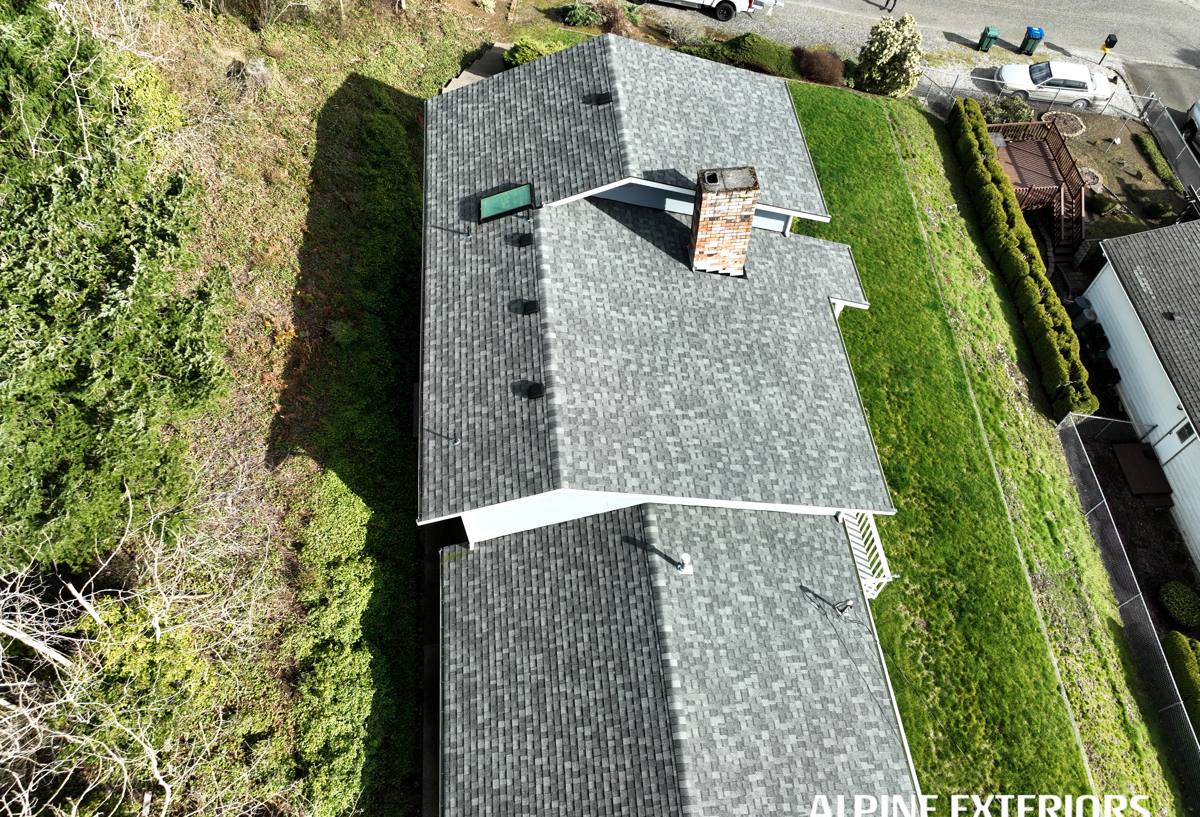
What's Actually Damaging These Roofs
Moss and Organic Growth
Whatcom County's long, mild, wet stretch from fall through spring gives moss and algae plenty of time to establish themselves, especially on north-facing slopes and anywhere tree cover keeps shingles from drying out between rain events. Moss doesn't just look bad — it holds moisture against the roofing material, lifts shingle edges as it grows, and creates channels for water to travel sideways instead of running off. Left alone long enough, a moss mat can turn a minor leak point into a rotted deck.
Wind-Driven and Salt-Laden Rain
Rain in this area rarely falls straight down. Storms moving through Whatcom County typically carry rain sideways, which pushes water into laps, seams, and flashing details that were never designed to handle a direct hit. Add the salt-tinged marine air common to this part of the Pacific Northwest, and you get accelerated corrosion on exposed metal — nail heads, drip edge, flashing, and vent boots age faster here than they would fifty miles inland.
Freeze-Thaw and Prolonged Saturation
We don't get the brutal freeze-thaw cycling of colder climates, but Whatcom County does get enough cold snaps mixed with wet weather that trapped moisture in a compromised roof section can freeze, expand, and widen existing cracks or gaps. The bigger issue is usually just prolonged saturation — wood that never fully dries out is wood that rots, and a roof deck that stays damp for months at a time is living on borrowed time.
Signs You Need a Repair — Not a Full Replacement
Most roofs don't fail all at once. They show warning signs first, and catching those signs early is usually the difference between a repair bill and a replacement bill. Look for:
- Water stains on interior ceilings or in the attic, especially after a wind-driven rain event
- Shingles that are cracked, curling, or missing in isolated spots rather than across the whole roof
- Visible moss or dark streaking concentrated on shaded or north-facing sections
- Flashing that's lifted, rusted, or separated around chimneys, skylights, and roof-to-wall transitions
- Granules collecting in gutters, a sign of shingle wear even without an active leak yet
- Soft or spongy spots underfoot near valleys or eaves, which usually means the decking underneath is compromised
- Daylight visible through the roof deck from inside the attic
If what you're seeing is localized and the roofing material elsewhere is still sound, a targeted repair is almost always the right call. Full replacement makes sense when the damage is spread across multiple areas, the roof is past its expected service life, or repeated repairs are starting to add up.
What a Correct Repair Actually Involves
A lot of "roof repairs" in wet climates are really just cosmetic patches — a bead of sealant over a leak, a shingle tab nailed back down, nothing addressing why the failure happened in the first place. That approach tends to buy a homeowner one dry season, not a lasting fix. A repair done right in this climate means:
| Step | Why It Matters Here |
|---|---|
| Full removal of moss and debris before inspection | You can't accurately diagnose a leak source through a mat of moss and trapped organic material |
| Checking the decking underneath, not just the surface | Prolonged moisture exposure common in this area often rots sheathing before the shingles look obviously bad |
| Replacing flashing rather than resealing it | Corroded or lifted flashing in a salt-influenced, wind-driven-rain climate rarely holds a second seal for long |
| Matching underlayment and fastener specs to current conditions | Older homes may have underlayment and fasteners that were never rated for this much sustained moisture exposure |
| Confirming attic ventilation isn't contributing to the problem | Poor ventilation traps humidity that accelerates rot and moss growth from the underside as well as the surface |
Our Repair Process
1. On-Site Inspection and Honest Diagnosis
We start by finding the actual source of the problem, not just the spot where water is showing up inside the house — leaks often travel along rafters or decking before dripping somewhere visible. We'll walk the roof, check the attic if accessible, and look at flashing, valleys, and penetrations, since that's where the majority of repair calls in this area originate.
2. A Clear Explanation of What We Found
Before any work starts, we explain what's damaged, what's causing it, and what the repair will actually involve. If it's a straightforward fix, we'll say so. If we find rot, ongoing moisture intrusion, or signs the roof is nearing the end of its useful life, we'll tell you that too, along with what your realistic options are.
3. The Repair Itself
Depending on what we find, that might mean removing and rebuilding a section of decking, replacing damaged shingles and underlayment together rather than shingles alone, installing new flashing at vulnerable transitions, or clearing and treating moss growth to stop it from returning as quickly. We match materials to what's already on the roof where possible and use fasteners and flashing suited to this area's moisture and salt exposure.
4. Cleanup and Follow-Through
We clear debris, old material, and moss buildup from the site, and we'll walk you through basic maintenance to extend the life of the repair, particularly around moss prevention, since that's the recurring issue for most homes in this part of Fairhaven's service area.
Repair vs. Replacement: What Actually Drives the Decision
| Factor | Leans Toward Repair | Leans Toward Replacement |
|---|---|---|
| Age of roof | Well within expected lifespan | Near or past typical service life for the material |
| Extent of damage | Localized to one section or detail | Spread across multiple slopes or recurring in different spots |
| Decking condition | Solid, dry, structurally sound | Soft, rotted, or repeatedly re-soaked |
| Repair history | First or infrequent repair | Multiple repairs in recent years with new issues appearing |
| Moss/moisture pattern | Manageable with cleaning and targeted fixes | Chronic, returning quickly despite treatment |
There's no shame in needing a repair rather than a full roof, and there's no upside to us pushing a replacement a home doesn't need yet. We'll give you a straight answer based on what we actually find.
Why Local Experience in Silver Beach Matters
A roofer who mostly works dry-climate jobs can still do competent work, but they won't necessarily know why a north-facing slope in this part of Whatcom County grows moss twice as fast as the south side, or which flashing details tend to fail first under the wind-driven rain patterns common here. That knowledge comes from doing this work in this climate, season after season. It shows up in small decisions — where to add extra flashing protection, which fastener holds up better against the marine air, how aggressively to address moss now versus later — that add years to a repair's lifespan.
We also know that homes in this area vary quite a bit in age and roofing material, so we don't come in with a one-size-fits-all fix. What works on a newer asphalt shingle roof isn't necessarily right for an older home with different decking or ventilation, and we adjust the approach accordingly.
Maintenance That Extends a Repair's Lifespan
A good repair is only half the equation in a climate like this. A few habits make a real difference between repairs:
- Have moss cleared and treated before it establishes a heavy mat, not after
- Keep gutters and downspouts clear so water isn't backing up against roof edges
- Trim back overhanging branches that keep sections of roof shaded and slow to dry
- Have flashing and penetrations checked after major wind or rain events, not just annually
- Watch for granule buildup in gutters as an early sign of wear, not just active leaks
If you're seeing signs of trouble on a Silver Beach roof — a stain on the ceiling, moss creeping across a slope, or flashing that doesn't look right — we're glad to take a look and give you a straightforward assessment. Reach out for a free, no-pressure estimate using the form below.