 Fairhaven Siding
 Roofing in Silver Beach Isn't Like Roofing Inland
Silver Beach sits close enough to the water that homes here take on a different combination of weather than roofs even a few miles inland in Whatcom County. Salt-laden air moves off Bellingham Bay and settles on everything, driving rain comes in sideways during fall and winter storms, and the shade from mature trees combined with our long damp season gives moss months and months to get a foothold. None of that is dramatic on its own, but stacked together year after year, it wears out an asphalt shingle roof faster than most manufacturers' literature assumes.
An asphalt shingle roof that's specified, installed, and maintained for this specific environment will hold up. One that's installed the same way you'd install it in a dry inland climate usually won't — not because the shingles are bad, but because the details around them (ventilation, flashing metal, underlayment, and moss control) weren't matched to the conditions. That's the gap this page is about.
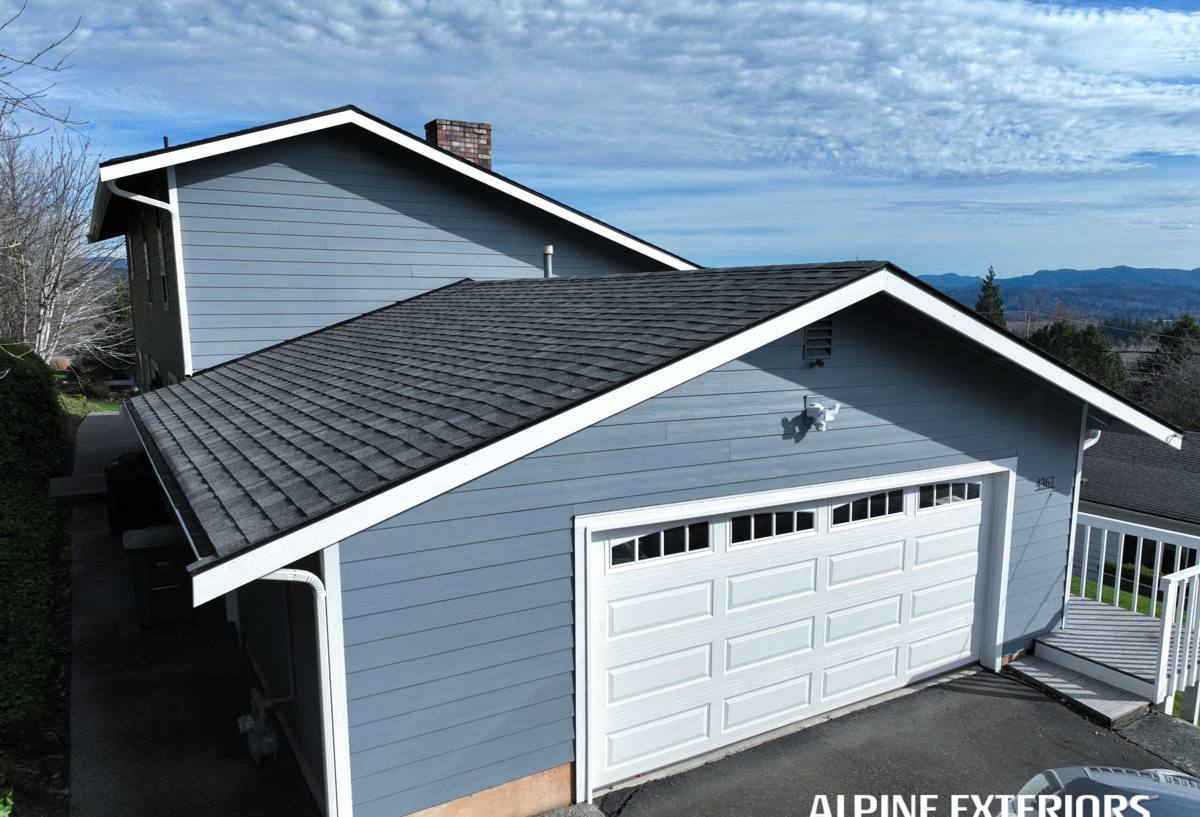
What Salt Air, Rain, and Moss Actually Do to a Roof
Salt Air and Metal Components
Asphalt shingles themselves aren't especially sensitive to salt air, but the metal parts of a roofing system are. Flashing, drip edge, valley metal, and roofing nails all corrode faster near the water than they do a few miles inland. Cheap or mismatched metal can start showing rust streaks and pinholes years before the shingles around it are due for replacement, and once flashing fails, water gets under the roof system even though the shingles overhead look fine.
Driving Rain
Wind-driven rain doesn't just fall straight down — it pushes up under shingle tabs, into open valleys, and around anything that penetrates the roof (vents, chimneys, skylights). A roof built for occasional light rain can shrug off normal weather but leak the first time a real Pacific Northwest storm pushes rain sideways at the house. Proper sealing, correct nail placement, and generous underlayment coverage matter more here than in drier climates.
Moss
Whatcom County's long wet season and shaded lots give moss a real head start. Moss holds moisture against the shingle surface, works its way under tabs as it grows, and can lift shingles enough to let wind and rain in. On north-facing slopes and roof sections shaded by trees, moss can establish itself within a couple of years of a roof going untreated — well before the shingles themselves are worn out.
What a Correctly Built Asphalt Shingle Roof Includes Here
A roof built for Silver Beach conditions isn't a special product — it's a standard asphalt shingle system with the details tightened up for this climate.
Underlayment
We use a full synthetic underlayment layer rather than the minimum felt some crews still install, and we run self-adhering ice-and-water barrier at eaves, valleys, and around every penetration — the spots where wind-driven rain is most likely to find a way in. This is the single biggest defense against the sideways-rain problem described above.
Ventilation
Balanced intake and exhaust ventilation keeps the underside of the roof deck dry and closer to outdoor temperature. That matters two ways: it prevents condensation from forming inside the attic during our cold, damp winters, and it keeps the roof surface from staying wet longer than it needs to — which slows moss and moisture-loving growth from getting established in the first place.
Metal and Fasteners
We specify corrosion-resistant flashing and fasteners rated for coastal-adjacent exposure rather than the cheapest option on the supply house shelf. It costs a bit more up front and saves a re-flash or a hidden leak five to ten years down the road.
Shingle Selection
Algae-resistant shingles (the ones with copper- or zinc-infused granules) are worth the small upcharge in this area specifically because of how much moisture and shade the neighborhood gets. We'll walk you through the realistic differences between shingle lines rather than pushing one brand — see the FAQ below on that.
Common Problems We Find on Silver Beach Roofs
| What You See | Likely Cause | Usually Repair or Replace |
|---|---|---|
| Moss on north-facing slopes only | Shade, moisture retention, no zinc/copper strip | Repair — treat and clean, install control strip |
| Granules collecting in gutters | Normal aging, or hail/impact wear | Depends on shingle age — inspect before deciding |
| Rust streaks below flashing | Corroding metal, often original builder-grade flashing | Repair if isolated, replace if widespread |
| Leak near a valley or chimney after a storm | Failed or undersized underlayment at penetration | Repair, unless underlayment is failing roof-wide |
| Curling or cupping shingles across the whole roof | Roof at or past its service life, or poor ventilation | Replace |
| Dark streaking across the whole slope | Algae growth, not moss | Repair — clean and consider algae-resistant shingles at next install |
The general pattern: isolated, localized damage is usually a repair; roof-wide symptoms — especially combined with a roof that's already 18-25 years old — usually point toward replacement being the more honest recommendation.
Our Process for an Asphalt Shingle Roof Job
- Inspection and honest assessment. We check the deck, flashing, ventilation, and shingle condition before recommending repair or replacement — not the other way around.
- Tear-off and deck check. We remove old roofing down to the deck and repair or replace any damaged sheathing before anything new goes down.
- Ice-and-water barrier and underlayment. Applied at all the vulnerable points first, then full synthetic underlayment across the field.
- Flashing and valleys. New corrosion-resistant metal at chimneys, walls, valleys, and penetrations — this is where most leaks originate, so it gets real attention, not an afterthought.
- Shingle installation. Installed to manufacturer nailing specs (fastener count and placement affect both wind rating and warranty validity).
- Ventilation check. Intake and exhaust balanced for the attic size, adjusted if the existing setup is inadequate.
- Cleanup and walk-through. Magnetic sweep for stray fasteners, debris removal, and a review of what was done and what to watch for going forward.
Repair, Re-Roof, or Full Tear-Off: Cost Factors
Every roof and budget is different, but these are the honest variables that move the price of an asphalt shingle project in this area, in roughly the order they matter:
| Factor | Why It Matters |
|---|---|
| Roof size and number of slopes/valleys | More cuts, more valleys, and more waste drive labor and material up |
| Deck condition underneath | Rotted sheathing found during tear-off has to be replaced before new roofing goes down |
| Number of layers being removed | Tear-off of two layers of old shingles costs more in labor and disposal than one |
| Shingle line chosen | Standard three-tab, architectural, and impact-rated lines carry different material costs and warranty lengths |
| Ventilation upgrades needed | Adding intake or exhaust vents where none existed adds labor but pays off in roof life |
| Access and roof pitch | Steep or hard-to-access roofs take longer and require more safety setup |
We'll give you a written estimate that breaks these out rather than a single lump number, so you can see what you're actually paying for.
Homeowner Maintenance Checklist
Between professional inspections, a few habits go a long way in this climate:
- Have gutters cleared at least twice a year — clogged gutters back water up under the lowest course of shingles
- Look at north-facing and shaded slopes each fall for early moss growth, before it spreads
- Trim back tree limbs that overhang the roof to cut down on shade, debris, and moss spores
- Never pressure-wash shingles — it strips protective granules and shortens the roof's life
- After any major windstorm, do a visual check from the ground for lifted or missing shingles
- Address small leaks immediately rather than waiting — trapped moisture under shingles spreads damage to the deck below
Why Local Experience in Silver Beach Matters
A crew that already works this neighborhood knows which slopes tend to hold moss longest, how the wind comes off the bay during winter storms, and what the Whatcom County permitting and inspection process actually requires for a re-roof. That's not something you can fully substitute with a general roofing checklist. It also means faster response if a storm causes damage — we're not driving in from another region to look at a tarp job.
It also means we've seen what happens when a roof is installed to a generic spec instead of this area's actual conditions: premature moss growth, corroded flashing years before the shingles wear out, and leaks at valleys that never got enough underlayment. We build for the climate you actually have, not the climate the shingle brochure assumes.
Choosing a Shingle for a Silver Beach Home
Architectural (dimensional) shingles are generally the better fit for this environment. They're heavier, have a stronger wind rating than standard three-tab shingles, and their layered profile sheds water more effectively — a real advantage when rain is coming in at an angle. Algae-resistant granules are worth the modest upcharge given how much shade and moisture this neighborhood sees. Beyond that, the differences between major manufacturers come down to warranty structure, color/style options, and installation tolerances — we'll walk you through the real trade-offs for your roof rather than steering you toward whichever brand is easiest for us to install.
If you're ready to talk specifics about your roof, request a free, no-pressure estimate using the form below — we'll take a look and give you a straight answer about what your roof actually needs.