 Fairhaven Siding
 Marietta's Siding Takes a Different Kind of Beating
Marietta sits close enough to the water that salt air is a daily fact of life, not an occasional nuisance. Combine that with Whatcom County's long wet season, driving rain off the Sound, and the months of shade and moisture that make moss season feel endless, and you get an exterior environment that's genuinely harder on siding than most inland neighborhoods deal with. Homes here don't fail because owners neglected them — they fail because the siding material or the installation wasn't built for these specific conditions in the first place.
We replace siding on homes in and around Marietta regularly, and the failure patterns we see are consistent: soft or delaminating panels near grade, moss and algae staining that keeps returning no matter how often it's cleaned, caulk lines that have pulled away and let water behind the wall, and paint that's blistering years ahead of schedule. Once you've seen it enough times, the pattern is obvious — this location needs a siding system engineered for constant moisture exposure, not just a fresh coat of whatever was on the house before.
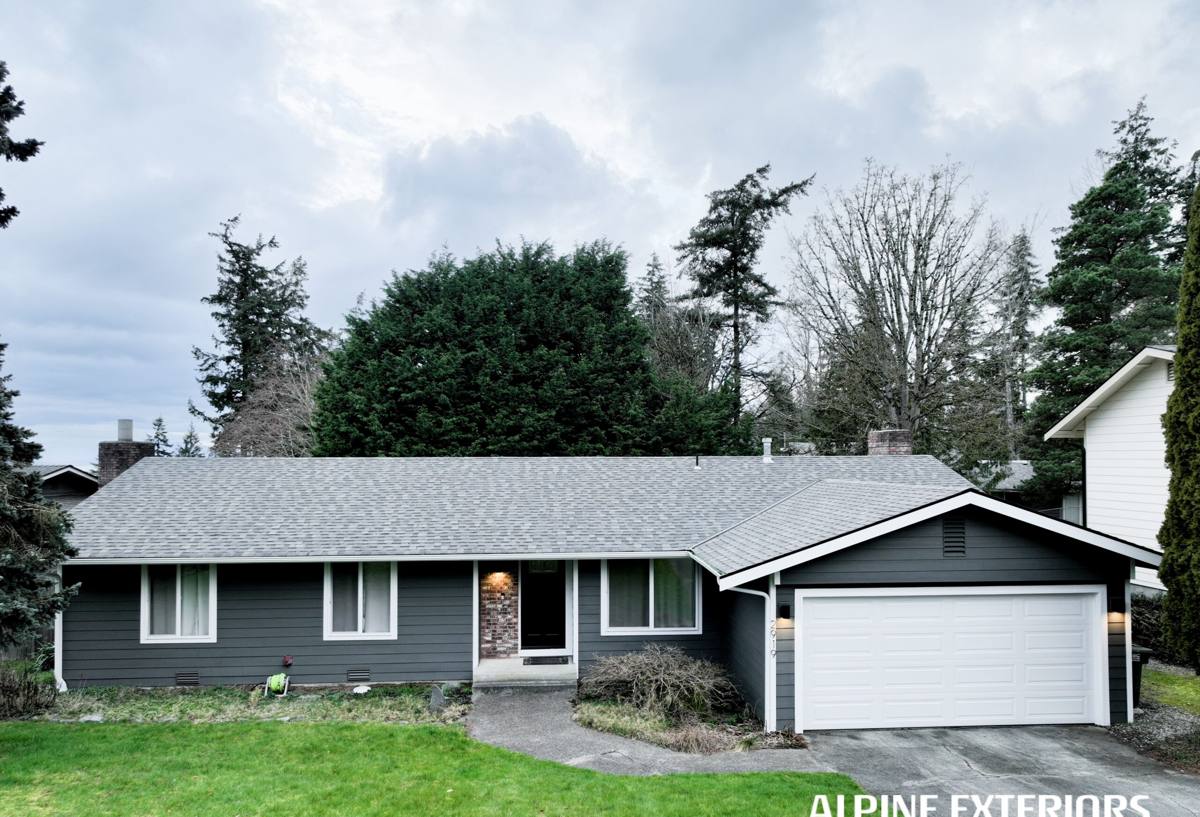
What Marietta's Climate Actually Does to a Wall
Salt Air
Airborne salt accelerates corrosion on fasteners, flashing, and any exposed metal trim, and it speeds up the breakdown of lower-grade paint finishes. Siding and coatings that aren't rated for coastal exposure tend to chalk, fade, and lose adhesion faster here than the same products would fifty miles inland.
Driving Rain
Wind-driven rain off the water doesn't just hit a wall — it gets pushed sideways and upward into laps, seams, and trim joints that a calm-weather installation might get away with. Any weakness in the water-resistive barrier, flashing detail, or panel overlap becomes a real leak path here, not a theoretical one.
Moss Season
Whatcom County's shoulder seasons stay damp for months at a time. On shaded walls and under eaves, that moisture supports moss and algae growth that stains and, over time, holds water directly against the siding surface. Materials that absorb moisture rather than shed it are the ones that suffer most.
Signs a Marietta Home Needs Siding Replacement
Not every issue means a full tear-off, but these are the signals that tell us the siding has stopped protecting the wall behind it and repair isn't going to hold:
- Soft, spongy, or crumbling panels, especially near the bottom courses and around windows
- Persistent moss or dark streaking that comes back within a season of cleaning
- Paint that's peeling, bubbling, or chalking heavily rather than just fading
- Visible gaps, warping, or panels pulling away from the wall
- Cracked or missing caulk at joints, corners, and trim
- Musty smells, soft drywall, or staining on interior walls near exterior corners
- Siding that's original to a home built before modern moisture-barrier standards
If you're seeing two or more of these, it's worth a real inspection rather than another round of caulk and paint.
What a Correct Siding Replacement Actually Involves
Replacing siding well is mostly about what happens before the new panels ever go up. In a location like Marietta, cutting corners on the underlying system is where premature failures start.
Tear-Off and Sheathing Inspection
We remove the old siding down to the sheathing and inspect for rot, soft spots, and prior water damage — particularly around windows, doors, and any spot where the old flashing was undersized or missing. Any compromised sheathing gets repaired or replaced before anything new goes on; covering damaged wood with new siding just hides the problem.
Weather-Resistive Barrier
A properly lapped and sealed water-resistive barrier is the layer that actually keeps a wall dry if wind-driven rain gets past the siding surface — which, on exposed Marietta lots, it eventually will. This isn't optional in our process.
Flashing Details
Windows, doors, roof-to-wall transitions, and butt joints all need correctly integrated flashing so water is directed out and away from the wall assembly, not funneled behind it. This is the single most common point of failure we find on older installations in this area.
Fastening and Clearances
Fiber cement siding has manufacturer-specified nailing patterns, gaps, and ground clearances for a reason — get them wrong and you invite moisture intrusion and premature edge swelling, even with a high-quality product.
Why We Install Only James Hardie Fiber Cement
We standardized on James Hardie siding across every job we take, including here in Marietta, and we don't install vinyl, LP SmartSide, or cedar. That's not a marketing position — it's a decision driven by what actually holds up in this climate.
Fiber cement is non-combustible and dimensionally stable, so it doesn't expand, contract, or absorb moisture the way wood-based or engineered-wood products can. James Hardie's HZ5 product line is specifically engineered for the Pacific Northwest's wet, moderate climate zone, and the factory-applied ColorPlus finish is baked on under controlled conditions rather than field-applied — which matters a great deal in an area where salt air and constant moisture are hard on ordinary paint. The finish resists fading, chalking, and moss-friendly surface buildup far better than field-painted alternatives, and it carries a strong transferable warranty backed by a manufacturer that's been refining this specific product category for decades.
None of that means other products are worthless — vinyl and engineered wood have their place. But for what Marietta's salt air, driving rain, and moss season demand of a wall over the next 30 years, we've made our call, and it's Hardie.
Our Process for Marietta Projects
- On-site inspection — we walk the exterior, check for hidden moisture damage, and assess what's driving the current siding's failure.
- Straightforward estimate — a clear scope and price, with any sheathing repair called out separately so there are no surprises once tear-off starts.
- Tear-off and repair — old siding comes off, damaged sheathing gets fixed, and the wall is prepped correctly before anything new is installed.
- Barrier and flashing installation — the moisture-management layer goes in first, done right, every time.
- Hardie installation — panels, trim, and color are installed to manufacturer spec, with attention to the fastening and clearance details that matter most in wet climates.
- Final walkthrough — we go over the finished work with you before calling the job done.
What Drives the Cost of a Siding Replacement
Every home is different, but these are the main factors that move a Marietta siding project up or down in price:
| Factor | Why It Matters |
|---|---|
| Home size and wall complexity | More square footage, corners, and trim details mean more labor and material |
| Extent of hidden damage | Rotted or soft sheathing found during tear-off requires repair before new siding can go on |
| Removal difficulty | Multiple layers of old siding or extensive prep work add time |
| Hardie product line and color | Panel profile, texture, and ColorPlus color selection affect material cost |
| Trim and detail work | Window casings, corner boards, and fascia detail add labor beyond flat wall coverage |
| Access and site conditions | Steep lots, tight setbacks, or limited staging area can affect scheduling and labor |
We walk every one of these through with you at the estimate stage so the number you get reflects your actual home, not a generic average.
Why Local Experience in Marietta Matters
A crew that already works this part of Whatcom County knows which walls take the worst of the wind-driven rain, where moss builds up fastest, and which older homes are likely to have flashing or sheathing issues hiding under the existing siding before we even pull the first panel. That kind of familiarity shortens the guesswork on your project and helps us flag problems early rather than mid-tear-off. It also means we're not learning coastal installation details on your house — we're applying what we already know works here.
Protecting the Investment After Installation
Hardie siding is low-maintenance compared to painted wood or engineered products, but "low-maintenance" isn't "no-maintenance," especially in this climate. A periodic rinse to keep moss and salt residue from building up, prompt attention to any caulk that starts to separate, and keeping gutters clear so water isn't sheeting down the wall will go a long way toward getting the full service life out of the system. We're happy to walk you through what to watch for once your project is finished.
If your Marietta home's siding is showing its age — or you just want an honest opinion on whether it's a repair or a replacement situation — we offer free, no-pressure estimates. Use the form below to get started.