 Fairhaven Siding
 Siding Repair for the Puget Area Near Fairhaven
Homes in the Puget area near Fairhaven sit close enough to the water that siding takes a different kind of beating than it does further inland in Whatcom County. Salt-laden air, wind-driven rain off the Sound, and a moss season that can run most of the year all work on exterior walls in ways that show up as cracked caulk lines, soft trim, swollen panel edges, and streaked or stained siding faces. A repair job done right in this neighborhood has to account for all of that, not just patch the visible damage and move on.
We work in and around Fairhaven regularly, and Puget is one of the pockets where we see the same failure patterns repeat from house to house. That familiarity matters — it means we're not guessing at what's causing a problem, we're confirming what we already expect to find and fixing it correctly the first time.
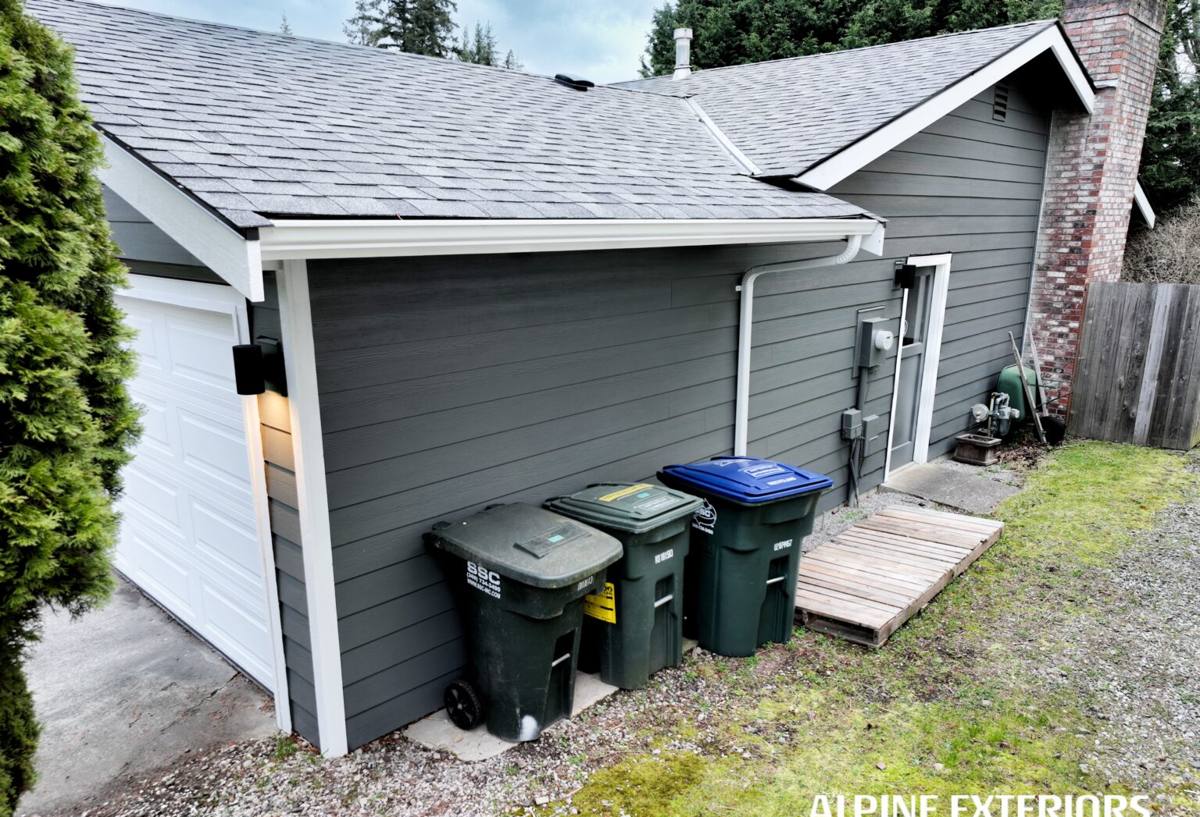
What the Local Climate Does to Siding Here
Salt Air and Corrosion
Proximity to Puget Sound means airborne salt settles on exterior surfaces even when a home isn't directly waterfront. Over years, that salt accelerates corrosion of exposed fasteners, flashing, and any metal trim components. Siding itself can develop a chalky or pitted surface where the factory finish has broken down faster than it would inland, especially on the wind-facing side of the house.
Driving Rain and Wind-Driven Moisture
Storms coming off the Sound don't just fall straight down — wind pushes rain sideways into seams, laps, and trim joints that were never designed to handle water hitting them at an angle. This is where poor original installation shows itself years later: gaps in caulking, insufficient overlap, or missing flashing that held up fine in calm weather but fails under sustained wind-driven rain.
Moss, Algae, and Prolonged Dampness
Whatcom County's wet season is long, and shaded or north-facing wall sections in Puget rarely get enough sun to dry out fully between rain events. That constant dampness is what moss and algae need to take hold. Left alone, moss growth holds moisture directly against the siding surface, which speeds up rot in wood-based products and can stain even durable materials if it's not cleaned off periodically.
Signs a Puget-Area Home Needs Siding Repair
- Soft or spongy spots when you press on the siding, especially near the bottom courses and around window sills
- Visible cracking or gaps in caulking at panel seams, corners, and trim joints
- Bubbling, peeling, or chalky discoloration on the sun- and wind-exposed sides of the house
- Persistent moss or dark algae streaking on shaded walls that keeps coming back after cleaning
- Warped, buckled, or separating panels, particularly where fasteners have corroded or backed out
- Water stains on interior walls near exterior corners, which often trace back to a siding or flashing failure outside
- A musty smell near exterior walls, which can indicate moisture getting behind the siding rather than staying on the surface
What a Correct Repair Actually Involves
A lot of siding "repairs" amount to caulking over a crack and repainting the surface. That approach might hide a problem for a season, but in a climate like Fairhaven's it rarely solves anything, because the underlying moisture path is still open. Our process treats repair as a diagnostic job first and a cosmetic job second.
1. Find the Actual Water Path
Before we touch a panel, we trace where water is actually getting in — that's rarely the exact spot where damage is visible. Water travels along framing and sheathing before it shows up as a stain or soft spot, so a repair that only addresses the visible symptom often leaves the real entry point untouched.
2. Check What's Behind the Siding
Once panels are pulled back, we look at the house wrap, flashing, and sheathing underneath. If there's rot in the sheathing or framing, that has to be addressed before any new siding goes back up — covering damaged structure with new material just delays a bigger repair later.
3. Match or Upgrade the Material
Where we're repairing an existing Hardie installation, we match the existing profile, reveal, and color as closely as possible. Where the original siding is a product we don't install — cedar, primed spruce, vinyl, or another fiber cement brand — we'll tell you honestly what your options are, including whether a full or partial re-side with James Hardie fiber cement makes more sense than continuing to patch a product that's fighting the climate.
4. Rebuild the Water Management Details
Proper flashing, correct fastener placement, and appropriate caulking at the right joints (not every joint — some are meant to stay open for drainage) are what actually keep water out long-term. This is the step that gets skipped most often in quick patch jobs, and it's the one that determines whether a repair lasts five years or fifteen.
Why We Only Install James Hardie Fiber Cement
When a repair turns into a replacement decision — a full wall, a full elevation, or the whole house — we install James Hardie fiber cement exclusively. We don't install LP SmartSide, vinyl, Cemplank, Allura, primed spruce, or cedar, and in a Puget Sound-adjacent climate that decision is a practical one, not a brand preference.
Wood-based siding, even engineered wood products, depends on an intact factory coating and consistent maintenance to resist moisture. In a spot with this much sustained dampness and salt air, that coating gets tested constantly, and any gap in maintenance shows up as swelling or rot faster than it would in a drier climate. Vinyl handles moisture fine on its own but can warp under temperature swings and doesn't hold paint if a color change is ever wanted. Hardie's fiber cement is non-combustible, doesn't absorb water the way wood-based products do, and its ColorPlus factory finish is engineered to hold up under UV and moisture exposure far longer than field-applied paint. It's also backed by a strong transferable warranty when installed to Hardie's specifications — which matters for resale in a coastal market like this one.
None of this means other products are bad products. It means that for the conditions Fairhaven and Puget deal with year-round, fiber cement is the material we're willing to warranty our workmanship on.
Repair vs. Replace: How We Help You Decide
| Factor | Repair Usually Makes Sense | Replacement Usually Makes Sense |
|---|---|---|
| Extent of damage | Isolated to one or two wall sections | Recurring damage across multiple elevations |
| Underlying structure | Sheathing and framing are sound | Rot has spread into structural framing |
| Existing material | Existing Hardie siding in otherwise good condition | Original material is a product we don't install, or is past its service life |
| Age of siding | Under 10-15 years old | Approaching or past manufacturer's expected lifespan |
| Cost pattern | One-time fix addresses the cause | You've repaired the same area more than once |
Our Process, Start to Finish
- Walk the exterior with you — we look at every elevation, not just the spot you called about, since damage in a climate like this rarely stays isolated
- Diagnose the water source — using moisture readings and a physical inspection behind affected panels where needed
- Give you a straight assessment — repair, partial replacement, or full re-side, explained in plain terms with the reasoning behind it
- Provide a written estimate — scope, materials, and timeline spelled out before any work starts
- Do the work correctly — proper flashing, fastening, and sealing details, not just a cosmetic patch
- Walk the finished job with you — so you know exactly what was done and why
Why a Crew That Works Puget Regularly Matters
Siding repair in this neighborhood isn't the same job as siding repair twenty miles inland. A crew that hasn't worked this close to the water can miss things — under-flashing corners that need extra protection from wind-driven rain, or underestimating how much a shaded, damp wall section needs to breathe. We've done enough repair work around Fairhaven and the surrounding Whatcom County waterfront communities to know which details actually matter here and which are just extra steps that don't change the outcome. That translates into repairs that are scoped correctly the first time, without over-selling work that isn't needed or under-scoping work that will just fail again in a year or two.
Maintenance That Extends the Life of a Repair
- Rinse moss and algae off shaded siding sections at least once a year before it has a chance to hold moisture against the surface
- Keep gutters clear so overflow isn't running down wall sections during heavy storms
- Trim back vegetation that keeps a wall section shaded and damp longer than it should be
- Re-caulk exposed joints on the schedule your installer recommends — caulk is a maintenance item, not a one-time fix
- Have any soft spots or recurring stains checked promptly rather than waiting for them to spread
If you're dealing with siding damage in the Puget area or just want an honest read on whether what you're seeing is a minor fix or a sign of something bigger, we're happy to take a look. Estimates are free, there's no pressure attached, and you'll get a straight answer either way — use the form below to get started.