 Fairhaven Siding
 Roofing in Birchwood: Built for Fairhaven's Weather, Not Just Any Weather
Birchwood sits close enough to Bellingham Bay that salt air is a daily fact of life, not an occasional nuisance. Add in Whatcom County's long wet season, driving rain off the water, and shaded lots where moss and moisture never fully dry out, and you've got a roofing environment that's genuinely harder on materials than most inland neighborhoods. A roof that would hold up fine in a dry, sunny climate can fail years early here if it wasn't specified and installed with this environment in mind.
That's the core of what a good roof replacement in Birchwood needs to solve: keep water out through months of steady rain, resist the corrosion that salt-laden air causes on metal fasteners and flashing, and shed moisture fast enough that moss and algae don't get a foothold on shaded slopes. This page walks through what that actually looks like in practice, not in marketing language.
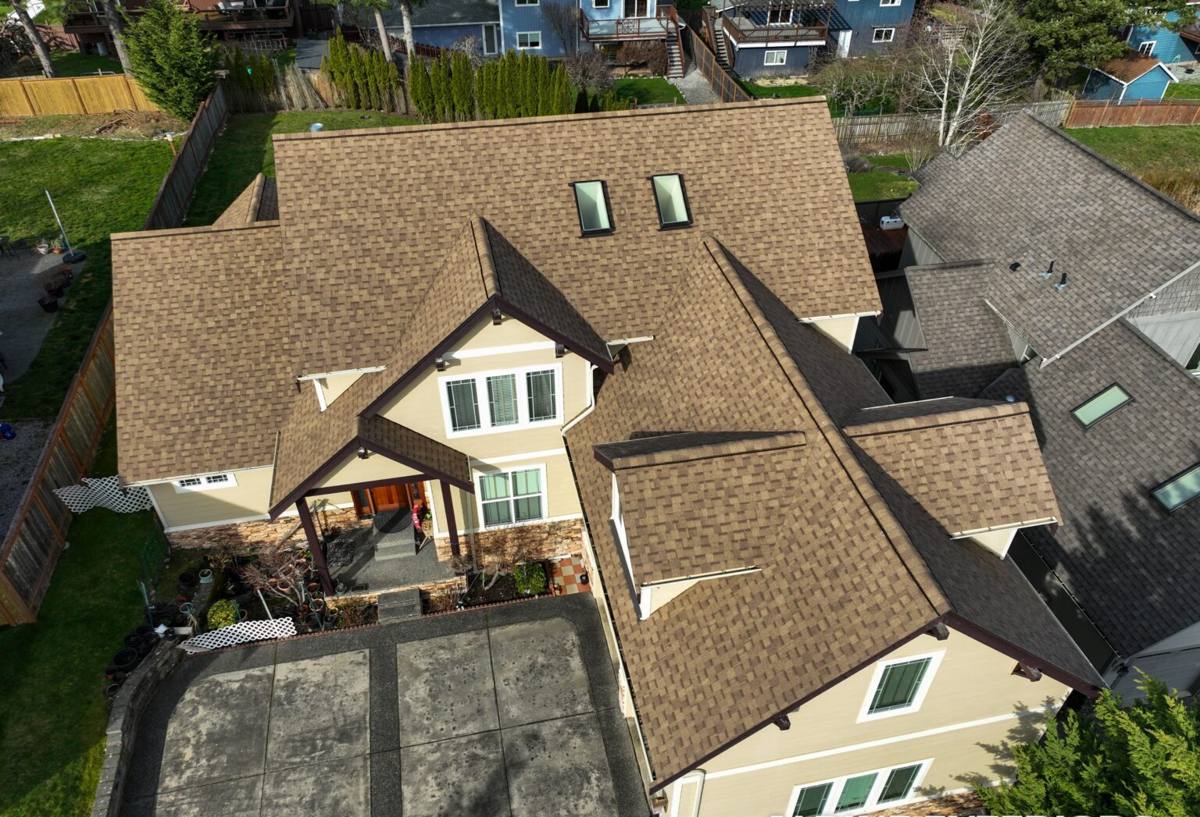
Signs a Birchwood Roof Needs Replacement, Not Another Repair
Most homeowners don't wake up and decide to replace a roof — they notice a problem and want to know whether it's fixable or not. In our experience working this neighborhood, these are the signs that point toward full replacement rather than a patch:
- Granule loss heavy enough that you can see bare, shiny patches on asphalt shingles, especially on south- and west-facing slopes that take the most sun and rain cycling
- Moss that keeps returning within a season or two of cleaning, which usually means the roof deck underneath is staying damp longer than it should
- Multiple past repairs in different areas — a sign the roofing is simply at the end of its service life rather than suffering isolated damage
- Soft spots or sagging when walked (our crew checks this, not something to test yourself), which often means deck rot from long-term moisture intrusion
- Rusted or corroded flashing, fasteners, or metal valleys — common here because of the salt air, and a real leak risk once it progresses
- Interior signs: water stains on ceilings, damp attic insulation, or a musty smell in upper rooms
If a roof is under 10 years old and the damage is localized, a repair is often the honest answer and we'll say so. Replacement makes sense when the underlying materials — deck, underlayment, flashing — are compromised broadly enough that patching just delays the same problem.
What a Correct Roof Replacement Actually Includes
A roof replacement is more than swapping old shingles for new ones. Done right, in a climate like this, it includes several layers working together:
Tear-off and deck inspection
Old roofing comes off completely so the deck underneath can be inspected. Any soft, rotted, or delaminated sheathing gets replaced before anything new goes down — covering over a bad deck is how roofs fail early, and it's not something a homeowner can see once the new roofing is on.
Underlayment suited to a wet climate
In a region with Fairhaven's rainfall, we lean toward synthetic or self-adhered underlayment products with strong water resistance, particularly in valleys and around penetrations. This is the roof's backup layer if wind-driven rain ever gets under the surface material — and given how much wind-driven rain this area sees off the bay, it matters more here than in drier parts of the state.
Ice-and-water protection at vulnerable points
Eaves, valleys, and roof-to-wall transitions are where leaks most often start. Self-adhered membrane in these zones adds a second line of defense beyond the underlayment.
Flashing and fastener selection for salt exposure
Standard galvanized fasteners and flashing corrode faster near saltwater. We use corrosion-resistant flashing and fastener options appropriate for coastal exposure, which costs a little more up front and saves real money in avoided leaks over the life of the roof.
Ventilation
Proper intake and exhaust ventilation keeps attic moisture from condensing against the underside of the deck — a real issue during Whatcom County's long, cool, wet stretches. Poor ventilation shortens the life of any roofing material, regardless of brand.
Material Options for Salt Air and Moss Exposure
There's no single "best" roofing material for every home — it depends on the roof's pitch, sun/shade exposure, and the homeowner's budget and priorities. Here's how the common options stack up for a Birchwood setting specifically:
| Material | Moss/moisture resistance | Salt air durability | Typical lifespan here |
|---|---|---|---|
| Architectural asphalt shingles | Good, especially with zinc/copper strips at the ridge | Good — fiberglass mat resists corrosion issues | 20–30 years |
| Standing seam metal | Excellent — sheds water and debris fast | Good with marine-grade coatings; needs correct fastener spec | 40–50+ years |
| Cedar shake | Fair — needs regular treatment/cleaning to resist moss and rot | Fair — higher maintenance burden near salt air | 20–30 years with upkeep |
| Composite/synthetic shingle | Good | Good — non-corroding material body | 30–50 years |
We don't push one product line over another as a matter of habit. What we do push is matching the material's real-world maintenance needs to what the homeowner is actually willing to keep up with — a beautiful cedar roof that never gets treated will underperform a well-installed asphalt roof every time.
A note on moss prevention
Zinc or copper control strips near the ridge release trace metal ions with every rain, which suppresses moss and algae growth on the slopes below without chemical treatment. On shaded Birchwood lots, this is a small addition that pays for itself in reduced cleaning and extended roof life.
Our Process, Start to Finish
- Free on-site estimate. We walk the roof (weather permitting) or inspect from ground level and attic access, and give you an honest read on repair-versus-replace.
- Written scope and pricing. You get a clear breakdown of materials, labor, and what's included — no vague allowances that turn into surprise change orders.
- Scheduling around Fairhaven's weather. We plan tear-off for dry-weather windows and keep the home protected with tarps and staging if conditions shift mid-project — this isn't optional here, it's standard practice.
- Tear-off, deck repair, and installation following the layered approach described above.
- Final walkthrough where we show you the completed work and answer questions before we consider the job done.
- Cleanup including magnetic sweep for stray nails and haul-away of all old materials and debris.
Why a Crew That Already Works Birchwood Matters
Roofing companies that mostly work drier, inland areas sometimes spec materials and details based on general practice rather than what this specific stretch of coastline demands. A crew that regularly works Birchwood and the surrounding Fairhaven area already knows which slopes hold moss longest, how far wind-driven rain travels under improperly sealed valleys, and which fastener and flashing choices actually hold up against salt air over years, not just at installation. That local pattern recognition is hard to get from a crew passing through once.
There's also a practical side: a local crew can respond faster if something needs attention after the job, and stands behind the work because they're still working in the neighborhood next year and the year after — not just this season.
What Roof Replacement Typically Costs
Exact pricing depends on roof size, pitch, material choice, and how much deck repair is needed — we won't quote a number until we've actually looked at your roof. In general terms, cost is driven by these factors:
| Factor | How it affects cost |
|---|---|
| Roof size and complexity | More squares, valleys, and dormers mean more material and labor time |
| Material choice | Asphalt is typically the most budget-friendly; metal and premium composites cost more upfront but often last longer |
| Deck condition | Rotted sheathing found during tear-off adds material and labor not visible from the ground |
| Pitch and access | Steep or hard-to-access roofs require more safety equipment and time |
| Tear-off layers | Removing multiple existing layers of roofing costs more than a single-layer tear-off |
We provide a written estimate before any work begins, so there are no surprises once the crew is on the roof.
Keeping a New Roof Performing in This Climate
A correctly installed roof still benefits from basic upkeep, especially in a moss-prone, salt-air environment:
- Clear debris (needles, leaves, moss) from valleys and gutters at least twice a year
- Have moss growth removed gently — pressure washing can strip granules and shorten shingle life, so soft-wash methods are safer
- Check attic ventilation isn't blocked by insulation, especially after any attic work
- Inspect flashing around chimneys, vents, and skylights annually for early signs of corrosion or lifting
- Trim back overhanging branches to reduce shade, debris buildup, and abrasion during wind
If your Birchwood roof is showing its age, or you just want an honest opinion on repair versus replacement, we're happy to take a look. There's a free, no-pressure estimate form below — reach out and we'll walk you through what we see and what it would take to fix it right.