 Fairhaven Siding
 Building New in Chuckanut Means Building for the Site You're On
Chuckanut sits in a tough spot for exterior work — close enough to the water to catch salt-laden air off the bay, wooded and shaded enough to stay damp for weeks at a time, and exposed enough on the hillside lots to take wind-driven rain straight into the wall assembly. If you're framing a new home here, the windows aren't a fixture you pick out of a catalog and bolt in. They're part of the building envelope, installed at the same time as your house wrap and flashing, and if that sequence gets rushed or done out of order, you won't find out until water shows up somewhere it shouldn't be.
New-construction window work is a different job than swapping out an old window in an existing wall. It happens before the siding goes on, it has to integrate correctly with the weather-resistive barrier, and it only gets one shot to be right before the wall is closed up. In Fairhaven and the rest of Whatcom County, that's true everywhere — but Chuckanut's combination of salt exposure, heavy rain, and tree-shaded moisture adds a few things worth getting right from the start.
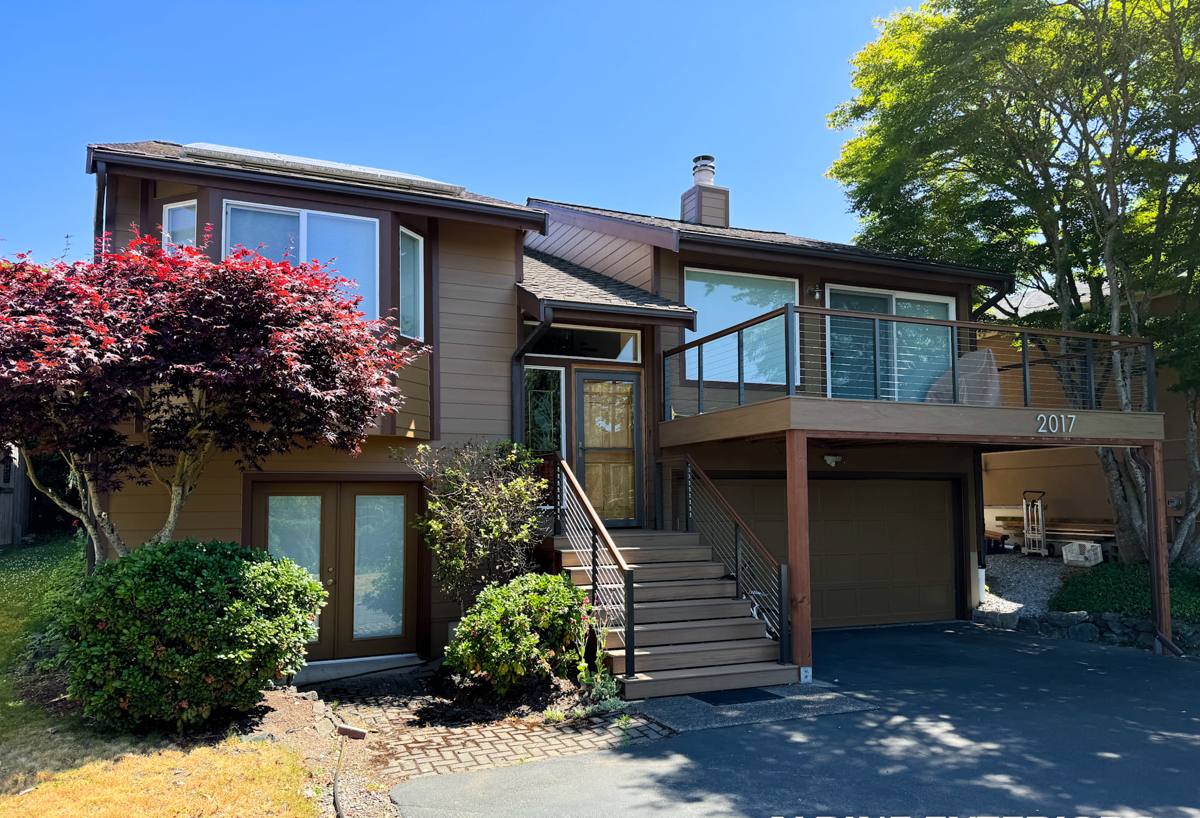
New-Construction vs. Replacement: Why the Installation Method Is Different
A lot of homeowners assume a window is a window. The install method says otherwise.
- New construction windows have a nailing flange (fin) around the perimeter of the frame. They get set into the rough opening before siding is installed, flashed in sequence with the house wrap, and fastened directly to the framing through that flange.
- Replacement windows are built to fit inside an existing frame with the old exterior trim and cladding left in place — no nailing fin, different flashing approach, different tolerances.
Using the wrong install method — or a crew that only knows one of the two — is where a lot of new-build water problems start. On a new home, you want a crew that installs new-construction windows correctly and often, not one that's more comfortable with retrofit work and treats a new build like a workaround.
Why This Matters More on a Coastal, Wooded Lot
On an open, dry lot, a mediocre flashing job might go years before it shows a problem. On a Chuckanut lot with driving rain off the water and shade that keeps wall assemblies damp longer after every storm, mistakes surface faster — and they're harder to fix once the siding, trim, and interior finishes are in.
What Salt Air, Rain, and Moss Actually Do to a Window Assembly
These aren't abstract concerns — they show up in specific, predictable ways:
- Salt air accelerates corrosion on unprotected fasteners, hinges, and metal flashing. It also degrades certain sealants and finishes faster than they'd wear inland.
- Driving rain tests the flashing details, not the window itself. Most window "leaks" are actually flashing or sill-pan failures — water getting past the wall assembly around a window that's otherwise fine.
- Moss and prolonged dampness from tree cover keep exterior surfaces wet longer after every rain. That extended wet time is what breaks down poorly sealed joints, untreated wood trim, and low-quality caulk faster than a drier site would.
None of this means you need exotic materials. It means the product selection and the installation details both have to account for a site that stays wet longer and sits closer to salt air than most.
Choosing Window Materials for a Chuckanut Build
There's no single "correct" frame material for every project — it depends on your budget, your home's style, and how much long-term maintenance you want to take on. Here's how the common options actually compare for a coastal, tree-shaded lot like Chuckanut:
| Frame Material | Salt/Corrosion Resistance | Maintenance | Relative Cost |
|---|---|---|---|
| Vinyl | Good — won't corrode, some color/UV fade over time near salt air | Low — occasional cleaning | Lower |
| Fiberglass | Very good — stable, resists warping and pitting | Low | Mid to higher |
| Aluminum-clad wood | Good on the exterior face; interior wood needs protection from any moisture intrusion | Moderate — depends on finish and detailing | Higher |
| Bare aluminum | Poor in salt air without a quality finish — prone to pitting and corrosion over time | Higher over time | Lower to mid |
For most Chuckanut new builds, we steer clients toward vinyl or fiberglass unless the design calls for a wood interior look — and if it does, we make sure the exterior cladding and flashing detail are doing the actual weather-resisting work, not the wood itself. That's a standard we hold regardless of brand: the wall assembly, not the finish material, is what keeps water out.
Flashing and Water Management: The Part That Actually Prevents Leaks
This is the piece that separates a window that performs for decades from one that causes problems in year three. On a new build, it happens in a specific order, and skipping steps is what causes hidden damage.
The Sequence That Matters
- Rough opening is checked for square, level, and correct sizing before the window ever shows up on site.
- A sloped sill pan is installed at the bottom of the opening so any water that gets past the window sheds outward, not into the wall.
- The window is set, shimmed, and fastened through the nailing fin per the manufacturer's specifications — not "close enough."
- Flashing tape and the house wrap are integrated in the correct shingle-lap order — jamb flashing, then head flashing, layered so water always sheds downward and outward, never behind the layer below it.
- Sealant is applied at specified points only — sealing the wrong spots can actually trap water inside the wall instead of keeping it out.
Get this sequence wrong on a rainy, shaded lot and you may not see a stain on the drywall for a year or two — by which point there's already rot or mold behind the wall. This is exactly why the installation crew matters as much as the window brand.
Washington Energy Code and Your Window Package
New construction in Whatcom County has to meet Washington's energy code requirements, which set minimum performance standards for window U-factor (how well the window resists heat loss) and, depending on your project's compliance path, solar heat gain. On a Chuckanut lot with strong natural light through the trees or open water views, you're often balancing:
- Meeting or beating code-minimum U-factor for the whole-house energy budget
- Managing glare and solar heat gain on view-facing walls
- Condensation resistance — cold, damp coastal air makes glass and frame condensation more noticeable if the glazing package is under-specified
We work through this with your architect or builder's energy compliance path (prescriptive or performance) so the window package you choose actually satisfies the permit — not a guess that gets flagged at inspection.
How We Work on a New-Construction Job
New-construction window installs are a coordination job as much as a trade job. Our process:
- Plan review — we check window schedules, rough opening sizes, and energy code compliance before anything is ordered.
- Coordination with your GC and framer — we confirm rough opening tolerances and timing so windows arrive when the wall is actually ready, not sitting exposed on site.
- Installation — sill pan, window set, and full flashing integration with your house wrap, done in the correct sequence, every opening.
- Inspection-ready documentation — so your project passes weatherization and energy code inspections without a callback.
- Follow-through with the siding crew — window flashing has to hand off cleanly to whatever cladding goes on next, so we coordinate that transition instead of leaving it as someone else's problem.
What a Correct Installation Looks Like — Checklist
- Rough openings verified square and correctly sized before window delivery
- Sloped sill pan installed under every window, no exceptions
- Flashing layered in proper shingle-lap order with the house wrap
- Fasteners and flashing rated for coastal/salt-air exposure
- Sealant applied only at manufacturer-specified points
- U-factor and glazing package matched to your energy code compliance path
- Clean, documented handoff to the siding trade
Why It Matters That We Already Work in Chuckanut
A crew that's only worked drier, inland sites doesn't always think about sill pans, corrosion-rated fasteners, or extended wet-time detailing as non-negotiables — because on those sites, cutting a corner doesn't show up as fast. On Chuckanut's hillside, tree-shaded, salt-air-exposed lots, it does. Working in Fairhaven and around Whatcom County day to day means we've already seen how these builds hold up over a few wet seasons, and we build accordingly from the first window, not after a callback.
That's also why we don't push a single "best" window brand. The right product depends on your budget, your home's design, and how much long-term maintenance you're willing to take on — our job is to make sure whatever you choose is installed to a standard that actually performs on this kind of site.
Get a Straightforward Estimate
If you're framing a new home in Chuckanut and want a window package and installation plan that's built for the site — not a generic spec — we're glad to walk through it with you. Reach out for a free, no-pressure estimate using the form below.