 Fairhaven Siding
 Why Silver Beach Needs a Different Roofing Conversation
Silver Beach sits close enough to the water that salt air is part of daily life, not an occasional nuisance. Add Whatcom County's long wet season, driving rain off Bellingham Bay, and shaded lots that hold moss well into summer, and you've got a roofing environment that's genuinely harder on materials than most inland neighborhoods. A roof that performs fine in a dry, sunny climate can struggle here within a decade if it wasn't chosen and installed with this exact combination of conditions in mind.
Metal roofing, done correctly, is one of the few systems that holds up to all three stressors at once — salt exposure, sustained moisture, and moss pressure — without the constant upkeep that shingle roofs demand in this kind of setting. This page is specifically about metal roofing for homes in and around Silver Beach, not a general overview of metal roofing everywhere. The details that matter change block by block depending on tree cover, wind exposure, and how close a house sits to the water.
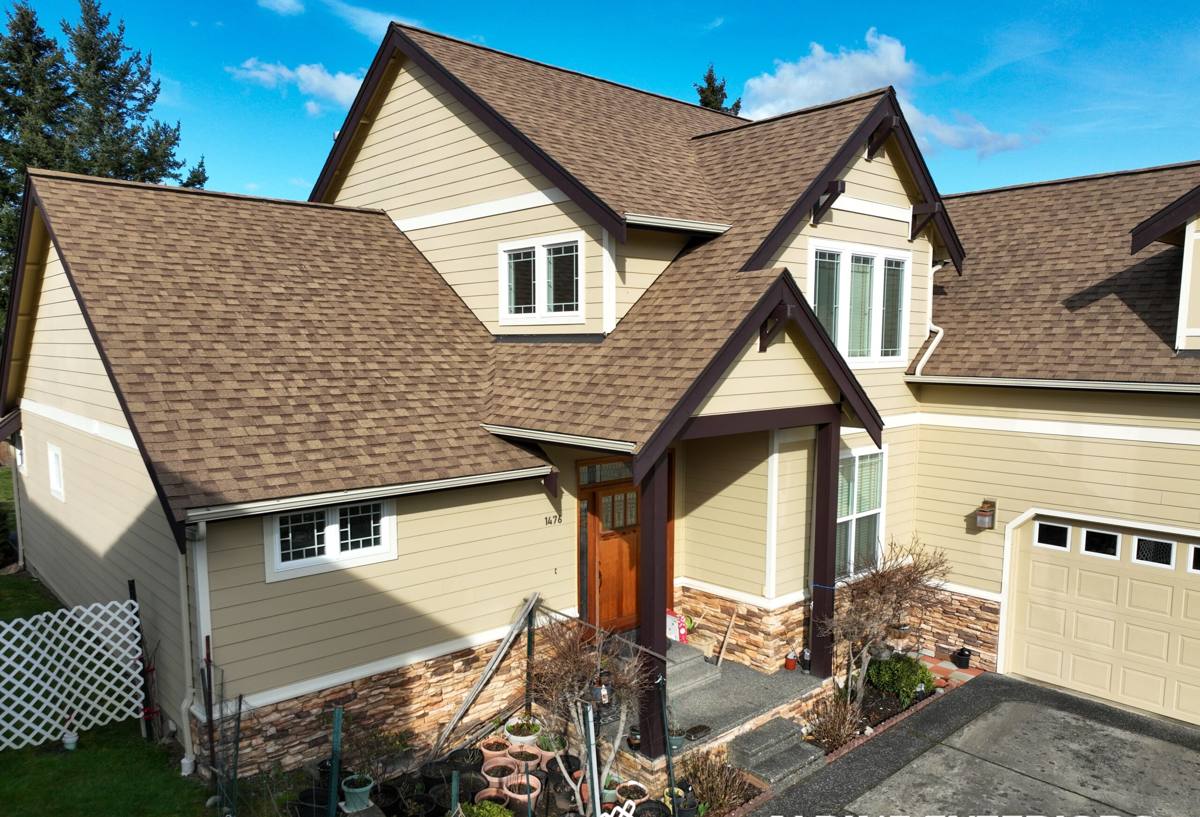
What Salt Air, Rain, and Moss Actually Do to a Roof
Salt Air and Metal
Salt-laden air accelerates corrosion on any metal that isn't properly coated or isn't the right alloy for coastal exposure. This shows up first at cut edges, fastener heads, and flashing seams — the places where a factory coating has been broken during fabrication or installation. It's not a reason to avoid metal roofing; it's a reason to be specific about panel coating, fastener material, and how edges are finished, all of which we cover below.
Driving Rain
Wind-driven rain off the bay doesn't fall straight down — it pushes sideways and works its way under laps, around penetrations, and into any gap that a calmer climate roof detail would tolerate. Underlayment choice and fastening pattern matter more here than in a sheltered inland yard.
Moss and Shade
Mature tree cover common in older Silver Beach lots keeps roof surfaces damp longer after every rain. Moss doesn't just sit on top of a roof — its root structure holds moisture against the surface and can lift shingle edges or hold water against fasteners over time. Metal sheds moss far better than shingle or wood because there's no rough surface for spores to establish on, but a poorly detailed metal roof in a shaded, damp spot can still collect debris in valleys and around penetrations if those areas aren't designed to shed water and leaves cleanly.
Metal Roofing Systems That Actually Hold Up in This Climate
Not all metal roofing is the same product wearing different colors. The panel type, seam style, and coating all affect how a roof performs against salt air and standing moisture over the long run.
| System | Best For | Coastal Performance | Trade-offs |
|---|---|---|---|
| Standing seam (concealed fastener) | Full roof replacements, most Silver Beach homes | Excellent — no exposed fasteners for salt air to attack, panels float with thermal movement | Higher upfront cost, needs a crew experienced with hidden clip systems |
| Exposed-fastener panel | Outbuildings, shops, budget-driven projects | Fair — exposed screws and washers are the first thing salt air degrades, gaskets need eventual replacement | Lower cost, but shorter realistic service life this close to the water |
| Stone-coated steel | Homeowners who want a shingle or shake look with metal's durability | Good — coating protects the steel, but cut edges and fastener penetrations still need careful sealing | More installation steps, heavier than standard panel |
For most Silver Beach homes, we lean toward standing seam because it removes the single biggest weak point — exposed fasteners — from the salt air equation entirely. That said, the right choice depends on the roof's pitch, how visible it is from the street, and budget. We'll walk through the honest trade-offs for your specific house rather than push one system by default.
Coating and Gauge Matter as Much as Panel Style
A steel panel is only as good as its coating. For coastal exposure we look for panels with a coating rated for marine or severe-exposure environments, not the standard-grade coating sold for inland projects. Aluminum panels are worth discussing too, since aluminum doesn't rust the way steel can if a coating is ever compromised — it's a legitimate option for a house sitting close to the water, at a cost premium.
What a Correct Installation Involves
Underlayment
Given how much driving rain this area sees, we don't treat underlayment as an afterthought. A synthetic, high-temperature underlayment with self-sealing properties around fasteners gives the roof a real second line of defense if wind ever drives water past the panel laps — which happens on every roof eventually, metal or not.
Fastening and Sealing
On standing seam, concealed clips do the fastening, which keeps penetrations out of the weather entirely. Where exposed fasteners are unavoidable — trim, some penetrations — we use gasketed, coastal-rated screws and check torque so gaskets seal without being crushed.
Flashing and Valleys
This is where moss-prone, shaded roofs fail most often. Valleys need to be wide enough and clean enough in profile to shed needles and leaf debris rather than collect it. Step flashing at walls and chimneys has to be formed to shed water outward, not rely on caulk to do a metal detail's job.
Ventilation
A metal roof over a poorly ventilated attic can trap moisture underneath just as easily as any other roof type. We check existing ventilation as part of every metal roofing project — it's a cheap fix to correct during a re-roof and an expensive one to fix after.
Our Process for Silver Beach Projects
- On-site assessment — we look at pitch, tree cover, wind exposure, existing decking condition, and ventilation before recommending a system.
- System selection — standing seam, exposed-fastener, or stone-coated steel, matched to your roof and budget, with the trade-offs explained plainly.
- Tear-off and deck check — old roofing removed, decking inspected and repaired where moisture has done damage, since metal panels won't hide a soft deck.
- Underlayment and flashing — installed to the standard above, not the minimum code requirement.
- Panel installation — fastened and sealed to coastal-exposure standards, valleys and edges detailed to shed debris.
- Final walkthrough — we go over maintenance expectations specific to your lot's sun and tree exposure before we leave.
Cost Factors for Silver Beach Homes
Metal roofing costs more upfront than asphalt shingles, and the gap widens with coastal-grade coatings and standing seam detailing. The following factors move the price the most on projects in this neighborhood specifically:
| Factor | Why It Affects Cost Here |
|---|---|
| Panel and coating grade | Marine-rated coatings and aluminum options cost more than standard-grade steel but hold up longer against salt air |
| Roof complexity | Homes with multiple valleys and dormers need more flashing labor, which matters more in a high-rain area where flashing quality is non-negotiable |
| Tree cover and access | Heavily shaded, mature-tree lots common in Silver Beach may need extra debris protection detailing at valleys |
| Existing deck condition | Moisture damage from a prior roof's slow leaks sometimes isn't visible until tear-off, and repair adds cost |
| Ventilation upgrades | Correcting inadequate attic ventilation during the re-roof is far cheaper than doing it as a separate project later |
We give a firm, itemized estimate after the on-site assessment — not a phone-quote range — because these factors vary enough house to house near the water that a generic number isn't useful to you.
Ongoing Maintenance: What Actually Needs Doing
One of metal roofing's real advantages here is how little maintenance it needs compared to shingles or wood shake, but "little" isn't "none," especially with moss pressure and salt air in the mix.
- Clear valleys and gutters of needles and leaf debris at least twice a year, more often under heavy tree cover
- Rinse accumulated salt film off panels periodically if the home sits close to the water
- Check exposed fasteners and gaskets on trim and penetrations every few years for wear
- Trim back overhanging branches to reduce shade, moisture retention, and debris load on the roof
- Have flashing at chimneys, walls, and valleys inspected after any major windstorm
Why a Crew That Already Works Silver Beach Matters
Metal roofing forgives fewer mistakes than shingle roofing. A flashing detail that's "close enough" in a dry climate can leak within a season here once driving rain and shaded, damp conditions get involved. A crew that's already worked roofs in this specific pocket of Whatcom County knows which valleys collect debris, which lots hold moisture longest, and how much salt exposure a given block actually sees based on wind direction and distance from the water — not textbook assumptions about coastal roofing in general.
That local pattern recognition is what separates a metal roof that looks right on installation day from one that still performs correctly ten and twenty years out. It's also why we're straightforward about which system fits your house rather than defaulting to whatever's easiest to install.
If you're weighing metal roofing for a Silver Beach home, we're glad to walk your roof, explain what we see, and put together a clear, no-pressure estimate — no obligation, just a straight assessment from a crew that already knows this neighborhood's climate. Use the form below to get started.