 Fairhaven Siding
 Happy Valley Roofs Work Harder Than Most
Happy Valley sits close enough to Bellingham Bay that every roof up here deals with a mix most inland homes never see: salt-laden air off the water, long stretches of driving rain, and a moss season that can run half the year. None of that is exotic weather by Whatcom County standards, but it adds up fast on a roof that was installed without it in mind. A roof that would last two or three decades in a dry climate can start failing early here if the underlayment, flashing, and ventilation weren't built for constant moisture exposure.
When we talk about a "new roof installation" for a Happy Valley home, we're not just talking about swapping old shingles for new ones. We're talking about rebuilding the whole system — deck, moisture barriers, flashing, and airflow — so it can actually hold up to the specific conditions this neighborhood gets year after year.
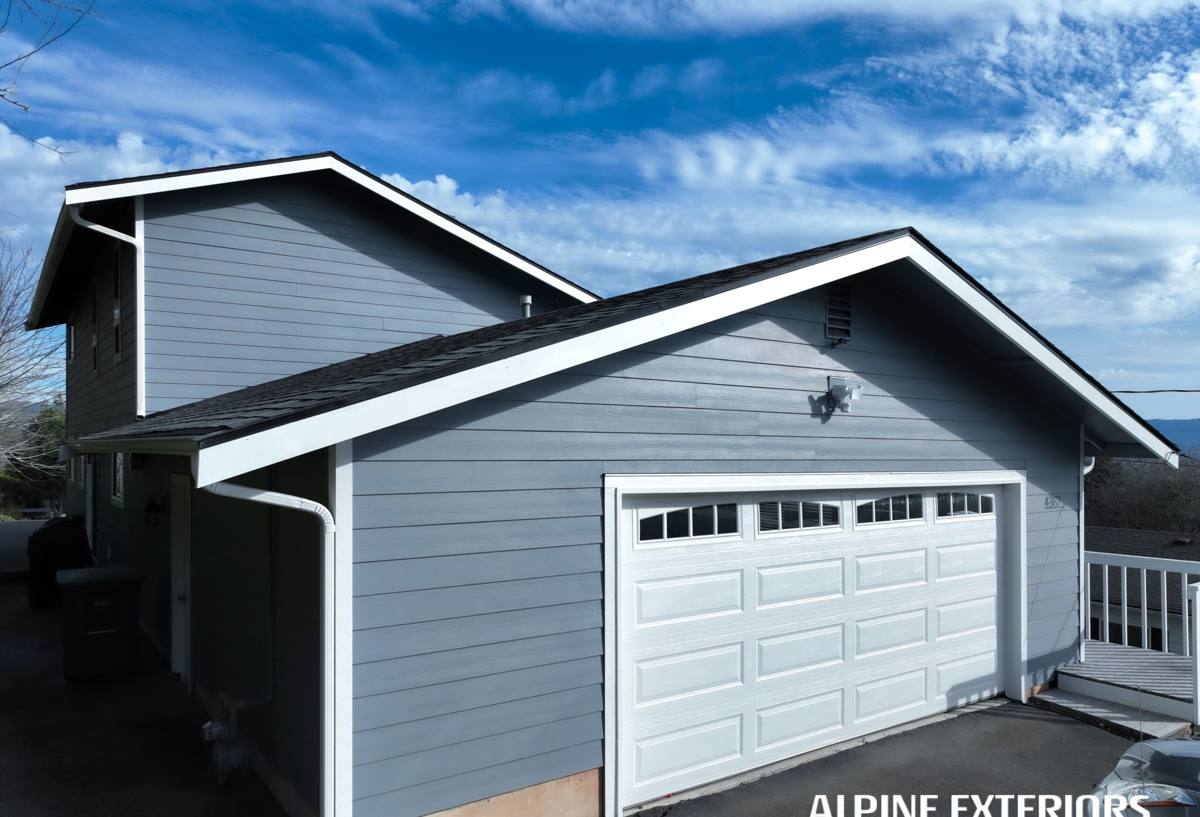
Signs a Happy Valley Roof Needs Replacing, Not Patching
A lot of roofs get patched two or three times before anyone seriously considers replacement, and that's usually money spent chasing a problem that keeps coming back. Here's what tends to mean the roof itself, not just a section of it, has reached the end of its service life:
- Granule loss heavy enough that you're finding shingle grit in the gutters every time it rains
- Shingles that are cupping, curling, or cracking across multiple slopes, not just one sun-exposed side
- Soft or spongy spots when walked on, which usually means the decking underneath has taken on moisture
- Persistent moss growth that comes back within a season or two of cleaning, even after treatment
- Daylight visible through the roof deck from inside the attic, or water stains on attic framing
- Flashing around chimneys, vents, or valleys that's rusted, lifted, or was never properly step-flashed to begin with
If you're only seeing one or two of these and the roof is under 15 years old, a repair might still make sense. Once several of these show up together, or the roof is past its expected lifespan, replacement is usually the more honest recommendation — and the more economical one over a five-to-ten-year horizon.
What a Correct New Roof Installation Actually Involves
Tear-Off and Deck Inspection
We don't install new roofing over old. A full tear-off lets us see the actual condition of the roof deck, which is the part most homeowners never get to look at. In a marine climate like this one, deck rot around old flashing points, vent boots, and eaves is common even on roofs that look fine from the ground. Any soft or delaminated sheathing gets replaced before anything new goes down — installing new roofing over a compromised deck just guarantees an early failure.
Underlayment and Moisture Barrier
This layer matters more here than almost anywhere else in the state. Given how much of the year Happy Valley spends under sustained rain, we treat underlayment as a real second line of defense, not a formality. That means synthetic underlayment across the field of the roof and self-adhering ice-and-water membrane at the eaves, valleys, and any low-slope transitions where water sits longest or wind-driven rain can work its way sideways under the shingles.
Flashing Details
Flashing failures are behind more roof leaks than worn-out shingles are. Every penetration — chimneys, plumbing vents, skylights — and every valley needs flashing that's correctly layered with the underlayment and roofing material, not just caulked over. Caulk is a maintenance item, not a waterproofing strategy, and salt air accelerates the breakdown of cheap sealants faster than people expect.
Ventilation
A roof with poor attic ventilation traps moisture underneath the deck, which speeds up rot and gives moss and algae exactly the damp, cool conditions they need to spread. Balanced intake at the eaves and exhaust at the ridge keeps air moving, which protects both the new roofing material and the decking underneath it. This is one of the most commonly skipped steps on budget installs, and it's one of the reasons roofs fail years before they should.
Choosing a Roofing Material for This Climate
There's no single "best" roofing material — the right choice depends on your budget, your home's style, and how much long-term maintenance you're willing to take on. Here's how the common options actually perform in a wet, salt-influenced environment like Happy Valley:
| Material | Moisture & Salt Air Performance | Moss Resistance | Typical Lifespan |
|---|---|---|---|
| Asphalt composition shingle | Good with proper underlayment; algae-resistant granule options help in shaded areas | Moderate — benefits from copper or zinc strips | 20-30 years |
| Standing seam metal | Excellent; sheds water fast and doesn't trap moisture in seams | High — minimal surface for moss to grip | 40-60+ years |
| Cedar shake | Fair; needs consistent maintenance to resist rot in constant damp conditions | Low without regular treatment | 20-30 years with upkeep |
| Synthetic/composite shingle | Good; engineered to resist moisture absorption | Moderate to high depending on product | 30-50 years |
We don't push one material on every home. Cedar shake, for example, can look great and is a legitimate choice — but it's an honest trade-off: it demands more regular maintenance in a climate this wet, and we'll tell a homeowner that upfront rather than let them find out the hard way. Metal roofing costs more at installation but tends to need the least attention over its life, which matters a lot on a shaded, damp lot.
Our Installation Process, Start to Finish
- On-site inspection and estimate. We walk the roof and attic, check the deck condition where accessible, and talk through material options based on your home and budget.
- Written scope and timeline. You get a clear breakdown of materials, underlayment, flashing work, and ventilation changes before anything is scheduled — no surprise add-ons mid-project.
- Material delivery and site protection. Landscaping, siding, and gutters get protected before tear-off begins.
- Tear-off and deck repair. Old roofing comes off down to the deck, and any rotten or weak sheathing is replaced.
- Underlayment, ice-and-water membrane, and flashing installation. This is the step that determines how the roof performs in driving rain, and we don't rush it.
- Roofing material installation. Installed to manufacturer specification, including proper nailing patterns and exposure — details that directly affect wind and warranty performance.
- Ventilation and final details. Ridge and soffit ventilation confirmed, vent boots and flashing checked, and moss-prevention strips installed if applicable.
- Final walkthrough and cleanup. We review the completed roof with you and do a magnetic sweep for stray fasteners before leaving the site.
Moss, Algae, and Long-Term Roof Care in a Marine Climate
Moss isn't just cosmetic. It holds moisture against the roofing material, works its way under shingle edges, and can lift them enough to let water in over time. In Whatcom County, moss season stretches across most of the fall, winter, and spring, which means a roof here is rarely fully dry for long. That's exactly why moss-resistant details — copper or zinc strips near the ridge, proper ventilation, and trimming back overhanging branches that keep sections of the roof shaded and damp — are worth building in at installation rather than treating as an afterthought.
Even a well-installed roof benefits from periodic soft-washing to keep moss and algae from establishing themselves, along with keeping gutters clear so water isn't backing up under the eaves. A new roof buys you a long reset period, but a little seasonal attention protects that investment.
Cost Factors for a Happy Valley Roof Replacement
Every roof is priced individually, but the same handful of factors drive most of the variation we see between quotes:
| Factor | Why It Affects Cost |
|---|---|
| Roof size and pitch | Steeper roofs take longer to work safely and use more material per square |
| Number of penetrations and valleys | Each chimney, vent, and valley adds flashing labor and material |
| Deck condition | Rotten sheathing found during tear-off adds repair cost not visible in a surface inspection |
| Material choice | Asphalt, metal, cedar, and composite carry very different material and labor costs |
| Access and site conditions | Tree cover, tight lots, and roof height all affect setup time and safety equipment needs |
| Ventilation upgrades | Adding or correcting intake/exhaust ventilation is a smart long-term investment but adds to the scope |
Asphalt composition roofs remain the most common choice for a reason — solid performance for a moderate cost. Metal and composite options cost more upfront but often make sense for homeowners planning to stay long-term and wanting to minimize maintenance in a wet climate.
Why Hiring a Crew That Already Works Happy Valley Matters
A roofer who's done work throughout Fairhaven and the surrounding Bellingham area already understands how these homes are exposed to wind and rain coming off the bay, which slopes tend to hold moss longest, and what deck condition to expect on homes of a given age in this part of Whatcom County. That familiarity shows up in small decisions — where to add extra ice-and-water protection, which valleys need reinforced flashing, how much ventilation a particular roof style actually needs — that a crew unfamiliar with the area might miss entirely.
Local experience also means we're pulling the correct permits for Fairhaven and Whatcom County work, coordinating around typical fall and winter weather windows, and standing behind the work with a company that isn't going anywhere after the job wraps.
What to Ask Before You Hire a Roofer
- Are you licensed and insured to work in Washington, and can you provide proof?
- Will you do a full tear-off, or is a layover being proposed to save cost?
- What underlayment and ice-and-water shield are included, and where will they be installed?
- How will you handle flashing at valleys, chimneys, and vent penetrations?
- Will ventilation be assessed and corrected as part of the install, not just the roofing surface?
- What's the manufacturer's warranty, and what's your own workmanship warranty?
- Do you have experience working in this specific area, and can you speak to how local weather affects the recommendation?
A contractor who answers these clearly and without hesitation is usually one who knows what they're doing. Vague answers, especially around tear-off and flashing, are worth pressing on further.
If your Happy Valley roof is showing its age or you just want an honest read on where it stands, we're happy to take a look. Use the form below to request a free, no-pressure estimate — we'll walk the roof, tell you what we actually see, and lay out real options for your home and budget.