 Fairhaven Siding
 Custom Decks in Bow, Built for the Weather That's Actually Here
A deck in Bow doesn't live the same life as a deck two hundred miles inland. Between the salt-laced air coming off the water, the long stretches of driving rain, and a moss season that can run most of the year in shaded spots, a deck out here is under constant, low-grade attack. Most of that damage doesn't show up as a dramatic failure — it shows up as soft spots under a rug, green film on the stair treads, corroded screw heads, or a railing post that's gone spongy at the base. We build and repair decks in this area specifically with those failure points in mind, not as an afterthought.
This page covers what a custom deck built for Bow actually needs, what separates a correctly built deck from one that just looks finished on install day, and how we approach the work.
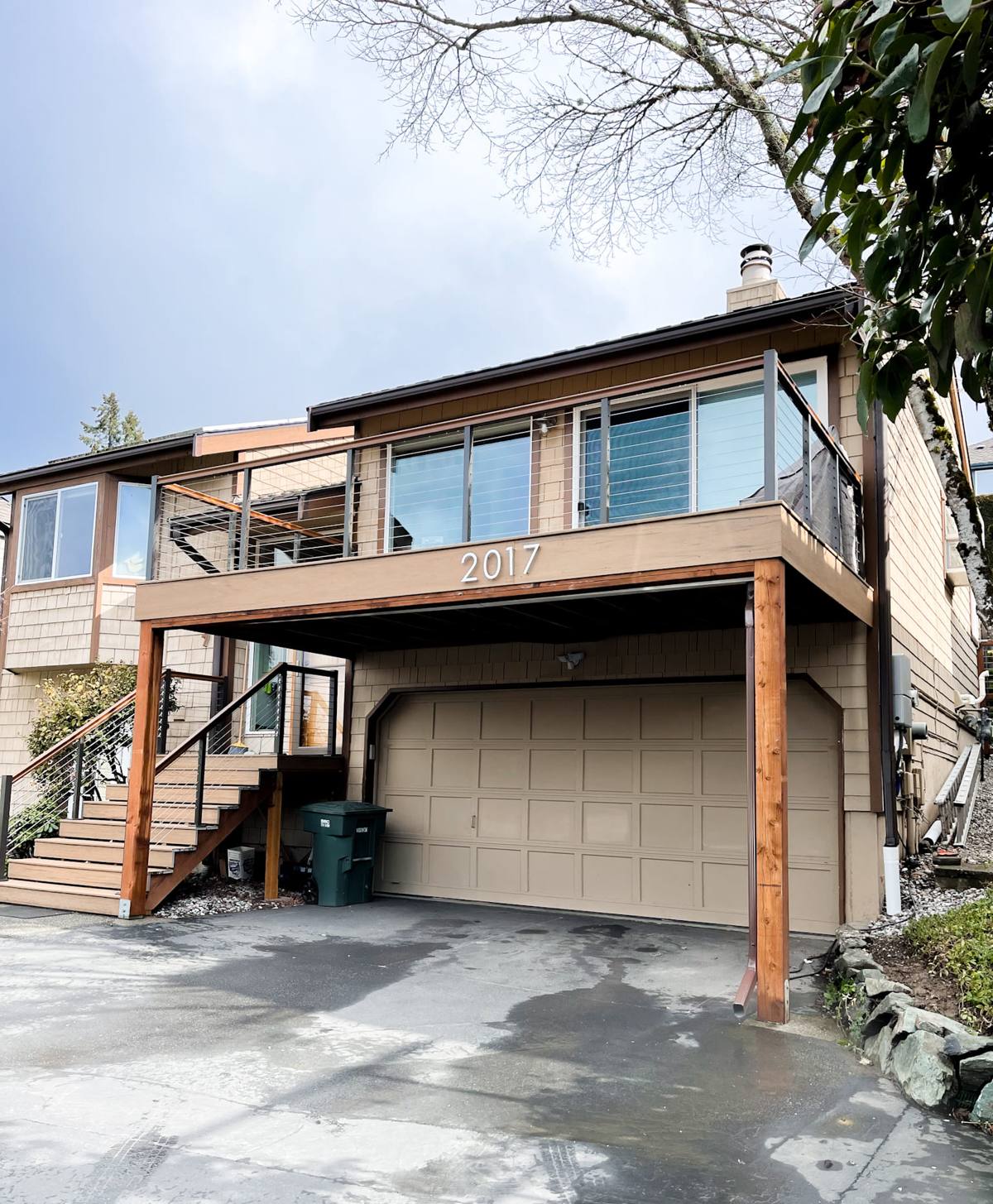
What Local Conditions Do to an Outdoor Deck
Three things drive almost every deck problem we see in this part of Washington:
Salt Air
Airborne salt accelerates corrosion on anything metal — fasteners, joist hangers, railing hardware, even the coating on some flashing products. A fastener rated for general exterior use inland can start rusting years earlier out here. Once a fastener corrodes, it loses holding strength long before it looks obviously bad.
Driving Rain
Rain that comes in sideways, not just straight down, finds gaps that a "mostly waterproof" detail would get away with in a calmer climate. Ledger connections, stair stringers, and any point where the deck meets the house siding are the places this shows up first — water tracking behind trim, into end grain, or down into framing that was never meant to stay wet.
Moss and Shade
Tree cover and persistent damp keep moss and algae established on decking, especially on the north side of a house or under a covered porch roof. Beyond looking bad, moss holds moisture against the decking surface and turns stairs and low-traffic areas slick and genuinely dangerous underfoot.
None of this means a deck in Bow can't last. It means the material choices, fastener choices, and drainage details have to account for it from day one — not get patched in after the first winter.
Choosing Decking Material for This Climate
There's no single "best" decking material — there's a best fit for your budget, your maintenance appetite, and how much sun or shade the deck actually gets. Here's how the common options hold up under Bow's conditions specifically:
| Material | How It Handles This Climate | Maintenance | Typical Lifespan Here |
|---|---|---|---|
| Pressure-treated wood | Affordable, but end grain and fastener holes need real attention to shed water; moss takes hold quickly in shade without upkeep | Annual cleaning, periodic sealing | 15–20 years with upkeep |
| Cedar | Naturally rot-resistant and handles moisture well, but is softer and shows moss/mildew staining faster if not cleaned | Cleaning and re-oiling every 1–2 years for color; will gray naturally if left | 20–25 years with upkeep |
| Composite decking | Won't rot, but moss and algae can still grow on the surface film in shaded, damp spots — needs occasional cleaning | Periodic washing; no staining or sealing | 25–30+ years |
| Capped/PVC decking | Best resistance to moisture absorption and staining of the options here; smoother cap sheds moss more easily | Occasional washing | 25–30+ years |
We don't push one material on every job. A sunny, open deck with good airflow is a very different maintenance conversation than a shaded deck tucked against tree cover — we'll walk your site with you and talk through what fits before you commit to a material.
What a Correctly Built Deck Involves
The decking boards get all the attention, but the parts that determine whether a deck lasts are underneath and behind them:
- Ledger flashing: Where the deck attaches to the house, proper flashing (not just caulk) keeps water from tracking behind the siding and into the wall framing — this is one of the most common failure points on older decks we're asked to fix.
- Joist hangers and fasteners: Stainless steel or coated fasteners rated for coastal, treated-lumber contact — mismatched or under-rated hardware corrodes fast in salt air and quietly loses grip.
- Footings sized for the soil: Concrete footings set below frost depth and matched to the actual load, not guessed at.
- Airflow underneath: Decks built too low or too tight to the ground trap moisture and accelerate rot in the framing — spacing and skirting need to allow air movement.
- Board spacing and drainage: Gaps sized so water actually sheds instead of pooling, especially important with composite and PVC boards that don't wick moisture the way wood does.
A deck that skips any of these can look identical to a correctly built one on the day it's finished. The difference shows up in year three or four, not year one.
Our Process for a Custom Deck in Bow
1. On-Site Walkthrough
We look at sun exposure, tree cover, drainage patterns on your lot, and how the deck ties into your house before talking materials — the site drives the recommendation, not the other way around.
2. Design and Material Selection
We talk through size, layout, railing style, and decking material with honest trade-offs on cost, maintenance, and how each option performs in a shaded or exposed spot on your specific property.
3. Permitting
Deck permitting requirements vary by jurisdiction and by the deck's height and attachment method — we handle what applies to your project so you're not chasing paperwork mid-build.
4. Framing and Flashing
This is where the long-term durability gets decided — ledger flashing, joist hangers, footings, and fastener selection all happen before a single decking board goes down.
5. Decking, Railing, and Finish Work
Boards, railings, stairs, and any trim or skirting go in with attention to drainage gaps and how water will move off the finished surface.
6. Final Walkthrough
We walk the finished deck with you, cover basic care for the material you chose, and make sure everything's solid before we call it done.
Railings, Stairs, and the Details That Actually Fail First
Railings and stairs take more direct weather exposure and more physical wear than the deck field itself, so they're often the first place problems show up. Post bases sitting in standing water, stair stringers without proper flashing, and railing hardware that isn't rated for coastal exposure are common culprits we run into on repair calls. On new builds, we treat these connection points with the same care as the ledger — proper flashing at post bases, corrosion-resistant hardware throughout, and stair stringers detailed to shed water instead of trap it.
Living With a Deck Through a Long Moss Season
Even a well-built deck needs some seasonal attention out here — the goal of good construction is to make that upkeep light, not eliminate it entirely. A simple maintenance routine keeps a deck looking and performing the way it should:
- Sweep leaves and debris off the deck regularly, especially in fall — trapped organic matter is what feeds moss and algae growth
- Rinse or lightly scrub decking once or twice a year, more often in shaded areas, to keep moss from establishing
- Check that gaps between boards stay clear of debris so water keeps draining properly
- Inspect railing post bases and stair connections yearly for softness or corrosion at fastener heads
- For wood decking, plan on re-sealing or re-oiling on the schedule appropriate to the species — skipping this is the fastest way to shorten a wood deck's life here
- Trim back overhanging branches where practical to cut down on shade and debris load
Why It Matters to Hire a Crew That Already Works in Bow
A deck built by someone unfamiliar with this stretch of coastline often looks fine at handoff and starts showing problems within a couple of winters — undersized flashing, general-purpose fasteners that weren't rated for salt air, or framing set too low for the site's drainage. We work in Bow and the surrounding Fairhaven area regularly, so the material and hardware choices on this page aren't theoretical to us — they're what we've seen hold up and what we've been called back to fix when it didn't. That local track record is worth more than a lower bid from a crew building the same deck they'd build anywhere else in the state.
Get a Free Estimate
If you're planning a new deck or need an honest look at one that's showing its age, we're happy to walk the site with you and talk through what makes sense for your home and budget. Use the form below to request a free, no-pressure estimate.