 Fairhaven Siding
 Windows in Columbia Work Harder Than They Look
Columbia sits close enough to the water that its homes deal with a different set of pressures than houses further inland. Salt-laden air moves through the neighborhood off Bellingham Bay, wind-driven rain finds its way into gaps that would stay dry elsewhere in Whatcom County, and the long stretch of gray, damp months each year gives moss and mildew plenty of time to take hold on anything that traps moisture. Windows sit right at the front line of all of it. A window that's sealed and flashed correctly shrugs this off for decades. One that isn't starts showing problems within a few wet seasons — and by the time you can see it from inside the house, there's usually already damage you can't see.
We work on homes in and around Columbia regularly, and the patterns repeat: older wood-frame windows with failed glazing, aluminum-frame single-panes from the 70s and 80s that never had a fighting chance against condensation, and even some newer vinyl installs that were never flashed properly and are already letting water into the wall cavity. Window replacement here isn't just a cosmetic upgrade — it's weatherproofing work first, and looks second.
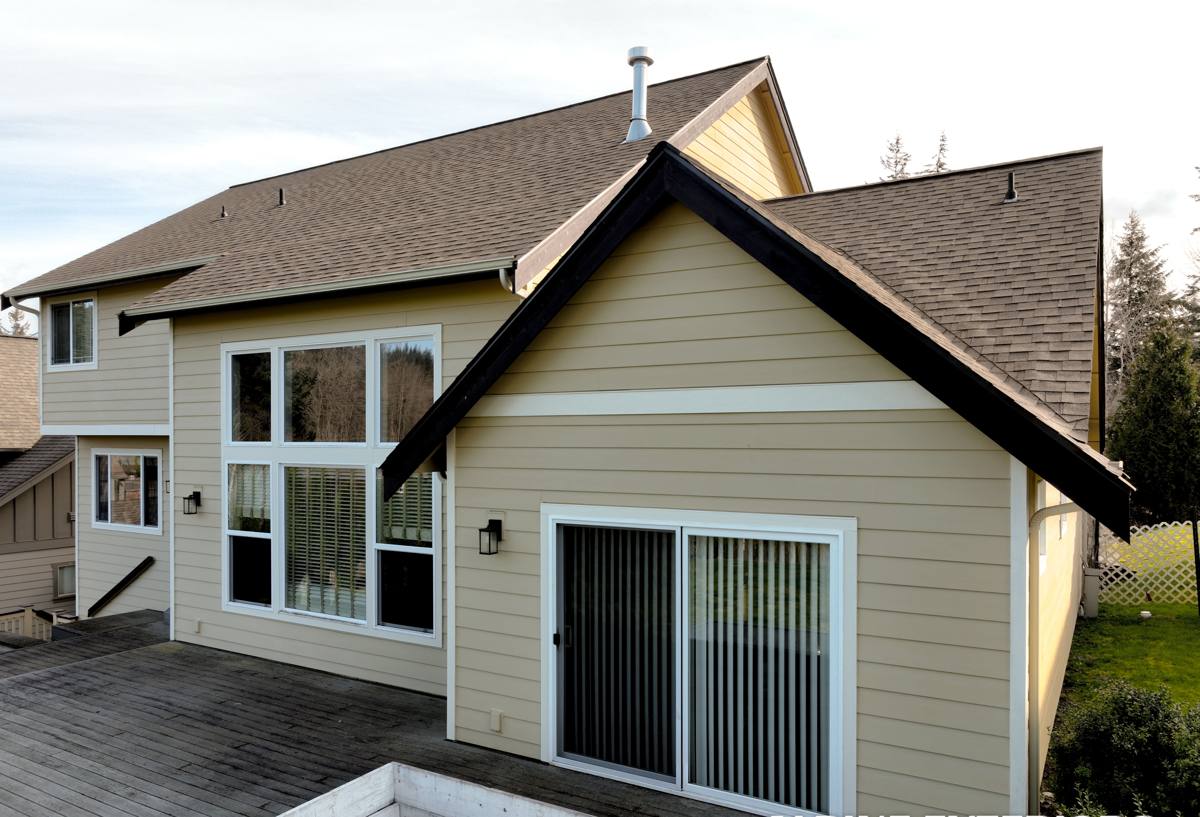
Signs a Columbia Home Needs Window Replacement
Most homeowners call us because of one obvious symptom, but a good inspection usually turns up two or three more. Here's what we look for and what you can check yourself:
- Fogging or a permanent haze between double-pane glass — the seal has failed and the gas fill is gone
- Soft or discolored trim and sill wood, especially on walls facing the prevailing weather
- Visible moss, algae, or black streaking on the sill or lower frame
- Drafts you can feel with a hand near the frame on a windy day
- Windows that are hard to open, stick, or won't stay up without a prop
- Noticeably higher heating bills compared to similar-sized homes nearby
- Condensation forming on the inside of the glass regularly, not just on the coldest mornings
- Paint peeling or bubbling on interior trim near the window — often a sign of moisture getting in behind it
Any one of these on its own might just mean a repair. Two or three together, especially on a home more than 20 years old, usually means the frames and seals are past the point where patching makes financial sense.
What a Correct Window Replacement Actually Involves
Removal and Inspection
The old window doesn't just get pulled and swapped. Once it's out, we check the rough opening and the sheathing around it for rot, soft spots, or existing water staining. In a marine climate like Whatcom County's, this step matters more than almost anywhere else — a window installed over damaged sheathing will fail again no matter how good the new unit is. If we find rot, we deal with it before anything goes back in, and we'll show you what we found rather than just quietly cover it up.
Flashing and Water Management
This is the step that separates a job that lasts from one that doesn't. Proper flashing directs any water that gets past the exterior trim back out and away from the wall framing, using a sequence of sill pan, side flashing, and head flashing that overlaps correctly — always shedding water downward and outward, never trapping it. Skipping or rushing this step is the single biggest reason window replacements fail early on the coast, and it's invisible once the trim goes back on. It's also the step that's easiest for a rushed or inexperienced crew to shortcut, because nobody will notice until the wall starts rotting from the inside.
Installation and Sealing
The new window gets set plumb, level, and square, shimmed correctly so it isn't under stress that will crack seals or bind the sash over time, and insulated around the frame without overpacking (which can bow the frame and cause operating problems). Exterior sealant goes on last, and it needs to be a product and application method suited to a climate with constant moisture and temperature swings — not just whatever caulk is closest to hand.
Choosing the Right Window for This Climate
Not every window sold in a big-box store is a good fit for a home exposed to salt air and driving rain. Frame material matters more here than in drier parts of the state. We'll walk through the trade-offs honestly rather than pushing whatever has the best margin.
| Frame Material | Coastal Performance | Maintenance | Our Take |
|---|---|---|---|
| Vinyl | Good — won't rot or corrode, handles moisture well | Low — occasional cleaning | Solid, budget-friendly default for most Columbia homes |
| Fiberglass | Excellent — very stable, resists warping in temperature/humidity swings | Low | Worth the upcharge on exposed elevations or larger openings |
| Wood (unclad) | Poor without diligent upkeep — vulnerable to rot and moss in this climate | High — regular repainting/sealing | We'll install it if requested, but we're upfront that it demands more ongoing care here than almost anywhere else in the state |
| Wood-clad (vinyl or aluminum exterior) | Good — exterior face protected, interior keeps wood look | Moderate | A reasonable middle ground if you want a wood interior look |
| Aluminum | Fair — prone to condensation and thermal transfer unless thermally broken | Low | Only with a thermally broken frame; otherwise not our recommendation here |
Glass package matters too. Dual-pane with a low-E coating and an argon fill is the practical standard for this part of Whatcom County — it cuts heat loss and helps manage the condensation that a damp, temperature-swinging climate is prone to causing on interior glass.
Our Process, Start to Finish
Estimate and Assessment
We come out, measure, and actually look at the condition of your existing frames, trim, and the wall around them — not just the glass. You'll get a straight answer about what's failing, what's optional, and what we'd genuinely recommend for a house in Columbia's conditions versus what we'd recommend somewhere drier inland.
Installation Day
We protect your interior and landscaping before we start, remove and inspect one opening at a time rather than tearing out every window in the house at once, and keep openings covered and weathertight if a job runs past a single day — which matters when Whatcom County weather can turn without much notice.
Final Walkthrough
Every new window gets operated, checked for square and smooth function, and the exterior sealant lines get inspected before we call the job done. We'll walk you through basic care for your specific frame material before we leave.
What Window Replacement Costs — and What Drives the Price
Every home is different, so we won't quote a number without seeing the job, but the honest range for most single-family window replacement projects in this area runs from a few hundred dollars per window for a straightforward vinyl swap up to well over a thousand per window for larger openings, premium frame materials, or jobs that turn up rot repair once we open the wall. Here's what actually moves the price:
| Factor | Why It Affects Cost |
|---|---|
| Frame material | Vinyl is the budget option; fiberglass and clad-wood cost more upfront |
| Window size and style | Large picture windows, bays, and custom shapes cost more than standard double-hungs |
| Existing damage | Rot found in the sheathing or framing adds repair cost that a healthy wall doesn't |
| Number of windows | Whole-house replacements typically bring a better per-unit price than one-offs |
| Access and height | Second-story or hard-to-reach openings take longer and cost more to do safely |
| Glass package | Upgraded low-E coatings or extra panes add cost but pay back in comfort and efficiency |
Why a Crew That Already Works in Columbia Makes a Difference
A window replacement crew that regularly works Columbia and the surrounding Fairhaven area has already seen what this specific stretch of coastline does to the wrong material choices and the wrong installation shortcuts. That's not a small thing. We know which elevations tend to take the worst of the driving rain, what moss buildup on a north-facing sill usually means for the wood underneath, and how much a marine climate punishes a sloppy flashing job compared to a drier inland town. That local pattern recognition shows up in fewer surprises during the job and fewer callbacks after it.
It also matters for accountability. A crew based in the area is still around next year if a question comes up, and has a reputation in the community worth protecting — not just a job number on an out-of-town route.
After Installation: Keeping Windows Performing in This Climate
New windows still need a little upkeep in a place like this. Rinse salt residue off exterior frames a couple of times a year, especially after storms. Keep an eye on exterior sealant lines and touch them up if you see cracking. Clear moss or debris off sills and tracks before it has a chance to hold moisture against the frame. None of this is heavy work, but skipping it is how even a good window installation loses years off its life in a coastal climate.
If you're weighing whether it's time to replace windows on a Columbia home, we're happy to take a look and give you a straight, no-pressure assessment of what's actually going on and what it would take to fix it right. Use the form below to request a free estimate.