 Fairhaven Siding
 Roofing Built for Columbia's Marine Climate
The Columbia neighborhood sits close enough to Bellingham Bay that homes here take a different kind of weather beating than roofs further inland. Salt-laden air off the water accelerates corrosion on exposed metal fasteners and flashing. Driving rain off Whatcom County's frequent southwest storms finds every weak seam, lap, and penetration. And the region's long, wet moss season means anything that holds moisture — valleys, north-facing slopes, shaded sections under mature trees — stays damp for months at a stretch instead of drying out between storms. A roof installed without accounting for all three of those factors will look fine for a year or two and then start failing in ways that are expensive to trace back to the install.
This page covers what a correctly installed new roof looks like for a Columbia home specifically: the materials that hold up here, how our crew sequences the job, and what to check before you sign with anyone.
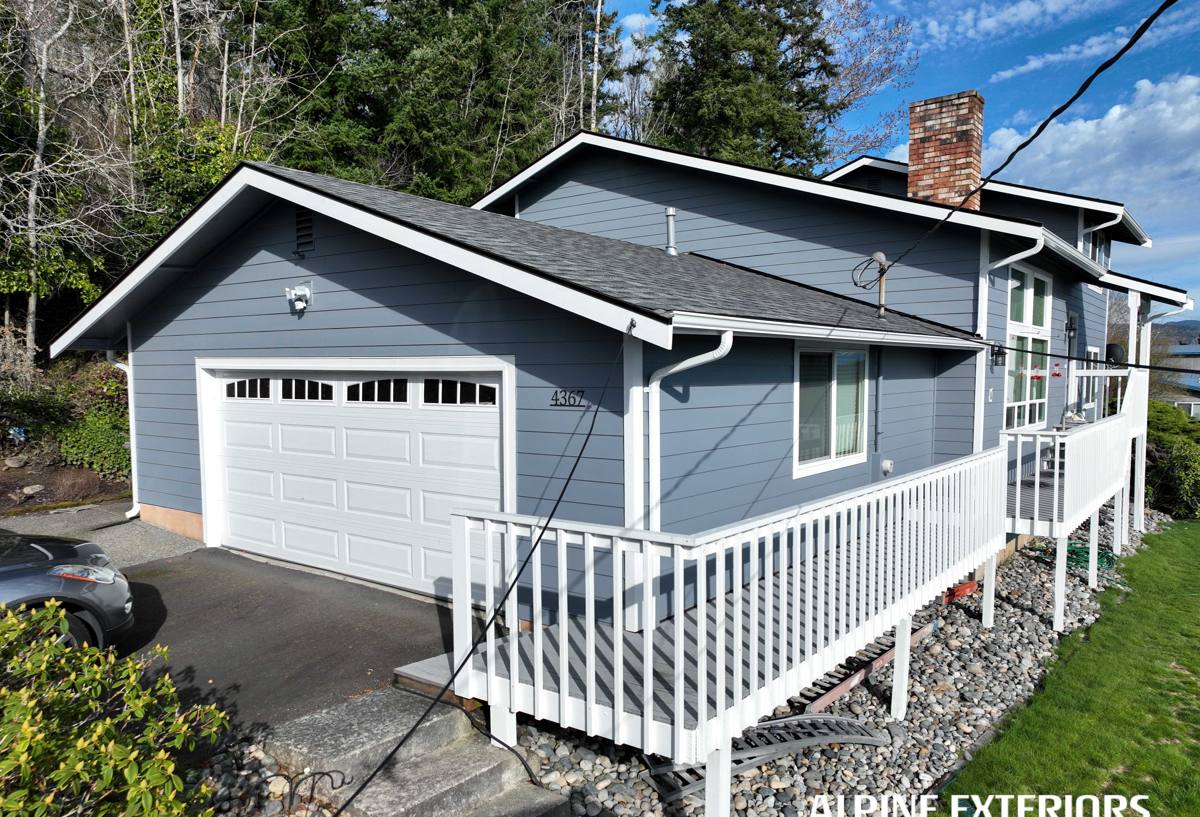
What Columbia Homes Are Up Against
Salt Air and Metal Fatigue
Proximity to the bay means airborne salt settles on every exterior surface, including your roof. Standard steel fasteners, uncoated flashing, and lower-grade metal roof edge trim corrode faster here than they would ten or fifteen miles inland. Over time, corroded fasteners lose their grip on shingles and underlayment, and pitted flashing stops shedding water the way it's supposed to. This isn't a hypothetical risk for oceanfront property only — it affects any Fairhaven-area home close enough to catch the marine air on a regular basis.
Driving Rain and Wind-Driven Water
Whatcom County storms don't just drop rain straight down — wind pushes it sideways and up under laps, especially at valleys, roof-to-wall transitions, and low-slope sections. A roof that isn't detailed for wind-driven rain can leak at these transition points even when the field of the roof (the open shingle area) is in good shape. This is one of the most common causes of "mystery leaks" we get called out to diagnose on roofs that are otherwise only a few years old.
Moss and Sustained Moisture
Moss doesn't just look bad — it holds water against the roofing material long after a storm passes, and its root structure works into shingle granules and seams over time. Shaded, north-facing, and low-slope sections of a Columbia roof are the most common moss hot spots. A new roof designed with this climate in mind builds in moss resistance and proper drainage from day one, rather than leaving it as a maintenance problem to manage forever.
What a Correct New Roof Installation Involves
A new roof is more than laying shingles over the old ones or the bare deck. Each layer does a specific job, and skipping or shortcutting any of them is where premature failures come from.
Tear-Off and Deck Inspection
We remove the existing roofing down to the deck rather than layering over it. This lets us inspect the sheathing for rot, soft spots, and delamination — issues that are common on older Fairhaven-area homes where a slow leak has been quietly damaging the deck for years without showing up inside the house. Any compromised sheathing gets replaced before anything new goes down; installing new roofing over a damaged deck just hides the problem and shortens the life of the new roof.
Underlayment and Ice-and-Water Protection
A synthetic underlayment goes down as the primary water barrier beneath the roofing material, and we add self-adhering ice-and-water membrane at the vulnerable spots — eaves, valleys, and roof penetrations — where wind-driven rain and moss-related moisture are most likely to find a way in. This is a small material cost relative to the whole job, but it's one of the biggest factors in how a roof performs during a real storm, not just a light rain.
Flashing and Metal Details
Flashing around chimneys, skylights, vent pipes, and wall transitions gets replaced with new, corrosion-resistant material — not reused or caulked over. Given the salt air in this area, we pay particular attention to fastener quality and flashing coatings so these details hold up over the long term instead of becoming the first thing to fail.
Roofing Material Installation
Whatever material is chosen, correct installation means following manufacturer nailing patterns and exposure specs exactly, maintaining proper overlap at valleys and hips, and keeping fastener count and placement consistent across the whole roof. This is where a lot of corner-cutting happens on rushed jobs, and it's not something you can inspect from the ground once the roof is finished.
Ventilation
Proper intake and exhaust ventilation keeps the attic and roof deck at a stable temperature and moisture level. In a climate this wet, poor ventilation traps moisture under the roofing material from the inside, which can cause deck rot and shortens shingle life regardless of how good the roofing material itself is.
Choosing a Roofing Material for This Climate
There's no single "best" roofing material for every Columbia home — the right choice depends on your roof's pitch, sun/shade exposure, budget, and how long you plan to stay in the house. Here's how the common options compare for this specific climate.
| Material | Moss/Moisture Behavior | Typical Lifespan Here | Trade-offs |
|---|---|---|---|
| Architectural asphalt shingle | Good with algae-resistant granules; needs periodic cleaning on shaded slopes | 25–30 years | Best value; wide color range; moderate maintenance in mossy areas |
| Standing seam metal | Excellent — sheds moss and water fast, minimal moisture retention | 40–50+ years | Higher upfront cost; requires correct coating spec near salt air |
| Composite/synthetic shingle | Good, resists moisture absorption better than organic-mat products | 30–40 years | Higher material cost than asphalt; fewer installers experienced with it |
| Cedar shake | Requires the most upkeep — retains moisture, needs regular treatment | 20–30 years with maintenance | We'll install it if requested, but we're upfront that it's the highest-maintenance option in a wet, mossy climate |
For most Columbia homes, we lean toward architectural asphalt with algae-resistant granules or standing seam metal, depending on the roof's exposure and the homeowner's long-term plans. We'll walk through the honest trade-offs for your specific roof rather than pushing whatever's most profitable to install.
Our Installation Process
- On-site assessment — we inspect the existing roof, deck condition (where visible), ventilation setup, and note the specific moss/moisture hot spots on your property.
- Written estimate — material options, scope of work, and a clear price, explained in plain terms before you commit to anything.
- Scheduling around weather — we plan tear-off and dry-in around Whatcom County's forecast windows so your home isn't exposed to open weather any longer than necessary.
- Tear-off and deck repair — full removal of old roofing, deck inspection, and replacement of any compromised sheathing.
- Underlayment, flashing, and ventilation install — the layers that determine long-term performance, done to manufacturer spec.
- Roofing material installation — installed to exact nailing and exposure specs for wind and moisture resistance.
- Final walkthrough — we review the finished roof with you and answer any questions before we consider the job done.
What to Check Before You Hire a Roofer in Columbia
- Do they carry current Washington contractor licensing and adequate liability insurance?
- Will they tear off down to the deck and inspect it, rather than layering over existing roofing?
- Do they specify ice-and-water membrane at eaves and valleys, not just standard underlayment across the whole roof?
- Can they explain their flashing material and fastener choice in terms of this area's salt air exposure?
- Do they address attic/roof ventilation as part of the scope, not as an afterthought?
- Is the estimate written and itemized, not a vague verbal number?
- Do they have manufacturer warranty backing for the specific material and installation method they're proposing?
Why Local Experience in Columbia Matters
A roofing crew that regularly works Columbia and the broader Fairhaven area already knows which slopes hold moss the longest, which roof styles are common in the neighborhood, and how the local storm pattern tends to find weak points. That's not something a crew traveling in from outside the region picks up on the first job. It also means we're a known, reachable local business if you ever have a warranty question or a storm-related concern down the road — not a name from a flyer that's hard to track down after the invoice is paid.
If you're weighing a new roof for a Columbia-area home, we're happy to take a look and give you a straight answer on condition, options, and honest pricing — no pressure, no upsell. Use the form below to request a free estimate.