 Fairhaven Siding
 Board & Batten Siding in the York Area: What Makes This Job Different
Board and batten siding has a clean, vertical-line look that suits a lot of the homes in and around the York neighborhood — craftsman bungalows, newer infill builds, and everything in between. But the look is only half the job. In this part of Whatcom County, the siding also has to survive salt air off Bellingham Bay, driving rain that comes in sideways more often than straight down, and a moss season that can stretch from fall through spring. A board and batten installation that isn't built for those specific conditions will look fine for a year or two and then start showing problems exactly where the vertical boards meet the horizontal battens — the joints and seams that make this style distinctive are also the parts most exposed to water if they're not detailed correctly.
We work on homes throughout Fairhaven, including the York area, often enough to know which details matter here and which corners get cut on jobs that aren't built for this climate. This page walks through what a correct board and batten job looks like on a York home, why we only do it in James Hardie fiber cement, and what our process looks like from estimate to finished siding.
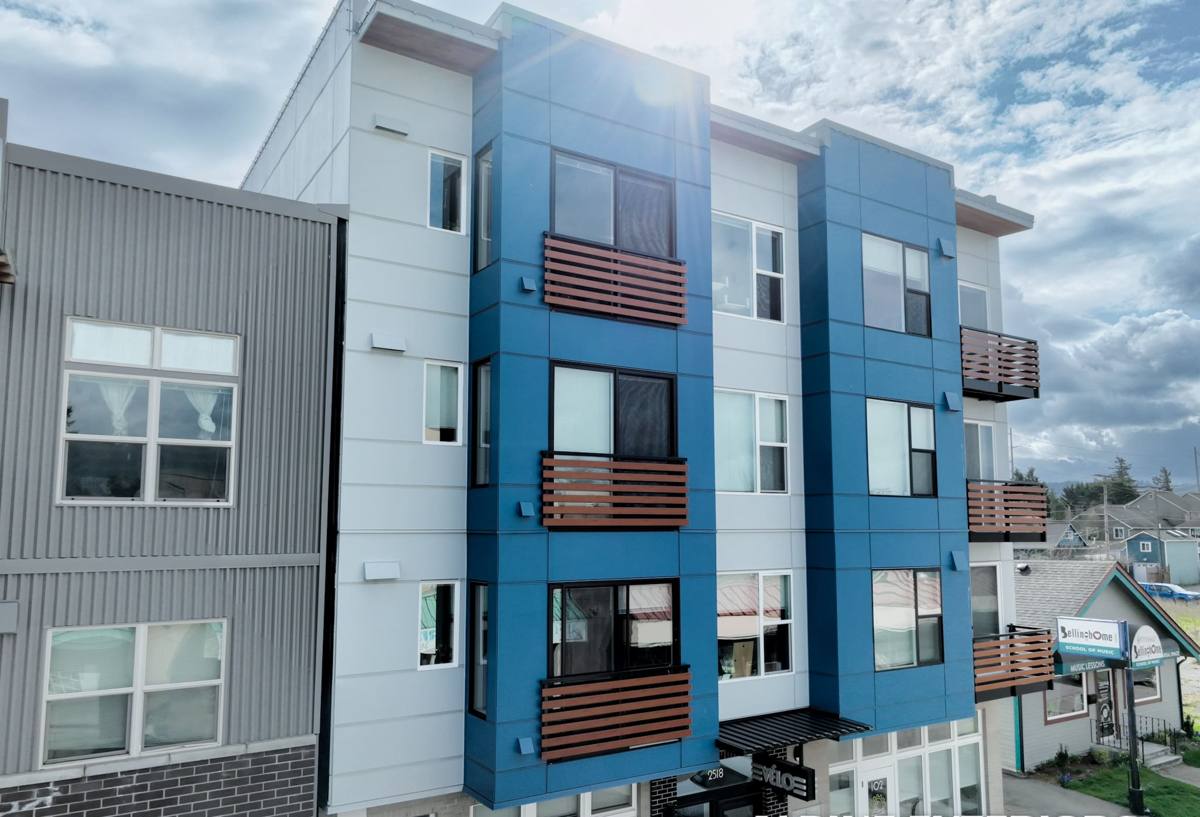
What This Climate Does to Board & Batten Siding
Salt Air and Coastal Exposure
Homes within a few miles of the water pick up airborne salt that settles on exterior surfaces and accelerates corrosion on fasteners, trim, and any metal flashing components. Over time, salt exposure also breaks down paint films and can telegraph through poorly sealed joints. Board and batten's many vertical seams mean more edges exposed to this kind of weathering than a standard lap siding job — which makes material choice and joint detailing more important here, not less.
Driving Rain and Wind-Driven Moisture
Fairhaven gets its share of storms where rain doesn't just fall — it's pushed sideways against the building envelope. Wind-driven rain finds any gap in a batten joint, any nail that wasn't set correctly, or any place where caulk was used instead of proper flashing. On a board and batten wall, that means water can travel behind the battens and sit against the wall assembly if there's no drainage plane to let it escape.
A Long Moss Season
Moisture, shade, and mild temperatures make Whatcom County prime territory for moss and algae growth on north-facing and shaded walls, which describes a lot of lots in and around York given the tree cover common to the area. Moss holds moisture against the siding surface for extended periods, which is a problem for any wood-based product and a non-issue for the material we install.
What Correct Board & Batten Installation Actually Involves
The visual style is simple — vertical boards with battens covering the seams — but doing it right involves several layers most homeowners never see.
A Working Rainscreen and Drainage Plane
Behind the siding, there needs to be a weather-resistive barrier and a drainage gap that lets any moisture that gets past the battens drain out and dry rather than sit against the sheathing. Skipping or shortcutting this is the single most common reason board and batten siding fails early in wet climates like ours.
Fastening and Batten Spacing
Battens have to be fastened into framing at correct intervals, with enough clearance for the panel underneath to handle normal expansion and contraction. Over-driven or under-driven fasteners are a common failure point — either can let water in or cause the panel to crack over time.
Flashing, Trim, and Terminations
Every window, door, corner, and roofline intersection needs flashing detailed to shed water outward, not into the wall. On a coastal, high-rain property, this is where most of the long-term performance of the job actually gets decided — not in the field of the wall, but at the edges.
Why We Install Only James Hardie Fiber Cement
Board and batten is offered in several materials — vinyl, engineered wood, primed spruce, cedar — and each has a real fan base. We don't install any of them. We standardized on James Hardie fiber cement for every siding job we do, board and batten included, for reasons that matter specifically in a climate like this one:
- Non-combustible: fiber cement doesn't feed a fire the way wood-based or wood-fiber products can.
- Moisture-stable: it doesn't absorb and swell the way engineered wood or solid wood products do when they take on repeated wetting from driving rain or moss cover.
- Factory-applied ColorPlus finish: baked-on color that resists fading and doesn't require the repainting cycle that primed wood products demand.
- Climate-engineered HZ formulations: James Hardie's HZ5 product line is specifically formulated for wetter, harsher climates like the Pacific Northwest.
- A real, transferable warranty backed by a manufacturer that's been in fiber cement longer than most competitors have existed.
None of this means other products can't be installed correctly by someone — it means we've made a professional call that, given what this region does to a home's exterior, fiber cement is the material we're willing to put our name behind.
Board & Batten Material Comparison for York Homes
| Material | Moisture Behavior in This Climate | Maintenance | Typical Warranty |
|---|---|---|---|
| James Hardie Fiber Cement | Dimensionally stable; resists water absorption and moss-related softening | Occasional wash; no repainting needed for ColorPlus finishes | Long-term, transferable, factory-backed |
| Engineered Wood (LP-type) | Can swell or degrade at cut edges and joints if moisture gets in | Periodic inspection of seams and edges; repaint over time | Manufacturer-specific, often more limited in wet climates |
| Solid Wood / Cedar | Absorbs moisture readily; prone to cupping, checking, and moss growth | Regular refinishing, sealing, and moss treatment | Typically no manufacturer warranty on the material itself |
| Vinyl | Doesn't absorb water but can warp with heat and doesn't stop moisture at seams | Low, but seams and panels can trap moisture behind them | Varies widely by manufacturer and grade |
What Affects Board & Batten Pricing on a York Home
We don't publish flat pricing because every home is different, but these are the real factors that move the number up or down on a board and batten project:
| Factor | Why It Matters |
|---|---|
| Wall complexity (dormers, gables, cutouts) | More corners and terminations mean more flashing detail and labor time |
| Current siding removal | Tear-off and disposal of failing wood, vinyl, or old fiber cement adds cost |
| Sheathing condition underneath | Rot or water damage found once old siding comes off may need repair before new siding goes on |
| Height and access | Multi-story sections or tight lot access affect staging and labor time |
| Trim and batten spacing pattern | Tighter batten spacing and wider trim boards use more material and labor |
Signs Your Current Siding Is Struggling in This Climate
If your home is already in the York area or nearby and you're not sure whether your siding needs attention, these are the signs we look for on a walk-around:
- Moss or algae buildup that comes back within weeks of cleaning
- Soft or spongy spots when you press on wood-based or engineered siding
- Paint that's peeling, bubbling, or chalking faster than a normal repaint cycle
- Visible gaps or separation at batten joints, corners, or trim
- Staining or dark streaks below joints, which usually points to water tracking behind the siding
- Warping, cupping, or bowing boards, especially on north- or shaded-facing walls
Our Process, Start to Finish
For a York-area home, our process is the same one we use across Fairhaven, because the fundamentals of doing this job right don't change from street to street:
- On-site assessment: we look at your current siding, wall assembly, and problem areas — moss coverage, sun exposure, prevailing wind and rain direction for your specific lot.
- Written estimate: a clear scope covering material, tear-off (if needed), drainage plane and flashing details, and batten layout.
- Prep and any repairs: if we find sheathing damage once old siding comes off, we address it before anything new goes up — not after.
- Installation to manufacturer spec: correct fastening, spacing, flashing, and drainage detailing, not shortcuts that only show up as problems years later.
- Final walkthrough: we go over the finished job with you before we consider it done.
Why a Crew That Already Works This Area Matters
Siding installation isn't one-size-fits-all across a region. A crew that mostly works drier inland climates may not automatically build in the drainage and flashing margin that a coastal, high-rain, high-moss property like one in the York area actually needs. Working Fairhaven and the surrounding Whatcom County neighborhoods regularly means we're not guessing at how this climate treats a wall assembly over five, ten, or twenty years — we're building for what we've already seen it do.
If you're considering board and batten siding for a home in the York area, we're happy to take a look and walk you through what your specific property needs. The estimate is free, there's no pressure to commit, and you'll get a straight answer about what correct installation looks like for your home.