 Fairhaven Siding
 Roofing for Happy Valley's Coastal Climate
Happy Valley sits close enough to Bellingham Bay and the Salish Sea that homes here deal with a different set of roofing stresses than houses further inland. Salt-laden air accelerates corrosion on metal fasteners and flashing. Driving rain off the water finds every gap in a poorly lapped shingle course. And the region's long wet season, especially under tree cover, gives moss and moisture months at a time to work into a roof that isn't built or maintained correctly. None of this means asphalt shingle roofing is a bad fit for the neighborhood — it's still the most practical, cost-effective option for most Happy Valley homes. It means the installation details matter more here than they would in a drier climate, and cutting corners shows up faster.
This page covers what a correctly built and maintained asphalt shingle roof looks like for a Happy Valley home, what our process involves, and why local experience with this specific stretch of Whatcom County coastline changes how a roofing job should be approached.
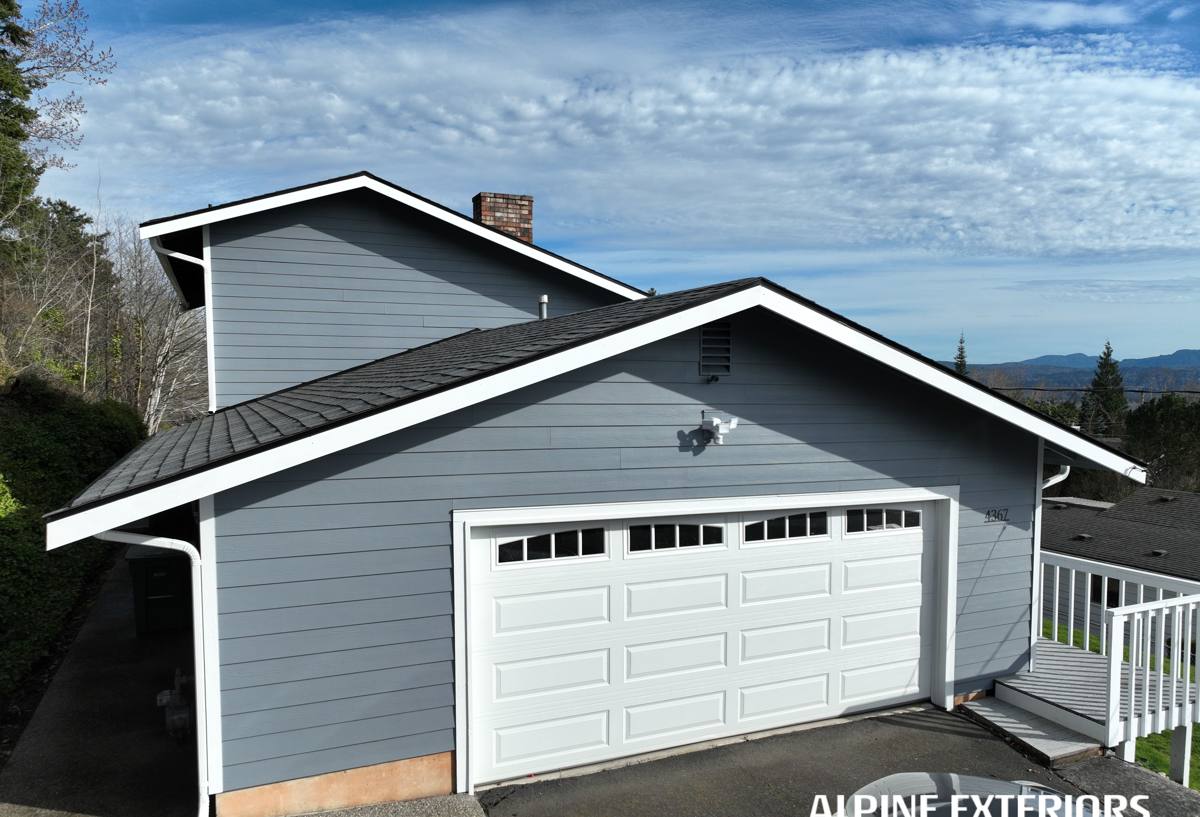
What Local Homes Actually Need From a Shingle Roof
An asphalt shingle roof that's correctly specified for Happy Valley needs to do three things well: shed wind-driven rain without relying on sealant alone, resist moisture retention in shaded or north-facing sections, and hold up to salt exposure on every metal component. A roof that only does two of these three tends to develop problems in the exact spots you'd expect — valleys, eaves, and anywhere tree canopy keeps a section of roof damp longer than the rest.
Wind-Driven Rain
Rain moving sideways off the water can work its way under shingles that are correctly nailed but under-lapped, or through step flashing that was reused instead of replaced during a re-roof. Proper shingle exposure and starter strip placement along eaves and rakes matters more here than in sheltered inland areas.
Moss and Sustained Moisture
Moss doesn't just sit on a roof looking bad — its root structure lifts shingle edges and holds water against the granule surface, which shortens the life of the shingle underneath it. Shaded roof sections and north-facing slopes in Happy Valley are the areas we watch closest, since they dry slowest after a wet stretch.
Salt Air and Metal Components
Fasteners, drip edge, flashing, and any exposed metal on a roof system are the first things salt air degrades. Using the wrong grade of metal, or skipping proper flashing at penetrations, shows up as rust streaking and eventual leaks years before the shingles themselves are due for replacement.
What a Correct Installation Actually Involves
A shingle roof is a system, not a single product. The shingles get the attention, but the layers underneath and the details around penetrations are what actually keep water out over the life of the roof.
- Deck inspection and repair — any soft, delaminated, or water-damaged sheathing gets replaced before anything goes back down, not covered over.
- Ice-and-water shield at eaves, valleys, and around penetrations where wind-driven rain and ice damming risk is highest.
- Synthetic underlayment across the full deck as the roof's secondary water barrier.
- Corrosion-resistant flashing at all walls, chimneys, skylights, and roof-to-wall transitions — sized and installed for coastal exposure, not the minimum code allowance.
- Balanced attic ventilation (intake at the eaves, exhaust at the ridge) so moisture from inside the home doesn't condense against the roof deck.
- Correct nailing pattern per manufacturer specification — not just "enough nails," but the right count, placement, and fastener length for the shingle and deck thickness.
- Starter strip and drip edge at every eave and rake, which is one of the most common shortcuts we see skipped on lower-bid re-roofs.
Threats and How We Address Them
| Local Condition | Effect on an Asphalt Shingle Roof | How We Address It |
|---|---|---|
| Salt air off the bay | Accelerated corrosion of fasteners, flashing, and drip edge | Corrosion-resistant flashing and fastener specification for coastal exposure |
| Wind-driven rain | Water forced under shingle edges and around flashing | Proper lap, sealed starter course, ice-and-water shield at vulnerable areas |
| Extended moss season | Lifted shingle edges, trapped moisture, premature granule loss | Correct shingle spacing, ventilation, and homeowner guidance on canopy trimming |
| Shaded, slow-drying sections | Localized wear ahead of the rest of the roof | Attention to ventilation balance and material choice in those zones specifically |
Choosing a Shingle for This Climate
Asphalt shingles come in a range of tiers, and the right choice for a Happy Valley home usually comes down to how much of the roof is shaded, how steep the roof is, and how long you plan to be in the house. We'll walk through the honest trade-offs rather than push the most expensive option by default.
| Shingle Type | Typical Lifespan | Best Fit | Trade-Off |
|---|---|---|---|
| 3-tab (standard) | Shorter end of the range | Budget-conscious re-roofs, simple rooflines | Less wind resistance, thinner profile, fewer style options |
| Architectural / laminate | Mid-to-long range | Most Happy Valley homes — good balance of cost, durability, and wind rating | Higher upfront cost than 3-tab |
| Impact-resistant / premium laminate | Longer range | Homes wanting maximum durability and warranty coverage | Highest material cost |
For most homes in this neighborhood, we recommend architectural shingles rated for higher wind exposure, given the proximity to open water. The upgrade cost from standard 3-tab is usually modest relative to the added wind and impact rating.
Our Process
Inspection and Estimate
We start with a walk of the roof (or a close visual and attic inspection if access is limited), noting deck condition, ventilation, flashing condition, and any moss or moisture damage already present. You get a straightforward written estimate with the scope explained in plain terms — no vague line items.
Tear-Off and Deck Check
Old roofing comes off down to the deck so we can actually see what's underneath, rather than roofing over hidden damage. Any compromised sheathing is identified and priced separately before replacement, so there are no surprise costs buried in a flat number.
Installation
Underlayment, flashing, starter course, and shingles go down per manufacturer specification, with the ventilation and flashing details above given the same attention as the visible shingle layer. This is the stage where coastal-specific details — flashing grade, fastener choice, ice-and-water placement — actually get executed, not just specified on paper.
Final Walkthrough
We walk the finished roof and the property with you, check gutters and downspouts for debris from the tear-off, and go over any maintenance recommendations specific to your roof's exposure and shading.
Signs a Happy Valley Roof Needs Attention
- Moss visible on shaded slopes, especially along ridges and in valleys
- Granules collecting in gutters or at downspout outlets
- Curling, cupping, or cracked shingles, particularly on south- or west-facing slopes
- Rust streaking below flashing or exposed fasteners
- Daylight visible through the roof deck from inside the attic
- Soft or spongy spots when walking the roof
- Water stains on interior ceilings near exterior walls or chimneys
- Shingles missing or lifted after a windstorm
Catching these early is usually the difference between a repair and a full replacement. A roof with isolated moss or a handful of damaged shingles can often be repaired if the deck and underlayment are still sound.
Why Local Experience in This Area Matters
A roofing crew that regularly works Happy Valley and the surrounding Fairhaven area already knows which slopes tend to hold moss longest, which flashing details fail first under this specific combination of salt air and rain, and how local permitting and inspection works in Whatcom County. That's not something you get from a general contractor rotating through a dozen different climates. It shows up in smaller ways too — knowing to check attic ventilation on homes with mature tree canopy, or recommending gutter guards on a roof section that consistently traps needles and moss spores.
It also matters for warranty follow-through. A local, established crew is going to be around in five or ten years if something needs a service call, which is worth more than a slightly lower bid from a crew that isn't based in the area.
Maintenance That Actually Extends Roof Life
Asphalt shingle roofs in this climate benefit from periodic attention rather than a "install and forget" approach. A brief annual or semi-annual check — clearing debris from valleys, keeping gutters flowing, and addressing moss before it spreads — does more for roof lifespan here than in drier regions, simply because moisture has more months of the year to do damage if it's left sitting.
If you're seeing early signs of wear, dealing with moss buildup, or planning ahead for a roof that's approaching the end of its service life, we're happy to take a look and give you a straightforward assessment. Reach out for a free, no-pressure estimate using the form below.