 Fairhaven Siding
 Fiber Cement Siding for York Homes, Built for This Climate
York sits close enough to the water and to the wooded slopes above Fairhaven that its homes take a specific kind of weathering — salt-tinged marine air, wind-driven rain off the Salish Sea, and long stretches of gray, damp weather that give moss and mildew months to work on anything that holds moisture. Siding here isn't just a cosmetic choice. It's the one layer standing between that climate and the framing, sheathing, and insulation underneath. We install James Hardie fiber cement siding exclusively, and on York homes specifically, because it's the one product we trust to hold up to this exact combination of exposures without turning into a maintenance project every couple of years.
This page is about that one job, in this one area: what York's climate actually does to siding over time, what a correctly installed fiber cement job looks like, how our crew runs the project from first look to final walk-through, and why working with a crew that already knows this neighborhood's housing stock and weather pattern matters more than it might seem.
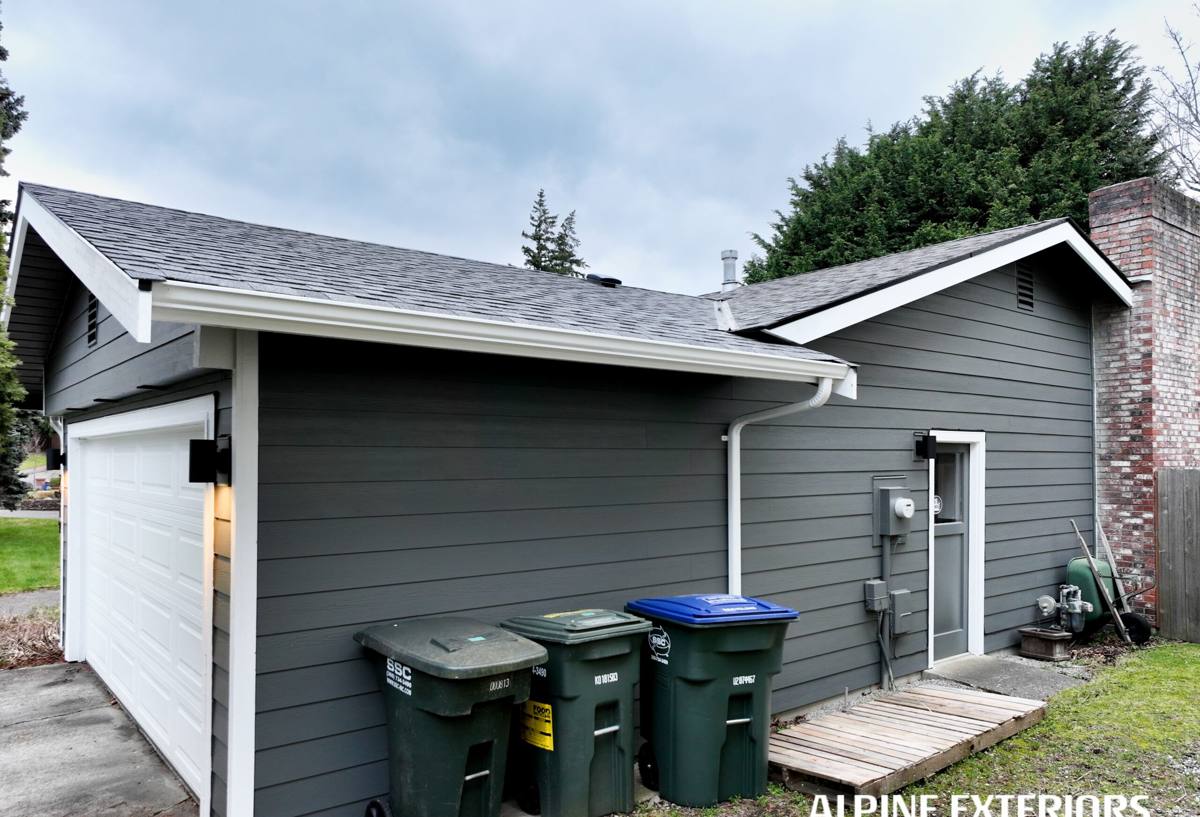
What Salt Air, Driving Rain, and Moss Season Do to Siding Over Time
Whatcom County's marine climate is mild compared to a lot of the country, but "mild" doesn't mean gentle on building materials. Three things stack up against exterior siding in and around York:
- Salt-laden air off the water accelerates corrosion of fasteners and metal trim, and it leaves a fine residue on siding surfaces that can degrade cheaper coatings faster than inland homes ever see.
- Wind-driven rain doesn't fall straight down here — it gets pushed sideways into wall assemblies, wall corners, and butt joints, which means water finds every gap, seam, or crack in a siding system that isn't detailed correctly.
- Extended moss and mildew season — long stretches of overcast, damp weather with limited direct sun on shaded elevations — gives organic growth months to establish itself on any surface that stays damp, especially north- and west-facing walls under tree cover.
None of these factors are dramatic on their own. The damage shows up slowly: caulked seams that fail quietly behind the surface, paint that chalks and peels years ahead of schedule, or moisture that gets behind siding and sits against sheathing without anyone noticing until there's a soft spot on an interior wall. By the time a homeowner sees the visible sign, the underlying problem has usually been active for a while.
Why This Matters More for Older Homes in the Area
A lot of the housing stock in and around York and greater Fairhaven predates modern weather-resistive barrier standards. That's not a knock on the homes — it just means the siding is doing more of the water-management work on its own than it would on new construction with a fully engineered wall assembly behind it. That raises the bar on what the siding itself needs to be able to handle, and on how carefully it needs to be installed.
Why We Only Install James Hardie Fiber Cement
We don't install vinyl, LP SmartSide, or other fiber cement brands, and that's a deliberate call rather than a default. James Hardie's fiber cement is a cement, sand, and cellulose fiber composite — it's non-combustible, it doesn't absorb water the way wood-based products do, and it doesn't expand and contract with humidity swings the way vinyl does in temperature shifts. On a site exposed to salt air and constant moisture cycling, those material properties aren't marketing points, they're the actual difference between siding that lasts and siding that needs attention every few seasons.
Hardie also backs its products with a factory-applied ColorPlus finish baked on under controlled conditions, which holds color and resists fading and chalking far better than field-applied paint on other materials. For a coastal-adjacent climate that's hard on painted surfaces, that finish quality matters. Combined with a strong transferable limited warranty, it's the product we're willing to put our name behind.
What a Correct Fiber Cement Installation Actually Involves
Fiber cement is only as good as the installation behind it. A rushed or generic install — the kind that treats Hardie like any other lap siding — is how homeowners end up with the exact moisture problems the product is supposed to prevent. A correct job includes:
- Proper water-resistive barrier and flashing detail at every window, door, and penetration, lapped correctly so water sheds outward rather than behind the cladding.
- Correct fastener type, spacing, and placement per Hardie's published installation specifications — not generic siding nail patterns.
- Manufacturer-specified clearances at grade, roofline, and any horizontal trim so the bottom edge of the siding never sits in standing water or constant splash-back.
- Sealed and primed cut edges, since factory finish only covers the face and edges of the board as manufactured — every field cut needs to be treated before it's exposed to weather.
- Correct joint treatment at butt seams and inside/outside corners, which is where wind-driven rain finds its way in if the detailing is sloppy.
Skipping any one of these doesn't usually cause an immediate, visible problem. It shows up two, five, or ten years later as trapped moisture, and by then the fix is a lot more than a caulk touch-up.
Our Process on a York Job
The steps don't change much house to house, but the details we're watching for are specific to this area's exposure and housing stock.
- On-site assessment. We look at the existing siding and sheathing condition, check for moss or moisture staining on shaded elevations, and note any areas with heavier wind or rain exposure based on the home's orientation and surrounding tree cover.
- Tear-off and substrate check. Once old siding is off, we inspect the sheathing and framing underneath for rot or hidden moisture damage before anything new goes up — this is the point where problems that have been building for years actually get found and addressed.
- Weather barrier and flashing. New house wrap or weather-resistive barrier goes on correctly lapped, with flashing detailed at every window, door, and penetration before a single piece of siding is installed.
- Hardie installation to spec. Boards, panels, or shingle siding go up per manufacturer fastening and clearance requirements, with attention to butt joints and corners given the wind-driven rain this area gets.
- Trim, caulking, and touch-up. Cut edges are sealed, joints are caulked with a product rated for the application, and any factory finish nicks from handling or cutting are touched up to match.
- Final walk-through. We go over the finished job with the homeowner, point out anything worth knowing for future maintenance, and answer questions before we consider the job done.
Hardie's HZ5 Line and Why It Fits This Climate
James Hardie engineers its siding by climate zone, and homes in Washington's marine climate fall under the HZ5 product formulation, which is built for regions with sustained moisture exposure and freeze-thaw cycling rather than dry heat or extreme cold. For a location like York — coastal-adjacent, damp for long stretches of the year, occasional frost — that climate-specific engineering is part of why we don't treat this as a one-size-fits-all product. It's formulated with this kind of weather in mind, not adapted to it after the fact.
Fiber Cement Compared to Other Siding Options
| Factor | James Hardie Fiber Cement | Vinyl | Wood/LP-Style Composite |
|---|---|---|---|
| Moisture resistance | Does not absorb or swell; engineered for wet climates | Resists water itself but seams and J-channels can trap moisture | More vulnerable to moisture absorption and rot at cut edges |
| Salt air / coastal exposure | Stable composite, factory finish holds up well | Can become brittle over time with UV and salt exposure | Finish and substrate more sensitive to constant damp/salt cycling |
| Fire resistance | Non-combustible | Combustible, can melt or warp near heat sources | Combustible |
| Finish longevity | Factory ColorPlus finish, long fade resistance | Color is through-body but can chalk/fade | Field-applied or factory finish, variable durability |
| Typical warranty structure | Strong transferable limited warranty | Varies widely by manufacturer | Varies, often shorter on finish |
What It Costs and What Drives the Price
We don't quote exact numbers without seeing the home, but the honest range for a full fiber cement re-side is broad because so many factors change the scope. Here's what actually moves the number:
| Cost Factor | Why It Matters |
|---|---|
| Home size and number of stories | More square footage and higher elevations mean more material and labor, plus scaffolding or lift access |
| Existing siding removal | Tear-off adds labor and disposal cost versus a bare or already-stripped wall |
| Substrate repair | Rot or moisture damage found during tear-off has to be fixed before new siding goes on — this is common on older York-area homes |
| Siding profile chosen | Lap siding, panel siding, and shingle-style products differ in material and labor cost |
| Trim and detail work | Homes with more corners, windows, and architectural trim take more time to flash and finish correctly |
Maintenance Checklist for York Homeowners
Fiber cement is low-maintenance compared to wood or vinyl, but "low-maintenance" isn't "no-maintenance," especially with this area's moss season. A short annual routine keeps a correctly installed system performing the way it's designed to:
- Rinse siding down once or twice a year, focusing on shaded, north- and west-facing walls where moss and mildew take hold first.
- Keep gutters clear so overflow doesn't run down the face of the siding and stay damp longer than it should.
- Trim back trees and shrubs that keep siding shaded and damp — airflow and sun exposure are the simplest defense against moss.
- Check caulked joints and trim seams periodically for cracking or separation, and have them addressed before water gets behind the siding.
- Look at fastener heads and metal flashing occasionally for early corrosion signs given the salt content in the air here.
Why Hiring a Crew That Already Works in York Matters
Siding installation isn't identical from region to region. A crew that mostly works dry inland climates doesn't automatically think in terms of wind-driven rain direction, salt exposure at fasteners, or how long a shaded wall stays damp after a week of Pacific Northwest weather. Working repeatedly in and around Fairhaven and York means we've already seen how the local housing stock, orientation, and tree cover affect where moisture problems actually start — and we build the installation around that, rather than applying a generic install and hoping it holds up.
That local familiarity also means less guesswork during the assessment. We already know what to check on an older York-area home before tear-off even starts, which shortens the surprises during the job and helps us give a more accurate picture of scope up front.
Ready to Talk About Your Home
If you're weighing a re-side in York or anywhere around Fairhaven, we're happy to take a look, walk the exterior with you, and give you a straight assessment of what your home actually needs. There's no pressure and no cost to get an estimate — just a clear look at the job in front of you.