 Fairhaven Siding
 Why Decks in Bow Wear Out Faster Than the Manual Says
Most decking products are rated and warrantied based on lab conditions or a generic national climate. Bow doesn't get a generic climate. Sitting along the coastal stretch between Bellingham and the Skagit Valley, homes here deal with salt-laden air off the water, long stretches of driving rain, and a moss season that can run most of the year in shaded yards. None of that is factored into a manufacturer's brochure, and it's exactly what determines how long a deck actually lasts once it's built.
A deck that would hold up fine in a dry inland climate can start showing problems here in half the time — soft spots at the ledger board, corroded fasteners bleeding rust streaks down the boards, or a slick green film that makes the surface unsafe to walk on after a wet week. Replacing a deck in this area isn't just about swapping old boards for new ones. It's about building something that's specifically detailed for salt exposure, sustained moisture, and biological growth.
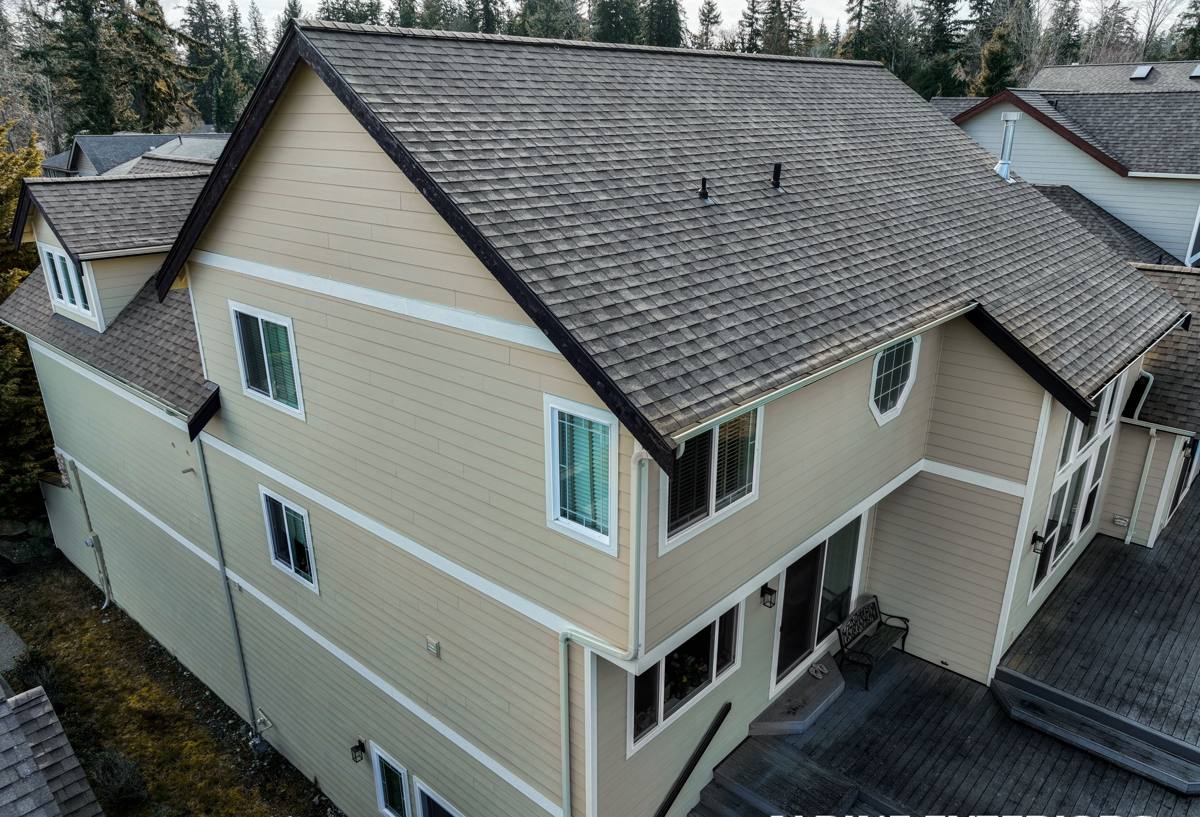
What a Correct Deck Replacement Actually Involves
A deck replacement done right is a rebuild of the whole system, not a resurfacing job. If a contractor is only talking about the decking boards, ask what they're planning to do about the parts underneath — because that's usually where the real failures start.
Tear-Off and Structural Inspection
Full removal of the old decking, railing, and any framing that's compromised. This is also the point where hidden problems get found — soft or rotted joists, undersized or corroded ledger connections, footings that have shifted or never met code to begin with. A replacement is the one chance to catch and fix these before they're covered up again for another 15–20 years.
Ledger Board and Flashing
The ledger board — where the deck attaches to the house — is the single most common point of structural failure on decks in wet climates. Water gets behind an improperly flashed ledger, soaks into the rim joist and sheathing, and rot spreads quietly for years before anyone notices. Correct flashing (properly lapped, sealed, and separated from the framing with a moisture barrier) is non-negotiable on any replacement we do.
Framing and Fasteners
New joists, beams, and posts sized to current code, with hardware selected for corrosion resistance rather than whatever is cheapest on the shelf. More on that below.
Decking Surface
The material homeowners actually see and walk on — chosen based on how it performs in salt air, rain, and shade, not just how it looks in a showroom.
Decking Material Options That Hold Up Near the Water
There's no single "best" decking material — every option is a trade-off between upfront cost, maintenance, and how it behaves in a wet, salty, moss-prone environment. Here's how the common choices stack up for this area specifically.
| Material | Moisture / Salt Air Behavior | Moss & Algae Resistance | Maintenance | Typical Lifespan |
|---|---|---|---|---|
| Pressure-treated wood | Good if properly sealed and re-coated; end grain is the weak point | Low — needs regular cleaning/treatment | High — annual cleaning, periodic sealing | 10–15 years |
| Cedar | Naturally rot-resistant but still needs sealing near salt air | Moderate | Moderate to high | 15–20 years |
| Capped composite | Excellent — won't absorb moisture or corrode | Good — smooth caps clean off easily | Low — occasional washing | 25–30+ years |
| PVC decking | Excellent — fully moisture-immune | Good | Low | 25–30+ years |
Uncapped or budget composite decking is worth a specific caution: early generations of composite decking had real moisture-absorption and mold issues in wet Pacific Northwest climates. Modern capped composite and PVC products solved most of that by sealing the core in a protective shell — but it's a detail worth confirming with any product you're considering, because not every composite board on the market is capped.
Fasteners and Hardware: The Detail Salt Air Punishes First
Fasteners and framing hardware are usually the first thing to fail on a coastal deck, well before the decking itself. Standard galvanized screws and connectors can start showing rust streaks and pitting within a few years when they're exposed to salt-carrying air on a regular basis. A few things we treat as standard rather than upgrades:
- Stainless steel or high-grade coated fasteners rated for coastal/marine-adjacent exposure
- Hardware and fasteners matched in metal type to avoid galvanic corrosion between dissimilar metals
- Hidden fastener clip systems on composite and PVC decking, which avoid face-screw penetrations that can trap moisture
- Corrosion-resistant joist hangers and structural connectors, not just at visible points but throughout the frame
The extra cost of proper hardware is small compared to the cost of tearing into a deck again in eight years because a handful of screws failed and let water into the framing.
Moss, Algae, and Keeping the Deck Safe to Walk On
Moss and algae aren't just a cosmetic nuisance in this region — on a deck surface, they're a slip hazard, and constant moisture retention under a layer of growth accelerates wear on whatever material is underneath. A few build decisions make a real difference in how much moss a deck develops and how easy it is to keep clean:
Board Profile
Deeply grooved or heavily wood-grained board textures hold moisture and debris longer than smoother or lightly textured profiles. In shaded, damp yards, a smoother surface is genuinely easier to keep moss-free.
Spacing and Airflow
Correct gapping between boards and adequate clearance and ventilation underneath the deck let it dry out between rain events instead of staying damp for days. Decks built low to the ground or in heavy shade need this attention more than most.
Layout Relative to Sun and Shade
Where the site allows it, board orientation and rail design that avoid trapping the deck in permanent shade will noticeably slow moss and algae growth compared to a deck buried under tree cover all year.
What We Check Before Quoting a Replacement
- Condition of the ledger board and existing flashing (if any)
- Post and footing condition — depth, contact with soil, signs of movement or rot
- Joist and beam condition, including hidden rot under old decking
- Railing code compliance (height, baluster spacing, guard requirements)
- Site drainage and grading around the deck's footprint
- Sun/shade exposure and how it will affect moss and moisture over time
- Whether the existing structure meets current code or needs to be rebuilt to do so
Our Deck Replacement Process in Bow
- On-site assessment — we walk the existing deck, check the structure from underneath where accessible, and talk through how the space actually gets used.
- Material and design conversation — options laid out honestly, including trade-offs, so the decision fits the budget and the site, not just what's easiest to sell.
- Permit handling — pulling and managing any required permits with the local building department so the finished deck is code-compliant and documented.
- Tear-off and structural rebuild — full removal of the old deck, repair or replacement of framing and footings as needed, and correct ledger flashing.
- Decking, railing, and hardware installation — built with the fastener and material choices covered above.
- Final walkthrough — checking the finished deck against code and against what was discussed at the start, before we call the job done.
Permits and Local Code Considerations
Most deck replacements that involve rebuilding the structure — not just swapping decking boards on an unchanged frame — require a permit, along with inspection at key stages like framing and footings. Requirements vary depending on the specific jurisdiction covering your property, including things like deck height, guard/railing requirements, and setback from property lines. We handle this as part of the job rather than leaving it for the homeowner to sort out, because a deck built without the right permits and inspections can become a real problem at resale.
Cost Factors for a Bow Deck Replacement
Every deck replacement is priced around the specifics of the site and the scope of work, not a flat per-square-foot number. The table below covers the factors that move the price the most, without pretending there's a one-size number that applies to every project.
| Factor | Why It Matters | Typical Cost Impact |
|---|---|---|
| Decking material | Pressure-treated wood vs. capped composite/PVC is the biggest swing in material cost | Medium–High |
| Structural repairs needed | Rotted joists, ledger, or footings found during tear-off | Medium |
| Footing/post condition | Whether existing footings can be reused or need full replacement | Medium |
| Deck size and layout | Square footage, stairs, multiple levels, angled or curved sections | High |
| Railing style | Basic wood/composite rail vs. cable, glass, or custom designs | Medium |
| Permit and engineering needs | Height, attachment method, or unusual site conditions may require engineering review | Low–Medium |
| Tear-off and disposal | Size and material of the existing deck being removed | Low |
Why Hire a Crew That Already Works in Bow
A deck built by someone unfamiliar with this stretch of coastline tends to get the visible parts right and the invisible parts generic — standard fasteners, standard flashing, standard framing spec, none of it adjusted for salt air, near-constant moisture, or the shade patterns that drive moss growth here. A crew that regularly works Bow and the surrounding Fairhaven and Whatcom County area already knows which details matter on this coastline, because we've seen what happens when they're skipped: corroded hardware, rotted ledgers, and decks that need real work again well before their time.
If you're weighing repair versus replacement, or just want an honest read on what shape your current deck is in, we're happy to take a look. Reach out through the form below for a free, no-pressure estimate — we'll tell you what we actually find, not just what's easiest to quote.