 Fairhaven Siding
 Why Silver Beach Siding Takes a Different Kind of Beating
Silver Beach sits close enough to open water that homes here deal with a combination most inland Whatcom County neighborhoods don't: salt-laden air off the bay, wind-driven rain that hits siding sideways instead of falling straight down, and a moss season that can run eight or nine months out of the year in shaded, north-facing exposures. None of these problems are dramatic on their own. What they do is compound. Salt air accelerates the breakdown of caulking and metal fasteners. Driving rain finds every gap in flashing and trim that would stay dry in a calmer climate. And moss holds moisture against the siding surface long after a storm has passed, which is exactly the condition that lets rot get started underneath a coating that still looks fine from the sidewalk.
We work Silver Beach regularly, so this isn't a general observation we're applying to your street from a distance. It's the reason our repair estimates here almost always start with a look at the wall assembly behind the siding, not just the siding itself. A repair that only addresses the visible damage and ignores what caused it tends to come back within a season or two.
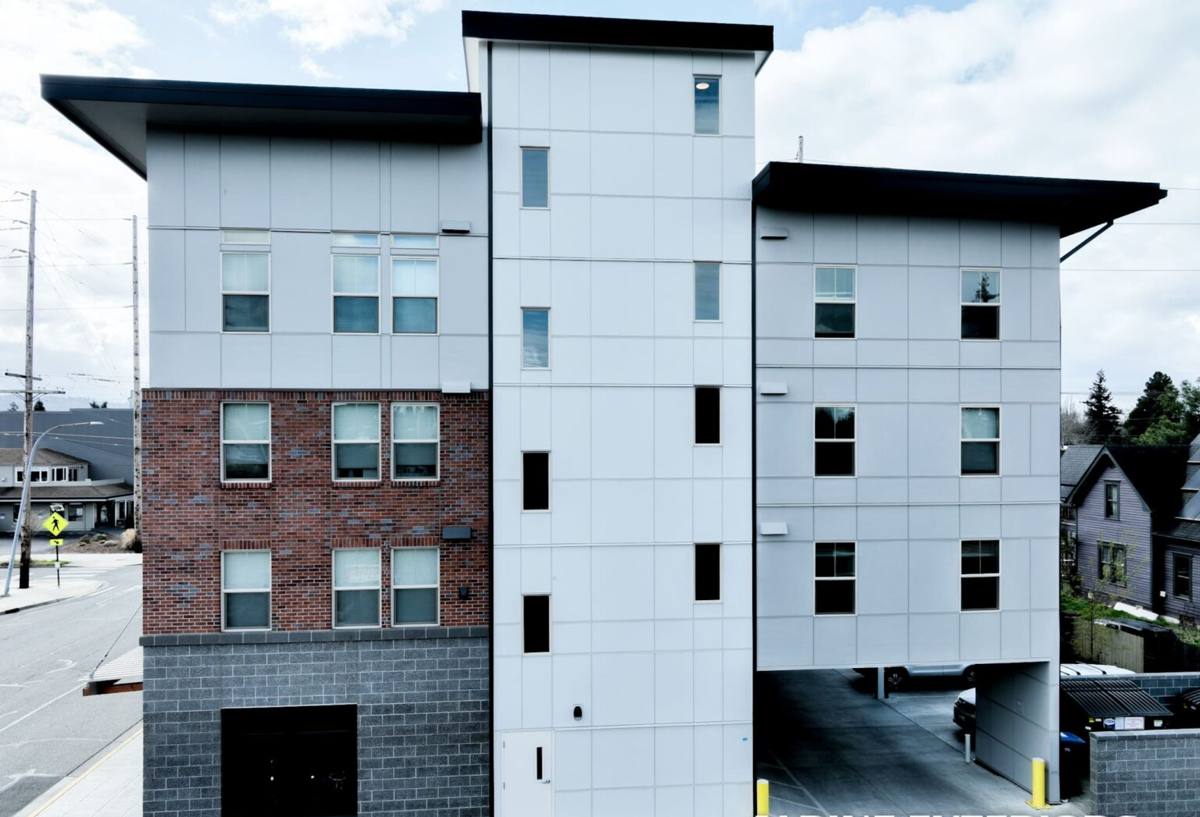
Signs Your Siding Needs Repair Now, Not "Eventually"
Most siding repair calls we get in this neighborhood start with one visible problem, but a proper inspection usually turns up two or three more nearby. Here's what we look for, and what you can check yourself before calling anyone:
- Soft or spongy spots when you press on the siding near the bottom courses, around window trim, or under decks and overhangs
- Visible cracking, chipping, or delaminating on cement board or hardboard panels, especially at cut edges
- Persistent moss or black-green streaking that keeps coming back within weeks of cleaning
- Caulk joints that have pulled away, cracked, or gone stiff and chalky around trim, windows, and corner boards
- Staining or bubbling on interior walls that lines up with an exterior siding problem
- Nail heads backing out, or fasteners that have rusted and stained the siding around them
- Warping or bowing panels, particularly on south- and west-facing walls that take the most weather
Any one of these on its own might be a minor fix. Several of them together, especially near the same wall or corner, usually mean water has been getting behind the siding for a while and the visible damage is just the part you can see.
What a Correct Repair Actually Involves
It starts behind the siding, not on top of it
The single biggest mistake in siding repair is treating it as a cosmetic fix — patch the hole, caulk the gap, repaint, done. On James Hardie fiber cement, a correct repair means pulling the damaged boards, checking the water-resistive barrier and flashing underneath for tears or gaps, confirming the drainage plane is still doing its job, and only then closing the wall back up. If the barrier or flashing failed, that's the actual problem. New siding over a bad barrier just buys you a few more years before the same repair.
Matching what's already on the wall
If your home already has James Hardie siding, repair is usually straightforward: we match the plank profile and, where possible, the ColorPlus factory finish so the repaired section doesn't stand out. Because Hardie's factory finish is baked on and warranted separately from the substrate, a clean board swap on a home that's been maintained well can be close to invisible. Where an exact color match isn't available for an older run, we'll walk you through the honest options — feathering the repair into a less visible elevation, or repainting the affected section — rather than promising a perfect match we can't deliver.
Fasteners, flashing, and joints — not just boards
A repair that only replaces the damaged plank and skips the fasteners, the kick-out flashing at roof lines, and the caulking at trim joints is an incomplete repair. Salt air is hard on exposed metal, and a repair done with the wrong fastener spec will corrode faster than the original installation did.
Repair vs. Replacement: How We Actually Decide
Homeowners often assume any water damage means full replacement. Sometimes it does — but plenty of Silver Beach repair calls turn out to be contained problems that don't justify tearing off a whole elevation. Here's the general framework we use when we're standing in front of your house:
| Factor | Favors Repair | Favors Replacement |
|---|---|---|
| Extent of damage | Isolated to one wall section or a few boards | Spread across multiple elevations |
| Underlying barrier condition | Intact once exposed and inspected | Failing broadly, not just at the damage point |
| Age and material of existing siding | Existing Hardie in good general condition | Old, brittle, or non-Hardie material nearing end of life |
| Cause of damage | One-time event (impact, isolated flashing failure) | Chronic moisture exposure over years |
| Color/profile match | Current product line still matches or repair area is low-visibility | Discontinued color or profile across a visible elevation |
We'll tell you plainly which side of that table your house falls on. If a full re-side is the more honest long-term answer, we'll say so — but we don't push replacement on a repair call just because it's a bigger job.
Our Process for a Silver Beach Repair Call
- Walk-through and moisture check. We inspect the visible damage plus the surrounding wall, trim, and any nearby penetrations (hose bibs, vents, light fixtures) that are common water entry points.
- Open it up. Before quoting a final price, we remove enough siding to see the barrier and framing condition underneath. This is the step that separates an accurate estimate from a guess.
- Address the cause, then the cosmetics. Any flashing, barrier, or framing repair happens first. Siding goes back on last.
- Match and finish. Boards, fasteners, and caulking are matched to the existing product line as closely as the materials allow.
- Walk the job with you. We show you what we found, what we fixed, and what to keep an eye on going forward.
When We Find Rot or Water Damage Behind the Wall
This happens more often in this neighborhood than homeowners expect, mostly because moss and salt air mask early warning signs for years. When we open a wall and find soft sheathing or framing, we stop and talk to you before doing anything else. Depending on the extent, that can mean localized framing repair before new siding goes back on, or it can mean the damage is more limited than it looked and a straightforward board swap will do. Either way, you get a clear explanation and a real number before we proceed — not a surprise change order halfway through.
Repairing Homes That Don't Have Hardie Siding
We install James Hardie fiber cement exclusively, but a lot of the repair calls we get in Silver Beach are on homes with vinyl, LP SmartSide, cedar, or older hardboard siding. We'll still assess and repair what's there when the fix is reasonable. What we won't do is pretend those materials handle this climate the same way Hardie does. Vinyl can crack and warp with age in cold snaps and doesn't take paint well if you want to change the color later. Cedar and hardboard are more sensitive to the sustained moisture and moss exposure common on shaded, water-adjacent lots. If a repair on one of these materials turns out to be extensive, or if it's clear the underlying product is nearing the end of its practical life, we'll tell you that honestly and let you decide — including whether a partial or full transition to Hardie makes more sense than continuing to patch a product that's fighting the climate.
Why a Crew That Already Works This Neighborhood Matters
Siding repair is one of those trades where local familiarity actually changes the outcome. A crew that already works Silver Beach knows which exposures take the worst of the wind-driven rain, which lots hold moisture longer because of tree cover, and how fast moss comes back here compared to a drier part of Whatcom County. That's not marketing — it's the difference between a repair that's built to handle another Bellingham winter and one that looks fine until the next wet season proves otherwise. Being local also means we're not driving across the county for a follow-up if something needs a second look after the first hard rain.
After the Repair: Keeping It From Happening Again
A good repair only stays good if the maintenance habits around it change too. For Silver Beach homes specifically, that usually means:
- Keeping gutters and downspouts clear so water isn't sheeting down the wall face during heavy rain
- Trimming back vegetation and tree cover that keeps a wall section shaded and damp longer than the rest of the house
- Rinsing moss and algae buildup off before it has months to sit against the siding surface
- Re-caulking trim joints on a regular schedule rather than waiting for a visible gap
- Having isolated damage looked at promptly instead of waiting for it to spread
None of this is complicated, but it's the difference between a repair that lasts and one you're revisiting in three years.
If you're seeing any of the warning signs above, or you just want an honest opinion on whether it's a repair or something bigger, we're glad to take a look. Estimates are free, there's no pressure, and we'll tell you straight what we find — use the form below to get started.