 Fairhaven Siding
 Why Siding Wears Out Faster in Puget
Homes in the Puget area near Fairhaven sit close enough to the water that siding takes on a different kind of abuse than it would twenty miles inland. Salt-laden air off the Sound works into seams, fasteners, and any exposed edge, accelerating corrosion on staples, nails, and trim fasteners long before the siding itself looks obviously worn. Combine that with driving rain that comes in sideways during fall and winter storms, and you get a wall assembly that's under near-constant moisture pressure for months at a time.
Then there's moss. Whatcom County's long wet season and filtered shade from mature trees on many Puget-area lots create ideal conditions for moss and algae to colonize north-facing walls and anything below a roofline or overhang. Moss holds moisture against the siding surface far longer than open air would, which matters a lot depending on what the siding is actually made of. Wood-based products swell, cup, and eventually rot under sustained damp conditions. Vinyl doesn't rot, but it traps moisture behind it and offers nowhere for trapped water to go. Fiber cement handles this environment fundamentally differently, which is a big part of why we've standardized on it.
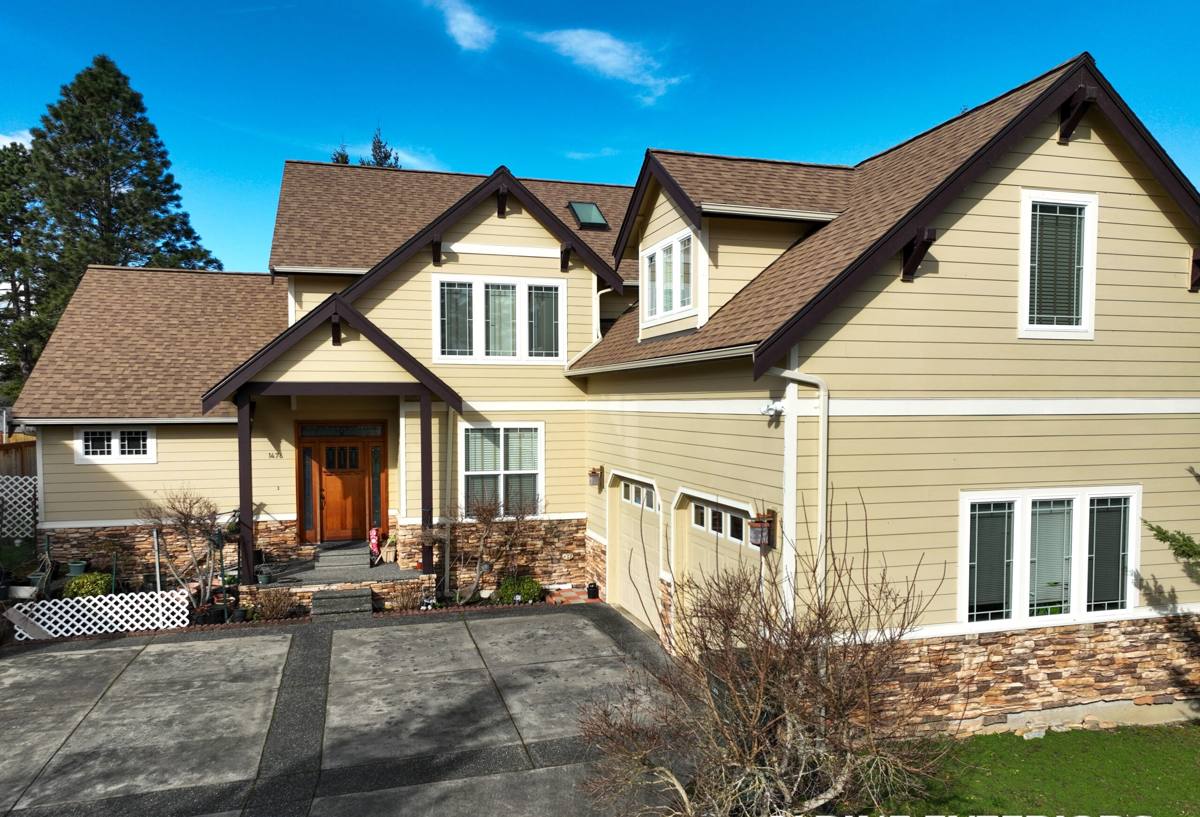
Signs a Puget Home Needs Siding Replacement
Not every issue means full replacement — but in a marine climate, small problems tend to compound faster than homeowners expect. Here's what we look for during an assessment:
- Soft or spongy spots when you press on the siding, especially near the bottom courses and around window trim
- Persistent moss or dark staining that returns within a season or two of cleaning
- Visible cupping, warping, or separation at panel seams
- Paint that's failing repeatedly in the same spots, which usually points to moisture underneath, not just weathered paint
- Rust streaking from fasteners, a sign that hardware is corroding faster than the cladding around it
- Rot at corner boards, window trim, or anywhere two materials meet
- Rising energy bills alongside drafts, which can indicate the water-resistive barrier behind the siding has failed
If you're seeing two or more of these, it's worth having someone open up a section and look at what's happening behind the cladding, not just at the surface.
What a Correct Siding Replacement Actually Involves
Siding replacement done right is not just stripping old material and nailing up new panels. In a wet, salt-exposed environment like Puget, the parts you don't see matter as much as the finished look.
Tear-Off and Inspection
Once the old siding comes off, the sheathing underneath gets inspected for rot, delamination, or soft spots — particularly around window and door openings, at the base of walls, and anywhere the old flashing was doing an inadequate job. Any damaged sheathing gets replaced before anything new goes up. Skipping this step is the single most common reason a siding job fails early.
Water-Resistive Barrier and Flashing
A new weather-resistive barrier goes on correctly lapped, and flashing gets installed at every window, door, and horizontal trim transition so water is directed out and down, never trapped behind the cladding. Given how much wind-driven rain the Puget area sees, flashing details are not optional extras — they're the difference between a wall that sheds water and one that slowly rots from the inside.
Installation to Manufacturer Spec
Correct fastener spacing, proper clearance from grade and roof lines, and correct gapping at butt joints all affect how the siding performs over decades, not just how it looks on install day. Fiber cement in particular is unforgiving of shortcuts here — improper fastening or clearance is one of the few things that can compromise its long-term performance.
Why We Install Only James Hardie Fiber Cement
We don't install vinyl, LP SmartSide, Cemplank, Allura, primed spruce, or cedar. That's a deliberate standard, not a lack of options.
Built for This Climate
James Hardie's HZ product lines are engineered specifically for regional moisture and temperature patterns. Fiber cement doesn't absorb water the way wood-based products do, and it doesn't trap moisture behind it the way vinyl can. In an environment with this much sustained dampness and salt exposure, that difference shows up over years, not weeks.
Non-Combustible
Fiber cement is non-combustible, which matters for both wildfire exposure and general home safety — a meaningful advantage over wood-based siding products.
Factory-Applied Finish
Hardie's ColorPlus finish is baked on at the factory under controlled conditions, rather than field-applied. That means better color consistency, better adhesion, and a finish that's engineered to resist the kind of UV and moisture cycling this area sees, rather than relying on a painter's timing and weather window.
Warranty That Follows the Home
Hardie backs its products with a strong, transferable warranty — something that matters to future buyers as much as current owners, and something not every siding manufacturer offers on comparable terms.
Comparing Siding Options for a Marine Climate
| Material | Moisture Behavior | Maintenance | Typical Lifespan |
|---|---|---|---|
| James Hardie Fiber Cement | Does not absorb or swell; engineered for wet climates | Low; factory finish resists fading and cracking | 30+ years with correct install |
| Vinyl | Doesn't rot, but can trap moisture behind panels; prone to warping in heat | Low, but repairs are visible and color can't be touched up | 20–30 years, shorter near salt air |
| LP SmartSide / Wood Composite | Engineered to resist moisture better than raw wood, but still wood-based and vulnerable at cut edges and seams | Moderate; repainting and edge sealing over time | 15–25 years, highly install-dependent |
| Cedar / Primed Spruce | Absorbs moisture readily; prone to cupping, checking, and rot in sustained damp conditions | High; regular refinishing and moss/mold treatment | 15–20 years without heavy upkeep |
This isn't a claim that other products are junk — vinyl and engineered wood have real uses elsewhere. But for homes absorbing salt air and driving rain off the Sound for months at a stretch, the moisture behavior of fiber cement is why it's what we put on walls in this area.
Our Process for a Puget Siding Replacement
1. On-Site Assessment
We look at your current siding, sheathing condition where accessible, moss and moisture patterns on the property, and sun/shade exposure on each elevation, since a north wall in Puget behaves very differently than a south-facing one.
2. Scope and Estimate
You get a clear, itemized estimate covering removal, any sheathing repair, house wrap and flashing, Hardie product line and color, and trim work — no vague allowances.
3. Tear-Off and Prep
Old siding comes off, damaged sheathing is repaired, and the wall is prepped with a new water-resistive barrier and flashing at every penetration.
4. Installation
Hardie panels or lap siding go on to manufacturer spec — correct fastening, clearances, and joint treatment — by a crew that installs this product regularly, not occasionally.
5. Final Walkthrough
We walk the finished job with you, check every elevation up close, and make sure trim, caulking, and touch-up paint at cut edges are complete before we call it done.
Cost Factors for Siding Replacement
| Factor | Why It Affects Cost |
|---|---|
| Home size and number of stories | More square footage and scaffolding/lift access for taller walls both add labor |
| Condition of existing sheathing | Rot or moisture damage found during tear-off requires repair before new siding goes on |
| Siding profile and color | Lap siding, panel systems, and custom ColorPlus shades vary in material cost |
| Trim and detail work | Corner boards, window trim, and fascia detail add labor beyond flat wall coverage |
| Removal complexity | Multiple layers of old siding or asbestos-era materials require extra handling |
We won't quote a number without seeing the home, but these are the variables that actually move the price, so you know what you're paying for rather than getting a flat per-square-foot figure that doesn't reflect your specific project.
Why Local Experience in Puget Matters
A crew that regularly works the Puget area around Fairhaven already knows which elevations take the worst weather, how moss patterns tend to develop on shaded walls, and where wind-driven rain typically finds gaps in flashing. That familiarity shows up in fewer surprises during tear-off and fewer callbacks after the job is done. It also means we're not learning the local climate on your project — we're applying what we already know about how Whatcom County's marine conditions treat a wall assembly over time.
If your siding is showing moss that keeps coming back, soft spots near the base of the walls, or paint that won't hold, we'll come take a look and give you a straight assessment — no pressure, no obligation. A free estimate is a good first step to find out whether you're looking at repair, partial replacement, or a full re-side.