 Fairhaven Siding
 Decks Built for Puget's Marine Climate, Not Just Any Deck
Puget sits close enough to the water and under enough tree cover that a deck here lives a different life than one built inland. Salt-laden air off Bellingham Bay works on metal fasteners year-round. Driving rain off the Sound doesn't fall straight down — it pushes sideways into ledger boards, railing posts, and anything with a seam. And Whatcom County's long, wet shoulder seasons give moss and algae months to colonize any surface that stays damp and shaded. A deck built with generic, one-size-fits-all specs will show all three problems within a few years. A deck built for this specific climate won't.
This page covers what we actually do differently when we build a custom deck for a home in Puget — the materials we lean on, the structural details that matter more here than elsewhere, and the process we follow from first walkthrough to final sign-off.
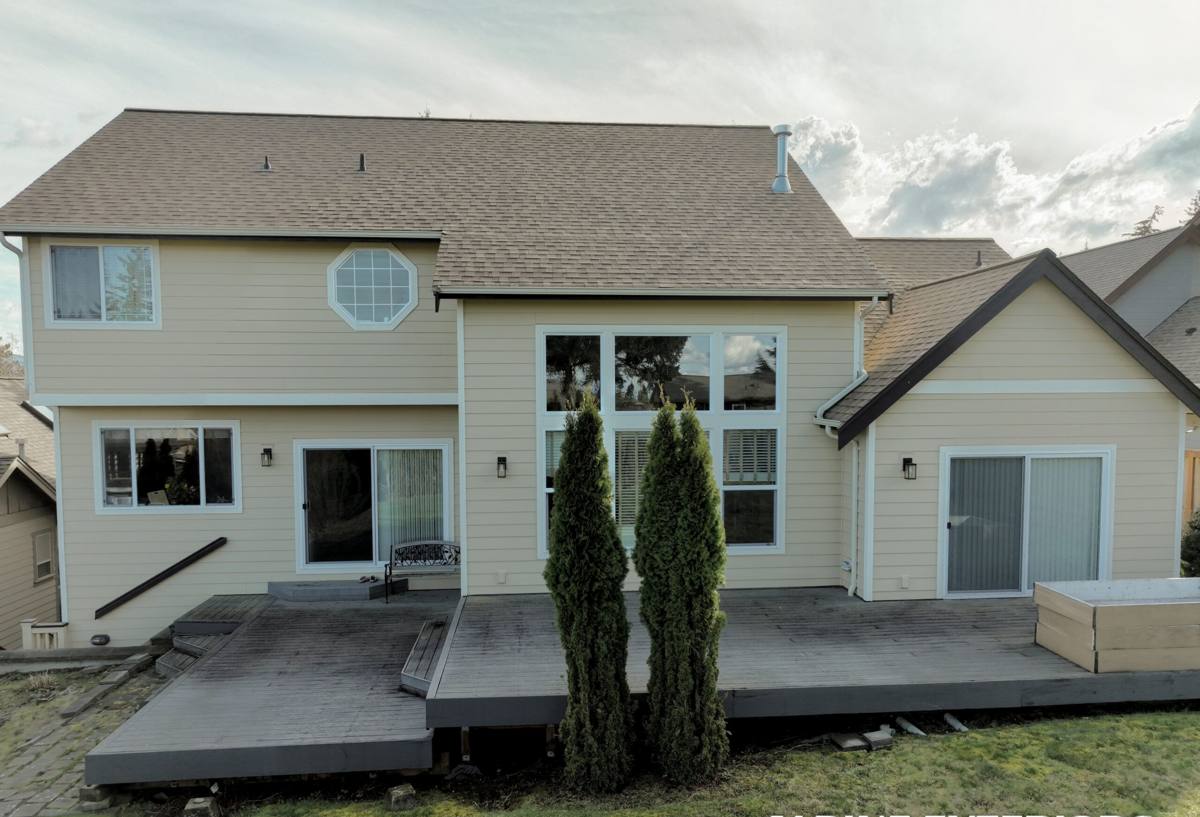
What Puget's Weather Actually Does to a Deck Over Time
Before talking about solutions, it's worth being specific about the failure modes we see repeatedly on older or poorly-detailed decks in this area:
- Fastener corrosion: standard zinc-coated screws and nails pit and streak within a few seasons when exposed to salt-influenced air, staining the decking around every fastener head.
- Rot at the ledger connection: where the deck attaches to the house is the single most common failure point in this climate. Driving rain finds any gap in the flashing and feeds moisture directly into the rim joist and framing behind it.
- Moss and algae growth: shaded decks under mature trees, or on the north side of a house, hold moisture long after a sunnier deck has dried out. That constant dampness is exactly what moss needs to take hold, and once it's established it holds even more water against the wood.
- Slick surfaces: moss and algae aren't just cosmetic — they turn a deck surface genuinely hazardous underfoot, especially on stairs.
- Soft or splitting boards: repeated wet-dry cycling through a Whatcom County winter stresses wood fibers, especially on boards that weren't fully dried or sealed on all six sides before installation.
None of these are exotic problems. They're the predictable result of building a deck without accounting for the conditions it actually has to survive.
Decking Material Options for This Climate
There's no single "best" decking material — there's a best material for a given lot, budget, and how much maintenance the homeowner actually wants to do. Here's how the common options stack up specifically against Puget's conditions:
| Material | Moisture Resistance | Moss/Algae Resistance | Maintenance | Typical Lifespan |
|---|---|---|---|---|
| Pressure-treated fir/pine | Good if sealed regularly | Low on shaded decks | Annual cleaning + resealing | 15–20 years |
| Cedar | Naturally decent, degrades if unsealed | Moderate; still needs cleaning | Cleaning + oil or stain every 1–2 years | 15–25 years |
| Capped composite | Excellent — non-porous cap | High; resists staining and growth | Occasional rinse/wash | 25–30+ years |
| Uncapped/older composite | Fair — can absorb moisture at cut edges | Moderate | Periodic cleaning | 15–20 years |
Why We Lean Toward Capped Composite on Shaded, Damp Lots
On lots in Puget with significant tree cover or a north- or west-facing deck that doesn't get much direct sun, we generally steer homeowners toward capped composite. The fully encapsulated surface doesn't give moss and algae the porous grain to grip onto the way wood does, and it doesn't need refinishing every year or two to keep doing its job. It costs more up front than pressure-treated lumber, but for a deck that's going to spend half the year damp and shaded, the maintenance savings add up fast.
When Wood Still Makes the Most Sense
Wood isn't wrong for this climate — plenty of well-built cedar and treated-lumber decks in Whatcom County last decades. It makes the most sense when the deck gets good sun exposure, when the homeowner genuinely wants to stay on top of annual cleaning and sealing, or when matching an existing wood structure or railing system matters more than minimizing upkeep. We'll give you a straight answer on which category your specific site falls into rather than defaulting to whatever's easiest to sell.
The Structure Underneath Is What Actually Fails First
Homeowners tend to focus on the decking boards because that's what they see and walk on, but in this climate the framing and connection details underneath are what determine whether a deck lasts 15 years or 35.
Fasteners and Hardware
We use stainless steel or heavy hot-dip galvanized fasteners and structural hardware — joist hangers, post bases, ledger bolts — rather than standard coated screws. The extra cost is small relative to the total project, and it's the difference between hardware that's still sound in 20 years and hardware that's visibly corroding and staining the wood around it within five.
Ledger Flashing
Because driving rain is a real factor here, the ledger board — where the deck ties into the house — gets proper flashing that sheds water away from the rim joist rather than trapping it behind the decking. This is the detail that's easiest to shortcut and the most expensive to fix later, since fixing it usually means partially tearing the deck back off the house.
Footings and Drainage
Footings get set to proper frost depth and sized for the soil conditions on the lot, which can vary block to block in this area. We also pay attention to airflow underneath the deck — a structure that's boxed in tight with no ventilation stays damp longer after every rain, which feeds right back into the moss problem.
Moss and Algae: Prevention Beats Removal
Once moss is established on a deck, pressure washing it off is a temporary fix — it comes back unless the underlying conditions change. We build to prevent it from getting a foothold in the first place:
- Board profile: smooth or lightly grooved boards shed water and debris faster than deep-grooved profiles, which can trap organic matter that feeds moss growth.
- Proper board spacing: correct gapping lets water drain through instead of pooling on the surface.
- Layout around shade: where the design allows, we'll talk through whether trimming back overhanging branches or adjusting the deck footprint slightly can meaningfully reduce how long the surface stays wet.
- Material choice: as covered above, non-porous capped materials simply give moss less to grab onto than raw wood grain.
None of this makes a deck moss-proof — Whatcom County's climate is what it is — but it can mean the difference between an annual five-minute rinse and a recurring scrubbing project.
Our Deck-Building Process in Puget
1. On-Site Assessment
We walk the actual lot — sun exposure through the seasons, drainage patterns, existing structure condition if it's a rebuild, and how the space will realistically get used — before recommending materials or layout.
2. Design and Material Selection
We put together a layout and material plan based on that assessment, with honest trade-offs explained rather than upsold. If wood makes sense for your situation, we'll say so; if composite is the better long-term call, we'll explain why.
3. Permitting
Fairhaven falls under the City of Bellingham's building requirements, and most new or substantially rebuilt decks need a permit. We handle the permit submission and inspection scheduling as part of the project so it's not something you have to chase down yourself.
4. Construction
Footings, framing, flashing, decking, and railings go in sequence, with the structural details above — hardware, flashing, drainage — treated as non-negotiable regardless of which decking material sits on top.
5. Final Walkthrough
We walk the finished deck with you, cover basic care for whatever material was installed, and make sure everything meets the plan before we consider the job done.
Railings, Stairs, and Code Basics
Guardrails, baluster spacing, and stair geometry are governed by current building code and get verified during the permit inspection process — we build to those requirements as a baseline, not an afterthought. Beyond the code minimums, railing style is where a deck can genuinely match the character of the house, whether that's a simple painted wood rail, black metal balusters, or a cable rail system that keeps sightlines open toward the water or the yard.
Maintenance Checklist for a Puget Deck
Whatever material you choose, a little seasonal attention goes a long way in this climate:
- Sweep debris (leaves, needles, seed pods) off the surface regularly — trapped organic matter is moss food.
- Rinse or wash the deck at least once a year; wood surfaces benefit from a soft-wash rather than aggressive pressure washing.
- Reseal or re-stain wood decking on the schedule the product calls for — don't wait until it's visibly gray and dry.
- Check fasteners and railing connections annually for looseness or corrosion staining.
- Keep gutters and downspouts near the deck clear so runoff isn't dumping extra water onto or under the structure.
- Trim back vegetation that's shading the deck more than the original design accounted for.
Why Hiring a Crew That Already Works in Puget Matters
A deck built to a generic national spec sheet can look fine on day one and still be the wrong deck for a shaded, damp lot two blocks from Bellingham Bay. Building here means defaulting to stainless or heavy-galvanized hardware instead of standard, treating ledger flashing as critical rather than optional, and picking decking materials based on how much shade and moisture a specific site actually gets through a Whatcom County winter. That's the kind of judgment that comes from building decks in this exact climate repeatedly, not from a catalog.
If you're planning a new deck or replacing one that's showing its age, we're happy to walk your property, talk through what your specific lot needs, and put together a straightforward, no-pressure estimate using the form below.