 Fairhaven Siding
 Metal Roofing Built for Columbia's Climate, Not Just Its Curb Appeal
Homes in the Columbia neighborhood sit close enough to Bellingham Bay that the weather here plays by different rules than it does a few miles inland. Salt-laden air off the water, driving rain that comes in sideways during winter storms, and a moss season that can stretch from October well into spring all put real, ongoing stress on a roof. A metal roof handles that combination better than almost anything else on the market — but only if it's specified and installed with this exact climate in mind. That's the distinction we care about on every Columbia project: not just "a metal roof," but the right metal roof, installed the right way, for this street, this tree cover, and this exposure.
We've worked enough roofs in and around Fairhaven and greater Whatcom County to know that a spec sheet built for a dry inland climate doesn't automatically hold up here. Fastener choice, flashing detail, and ventilation all get adjusted for salt exposure and near-constant moisture — not because it looks good on a proposal, but because we've seen what happens when those details get skipped.
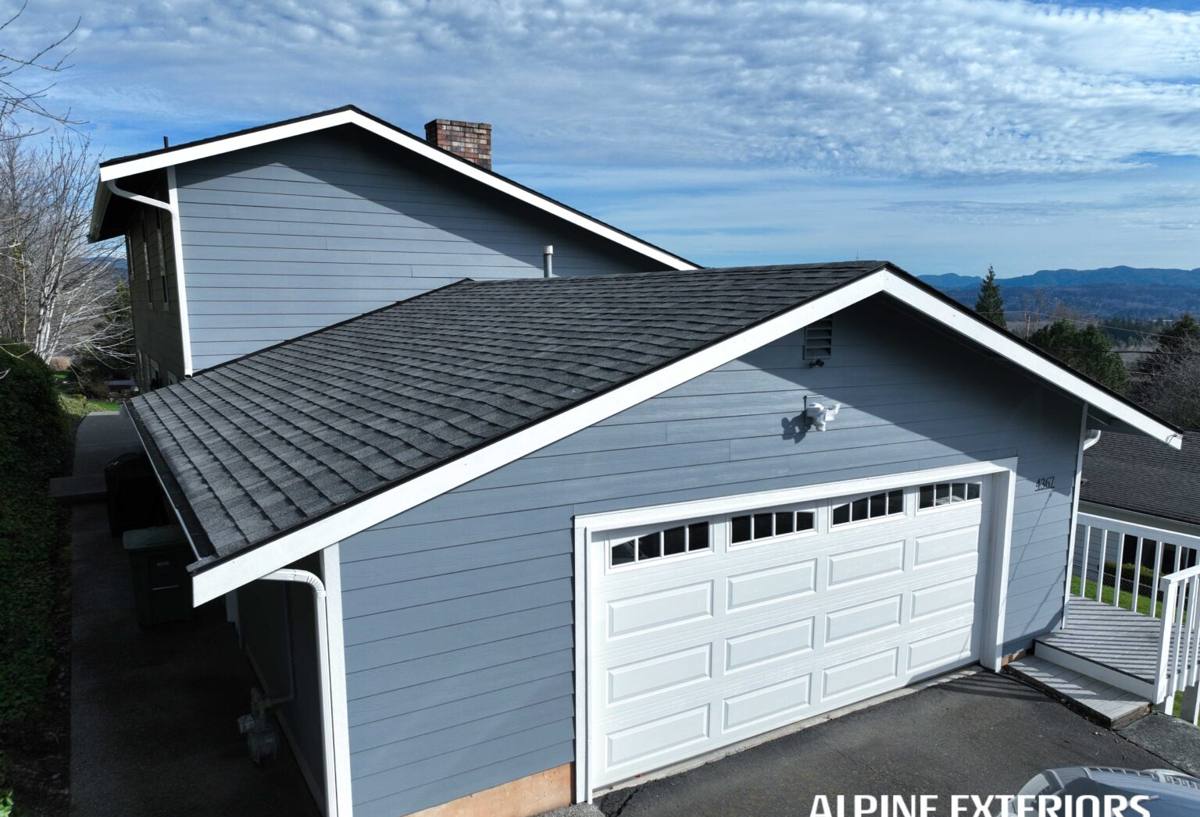
What a Correct Metal Roofing Installation Actually Involves
A metal roof is only as good as the layers underneath it. The panels get the attention, but the parts nobody sees are what actually keep a house dry through a wet Whatcom County winter.
The layers that matter
- Deck inspection and repair — any soft, rotted, or delaminated sheathing gets replaced before anything else goes down. Metal panels won't hide a bad deck; they'll just sit on top of a problem.
- Ice-and-water shield at eaves, valleys, and penetrations — the areas most likely to see standing water or wind-driven rain get a self-adhering waterproof membrane, not just standard felt.
- High-temperature synthetic underlayment across the field of the roof, rated to handle the heat a metal panel can hold on a sunny afternoon.
- Properly lapped drip edge and flashing at every transition — rake edges, sidewalls, chimneys, and roof-to-roof valleys.
- Panel installation with the fastening pattern and clip spacing matched to the panel profile and the local wind exposure.
- Ridge and hip closures that keep wind-driven rain out while still allowing the roof to breathe.
Skip or shortcut any one of these and the panels on top can look flawless for years while water finds its way in underneath — usually showing up as a stain on a ceiling long after the crew that did the work is gone.
Choosing the Right Panel System for a Coastal, Wet Climate
Not all metal roofing is built the same, and the right choice for a Columbia home depends on the roof's exposure, pitch, and how close it sits to the water. We talk homeowners through the real trade-offs rather than pushing whatever's easiest to install.
| Panel Type | Fastening | Best Suited For | Maintenance Considerations |
|---|---|---|---|
| Standing seam (concealed fastener) | Hidden clips, no exposed screws | Full exposure to salt air and driving rain; long-term, low-maintenance roofs | Lowest long-term maintenance; fasteners aren't exposed to weather or UV |
| Exposed-fastener corrugated/ribbed panel | Screws through the panel face, with sealing washers | Lower-budget projects, secondary structures, less exposed roof planes | Washers and fasteners need periodic inspection; more vulnerable near salt air |
| Stone-coated steel | Concealed or exposed depending on system | Homeowners wanting a shingle or shake profile with metal's durability | Coating and granule adhesion should be checked after major storms |
For homes with direct exposure toward the water, we generally steer people toward a concealed-fastener standing seam system. It has no exposed screw heads for salt air to work on over time, and it handles wind-driven rain better because there's no penetration through the panel face itself. Exposed-fastener panels aren't a bad product — they're a reasonable, lower-cost option for a detached garage or shop roof — but on a primary residence this close to the bay, we're upfront that they carry a longer-term maintenance commitment.
Fasteners, Sealants, and the Small Details Salt Air Is Hardest On
Corrosion doesn't happen evenly. It concentrates at the weak points — exposed fastener heads, cut panel edges, and anywhere dissimilar metals touch each other. On a Columbia roof, we treat those points as the ones that decide how the whole system ages.
That means matching fastener coatings to the panel material instead of grabbing whatever's in the truck, sealing cut edges rather than leaving bare metal exposed, and keeping flashing metals compatible so one doesn't accelerate corrosion in the other. Sealant washers on exposed-fastener systems are a wear item — they harden and shrink with age, and in a climate with this much rain, a failed washer turns into an active leak faster than it would somewhere drier. It's a small detail, but it's the kind of thing that separates a roof that's still tight in fifteen years from one that starts weeping at the screws in five.
Ventilation and Moss: The Overlooked Half of a Metal Roof
Metal itself doesn't give moss anything to root into the way a shingle or wood surface can. But a long moss season still matters to a metal roof, just in a different way. Shaded, tree-covered lots — common around Columbia — stay damp longer after a storm, and organic debris (needles, leaves, moss fragments blown from nearby trees) can collect in valleys and against ridge caps. Left alone, that debris holds moisture against the metal and its trim longer than the roof would otherwise see.
Proper ridge and soffit ventilation does double duty here: it lets the underside of the deck dry out instead of trapping condensation, and a well-ventilated attic space reduces the temperature swings that stress panel seams and sealants over time. When we install or replace a metal roof, we look at the whole ventilation path — intake at the soffit, exhaust at the ridge — not just the panels themselves.
Our Process, Start to Finish
- On-site visit and measurement — we walk the roof, check the deck condition where accessible, and note tree cover, exposure, and drainage patterns specific to the property.
- Written proposal — panel profile, gauge, color, fastening system, and underlayment spelled out in plain language, with the reasoning behind each choice.
- Tear-off and deck repair — old roofing removed, deck inspected board by board, any damaged sheathing replaced before underlayment goes down.
- Underlayment and flashing — ice-and-water membrane at vulnerable areas, synthetic underlayment across the field, new flashing at every penetration and transition.
- Panel installation — installed to the manufacturer's fastening spec, adjusted for this roof's wind and rain exposure.
- Final walkthrough — we go over the finished roof together, answer questions, and make sure the site is cleaned up, including magnetic sweeps for stray fasteners.
What Affects the Cost of a Metal Roof in Columbia
Every roof is priced from its own specifics — pitch, layout, and condition all move the number. Broadly, the factors that matter most on a Columbia project are:
| Factor | Why It Matters | Typical Cost Impact |
|---|---|---|
| Panel system (exposed vs. concealed fastener) | Standing seam requires more precise installation and material | Moderate to significant |
| Roof pitch and complexity | Steep pitches, multiple valleys, and dormers add labor time | Moderate to significant |
| Tear-off vs. overlay | Full tear-off allows deck inspection and repair; overlay is rarely advisable on an aging deck | Moderate |
| Deck condition | Rot or delamination found during tear-off requires replacement before panels go on | Variable, depends on findings |
| Site access | Tree cover, tight lot lines, and older driveways can slow material staging | Minor to moderate |
A metal roof costs more upfront than asphalt shingles, but the gap narrows considerably over the life of the roof once you account for how much less frequently it needs replacement or repair in a climate this wet.
Maintenance Checklist for Metal Roofs in Whatcom County
A well-installed metal roof asks very little of a homeowner, but a little seasonal attention goes a long way given how much rain and organic debris this area sees.
- Clear valleys and gutters of needles and leaf debris before the wettest months set in
- Check for moss or algae buildup where branches overhang the roofline, and trim back growth that keeps a section shaded and damp
- Inspect exposed fasteners and sealant washers for cracking or backing out, if the roof uses an exposed-fastener system
- Look at flashing around chimneys, vents, and skylights after major windstorms
- Confirm gutters are draining properly and not backing water up under the drip edge
- Have a professional inspection every few years, or after any significant storm event
Why a Crew That Already Works in Columbia Matters
A lot of what makes a metal roof perform well here isn't on the spec sheet — it's judgment calls made on-site: how tight to run the fastening pattern given this roof's wind exposure, whether a particular valley needs extra membrane because of how water tends to move across a specific roofline, how much ventilation a shaded, tree-heavy lot actually needs. That judgment comes from having done this work, on this kind of roof, in this exact climate, over and over.
We're familiar with the older homes and mixed housing stock common in Columbia, with the permitting expectations in the area, and with how a roof here actually weathers over its first few winters — not just how it looks on installation day. That local track record is worth something a lower bid from an out-of-area crew usually can't match.
If you're weighing a metal roof for your Columbia home, we're glad to walk the roof with you and talk through what it actually needs — no pressure, no hard sell. Use the form below to request a free estimate.