 Fairhaven Siding
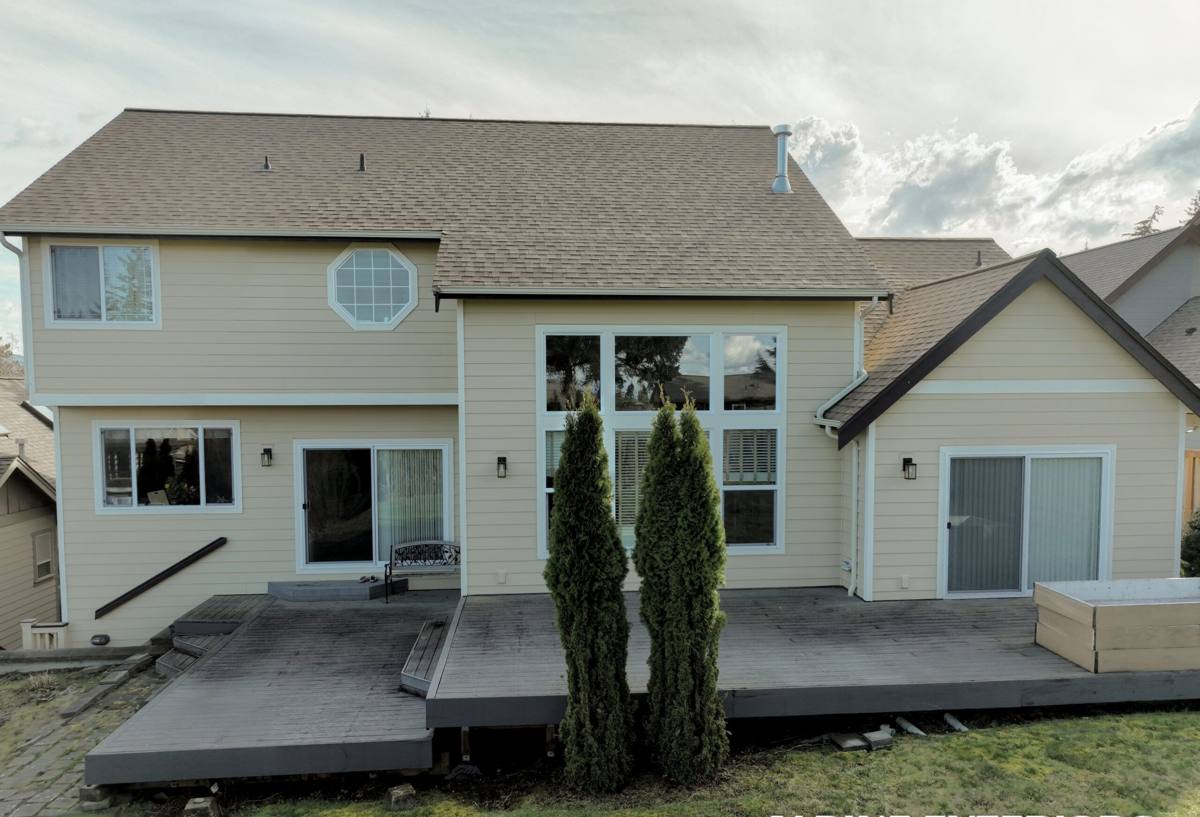
 Decks Built for an Island, Not Just a Yard
A deck on Lummi Island lives a harder life than a deck ten miles inland. It sits closer to open water, takes more wind-driven rain across a longer wet season, and spends months at a time under a film of moisture that never fully dries between storms. A deck built with the same assumptions you'd use on a sheltered lot in town will show it within a few years — soft spots at the ledger, corroding fasteners, boards that stay slick with moss from November through April. Building a custom deck here means starting from the site conditions, not from a stock plan, and making a handful of decisions correctly the first time.
This page is about that one job, done right, for this one place. It's not a general "why decks matter" pitch — it's what actually changes when the deck you're building sits on an island in Whatcom County's marine climate.
What Lummi Island's Marine Climate Asks of a Deck
Salt Air and Corrosion
Being close to open water means airborne salt settles on everything outdoors, including metal that's supposed to be protected. Standard coated fasteners and connectors can start showing surface corrosion faster here than they would twenty minutes inland, and once a fastener starts to rust, it weakens the very connections that hold your deck together — ledger bolts, joist hangers, post bases. This is a hardware decision as much as it's a lumber decision, and it's one of the first things we plan for, not something we fix later.
Driving Rain and Water Management
Rain here doesn't just fall — wind off the water pushes it sideways into ledger connections, under flashing, and into any gap that isn't properly sealed. A deck that's structurally fine but poorly flashed at the house connection will still let water track behind siding and into rim joists over time. Getting water to shed away from the structure, rather than into it, matters more on an exposed island lot than it does in a calmer inland yard.
The Long Moss Season
Whatcom County's damp stretch runs long, and a deck that stays shaded or doesn't get much airflow underneath will grow moss on the walking surface for a good part of the year. Beyond looking neglected, moss holds moisture against the board and turns a dry deck surface into a standing slip hazard after rain. Material choice, board spacing, and site orientation all affect how bad this gets — and how much upkeep it demands from you.
Getting the Job Done on Island Time
Building on Lummi Island means working around the ferry, not against it. Material deliveries, equipment, and crew all have to make a scheduled crossing, which means a project here runs on a different rhythm than a mainland job — deliveries get batched and timed deliberately, and a crew that's done this before builds the schedule around ferry availability from day one instead of discovering the problem mid-project. That planning is invisible when it's done well, and it's the difference between a project that moves steadily and one that stalls waiting on a truckload of joist hangers that missed the last sailing.
Choosing the Right Decking Material
There's no single "best" decking material — there's the right material for a specific site, budget, and how much upkeep you want to take on. Here's how the common options actually perform in a salt-air, high-moisture environment like this one:
| Material | Salt air / moisture behavior | Moss resistance | Upkeep |
|---|---|---|---|
| Pressure-treated wood | Good if properly sealed and re-sealed; end grain and cut edges need extra protection | Needs regular cleaning to stay ahead of it | Annual cleaning, periodic sealing |
| Cedar | Naturally resists rot better than most softwoods; still needs finish maintenance near open water | Same — regular cleaning required | Sealing every 1–2 years |
| Composite decking | Handles moisture and salt exposure well; won't rot or splinter | Surface texture varies by product — some resist moss buildup better than others | Occasional washing, no sealing |
| PVC / capped composite | Best moisture and salt performance of the group; fully synthetic surface | Smooth-cap products shed moss growth better than wood-grain textures | Lowest — periodic washing only |
We don't push one product line over another as a rule — we walk through the trade-offs in cost, appearance, and maintenance for your specific deck and let you make an informed call. What we won't do is install a wood-grain composite over full shade with poor airflow underneath and call it low-maintenance — that combination grows moss just as readily as wood, and it's a mismatch between product and site, not a fair test of the material.
What a Correctly Built Deck Requires Below the Surface
The decking boards are the part you see. The part that determines whether the deck is still solid in fifteen years is underneath:
- Ledger flashing: A proper flush-mounted or self-adhering flashing detail at the house connection, installed so water sheds outward and never behind the siding.
- Fastener grade: Stainless steel or heavy hot-dip galvanized hardware at every structural connection — not the lighter coated fasteners that are fine inland but corrode faster in salt air.
- Joist protection: Cut ends and top edges of framing lumber sealed or taped, since untreated cut surfaces are where rot starts first.
- Footings sized for the soil and frost conditions on your specific lot, not a generic span table applied without checking.
- Airflow underneath: Enough clearance and, where the design allows it, skirting that doesn't trap moisture against the framing.
None of this is visible once the deck is finished, which is exactly why it's worth asking a contractor to walk you through it before the first board goes down.
Our Custom Deck Process
- Site walk and design conversation. We look at sun exposure, wind direction, drainage, and how the deck connects to the house before we talk materials.
- Material and layout decisions. Based on your budget and how much maintenance you want to take on, we lay out decking, framing, and hardware specs together.
- Permitting. We handle the Whatcom County permit process for the structure and any required inspections.
- Scheduled delivery. Materials and crew are scheduled around the ferry so the job moves without avoidable delays.
- Framing and flashing. Ledger, footings, joists, and flashing go in first, correctly, since this is the part you won't see again.
- Decking and finish work. Boards, railings, and any stairs or skirting are installed to the agreed layout.
- Final walkthrough. We go over the finished deck with you, including what maintenance it needs and when.
Keeping an Island Deck Sound Year After Year
A well-built deck still needs a homeowner to do a few simple things on a schedule. This is the realistic list for a Lummi Island property:
- Sweep debris and standing leaves off the deck surface regularly through fall and winter — trapped organic matter is what moss and rot both need to get started.
- Wash the deck surface at least once a year to remove salt film, dirt, and early moss growth before it spreads.
- Check and re-seal wood decking on the manufacturer's recommended schedule — don't wait for it to look dry and gray.
- Inspect visible fasteners and railing hardware once a year for early rust staining, especially after a stormy winter.
- Keep gutters and downspouts near the deck clear so runoff isn't dumping extra water onto or under the structure.
- Trim back vegetation that's shading the deck and killing airflow underneath.
Why Hire a Crew That Already Works Lummi Island
A contractor who mostly builds decks in sheltered mainland neighborhoods isn't wrong about decks in general — they just haven't had to solve for a ferry-dependent schedule, salt-air hardware corrosion, or a moss season that runs half the year. Those aren't exotic problems, but they're the kind of thing you either plan for from the start or end up fixing in year three. A crew that already works this island has made the hardware calls, the flashing calls, and the scheduling calls before, on homes with the same exposure yours has.
That familiarity also means fewer surprises during the project itself — knowing which lots need extra footing depth, which sites bake in shade most of the day, and how to keep a build moving without a delivery stranded on the mainland.
Get a Straight Answer on Your Deck
Every lot on Lummi Island faces the water a little differently, and the right deck for your home depends on your exposure, your budget, and how much upkeep you actually want to take on. If you're planning a new deck or replacing one that didn't hold up, we'll come take a look and give you a straightforward, no-pressure estimate using the form below.