 Fairhaven Siding
 Roof Repair in Happy Valley: What the Climate Puts Your Roof Through
Happy Valley sits close enough to Bellingham Bay and the Fairhaven waterfront that its roofs deal with a different combination of stress than roofs further inland. Salt-laden air moves in off the water and slowly works on exposed metal — nail heads, flashing, vent stacks, and gutter hardware all corrode faster here than they would twenty miles east. Add in driving, wind-pushed rain that comes at the roof sideways instead of straight down, and you get water finding its way into laps and seams that would stay dry in a calmer storm. Then there's the moss. Whatcom County's wet season runs long, and any roof with shade, north-facing slopes, or tree cover nearby is going to grow moss and algae for months at a time if it isn't managed.
None of that means Happy Valley roofs fail faster than average. It means the failure points are specific and predictable, and a repair that doesn't account for them tends to come back. We've built our repair process around what this exposure actually does to a roof, not a generic checklist.
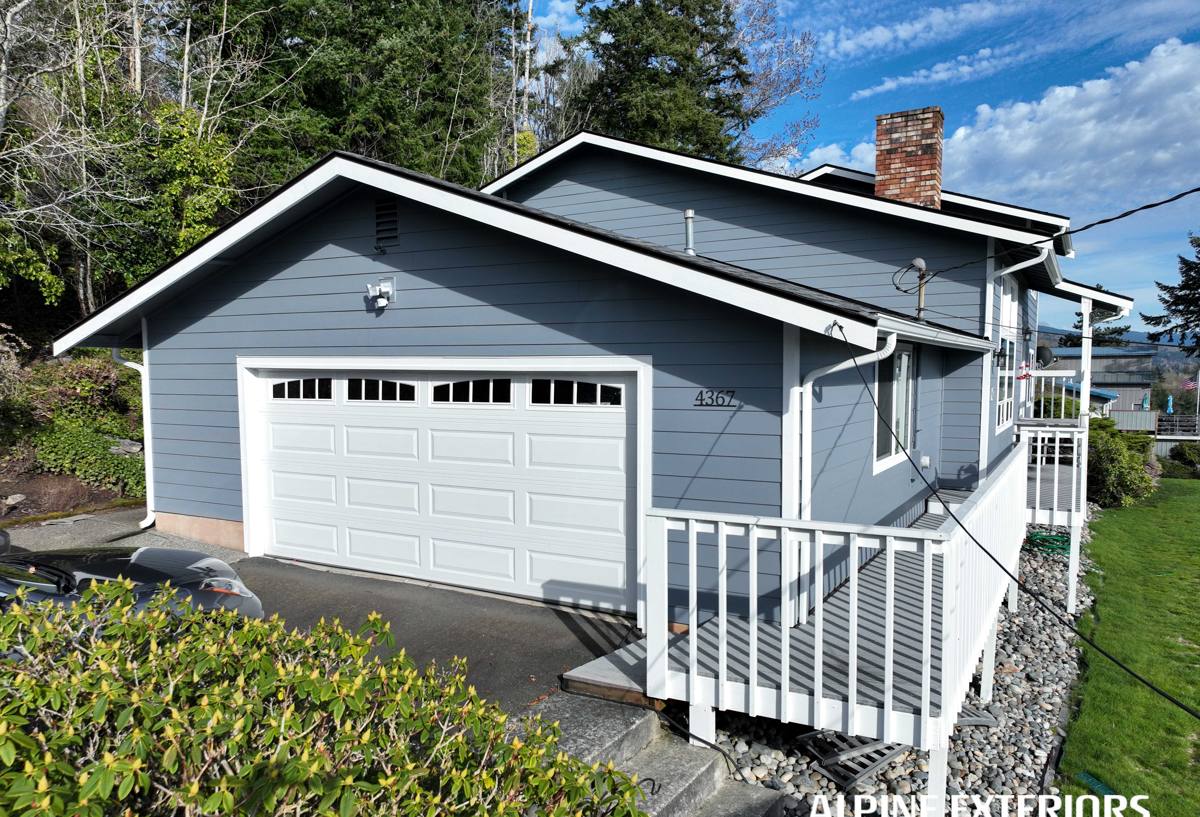
Early Warning Signs a Roof Needs Repair — Not Replacement
Most roofs give some warning before a leak shows up inside the house. Catching these early is usually the difference between a repair bill and a replacement bill.
- Granules collecting in gutters or at downspout outlets, leaving shingles looking patchy or bald
- Shingle edges curling, cupping, or lifting, especially on south- and west-facing slopes
- Dark streaking or thick moss patches concentrated on shaded or north-facing roof sections
- Soft or spongy spots when walking the roof, which usually means the decking underneath is wet
- Water stains, discoloration, or sagging on interior ceilings near exterior walls or chimneys
- Daylight visible through the roof boards when viewed from inside the attic
- Rusted, lifted, or missing flashing around chimneys, skylights, or plumbing vents
- Shingles missing or torn loose after a windstorm, even if no leak has shown up yet
If you're only seeing one or two of these and the roof is still reasonably young, repair is almost always the right first move. Widespread granule loss combined with soft decking is a different conversation, which we'll get into further down.
What a Correct Roof Repair Actually Involves
Diagnosis Before Repair
A repair is only as good as the diagnosis behind it. That means getting on the roof, not just looking at it from the ground, and checking the attic side too — moisture staining on the underside of the decking often tells you more about a leak's real path than anything visible on top. Water that shows up on a ceiling can travel several feet from where it actually entered the roof, so tracing it back correctly matters more than patching where the stain appears.
Matching Materials and Layering
A patch that doesn't match the existing shingle's profile, weight, or exposure will shed water differently than the roof around it, which can create a new leak point instead of fixing the old one. Correct repair work ties new material into the existing shingle courses with proper overlap and fastening, not caulk laid over a gap.
Flashing and Valleys
The honest truth about most roof leaks: they aren't shingle failures, they're flashing failures. Step flashing along walls and chimneys, valley metal, and vent boots are the parts of a roof doing the hardest work, and they're also the parts most often installed wrong or worn out by salt exposure. A repair that replaces shingles but ignores tired flashing underneath hasn't actually solved anything.
Moss and Organic Growth
Moss removal has to be done carefully. Pressure washing strips granules and can force water up under shingle laps, which causes the exact leak you're trying to prevent. We remove growth by hand or with low-pressure methods, then treat the area and can install zinc or copper strips near the ridge, which release a small amount of metal ion with every rain and discourage regrowth for years — a much better long-term answer than repeated aggressive cleaning.
What Causes Repeat Repairs on Happy Valley Roofs
A few patterns show up often enough on this side of Fairhaven that they're worth calling out directly.
- Fastener and flashing corrosion from salt air, which loosens nail holding power and pits thin metal flashing over years of exposure
- Wind-driven rain intrusion at eaves, rakes, and low-slope transitions, where water is pushed uphill under shingle edges rather than running straight off
- Moss root intrusion that lifts shingle tabs slightly, just enough to let wind-blown rain underneath
- Thermal cycling nail pops, where fasteners back out slightly as the roof deck expands and contracts through wet, cool cycles
Repairs that only address the visible symptom — a missing shingle, a stain on the ceiling — without dealing with the underlying cause tend to resurface within a season or two.
Repair vs. Replacement: How We Help You Decide
Not every roof problem needs a full replacement, and we're not going to tell you it does. The table below covers the factors we actually weigh when giving an honest recommendation.
| Factor | Leans Toward Repair | Leans Toward Replacement |
|---|---|---|
| Roof age | Under 15 years, or well-maintained older roof | Near or past the shingle's rated service life |
| Extent of damage | Isolated to one section, valley, or flashing point | Widespread granule loss or curling across most slopes |
| Decking condition | Solid, no soft spots found during inspection | Soft, delaminating, or water-damaged in multiple areas |
| Leak history | First occurrence or a single recurring known point | Multiple unrelated leaks appearing over time |
| Typical cost range | Generally a few hundred to a few thousand dollars | A larger investment, but resets the roof's service life |
When a roof falls in a gray area, we'll walk you through what we found and what each option actually buys you — we'd rather lose a bigger job than sell a replacement a roof doesn't need yet.
Our Roof Repair Process
- Inspection and estimate — a full walk of the roof and attic, with photos of anything relevant, and a written estimate before any work starts
- Scope review with you — we explain what we found, what caused it, and what the repair will and won't fix
- Material matching — sourcing shingles, flashing, and underlayment that match your existing roof as closely as possible
- Tear-out to sound material — removing damaged shingles and decking until we're working from solid, dry material
- Flashing and underlayment first — rebuilding the waterproofing layer correctly before any new shingles go on
- Shingle installation — tied into the surrounding courses with proper overlap and fastening pattern
- Cleanup and haul-away — magnetic sweep for nails, debris removed same day
- Final walkthrough — we show you the completed repair and answer any questions before we consider the job done
Why a Local Fairhaven Crew Matters for Happy Valley Homes
Roof repair is one of those jobs where local experience actually changes the outcome, not just the marketing. A crew that regularly works Happy Valley roofs has already seen how salt exposure ages flashing on this side of town, how long the moss season really runs here versus a drier part of the state, and which roof styles and ages are common in the area. That familiarity means fewer surprises during the inspection and a repair plan built around what actually happens to roofs here, not a one-size-fits-all approach.
Local also means accountability. We live and work in this community, which means if something isn't right after a repair, we're not far away and not hard to reach. And when storm damage hits — which it does periodically along this stretch of Whatcom County — a local crew can typically get eyes on a roof faster than a company dispatching from out of the area.
Keeping a Repaired Roof Healthy Year-Round
A correct repair buys you time, but a little upkeep protects that investment. This is the maintenance rhythm we recommend for homes in this area:
- Check for new moss or algae growth at least once a year, ideally after the wettest stretch of winter
- Keep gutters and downspouts clear so water isn't backing up under the eaves
- Trim back tree limbs that shade the roof or drop debris, since both extend how long moisture sits on the surface
- Have flashing points — chimney, vents, valleys — glanced at every couple of years, since these are the first things salt air affects
If you're seeing any of the warning signs above, or just want an honest read on where your roof actually stands, we're happy to take a look. The estimate is free, there's no pressure to book anything on the spot, and you'll get a straight answer about whether you're looking at a repair, a replacement, or nothing at all right now. The form below is the quickest way to get on our schedule.