 Fairhaven Siding
 Fiber Cement Siding for Birchwood Homes
Birchwood sits close enough to Bellingham Bay and the Fairhaven waterfront that its homes take on a distinct set of weather stresses: salt-tinged air moving in off the water, long stretches of driving rain through fall and winter, and a shaded, moisture-heavy environment that keeps moss and algae active for much of the year. Siding here has a harder job than siding in a drier inland climate, and it shows on houses where the wrong product or a rushed installation was used. We install James Hardie fiber cement siding exclusively in this neighborhood because it's the one system we trust to hold up to all three of those pressures at once, year after year, without the maintenance treadmill that vinyl, engineered wood, or bare cedar demand in this kind of climate.
This page is specifically about fiber cement siding for Birchwood homes — what the local conditions demand, what a correct installation actually involves, and how our process is built around the realities of working in this part of Whatcom County.
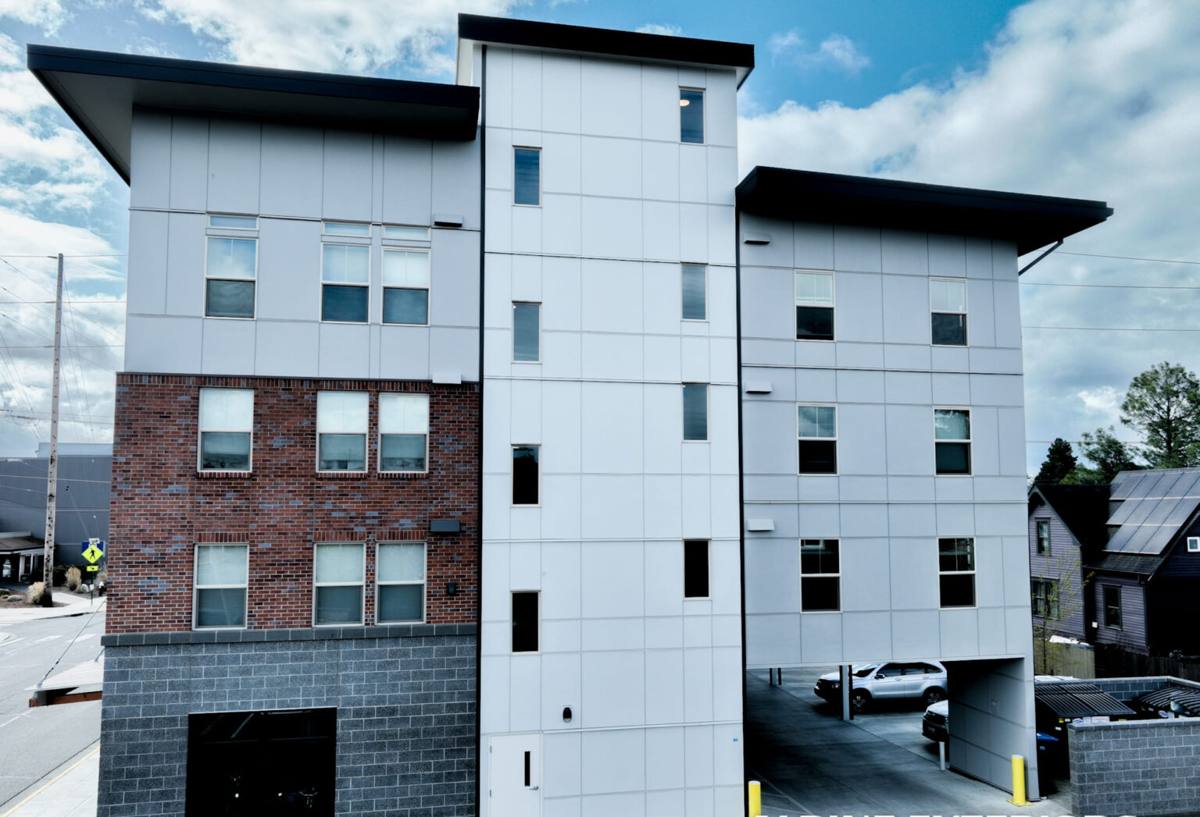
What Birchwood's Climate Actually Does to Siding
Salt Air and Slow Corrosion
Homes closer to the water pick up airborne salt that settles on exterior surfaces and accelerates the breakdown of fasteners, trim, and paint film. It doesn't happen overnight — it's a slow, cumulative process that shows up first as fastener staining, then as paint failure at seams and edges, and eventually as rot in whatever the compromised surface was protecting. Fiber cement itself doesn't corrode, but the fasteners, flashing, and trim details around it need to be chosen and installed with that salt exposure in mind.
Driving Rain
Whatcom County doesn't just get a lot of rain — much of it comes in sideways on wind off the Sound, which pushes water into laps, seams, and penetrations that would stay dry in a calmer climate. Siding systems that rely on caulk alone to keep water out, rather than proper overlaps, drainage planes, and flashing, tend to fail here faster than they would somewhere drier and stiller.
A Long Moss Season
Between tree cover, cool temperatures, and near-constant moisture, moss and algae have a long growing window in Birchwood — often close to year-round on north-facing and shaded walls. Any siding material that stays damp against its substrate, or that has a soft, porous surface for organic growth to grip onto, will show green and black staining faster here than it would in a sunnier, drier neighborhood.
What Correct Fiber Cement Installation Involves
Fiber cement is only as good as the installation behind it. The board itself is durable, but the assembly — drainage plane, flashing, fastening, and joint treatment — is what actually keeps water out of the wall over the long run. This is the part of the job that's easy to shortcut and hard to inspect once the siding is up, which is exactly why it matters most.
Drainage Plane and Rainscreen
We install fiber cement over a weather-resistant barrier with a drainage gap behind the siding, so any moisture that does get past the cladding has a path to drain and dry rather than sitting against the wall sheathing. This is especially important on a site with as much driving rain and shade-driven dampness as Birchwood sees.
Fastening and Clearances
Fasteners are corrosion-resistant and set to Hardie's specifications for penetration depth and spacing — not just close enough. Siding is held above grade, decks, patios, and roof lines with the clearances the manufacturer requires, so splashback and snow-load moisture don't sit against the bottom edge of the boards.
Flashing, Caulking, and Joint Treatment
Every window, door, and penetration gets proper flashing integrated with the drainage plane, not just a bead of caulk over the gap. Butt joints are treated and, where possible, backed with flashing rather than relying on sealant alone — sealant is a backup layer here, not the primary defense against Birchwood's sideways rain.
James Hardie Products We Use in Birchwood
We install James Hardie's HardiePlank lap siding as the primary product on most Birchwood homes, with HardiePanel or HardieShingle used selectively for accent areas where the design calls for it. All of it comes factory-finished with Hardie's ColorPlus baked-on finish, which holds color and resists fading far better than a field-applied paint job — an advantage that matters in a climate where UV, salt, and moisture are all working against a painted surface at once.
Why We Don't Substitute Other Materials Here
We don't install vinyl siding, LP SmartSide, Cemplank, Allura, or bare wood siding on Birchwood homes, and it comes down to how each of those products performs under this specific combination of salt air, driving rain, and sustained dampness. Vinyl can warp and fade with UV and temperature swings, and its seams give water an easy path in wind-driven rain. Engineered wood products are more moisture-sensitive at cut edges and joints than fiber cement, which matters in a climate where those edges rarely get a chance to fully dry out. Bare or primed wood siding needs a maintenance schedule most homeowners can't realistically keep up with here — repainting every few years while also fighting moss growth on a porous wood surface. Fiber cement, installed correctly, is non-combustible, holds its shape and finish, and doesn't feed organic growth the way wood does.
Fiber Cement vs. Other Siding Options in a Coastal Whatcom County Climate
| Factor | James Hardie Fiber Cement | Vinyl | Engineered Wood / Cedar |
|---|---|---|---|
| Moisture behavior | Dimensionally stable; resists swelling and rot when correctly installed | Can warp or buckle with heat and moisture cycling | Prone to swelling, checking, and rot at edges and joints |
| Moss and algae resistance | Dense, non-porous surface sheds growth better than wood-based products | Resists moss but seams and channels trap organic debris | Porous surface holds moisture, feeding moss and mildew |
| Salt air exposure | Material itself is inert; finish holds up well with proper detailing | Can chalk and become brittle over time | Finish breaks down faster; more frequent repainting needed |
| Fire resistance | Non-combustible | Combustible, can melt or deform near heat sources | Combustible |
| Maintenance | Occasional wash; factory finish, no regular repainting | Low maintenance but limited repair options when damaged | Regular repainting/staining and moisture monitoring |
Our Process for Birchwood Projects
- Walkthrough and assessment — we look at existing siding condition, trim, moisture intrusion points, and how much sun or shade each elevation gets, since that affects moss exposure and product choices.
- Detailed proposal — product lines, colors, and a clear scope covering tear-off, drainage plane, flashing, and trim work, not just the visible siding.
- Prep and moisture check — sheathing is inspected once old siding is removed, and any water damage is addressed before new siding goes on. Covering up a wet wall with new siding just hides the problem.
- Installation to Hardie spec — correct fastening, clearances, flashing, and joint treatment, with attention to the details that matter most in driving rain.
- Final walkthrough — we review the finished work with you and confirm everything meets the standard we installed it to.
Living with Fiber Cement Siding in Birchwood's Moss Season
No siding material is completely maintenance-free in a climate this damp, but fiber cement asks for far less than the alternatives. A little routine care keeps it looking right through the wet months and protects the investment long-term.
- Rinse siding with a garden hose or soft wash once or twice a year, focusing on shaded, north-facing walls where moss and algae take hold fastest.
- Keep gutters clear so overflow doesn't run down the siding face and create a constant damp streak that invites moss.
- Trim back tree branches and shrubs that keep siding shaded and damp against the wall — airflow is one of the simplest ways to slow moss growth.
- Check caulking at trim, windows, and penetrations every year or two, and have any cracked or missing sealant addressed promptly.
- Watch for any staining or soft spots at the bottom courses near grade or decks, which can signal a clearance or drainage issue worth checking.
Why Hire a Crew That Already Works This Neighborhood
Fairhaven and the surrounding Bellingham neighborhoods, Birchwood included, have a specific set of conditions that don't show up the same way in a lot of installation training or generic product literature: shaded lots, salt-tinged air, and rain that comes in at an angle instead of straight down. A crew that's worked this area knows to prioritize drainage detailing on shaded elevations, to flash penetrations for wind-driven rain rather than just vertical runoff, and to recognize early moss staining as a signal to check the assembly behind it, not just wash it off and move on. That local pattern recognition is the difference between a siding job that looks good on installation day and one that still looks good, and keeps water out, ten years later.
What This Costs
Every Birchwood home is different — square footage, number of stories, trim complexity, and how much of the existing siding and sheathing needs to come off all factor into the price. Rather than quote a number that won't reflect your actual house, here are the main drivers we walk through with every homeowner:
| Cost Factor | Why It Matters |
|---|---|
| Home size and stories | More surface area and taller walls mean more material and labor, plus added scaffolding or lift access. |
| Existing siding removal | Tear-off of old vinyl, wood, or damaged fiber cement adds labor and disposal costs. |
| Sheathing repair | Any rot or moisture damage found underneath needs to be repaired before new siding goes on. |
| Product line and profile | Lap width, panel vs. shingle accents, and color selection all affect material cost. |
| Trim and detail work | Homes with more windows, corners, and architectural detail take more time to flash and finish correctly. |
We provide a written estimate that breaks these factors down for your specific home, so you know exactly what you're paying for and why.
Ready to Talk About Your Birchwood Home?
If your siding is showing moss staining, failing caulk, or signs of moisture damage — or you're just ready to stop maintaining a product that was never built for this climate — we're happy to take a look. Fill out the form below for a free, no-pressure estimate on James Hardie fiber cement siding for your Birchwood home.