 Fairhaven Siding
 Siding Replacement Built for Ferndale's Climate
Homes in Ferndale sit in one of the more demanding stretches of Whatcom County when it comes to exterior wear. The marine air moving in off the Salish Sea carries salt that slowly corrodes fasteners and finishes. Rain doesn't just fall here, it drives sideways for days at a time during fall and winter systems, forcing water into every gap, seam, and nail hole that isn't properly sealed. And because the region rarely gets a hard, sustained dry stretch, moss and algae get a long runway to establish themselves on north-facing walls, shaded siding, and anywhere water lingers.
Siding that isn't matched to those conditions doesn't fail overnight. It fails slowly, through swelling, delamination, soft spots, and finish breakdown that homeowners often don't notice until the damage has already reached the wall sheathing underneath. A siding replacement done right in Ferndale has to account for all three stressors at once: salt exposure, sustained moisture, and moss growth. That's a different job than replacing siding in a dry inland climate, and it should be treated that way from the first inspection to the final caulk line.
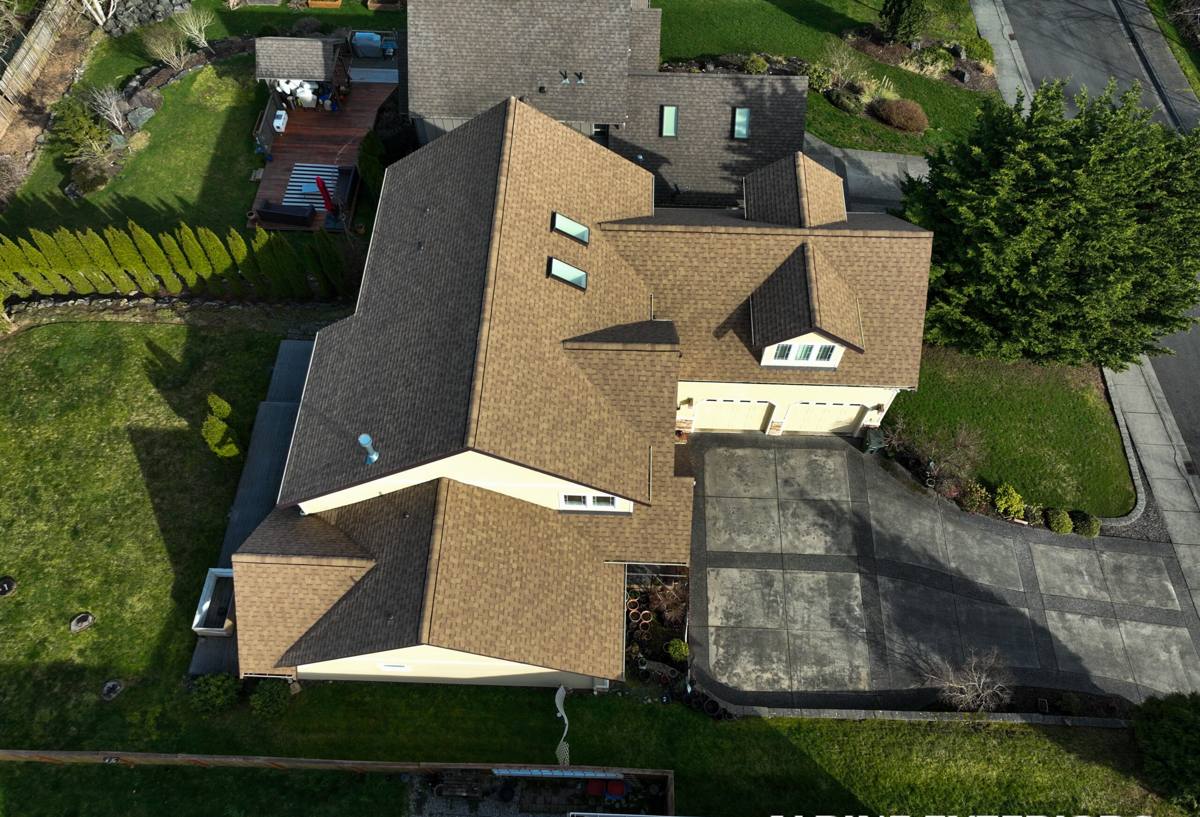
Signs a Ferndale Home Needs Siding Replacement
Most siding problems in this area show up gradually, and they're easy to write off as cosmetic until they aren't. Here's what we look for on a Ferndale home before recommending a full replacement over a repair:
- Soft or spongy spots when you press on the siding, especially near the bottom courses and around windows
- Visible swelling, bubbling, or bowing in panels or boards
- Paint that's failing faster than it should, or won't hold a fresh coat
- Persistent green or black staining that comes back within a season of cleaning
- Cracked or separated caulk joints at trim, corners, and penetrations
- Gaps or warping at butt joints where boards meet
- Visible fastener corrosion or rust streaking below nail heads
- Interior signs like musty smells, peeling interior paint, or damp drywall on exterior-facing walls
One or two of these on their own might point to a localized repair. Several at once, or any sign of soft sheathing underneath, usually means the siding system itself has reached the end of its useful life and a full replacement is the more honest recommendation.
What a Correct Siding Replacement Involves
Tear-Off and Inspection
Replacement starts with full removal of the existing siding, not just an overlay. This is the only point in the project where the sheathing, framing, and existing weather-resistive barrier are fully visible. Any rot, soft wood, or water-damaged sheathing needs to be cut out and replaced before anything new goes back on. Skipping this step to save time is how new siding ends up over old rot.
Weather-Resistive Barrier and Flashing
In a climate that sees as much driving rain as Ferndale does, the water-resistive barrier and flashing details matter more than the siding material itself. Housewrap needs to be installed shingle-fashion so every layer sheds water downward and outward. Flashing at windows, doors, and roof-to-wall intersections has to be integrated with the barrier correctly, not just caulked over. Most siding failures we see trace back to a flashing or barrier detail that was rushed the first time around.
Siding Installation
Proper fastening, spacing, and clearance from grade, decks, and roof lines all affect how well the siding sheds water over time. Manufacturer nailing patterns and gaps at butt joints aren't optional details, they're what keeps the assembly performing the way it's engineered to.
Finish Work
Caulking at trim and penetrations, touch-up paint at cut edges, and final trim details are what give the job a finished look, but they're also functional, not just cosmetic. A missed caulk line at a window head is a small thing that turns into a big problem after a few wet winters.
Why We Install Only James Hardie Fiber Cement
We made a deliberate decision to install James Hardie fiber cement siding exclusively, and we don't treat that as a marketing line, it's a standard we hold ourselves to on every job. Fiber cement is non-combustible, dimensionally stable, and engineered to hold up under sustained moisture exposure without swelling or delaminating the way some wood-based and engineered wood products can when a finish edge is compromised. Hardie's ColorPlus factory finish is baked on under controlled conditions, which gives it better fade and moisture resistance than field-applied paint, and it comes with its own finish warranty backing it.
Products like vinyl, LP SmartSide, primed spruce, and cedar all have real strengths, and we're not going to pretend otherwise. Vinyl is inexpensive and low-maintenance in mild climates. Engineered wood products can look and install like traditional wood at a lower cost. Cedar has a natural look that some homeowners want specifically. But in a climate that combines salt air, sustained rain, and long moss seasons, we've found the trade-offs on those products, edge moisture sensitivity, seam and caulk dependency, more frequent refinishing, and shorter practical service life, aren't worth it when the alternative is a product engineered specifically for this kind of exposure. That's the honest reasoning behind why Hardie is the only thing we put on a Ferndale home.
| Factor | Vinyl | LP SmartSide / Engineered Wood | Cedar | James Hardie Fiber Cement |
|---|---|---|---|---|
| Moisture behavior | Can warp or gap at seams | Edge swelling risk if finish is breached | Absorbs moisture, needs sealing | Dimensionally stable, moisture-resistant core |
| Moss/algae resistance | Moderate, surface growth | Moderate, depends on finish | Prone to moss without upkeep | Factory finish resists staining and growth |
| Salt air / corrosion | Low direct impact | Fastener corrosion risk | Fastener corrosion risk | Engineered fasteners, stable finish |
| Maintenance | Low, occasional cleaning | Periodic refinishing needed | Regular sealing/staining | Cleaning only, no refinishing on ColorPlus |
| Fire rating | Combustible | Combustible | Combustible | Non-combustible |
| Typical warranty | Varies by manufacturer | Varies, often shorter on finish | None standard | Long-term product warranty, transferable |
Our Siding Replacement Process
- On-site assessment. We walk the exterior, check for soft spots and moisture issues, and evaluate current siding, trim, and flashing conditions.
- Written estimate. You get a clear scope of work and pricing before anything is scheduled, including what Hardie product line and profile fits the home.
- Tear-off and sheathing inspection. Old siding comes off, damaged sheathing is identified and documented before replacement begins.
- Repair and barrier installation. Any rot or damage is repaired, then a new weather-resistive barrier and flashing system go in.
- Hardie siding installation. Panels or lap siding are installed to manufacturer specifications for fastening, spacing, and clearance.
- Trim, caulk, and finish work. Final details are completed and touched up to match the ColorPlus finish where needed.
- Final walkthrough. We go over the completed work with you before calling the job done.
Cost Factors for Ferndale Siding Replacement
Every home is different, so we don't publish flat pricing, but these are the factors that most affect what a Ferndale project costs:
| Factor | Why It Matters |
|---|---|
| Home size and complexity | More linear footage, corners, and roof lines mean more material and labor |
| Existing damage | Rot or soft sheathing found during tear-off adds repair scope |
| Number of siding layers | Homes with layered siding history take longer to strip and prep |
| Siding profile and trim detail | Lap siding, panel systems, and custom trim carry different labor and material costs |
| Access and site conditions | Slopes, tight setbacks, and staging needs affect labor time |
| Color and finish selection | Factory ColorPlus finishes vary slightly in cost by line and color |
Why a Local Fairhaven-Based Crew Matters in Ferndale
Siding performance in Whatcom County isn't uniform. A crew that only works occasionally in this region can miss the details that matter here, how much clearance to leave at grade given the rain volume, which flashing details hold up against driving rain from repeated storm systems, or how much ventilation a wall assembly needs to manage moss and moisture over a full wet season. We're based in Fairhaven and work throughout the surrounding communities, including Ferndale, which means the crew on your job has already seen how these conditions play out on real homes nearby, not just in a training manual.
That local familiarity also shows up in smaller ways: knowing which product lines and profiles have held up well on homes with similar exposure, and being upfront when a certain siding choice isn't a good fit for a particular site.
Maintenance After Your New Siding Is Installed
James Hardie fiber cement with a factory ColorPlus finish is low-maintenance, not no-maintenance. A few habits will keep it performing well through Ferndale's wet seasons:
- Rinse the siding annually, more often on shaded or north-facing walls prone to moss
- Keep gutters clear so water isn't overflowing directly onto siding runs
- Trim back vegetation that keeps siding shaded and damp
- Inspect caulk joints at trim and penetrations every year or two and touch up as needed
- Address any impact damage or chipped finish promptly rather than letting it sit exposed
If you're seeing early signs of wear on your current siding or you're ready to talk through a replacement for your Ferndale home, we're happy to take a look and give you an honest read on what your home actually needs. Fill out the form below for a free, no-pressure estimate.