 Fairhaven Siding
 Deck Repair Built for Ferndale's Climate, Not a Generic Checklist
A deck in Ferndale doesn't fail the same way a deck in a dry inland climate does. Between the salt-laden air coming off the water, the driving rain that blows in sideways during winter storms, and a moss season that can stretch for months, Whatcom County decks take on moisture and grime from almost every direction. A repair job that doesn't account for that climate is a repair job that fails again in a year or two. We've built our process around what actually happens to decks out here, not a one-size-fits-all checklist written for a different climate.
This page covers what deck repair looks like specifically for Ferndale homes: what the local weather does to decks, what a correct repair actually involves, how we approach the job, and what to look for when you're hiring someone to do it.
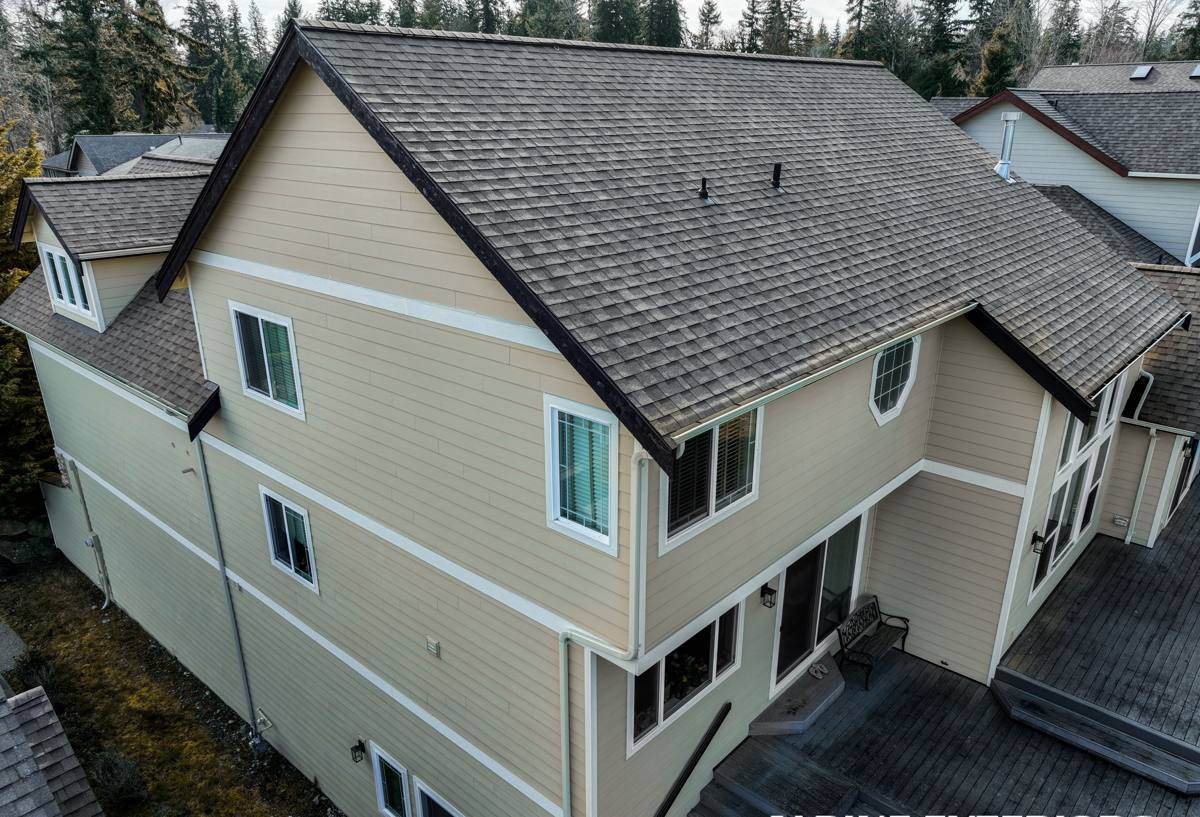
What Ferndale's Weather Does to a Deck
Three climate factors drive almost every deck repair call we get in this area.
Salt Air and Corrosion
Proximity to salt water accelerates corrosion on anything metal — nails, screws, joist hangers, bolts, and railing hardware. Fasteners that would last decades further inland can start rusting, staining the wood around them and losing their grip within just a few years if they weren't rated for coastal exposure in the first place. Once a fastener starts to corrode, it weakens the connection it's supposed to be holding, and that's often the first structural issue that shows up.
Driving Rain and Water Intrusion
Wind-driven rain doesn't just fall on a deck's surface — it gets pushed sideways and upward into joints, under railings, and behind ledger boards where a deck attaches to the house. That's the single most common place we find hidden rot, because it's the hardest spot to see and the easiest to miss during a quick visual inspection. Water that gets trapped there instead of draining away is doing damage long before it becomes visible from the surface.
The Long Moss Season
Whatcom County's wet, mild climate is close to ideal for moss and algae growth, and a shaded deck can stay damp for weeks at a stretch during fall, winter, and spring. Moss holds moisture directly against the wood surface, keeps boards from drying out between rains, and makes the deck surface slick and slippery. Left alone long enough, that constant dampness works its way into the wood grain itself.
Signs a Deck Needs Repair
Homeowners usually notice one of these before calling:
- Boards that feel spongy, soft, or springy underfoot, especially near the house or along the edges
- Visible rust streaks bleeding out from screws, nails, or metal connectors
- Railings or posts that wiggle or feel less solid than they used to
- Gaps opening up between decking boards or around the ledger board where the deck meets the house
- Persistent green or black staining that pressure washing doesn't fully remove
- Stairs that feel uneven or have started to separate from their stringers
Any one of these on its own might be minor. Several together, or anything involving the ledger board or main support posts, usually means it's time for a proper inspection rather than a DIY patch.
What a Correct Deck Repair Actually Involves
A repair that only addresses the visible symptom — replacing a rotten board, for instance — without checking what's underneath it is a repair that's likely to need doing again soon. A correct job works from the structure outward.
Framing and Structural Components
The ledger board, joists, beams, and support posts are the parts of the deck doing the actual load-bearing work, and they're also the parts most often hidden from view. Rot or corrosion here is the most serious kind of damage because it affects the deck's overall safety, not just its appearance. Any repair worth doing checks these components first, since decking boards installed over a compromised frame won't hold up regardless of how new they look.
Fasteners and Hardware
In a salt-air climate, the fasteners matter almost as much as the wood. Joist hangers, structural screws, and post connectors that aren't rated for coastal or wet-climate exposure will corrode faster than the wood around them, and a corroded fastener loses its holding strength well before it looks obviously bad. Part of a correct repair is replacing undersized or non-rated hardware with connectors built to hold up in this environment, not just matching what was there before.
Decking Surface and Board Replacement
Individual boards get replaced when they're cracked, cupped, soft, or rotted through — but board replacement should always follow, not substitute for, a check of the framing underneath. We also look at board spacing and drainage, since boards installed too tight to each other trap water and accelerate rot in a wet climate like this one.
Railings and Guards
Railings take constant wind and rain exposure and often get less attention than the decking surface, even though a loose or rotted railing is a safety issue. Posts anchored into a damp or rotted rim joist are a common failure point we find during inspections, and it's usually not visible until someone leans on the railing and it moves.
Repair or Replace? Weighing the Real Cost Factors
Not every damaged deck needs a full rebuild, but not every deck is worth repairing indefinitely either. These are the factors that actually drive the decision:
| Factor | Favors Repair | Favors Replacement |
|---|---|---|
| Structural framing condition | Ledger, joists, and posts are sound | Rot or corrosion found in multiple structural members |
| Extent of damage | Isolated to a few boards or one area | Widespread across the deck surface and frame |
| Age of the deck | Built or rebuilt within the last 10-15 years | Original construction is decades old with unknown history |
| Fastener condition | Hardware still rated and intact | Corroded or undersized connectors throughout |
| Budget goals | Extending useful life at lower upfront cost | Wanting a long-term reset instead of recurring repairs |
We'll give you an honest read on which side of that table your deck falls on. If a repair genuinely makes sense, that's what we'll recommend — a full rebuild isn't the right answer for every damaged deck, and we're not going to sell you one you don't need.
Our Deck Repair Process
1. Inspection From the Ground Up
We start underneath the deck where possible, checking the ledger board connection, joists, beams, and posts before we ever touch the surface boards. This is where hidden rot and corrosion actually live, and it's the step that gets skipped when a repair is rushed.
2. Isolating the Real Extent of Damage
Rot spreads along the grain of wood, often further than it looks from the surface. We probe surrounding material to find where sound wood actually starts, rather than replacing only the section that looks bad and leaving compromised wood next to it.
3. Structural Repair First
Any damaged framing, ledger flashing, or corroded hardware gets addressed before new decking goes down. We use fasteners and connectors rated for coastal, wet-climate exposure, not standard hardware that will just corrode again on the same timeline.
4. Surface and Railing Repair
Damaged boards, stairs, and railings get replaced or repaired with attention to proper spacing and drainage, so water sheds off the deck instead of sitting between boards.
5. Cleanup and a Clear Explanation
We walk you through what we found, what we fixed, and what to keep an eye on going forward, especially anything that's holding up okay for now but worth watching.
Materials: Matching the Repair to the Climate
Whether your deck is natural wood or composite decking, the repair approach has to account for this climate rather than assume dry-climate conditions.
For wood-framed decks, we use pressure-treated lumber rated for ground contact and outdoor exposure on any structural replacement, since untreated or under-rated lumber won't hold up to the moisture cycle here. For decking surfaces, whether the existing deck is wood or composite, our standard is to match or upgrade the fastening hardware to something rated for coastal exposure — that's a professional standard we hold regardless of which decking product is already installed, because standard interior-grade or low-cost hardware is simply the wrong tool for salt air and constant rain. Composite decking repairs bring their own considerations too: damaged composite boards typically need to be replaced as a unit rather than patched, and the substructure underneath still needs the same wood-frame protection as a traditional deck, since composite surfaces don't eliminate moisture problems in the framing below.
Living With the Moss Season
Even a well-repaired deck will grow moss again in this climate if drainage and airflow underneath aren't part of the fix. Where it makes sense, we address grading, gaps between boards, and clearance underneath the deck so air can circulate and water has somewhere to go, rather than just cleaning the surface and leaving the same conditions that grew the moss in the first place. A deck that dries out between rains holds up dramatically better over a Whatcom County winter than one that stays damp.
Keeping a Repaired Deck in Good Shape
A few habits go a long way toward protecting the repair and stretching the years before the next one:
- Sweep debris and standing leaves off the deck regularly, especially in fall
- Rinse off moss and algae before it builds up into a thick layer
- Check railings and stair connections for looseness once or twice a year
- Keep gutters and downspouts near the deck clear so runoff isn't draining directly onto it
- Reseal or restain wood decking on the schedule the product calls for — don't stretch it because it "still looks fine"
- Look underneath the deck occasionally, not just at the surface, since that's where problems start
Why Hire a Crew That Already Works Ferndale
A contractor who works this area regularly already knows what Ferndale's exposure to salt air and driving rain does to decks over time, and doesn't need to relearn that on your project. That familiarity shows up in small decisions — which hardware to spec, where rot tends to hide on a ledger board in this climate, how much drainage clearance actually matters under a shaded deck — that a crew unfamiliar with the region might not think to check. It also means we're not guessing at what "normal wear" looks like here versus what's actually a warning sign.
If your deck is showing soft spots, rust stains, loose railings, or persistent moss that won't go away, we're happy to take a look and give you a straight answer about what it needs. Reach out for a free, no-pressure estimate using the form below — we'll walk the deck with you and tell you honestly what we find.