 Fairhaven Siding
 Asphalt Shingle Roofing Built for Columbia's Weather
Homes in and around Columbia sit close enough to Bellingham Bay and the Fairhaven waterfront that the weather does something different to a roof than it does further inland. The salt-laced air, the wind that pushes rain sideways off the water, and the long stretch of wet, shaded months all work on a roof at the same time. An asphalt shingle roof that's installed correctly for this specific mix of conditions will outlast one that was installed the same way you'd install it in a drier, inland part of Whatcom County. That difference shows up in fewer callbacks, fewer surprise leaks, and a roof that actually reaches its rated lifespan instead of falling short of it.
This page is about one job, done right, in one area: asphalt shingle roofing for homes in Columbia. Not a general overview of every roofing option we offer — just what this climate demands, what a correct installation looks like, and why a crew that already works in this part of Fairhaven tends to get better long-term results than a crew driving in from somewhere with milder weather.
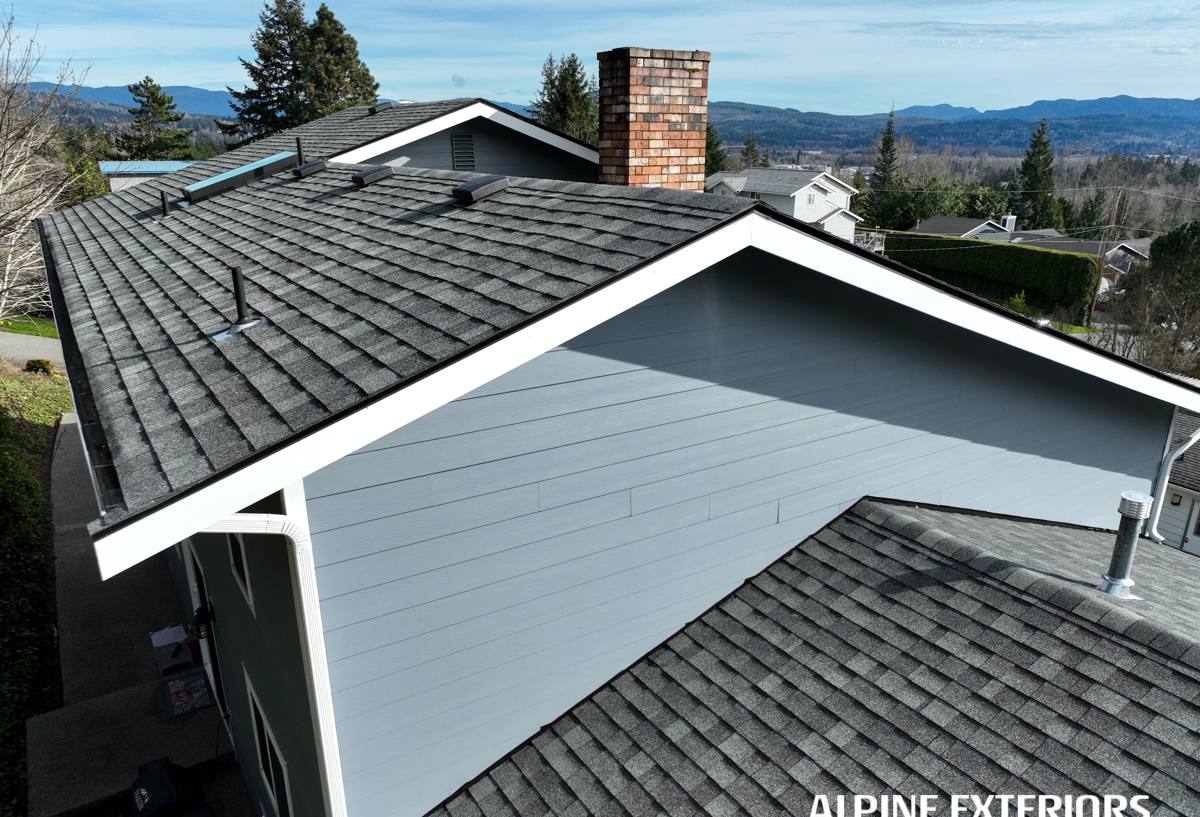
What Columbia Homes Need From a Shingle Roof
Salt Air and Metal Corrosion
Proximity to the water means airborne salt settles on everything outside, including your roof. It's not enough to cause obvious damage overnight, but over years it accelerates corrosion on any exposed metal — nails, flashing, vents, and fasteners. Standard galvanized fasteners can start showing rust streaks and weakening well before a shingle roof's expected replacement age in a coastal-influenced area like this. We treat fastener and flashing material selection as part of the job, not an afterthought, because the metal underneath the shingles usually fails before the shingles themselves do.
Driving Rain and Wind-Driven Water
Rain that falls straight down is easy for any roof to shed. Rain that's being pushed sideways by wind off the water is a different problem — it finds every gap, gets up under shingle tabs, and works its way through flashing details that weren't sealed with that kind of exposure in mind. Whatcom County storms regularly bring this combination, and a roof here needs underlayment and flashing choices that account for wind-driven moisture, not just gravity.
Moss, Shade, and a Long Wet Season
Columbia's mature tree cover is part of what makes the area pleasant to live in, but it also means shaded roof sections stay damp for extended stretches, especially through fall, winter, and spring. That's exactly the environment moss and algae need to establish themselves. Once moss gets a foothold, it holds moisture against the shingle surface, lifts tabs, and shortens the roof's usable life. Roofs here need both the right shingle products and a maintenance rhythm that keeps moss from ever getting comfortable.
What a Correct Asphalt Shingle Installation Involves
A shingle roof is a system, not a single layer of material nailed to a deck. Every layer underneath the shingles matters as much as the shingles themselves, and in this climate, skipping or shortcutting any one of them is where roofs start failing early.
Tear-Off and Deck Inspection
We remove the old roofing down to the deck rather than layering over it. That lets us actually see the plywood or plank sheathing underneath, check for soft spots or water staining from past leaks, and replace any damaged decking before new material goes down. Roofing over a compromised deck just hides a problem that will resurface.
Underlayment and Water-Entry Protection
Given how much wind-driven rain this area sees, we pay close attention to underlayment coverage and self-adhered ice-and-water membrane at vulnerable points — eaves, valleys, and roof-to-wall transitions. This layer is the backup that keeps water out if wind ever pushes moisture past the shingle surface, which happens during the region's stronger winter storms.
Flashing at Every Penetration and Transition
Chimneys, skylights, vent pipes, and sidewalls are where the vast majority of roof leaks actually start — almost never in the open field of shingles. Correct step flashing, counterflashing, and pipe boot selection, installed with the salt-air corrosion risk in mind, is what keeps these details watertight for the life of the roof rather than just the first few years.
Ventilation That Matches the Climate
A roof deck that can't breathe traps moisture underneath the shingles, which shortens shingle life from below at the same time moss and rain are working on it from above. We balance intake and exhaust ventilation so the attic and roof deck stay dry, which also helps control ice formation and condensation during cold snaps.
Choosing the Right Shingle for This Climate
Not every asphalt shingle product is built the same way, and in a moss-prone, salt-air, wind-driven-rain environment, that difference matters more than it would in a milder area.
| Shingle Type | Wind & Rain Performance | Moss/Algae Resistance | Typical Lifespan Here |
|---|---|---|---|
| Standard 3-tab | Adequate in calm conditions, more prone to tab lift in driving wind | Low unless algae-resistant granules specified | Shorter end of the range in this climate |
| Architectural (laminate) | Stronger wind rating due to heavier, layered construction | Better when paired with algae-resistant (AR) granules | Mid-to-long range with proper maintenance |
| Impact-rated / high-wind laminate | Best available wind and impact performance | Best when combined with copper or zinc strips near the ridge | Longest range for this coastal-influenced climate |
We don't push the most expensive option on every roof. We look at the pitch, the amount of tree shade, sun exposure, and how exposed the roof is to wind off the water, then recommend the shingle tier that actually matches what that specific roof will face. A steep, sun-exposed roof and a low-pitch, shaded roof in the same neighborhood can reasonably call for different products.
Our Process for Columbia Roofing Projects
- On-site inspection. We walk the roof (or use a lift/drone where access is limited) and check the deck, flashing, ventilation, and shingle condition together, not shingles in isolation.
- Honest scope and options. You get a written explanation of what's failing, what's still sound, and which shingle and underlayment combination fits your roof's exposure and your budget.
- Protection of the property. Landscaping, siding, and gutters get covered or protected before tear-off starts, and magnetic sweeps for nails happen throughout the job.
- Tear-off, deck repair, and system installation. Underlayment, flashing, and shingles go in as a coordinated system, not separate steps done by whoever's fastest.
- Final walkthrough. We review the finished roof with you, including ventilation and any moss-prevention measures installed, before calling the job done.
Roof Maintenance Checklist for Moss and Moisture Season
A correctly installed shingle roof still benefits from basic upkeep in a climate this wet and shaded. This is what we recommend homeowners in Columbia stay on top of between professional inspections:
- Keep gutters and downspouts clear so water isn't backing up under the lowest course of shingles
- Look for dark streaking or green/black patches, especially on north-facing or shaded slopes, and address moss early rather than letting it establish
- Trim back overhanging branches to cut down on shade, debris buildup, and physical abrasion against the shingles
- Check attic ventilation isn't blocked by insulation or debris, since poor airflow accelerates moisture damage from underneath
- Have flashing around chimneys, skylights, and vent pipes checked periodically, since these fail well before open-field shingles do
- Avoid pressure washing the roof surface, which can strip protective granules and shorten shingle life
Why a Crew That Already Works Columbia Matters
A roofing crew that regularly works this part of Fairhaven already knows which flashing details tend to fail first in this specific wind-and-rain pattern, which roof orientations grow moss fastest, and how much ventilation a typical Columbia attic actually needs. That local pattern recognition isn't something a crew unfamiliar with Whatcom County's coastal microclimate picks up on the first job. It shows up in fewer callbacks, fewer surprises during tear-off, and a roof that's specified correctly the first time instead of needing correction after a storm exposes a shortcut.
It also matters for warranty follow-through and honest long-term advice. A local crew has a reputation in the area worth protecting and is around to service what it installs, not just complete a transaction and move on.
What Affects Cost
Every roof is priced based on its own specifics, but the factors that most commonly move the number on a Columbia project are the roof's total square footage and pitch, how many layers of old roofing need to be removed, the amount of flashing and penetration work required, deck repairs found once tear-off starts, and which shingle tier you choose from the comparison above. We'll walk through each of these with you in plain terms during the estimate, so there are no surprises once work begins.
If you're weighing whether your current roof needs a full replacement or can hold on with targeted repairs, we're happy to give you a straight answer either way. Reach out for a free, no-pressure estimate — we'll take a real look at your roof and tell you what it actually needs.