 Fairhaven Siding
 Windows on the Edge of the Bay: Why Chuckanut Is a Different Job
Chuckanut sits in a stretch of Whatcom County where the terrain does most of the talking. Homes here are tucked against forested slopes, perched above the water along Chuckanut Bay, or set back under heavy tree cover that never fully dries out between storms. That combination — salt-laden air off the water, steep exposure to driving rain, and shade that keeps moss and mildew active most of the year — puts more stress on a window system than you'd see in a typical inland neighborhood. A window installation that would hold up fine in a dry, open subdivision can start failing early in a Chuckanut microclimate if it wasn't built and sealed for these specific conditions.
This page is about that one job, done right, for this one area. Not a general overview of window replacement — the specifics of what Chuckanut's climate does to windows, what a correct installation actually involves, and how we approach it as a crew that already works this part of Fairhaven regularly.
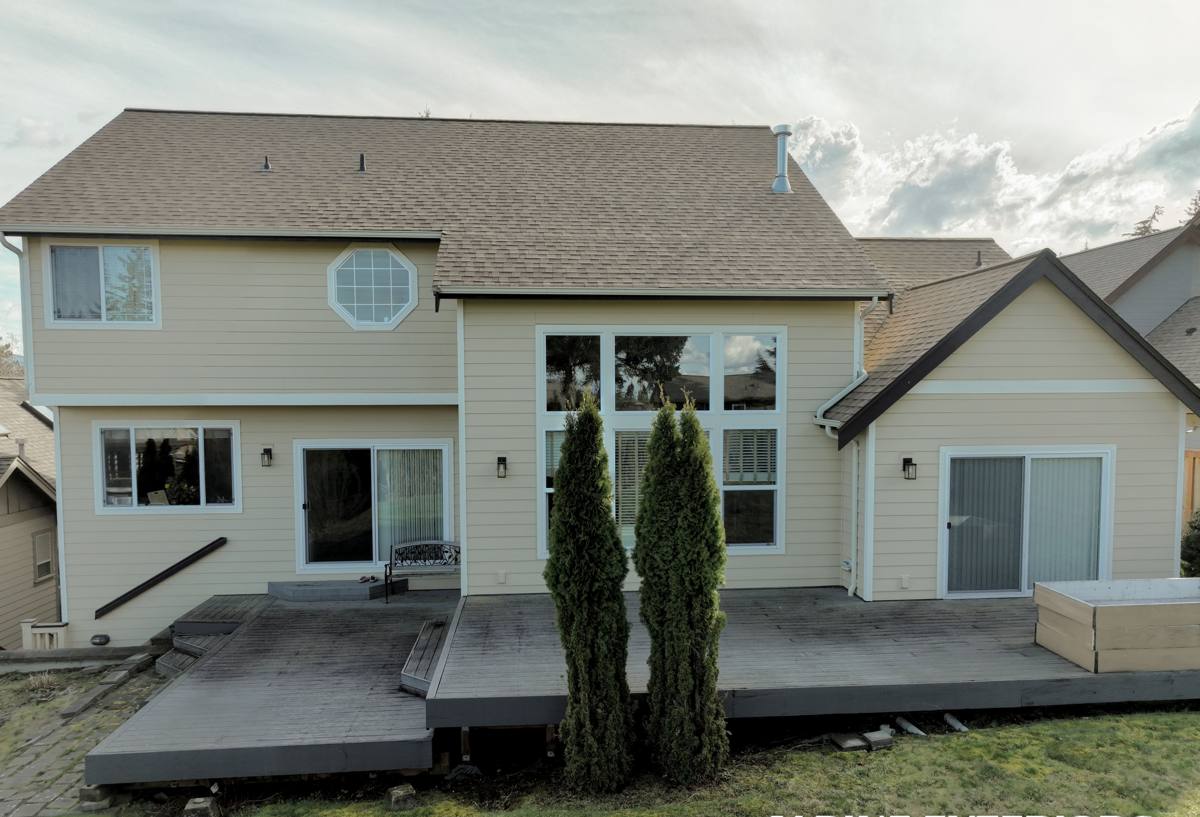
What the Chuckanut Climate Actually Does to Windows
Salt Air and Metal Fatigue
Proximity to Chuckanut Bay and the wider Salish Sea means a steady low-level presence of salt in the air, especially on homes with a water-facing exposure. Salt accelerates corrosion on window hardware — hinges, locks, balance mechanisms, and uncoated fasteners are the first parts to show it. Over years, that corrosion can seize hardware, stain sills, and, in older aluminum-frame windows, pit the frame itself. It's rarely dramatic; it's a slow wear pattern that homeowners notice as "the window doesn't latch like it used to" long before they think to blame the air.
Driving Rain and Wind-Driven Water
Whatcom County gets a lot of rain, but the rain that matters most for windows is the kind that comes in sideways during a windstorm off the water. Wind-driven rain pushes water into places gravity alone never would — up under a poorly lapped flashing, sideways past a weak seal, into a nail fin that wasn't bedded correctly. A window that's watertight in a light, straight-down drizzle can still leak during a real Chuckanut storm if the flashing detail and sealant work weren't done for that specific load, not just "up to code" in the loosest sense.
Moss, Shade, and Trapped Moisture
Heavy tree cover keeps a lot of Chuckanut properties shaded and damp well into the parts of the year other neighborhoods have dried out. That means moss and algae growth on sills, trim, and cladding around windows for a longer stretch of the year, and it means any gap in the water management around a window stays wet longer before it has a chance to dry. Wood trim and sills in these conditions rot faster if the surrounding flashing and paint or sealant aren't maintained — and once moisture gets behind a window frame in a shaded, low-airflow spot, it can sit there for months.
What a Correct Window Installation Involves
A window installation is not just fitting a new unit into an old opening. In a climate like this, most of what actually determines whether the job lasts happens in details that are invisible once the trim goes back on.
Flashing and Water Management
Every opening needs a properly lapped flashing system — sill pan, jamb flashing, and head flashing installed in the correct shingle-style order so water is always directed outward and down, never trapped behind the siding. This is the single most common failure point we find in older installs on wind-exposed and shaded lots: flashing that was skipped, reversed, or replaced with sealant alone.
Air Sealing and Insulation
The gap between the window frame and the rough opening needs to be sealed and insulated correctly — not packed tight with fiberglass, which compresses and loses its seal, and not left with gaps that let in drafts and moisture-laden air. Low-expansion foam or backer rod and sealant, used correctly around the full perimeter, keeps both air and bulk water out.
Fastening for Wind Exposure
On lots with real wind exposure — bluff-top and water-facing sites in particular — fastening schedule matters more than it does on a sheltered inland home. Windows need to be shimmed square, fastened per the manufacturer's wind-load spec, and checked for square and plumb before trim goes on. A window that's slightly racked in the opening won't seal or operate correctly no matter how good the unit itself is.
Choosing Window Materials for a Coastal, Wooded Site
There's no single "best" window material — the right choice depends on a home's specific exposure, budget, and how much upkeep the owner wants to do. Here's how the common options hold up under Chuckanut's conditions specifically.
| Material | Salt air / corrosion | Moisture & rot resistance | Upkeep in shaded, damp spots |
|---|---|---|---|
| Vinyl | Good — won't corrode; hardware is the weak point | Good, doesn't absorb moisture | Low — occasional cleaning, watch for moss buildup in tracks |
| Fiberglass | Very good — stable, corrosion-resistant frame | Very good | Low, holds paint/finish well if factory-coated |
| Wood-clad | Fair — depends entirely on cladding integrity | Fair — interior wood needs the exterior seal intact | Higher — any crack in the cladding needs prompt attention |
| Aluminum | Weaker — most prone to pitting near salt air | Fair, thermally weaker in our climate | Moderate — hardware and finish need regular checks |
We don't push one brand or line across every job. We spec the material and hardware finish to the specific exposure of the opening — a water-facing wall on a windy lot gets different treatment than a sheltered opening tucked under trees on the same house.
Our Chuckanut Installation Process
- On-site assessment. We look at each opening individually — exposure to wind and water, condition of existing flashing and sheathing, and any signs of past moisture damage.
- Removal and opening inspection. Old windows come out and we check the rough opening and sheathing for rot or hidden water damage before anything new goes in. This is often where problems from a prior installation surface.
- Repair as needed. Any soft or damaged framing, sheathing, or sill material gets replaced before the new window goes in — installing a good window into a compromised opening just hides the problem.
- Flashing and installation. Sill pan, jamb, and head flashing installed in correct order, window shimmed square and fastened to spec, perimeter sealed and insulated.
- Trim, finish, and final seal check. Interior and exterior trim reset or replaced, all sealant joints checked, hardware tested for smooth operation.
- Walkthrough. We go over the work with the homeowner and explain any maintenance points specific to that window's exposure.
Signs Your Current Windows Are Failing
Not every window that needs attention is obviously broken. In Chuckanut's climate, these are the signs worth acting on before they turn into structural repairs:
- Fogging or condensation between the panes of a double-pane window — the seal has failed
- Soft, spongy, or discolored wood trim or sill around the frame
- Hardware that's stiff, corroded, or won't latch fully
- Visible daylight or a noticeable draft around the frame edges
- Moss or dark staining building up on sills or trim faster than it can be cleaned off
- Difficulty opening or closing that wasn't there a year or two ago
- Peeling paint or bubbling finish concentrated right around the window opening
Why Hiring a Crew That Already Works Chuckanut Matters
Window installation isn't a one-size-fits-all trade, and it shows most on properties with real climate exposure like this. A crew that mostly works dry, sheltered neighborhoods elsewhere in the region can install a perfectly good window and still get the flashing detail or fastening schedule wrong for a bluff-facing wall that takes wind-driven rain every winter. Working Fairhaven and the surrounding Whatcom County coastline regularly means we're not guessing at how a given wall or opening on a Chuckanut lot will behave — we've seen how these homes age, where the moisture actually gets in on similar sites, and which details are worth the extra time.
It also means we're realistic about timing. Scheduling installation work around this area's weather patterns, rather than around a generic install calendar, reduces the odds of water getting into an open rough opening mid-project.
Caring for New Windows in a Coastal Climate
A correctly installed window in this climate still benefits from a little regular attention. Rinsing salt residue off exterior glass and frames a few times a year, especially after storms, keeps it from concentrating on the surface. Keeping gutters and nearby drainage clear stops water from sheeting down across window heads. In shaded spots, periodically clearing moss and debris from sills and tracks keeps moisture from sitting against the frame. And any cracking or gapping in exterior caulk lines around trim should get resealed promptly — in a damp, shaded microclimate, small gaps don't stay small for long.
If you're dealing with drafty, foggy, or hard-to-operate windows on a Chuckanut property, or planning ahead for a home in this area, we're happy to take a look and walk you through what your specific exposure actually calls for. Reach out for a free, no-pressure estimate using the form below.