 Fairhaven Siding
 Storm Damage Roof Repair Built for Chuckanut's Coastal Climate
Homes on the wooded slopes and waterfront edges around Chuckanut sit in one of the more demanding roofing environments in Whatcom County. The combination of salt-laden air rolling in off the bay, wind-driven rain that hits roofs sideways instead of straight down, and heavy evergreen canopy overhead adds up to a roof that ages differently than one a few miles inland. A storm doesn't have to be dramatic to cause real damage here — it just has to find the one weak point that months of salt exposure and shade-grown moss have already been working on.
We repair storm-damaged roofs throughout the Fairhaven area, and Chuckanut jobs come with their own pattern of problems: lifted shingle tabs on wind-exposed slopes, flashing that's corroded faster than expected near the water, and valleys and gutters clogged with moss and needle debris that turn a normal rainstorm into standing water. Understanding that pattern is the difference between a repair that lasts and one that fails again at the next storm.
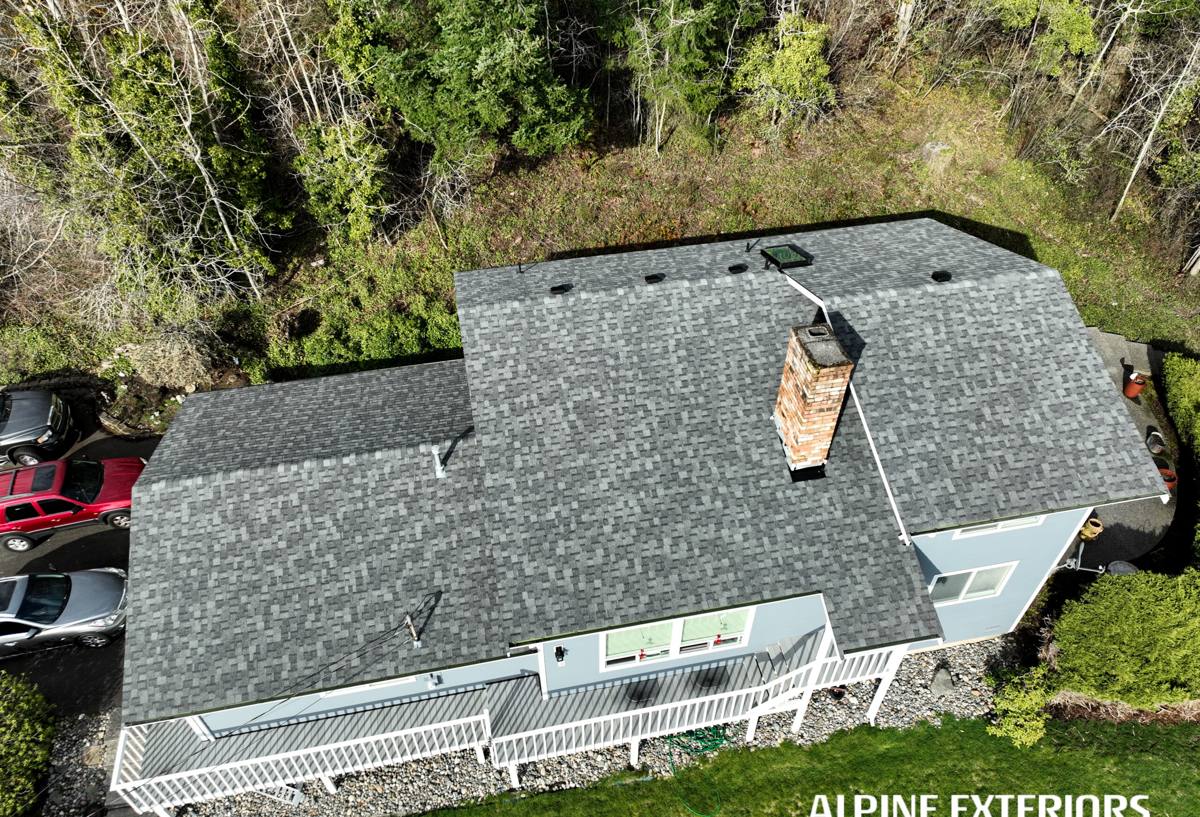
What Actually Counts as Storm Damage
Not every roof problem after a storm is obvious from the ground. Storm damage covers a range of issues, and some of the most costly ones are the least visible.
Wind Damage
Wind doesn't need to reach dramatic speeds to lift shingle tabs, especially on roofs that have already lost some adhesive bond to age or heat cycling. Once a tab is lifted, it rarely reseals on its own, and it becomes an entry point for the next rain event even if it looks mostly fine from the driveway.
Water Intrusion
Driving rain off the water can push moisture sideways into gaps that would never leak in a straight-down rain. This is especially common around chimneys, skylights, and roof-to-wall transitions where flashing has aged or was never detailed correctly to begin with.
Impact Damage from Falling Debris
Tree cover is part of what makes Chuckanut attractive, but it also means branches, cones, and occasionally whole limbs come down in wind events. Impact damage can crack shingles, dent metal roofing, or knock flashing out of place without leaving an obvious hole.
Moss and Organic Growth Damage
Moss isn't storm damage on its own, but it sets the stage for it. A storm that would otherwise shed water cleanly instead pools behind moss mats and debris, and that trapped moisture is what turns a minor storm event into a real leak.
Why Waiting Costs More Than the Repair Itself
A small roof leak rarely stays small. Water that gets past the roofing material typically travels along the underlayment or decking before it ever shows up as a stain on a ceiling, which means visible damage inside the home usually indicates the problem has already been active for a while. In a marine climate like this one, trapped moisture under a roof deck doesn't dry out quickly between rain events, especially during the wetter months when moss growth is also at its heaviest.
The practical risk of delaying a storm damage repair is that a straightforward shingle or flashing fix turns into a decking replacement, insulation replacement, or interior repair once moisture has had time to work. Addressing damage promptly after a storm is almost always the more affordable path, even when the visible damage looks minor.
What a Proper Storm Damage Repair Involves
Storm repairs get done badly more often than people expect, usually because the fix addresses only the spot that's actively leaking rather than the reason it leaked in the first place. A patch over a symptom will often hold through summer and fail again the first hard storm of the season.
| Approach | What It Addresses | Typical Outcome |
|---|---|---|
| Surface patch only | The visible crack, gap, or missing shingle | Often reopens or leaks nearby within a season or two |
| Comprehensive repair | Underlying flashing, underlayment, decking, and drainage path | Restores the roof's ability to shed water as a system, not just at one spot |
Full Inspection First
A correct repair starts with checking the areas around the visible damage, not just the damage itself. Wind and water rarely affect just one shingle or one flashing point — if one area failed, nearby areas exposed to the same conditions are worth a close look too.
Matching Materials and Techniques
Repairs should tie into the existing roofing system using compatible materials and correct fastening patterns, not whatever is fastest. Mismatched materials or shortcuts in fastening are a common reason repairs fail earlier than they should.
Flashing, Underlayment, and Ventilation
Most storm-related leaks trace back to flashing or underlayment rather than the shingles themselves. A repair that replaces shingles but ignores compromised flashing underneath is treating the symptom, not the cause.
Our Storm Damage Repair Process
- Inspection and documentation. We assess the full roof, not just the reported problem area, and document what we find with photos you can keep for your own records or insurance use.
- Clear scope and written estimate. You get a plain-language explanation of what's damaged, what needs to be repaired versus replaced, and an honest cost range before any work starts.
- Repair. We match materials and techniques to your existing roof system, prioritizing the underlying cause of the leak, not just the visible symptom.
- Cleanup and debris clearing. Storm debris, old moss growth, and displaced material are cleared from the roof and gutters as part of the job, not left for you to deal with separately.
- Follow-up. We stand behind the work and are reachable if anything about the repair needs a second look after the next round of weather.
Materials That Hold Up to Salt Air and Moss
Material choice matters more here than in drier, inland parts of Whatcom County. Standard fasteners and flashing can corrode faster in salt-influenced air, and shaded, moisture-holding roof sections are more prone to moss and algae growth than roofs with more sun exposure.
For repairs in this area, we favor corrosion-resistant fasteners and flashing rated for coastal exposure, and where it fits the existing roof system, algae-resistant shingle products that are designed to slow moss and algae growth rather than just cover it up. None of this eliminates the need for regular moss removal and gutter clearing, but it reduces how hard the roof has to work between cleanings.
Insurance Considerations After a Storm
Many storm damage repairs are eligible for insurance coverage, but the process depends on your policy, your carrier, and the specifics of the event — we don't handle claims on your behalf, but we can make the process easier on our end. That means providing clear photo documentation, a written scope of damage, and a straightforward repair estimate you can hand to your adjuster. Getting an inspection soon after a storm, rather than waiting, also matters: some carriers have windows for filing, and damage that's been sitting exposed for weeks can be harder to clearly attribute to a single storm event.
Why Hire a Crew That Already Works in Chuckanut
Roofing crews that mostly work drier, more sheltered areas inland don't always anticipate how differently a coastal, tree-covered roof behaves. A crew familiar with Chuckanut and the greater Fairhaven area already knows to check flashing corrosion more closely, expect heavier moss accumulation on north- and shade-facing slopes, and account for wind patterns coming off the water when assessing shingle lift. That local pattern recognition often means catching a second problem before it becomes its own emergency call.
Response time matters too. After a significant storm moves through Whatcom County, roofing crews get busy fast, and homes with active leaks need attention sooner rather than later. Working locally means we're not driving in from across the region to reach you.
Signs Your Roof Needs a Storm Damage Inspection
- Shingle tabs that look lifted, curled, or are missing granules in patches
- New or worsening water stains on ceilings or upper interior walls
- Visible dents, cracks, or displaced flashing after high wind or falling debris
- Heavy moss or debris buildup in valleys, gutters, or roof-to-wall transitions
- Daylight visible through the attic roof deck, or damp insulation in the attic
- Granules collecting in gutters or at downspout outlets after a storm
If any of this sounds familiar, or you're just not sure whether a recent storm caused damage worth addressing, we're glad to take a look. We offer free, no-pressure estimates for Chuckanut and Fairhaven-area homes — use the form below to get started.