 Fairhaven Siding
 Board & Batten Siding for Silver Beach Homes
Board and batten has a specific job to do beyond looking good. The vertical boards and the narrow strips that cover each seam create a clean, strong-lined profile that suits farmhouse, craftsman, and modern homes alike, and it's a style we get asked about often from homeowners in and around Silver Beach. But the same design that makes it attractive — more seams, more vertical joints, more surface texture — is also what makes it less forgiving than standard lap siding if it isn't installed correctly for this part of Whatcom County.
This page is specifically about board and batten siding for homes in the Silver Beach area near Fairhaven. It's not a generic rundown of the style — it's what we've learned matters most for homes in this pocket of the county, and how we approach the job so it actually holds up here.
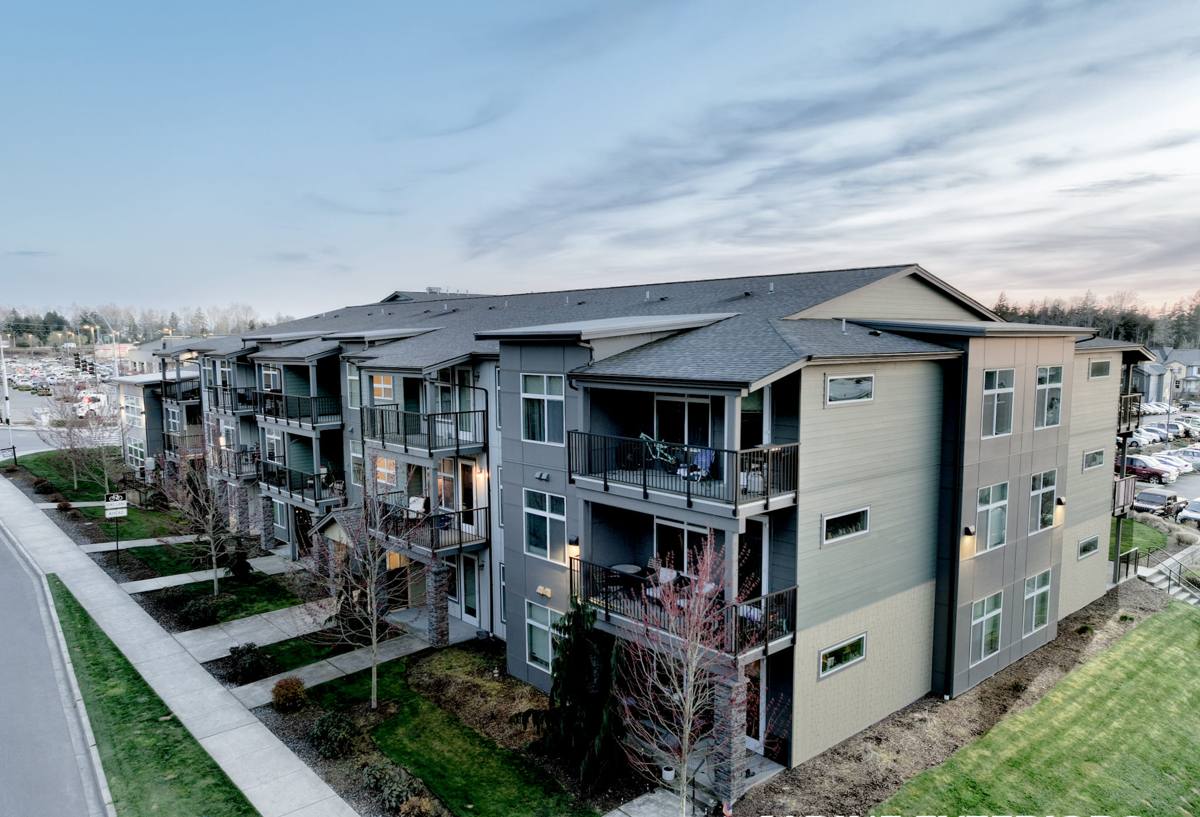
What Silver Beach's Climate Does to Vertical Siding
Homes in this area deal with a combination of three things every year: salt-laden air off the water, wind-driven rain that hits walls at an angle instead of falling straight down, and a moss season that can stretch across most of the fall, winter, and spring. Each one interacts with board and batten differently than it does with standard horizontal lap siding.
- Salt air accelerates corrosion on fasteners and metal flashing. Board and batten has roughly double the vertical seams of lap siding, which means roughly double the flashing and fastening points where corrosion can start.
- Driving rain pushes water sideways into vertical joints rather than letting it run down and off, the way it does on horizontal laps. If the drainage plane and flashing details behind the boards aren't right, water finds its way behind the siding instead of shedding off of it.
- Moss needs shade, moisture, and a surface to grip. The battens themselves can create small horizontal ledges and shadow lines that hold moisture longer than a flat lap board would, giving moss exactly the foothold it needs if the reveal and spacing aren't cut right.
None of this means board and batten is a bad choice for Silver Beach. It means it has to be built for these conditions specifically, not installed the same way it would be in a dry inland climate.
What a Correct Board & Batten Job Actually Involves
Behind the Panel
The siding itself is the last line of defense, not the first. A correct install starts with a continuous water-resistive barrier, properly lapped and sealed, with flashing at every horizontal transition — window and door heads, roof-to-wall intersections, and the bottom termination where the siding meets the foundation. Every vertical panel needs a gap at the bottom for water to weep out rather than pool.
Fastening and Fastener Choice
Given the salt air this area sees, fastener choice isn't a minor detail. Stainless steel or hot-dip galvanized fasteners hold up where standard coated fasteners will rust, streak, and eventually fail years before the siding itself would.
Batten Spacing and Material
Battens need consistent spacing for the pattern to read correctly, but more importantly, the batten material itself has to handle moisture without cupping, warping, or splitting. Solid wood battens move with humidity and rain exposure; that movement opens gaps at exactly the seams that are supposed to be protected.
Why We Install Only James Hardie for This Look
Board and batten can be built out of several different materials, and we've made a deliberate choice to install only James Hardie fiber cement for it. HardiePanel vertical siding, paired with fiber cement trim boards used as battens, gives the same crisp vertical profile without the moisture movement that comes with wood. It's engineered in Hardie's HZ5 product line for the wetter, harsher climates of the Pacific Northwest, and it comes with a factory-applied ColorPlus finish, which matters a lot on a style with this many exposed seams and edges — there's simply more surface area for a field-applied paint job to fail on.
| Material | Moisture Behavior | Salt Air Durability | Maintenance | Finish Longevity |
|---|---|---|---|---|
| James Hardie fiber cement | Dimensionally stable, doesn't swell or rot | Non-combustible, resists corrosion-driven failure when installed with correct fasteners | Low — occasional wash, caulk checks at seams | Factory ColorPlus finish, long repaint interval |
| Solid wood | Absorbs moisture, cups and warps over time | Vulnerable to rot acceleration in salt-humid air | High — regular repainting and sealing | Field paint, shorter repaint cycle |
| Vinyl board and batten | Doesn't rot, but expands/contracts with temperature | Can become brittle over time; seams can gap | Low, but limited repair options | Color molded-in, can fade unevenly |
We're not going to tell you these other materials don't work anywhere — they do, in the right context. But for the moisture load and salt exposure a Silver Beach home takes on, we've standardized on Hardie because it's the option that holds its shape, its finish, and its seams the longest with the least upkeep.
Our Process for a Silver Beach Install
- Assessment: we look at existing siding, sheathing condition, and wall orientation relative to prevailing wind and rain direction before we ever measure for panels.
- Removal and inspection: old siding comes off and we check the sheathing underneath for hidden rot or moisture damage — a common find on older homes in wetter coastal pockets like this one.
- Water-resistive barrier and flashing: installed continuously, with extra attention at every window, door, and roofline transition.
- Panel installation: HardiePanel set plumb and true, with correct fastening pattern and bottom weep gaps.
- Batten installation: fiber cement battens set to consistent spacing and sealed per manufacturer specification.
- Final inspection: we walk every seam, corner, and transition before calling the job done.
Cost Factors for Board & Batten in This Area
Board and batten generally costs more than standard lap siding to install, mainly because there are two layers of material (panel plus batten) and roughly twice the fastening and sealing work. Beyond that baseline, a few things move the price on any given Silver Beach home:
| Factor | Why It Matters |
|---|---|
| Sheathing condition | Rot found during tear-off has to be repaired before new siding goes on — this is common on older homes in damp, shaded lots |
| Home height and access | Multi-story walls and tight side yards slow the work and require more scaffolding or lift equipment |
| Trim and corner detail | Board and batten reads its cleanest with well-executed corner and trim work, which takes more time than a simple lap corner |
| Color selection | ColorPlus factory finishes come in a standard range; custom field-painted colors add labor and future repaint costs |
We give every homeowner a firm, itemized quote after an in-person assessment — we don't quote board and batten off a phone call or a photo, because the sheathing condition underneath is often the biggest cost variable.
What to Expect Over Time
A correctly installed Hardie board and batten system in this climate needs very little upkeep: an occasional rinse to keep moss and mildew from taking hold, and a periodic look at the caulking around battens, windows, and trim to catch any gaps before water does. Because the ColorPlus finish is baked on at the factory rather than sprayed on site, you're not on a repainting clock the way you would be with field-painted wood board and batten — that's one of the bigger practical differences homeowners notice a few years in.
Why Hiring a Crew That Already Works Silver Beach Matters
A lot of what makes board and batten fail early isn't the material — it's generic installation that doesn't account for local conditions. A crew that regularly works this stretch of Whatcom County already knows which wall orientations take the worst wind-driven rain, what sheathing condition to expect opening up an older home near the water, and how much moss exposure to plan for on shaded lots. That's the kind of judgment that doesn't show up in a manufacturer's install manual, and it's the difference between board and batten that looks sharp for two years and board and batten that still looks sharp in twenty.
Signs Your Current Siding Needs Attention
- Soft or spongy spots when you press on boards or battens
- Visible gaps opening up at batten seams
- Peeling or bubbling paint, especially at seams and corners
- Heavy moss or dark streaking that returns quickly after cleaning
- Warped, cupped, or split boards
- Rust streaks below fastener heads
If you're seeing any of these on a Silver Beach home, it's worth having someone look before it turns into a sheathing repair. If you're just weighing board and batten for a new look, we're happy to walk the exterior with you and talk through what it would take. Either way, reach out for a free, no-pressure estimate — the form below gets you started.