 Fairhaven Siding
 Siding in Birchwood Has a Different Job to Do
Birchwood sits close enough to the water and the bluff that its siding takes on a workload most inland neighborhoods never deal with. Salt-laden air off Bellingham Bay, wind-driven rain that hits walls sideways instead of falling straight down, and a shade-and-moisture season that can stretch from October well into spring all put steady pressure on whatever material is covering a home's exterior. We install James Hardie fiber cement siding exclusively, and Birchwood is a good example of why: this is a neighborhood where the difference between a product engineered for Pacific Northwest conditions and one that merely tolerates them shows up in real, visible ways within a few years.
This page focuses specifically on Hardie siding for Birchwood homes — what the local climate demands, what a correct installation actually involves, and how our process works when we're on your street. It's not a general overview of fiber cement; it's the version of that conversation we'd actually have standing in your driveway.
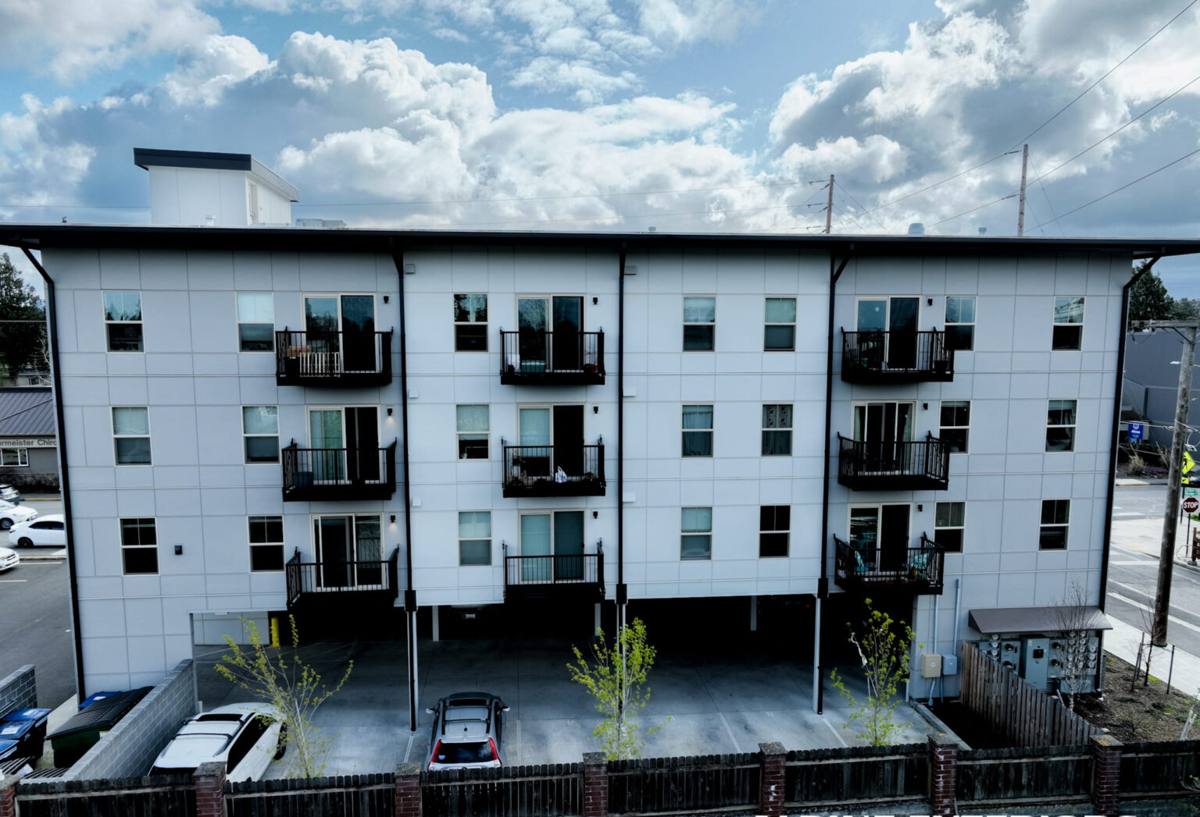
What Fairhaven's Climate Does to Exterior Walls
Salt Air and Slow Corrosion
Homes within a mile or two of Bellingham Bay live in a mild salt-air environment. It's not coastal-Oregon severe, but it's persistent, and persistence is what matters over a 20- or 30-year siding life. Salt-laden moisture accelerates corrosion on exposed fasteners, trim fittings, and any hardware that isn't properly rated or protected. It also settles into porous or absorbent siding surfaces and stays there, which is part of why we specify corrosion-resistant fasteners and factory-finished materials rather than field-primed alternatives whenever a home is within that salt-air zone.
Driving Rain, Not Just Rainfall
Whatcom County gets a lot of rain, but the number that matters more for siding is wind-driven rain — moisture forced sideways and upward into laps, seams, and penetrations rather than just running down a flat wall. Birchwood's exposure to weather coming off the water means walls facing west and southwest take the brunt of this. A siding system's water-shedding detailing — how laps overlap, how flashing directs water back out, how gaps at trim are sealed — matters as much as the material itself.
A Long Moss and Mildew Season
Shaded elevations, tree cover, and the region's extended damp season create ideal conditions for moss, algae, and mildew growth on exterior surfaces. Organic growth on siding isn't just cosmetic — moss holds moisture against a wall surface for extended periods, which is exactly the condition that causes trouble for moisture-sensitive materials. Siding that can be power-washed or brush-cleaned without damage handles this far better than a material that degrades when scrubbed.
Why We Standardized on James Hardie for This Climate
James Hardie fiber cement is engineered specifically to resist the combination of moisture, organic growth, and temperature swing that defines Pacific Northwest weather. It's non-combustible, doesn't absorb water the way wood-based products do, and Hardie's HZ5 product line is formulated for climates like ours. The factory-applied ColorPlus finish is baked on under controlled conditions and backed by a real finish warranty — a meaningfully different proposition than field-applied paint trying to cure in a Fairhaven fall.
We don't install LP SmartSide, vinyl, Cemplank, Allura, primed spruce, or cedar. Each of those has legitimate use cases somewhere, but for a marine-influenced, high-moisture, moss-prone neighborhood like Birchwood, we'd be setting a homeowner up for a shorter service life or a heavier maintenance burden than they should have to accept. That's a professional judgment call we've made, not a claim that those products are broadly defective — but it's why our crews only carry Hardie material.
How the Options Compare for This Climate
| Factor | James Hardie Fiber Cement | Vinyl | Wood / Engineered Wood |
|---|---|---|---|
| Moisture absorption | Very low; won't swell or rot | Non-absorbent but seams can trap moisture | Absorbent; prone to swelling and decay |
| Salt air resistance | Strong with proper fasteners/finish | Can become brittle over time | Requires vigilant sealing and repainting |
| Moss/algae cleaning | Withstands washing without damage | Withstands washing; can crack when brittle | Washing can accelerate surface wear |
| Fire resistance | Non-combustible | Melts/deforms under heat | Combustible |
| Finish life expectancy | 15-year ColorPlus finish warranty (product varies) | Color baked in, but fades and chalks over time | Repaint every 5-8 years typical in this climate |
What a Correct Hardie Installation Involves
The material is only half the equation. Most siding failures we get called to inspect — regardless of brand — trace back to installation shortcuts, not the product itself. In a wind-driven-rain environment like Birchwood, these details aren't optional extras; they're the difference between siding that lasts three decades and siding that needs attention in eight years.
Water Management Comes First
Before a single board goes up, the wall needs a correctly lapped weather-resistive barrier, properly integrated flashing at every window, door, and penetration, and rainscreen or drainage detailing where the wall assembly calls for it. Hardie's own installation instructions specify minimum clearances from grade, decks, and roof lines specifically to keep splash-back and standing water away from the bottom edge of the siding — a detail that matters more on a home taking direct weather off the water.
Fastening and Gaps
Fasteners need to be corrosion-resistant and driven correctly — not overdriven, not underdriven, and into framing, not just sheathing. Gaps at trim, corners, and butt joints need to be sized correctly and sealed with a high-quality, paintable sealant rated for the exposure. Skipping proper caulking or using a builder-grade sealant is one of the most common corner-cut we see, and it's usually invisible until it isn't.
Cut Edges and Field Touch-Up
Every factory-finished board that gets cut on site exposes raw fiber cement at that edge. Those cut ends need to be sealed and touched up with Hardie-approved products — otherwise you've created a moisture entry point on siding that's supposed to be maintenance-light. It's a small step that gets skipped constantly on rushed jobs.
Which Hardie Products Fit Birchwood's Homes
Birchwood has a mix of older bungalow and craftsman-style homes alongside newer infill construction, and the right Hardie product line depends on the home's architecture and exposure.
- HardiePlank lap siding — the most common choice for traditional and craftsman-style homes; available in several exposure widths and textures to match existing trim proportions.
- HardieShingle — a good fit where a home has shingle-style accent areas or gables that call for a traditional look without the maintenance of cedar shingles.
- HardiePanel — vertical panel siding, often used for accent sections, porch gables, or a more contemporary look on newer builds.
- HardieTrim — matched trim boards that keep corners, fascia, and window surrounds consistent with the field material instead of mixing in wood trim that ages differently.
For homes with heavier western or southwestern exposure to wind-driven rain, we'll usually talk through wider lap reveals and confirm the weather barrier and flashing detail before we talk about color — the water management plan matters more than the profile choice.
Our Process for a Birchwood Job
The steps are the same as any Hardie install, but the sequencing and attention shift based on what we already know about this neighborhood's exposure.
- Walk-through and assessment. We look at the home's orientation relative to prevailing wind and rain, existing moisture damage, moss buildup, and the condition of the current weather barrier if it's exposed during the estimate.
- Written estimate and product plan. We specify the Hardie product line, exposure width, color, and fastener spec up front — not a vague allowance decided later.
- Removal and inspection. Once the old siding comes off, we inspect sheathing for hidden rot or moisture damage before anything new goes up. This is often where a home's real condition gets revealed.
- Weather barrier and flashing. Correct lapping, integrated window and door flashing, and drainage detailing get installed and, where relevant, photographed before they're covered.
- Siding installation. Boards, panels, or shingles go up to Hardie's fastening and clearance specifications, with cut edges sealed as we go rather than at the end.
- Trim, caulking, and touch-up. Final sealant, trim work, and any factory-finish touch-up happen last, with a walk-through so you can see the finished work before we consider the job done.
Cost Factors Specific to a Birchwood Home
| Factor | Why it affects cost here |
|---|---|
| Home age and existing wall condition | Older Birchwood homes may need sheathing repair once old siding is removed, especially on weather-exposed walls |
| Access and lot layout | Sloped lots and tighter setbacks common near the bluff can affect staging and scaffolding needs |
| Trim and detail complexity | Craftsman-style trim, gables, and shingle accents take more labor than a plain flat-wall install |
| Product line and exposure width | Plank, shingle, and panel products carry different material costs and installation time |
| Moisture remediation, if found | Rot or hidden moisture damage discovered during removal adds repair scope before new siding goes up |
Maintenance in a Salt-Air, Moss-Prone Climate
James Hardie siding is genuinely low-maintenance compared to wood, but "low-maintenance" isn't "no-maintenance," especially this close to the water. A simple seasonal routine keeps it performing the way it's designed to:
- Rinse the siding with a garden hose or low-pressure wash once or twice a year to clear salt residue, pollen, and early moss growth before it takes hold.
- Keep gutters clean and downspouts directed away from the foundation so splash-back doesn't concentrate moisture at the base of the wall.
- Trim back vegetation and tree cover that keeps siding shaded and damp for extended periods — this is the single biggest driver of moss growth we see.
- Inspect caulking at trim, corners, and penetrations every year or two; sealant is the first thing to age out and the easiest thing to refresh before it becomes a leak.
- Avoid high-pressure washing directly at close range — it's not necessary with Hardie and can force water behind trim if aimed carelessly.
Why a Crew That Already Works Birchwood Matters
Siding installation quality depends heavily on judgment calls that don't show up in a spec sheet — how much clearance to leave above a deck ledger, how to detail flashing around an older window that's slightly out of square, how aggressively to plan for wind exposure on a particular elevation. A crew that has already worked in Birchwood and similar Fairhaven neighborhoods has seen how homes here actually age, where moisture problems tend to originate, and what Whatcom County's permitting and inspection process expects. That local pattern-recognition is worth more than it sounds like on paper — it's the difference between a generic install and one that's actually built for the wall it's going on.
It also means faster, more accurate estimates. We're not guessing at regional exposure or researching local code requirements for the first time on your job — we already know what this neighborhood's homes are up against.
Signs Your Current Siding Is Falling Behind
Not sure whether your Birchwood home's siding needs attention now or can wait? These are the signs worth taking seriously:
- Visible moss or algae that returns quickly after cleaning, especially on shaded or north-facing walls
- Soft spots, bubbling, or a spongy feel when you press on siding near the bottom edge or under windows
- Peeling or bubbling paint, particularly on wood or engineered-wood siding
- Gaps opening up at seams, corners, or trim joints that weren't there a few years ago
- Visible warping, cupping, or panel separation after a wet winter
- Rising energy bills that might point to a compromised weather barrier behind the siding
If any of that sounds familiar, it's worth having someone take a real look rather than waiting for a small problem to become a wall-sheathing problem.
Get a No-Pressure Estimate for Your Birchwood Home
If you're weighing a siding replacement or just want an honest read on how your current siding is holding up against Fairhaven's salt air and rain, we're happy to come take a look. The estimate is free, there's no pressure to commit, and you'll get a straight answer about what your home actually needs — use the form below to get started.