 Fairhaven Siding
 Why Decks in York Wear Out Faster Near Bellingham Bay
The York neighborhood sits close enough to Bellingham Bay that salt-laden air reaches every exposed surface on a deck, not just the boards facing the water. Salt air accelerates corrosion on fasteners, hinges, and any exposed metal hardware, and it works year-round, not just during storms. Combine that with Whatcom County's long wet season and the driving rain that comes off the Strait, and you get decks that trap moisture in places a drier climate never would: end grain, board gaps, and the underside of ledger boards bolted to the house.
Then there's moss. Fairhaven and the surrounding hillside neighborhoods stay shaded and damp for much of the year, which is exactly what moss and algae need to take hold. On a deck, moss isn't just cosmetic — it holds water against the wood surface long after the rain has stopped, and it turns boards slick and dangerous underfoot on stairs and low-light corners of the yard. A deck built without this climate in mind will show rot, fastener staining, and slip hazards years before a comparable deck in a drier part of the state.
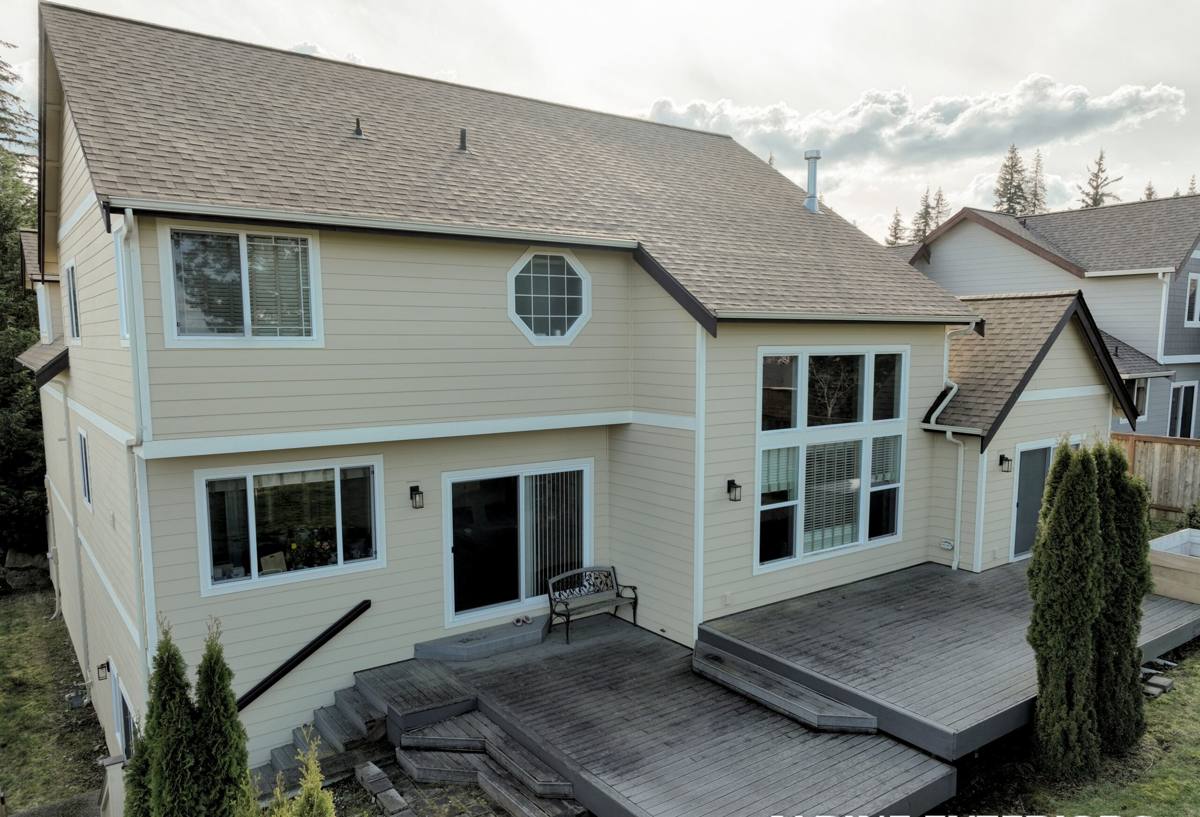
Repair vs. Replacement: How to Tell Which One You Need
Not every tired-looking deck needs to be torn out. Surface graying, a few loose boards, or a handrail that's worked itself loose are usually repair-level problems. Replacement becomes the honest answer once the damage has moved past the surface and into the structure itself.
Signs the frame is telling you something
Soft or spongy decking that flexes underfoot, posts that have visibly shifted or settled, and joists with soft, dark, crumbling wood at the ends are all structural red flags. If you can push a screwdriver into a joist or post near ground contact with light pressure, that member has already lost its strength and no amount of surface repair will bring it back.
When a fresh coat of stain won't fix it
We also look at the ledger board — the piece bolted to the house that carries a large share of the deck's load — and the flashing behind it. Ledger rot, especially where it meets the house, is one of the most common reasons we recommend full replacement rather than a repair, because by the time it's visible the water has usually been getting behind the siding for a while. In a climate that stays wet as long as ours does, patching around a compromised ledger just delays the real fix.
Choosing a Decking Material That Holds Up to Salt Air and Moss
Material choice matters more here than in drier inland climates, because the deck has to shed water fast, resist moss growth, and tolerate metal hardware sitting in salt-influenced air for years without corroding. Here's how the common options compare for a York-area rebuild.
| Material | Moss & moisture resistance | Maintenance | Typical lifespan here |
|---|---|---|---|
| Pressure-treated wood | Moderate — needs sealing to perform well | Annual cleaning and re-sealing recommended | 10–15 years with upkeep |
| Cedar | Good natural resistance, but surface still needs care | Regular cleaning, periodic oiling or staining | 15–20 years with upkeep |
| Capped composite | Very good — cap layer sheds moisture, resists moss staining | Occasional washing, no sealing or staining | 25+ years |
| PVC decking | Excellent — fully synthetic, minimal water absorption | Occasional washing only | 25+ years |
Wood isn't a wrong choice — plenty of homeowners in Fairhaven want the look and are willing to keep up with sealing and cleaning. What we don't recommend is skipping that maintenance schedule, because in this climate an unsealed wood deck loses its water resistance fast, and once moss gets a foothold in the grain it's very difficult to fully clean back out. Composite and PVC cost more up front but trade ongoing maintenance for a longer, lower-effort service life, which is why we see more homeowners in this part of Whatcom County moving toward them for full replacements.
What's Underneath Matters More Than What's On Top
A deck replacement that only swaps out the visible boards and leaves the old framing in place is a repair wearing a replacement's price tag. The framing, connections, and drainage details underneath are what determine whether the new decking actually lasts.
Ledger board and flashing
Where the deck attaches to the house is the single most important connection on the whole structure, and it's also the spot most exposed to wind-driven rain coming off the bay. We install proper flashing that directs water away from the house band board rather than letting it wick in behind the ledger, and we use fasteners rated for the moisture and salt exposure this location sees.
Footings and posts on wet, sloped lots
Many yards in and around York have some grade to them, and older decks were sometimes built on undersized or shallow footings that have since shifted with seasonal ground saturation. We check footing depth and condition against current code before deciding whether existing footings can be reused or need to be replaced, since reusing a marginal footing under new decking just resets the clock on the same problem.
Our Deck Replacement Process, Step by Step
We keep the process straightforward and communicate at each stage, since a deck replacement affects your access to the yard and, often, the back of the house.
- On-site evaluation. We inspect the existing deck's framing, ledger, footings, and any moss or moisture damage, and talk through what you want from the new deck.
- Material and layout decisions. We go over decking material options, railing style, and any layout changes, along with a clear written estimate.
- Permitting. Where required, we handle the permit application with Whatcom County or the City of Bellingham before work begins.
- Demolition and disposal. The old deck comes out, including any compromised framing, and debris is hauled off site.
- Framing and structural work. New or reinforced footings, posts, joists, and ledger flashing go in first, built to current code.
- Decking, railing, and stairs. Surface materials go down, followed by railing and stair installation.
- Final walk-through. We inspect the finished deck with you and confirm everything meets what was agreed on.
Permits and Code Requirements in Whatcom County
Deck permitting depends on size, height, and how the deck attaches to the house, and the specific requirements are set by Whatcom County or the City of Bellingham depending on where the property sits. In most jurisdictions, including here, a deck that sits more than about 30 inches above grade or that's structurally attached to the house will need a permit and an inspection, while smaller, freestanding, ground-level decks sometimes don't. Guardrail height, baluster spacing, and stair rise-and-run also have to meet current code, which matters most on older decks being rebuilt — a lot of decks built decades ago in this area predate current railing spacing rules. We check what applies to your specific property and handle the paperwork as part of the job rather than leaving it for the homeowner to sort out.
Keeping a New Deck Looking Good Through Whatcom County Winters
A well-built deck still needs some seasonal attention in this climate, especially through the wet months when moss pressure is highest. A little upkeep goes a long way toward protecting the investment.
- Sweep leaves and debris off the deck surface regularly in fall, especially in gaps between boards where moisture collects.
- Rinse off algae and moss buildup before it has a chance to stain or get slick, particularly on shaded sections and stairs.
- Check that gaps between deck boards stay clear so water can drain through rather than pooling on the surface.
- For wood decking, plan on cleaning and re-sealing on a regular cycle rather than waiting until graying is obvious.
- Look over railing connections and stair fasteners once a year, since salt air can work on exposed metal even when the wood looks fine.
- Trim back overhanging branches or shrubs that keep sections of the deck shaded and slow to dry out.
Why It Helps to Hire a Crew That Already Works in York
A deck replacement done by a crew unfamiliar with this specific stretch of Whatcom County tends to treat salt air and moss exposure as an afterthought instead of a design factor. We already know which fastener grades hold up near the bay, which footing depths make sense on the sloped lots common in this area, and which materials actually perform through a Fairhaven winter rather than just looking good on install day. That familiarity also means fewer surprises during permitting, since we're used to working with the local jurisdiction's requirements rather than learning them project by project.
Being local also means we're not far away if a question comes up after the job is done. A deck is a long-term structure attached to your house, and it's worth having a contractor who's still reachable — and still working in the same neighborhood — years down the road.
What Deck Replacement Costs Depend On
Every deck replacement is priced around the same handful of factors: the size and shape of the deck, whether the existing footings and framing can be reused or need replacing, the decking material you choose, and any extras like built-in benches, multiple stair sections, or lighting. A straightforward wood deck replacement generally costs less up front than composite or PVC, while composite and PVC cost more initially but reduce maintenance spending over the life of the deck. Framing condition is often the biggest wild card — a deck that looks fine on the surface but has a rotted ledger or undersized footings will cost more to bring up to code than one where the structure just needs new decking on top of sound framing. We give a clear, itemized estimate after the on-site evaluation so there's no guessing about where the cost is coming from.
If your deck in York is showing its age, or you'd just like an honest opinion on whether it needs repair or full replacement, we're happy to take a look. Reach out for a free, no-pressure estimate using the form below.