 Fairhaven Siding
 Asphalt Shingle Roofing Built for York's Conditions
The York neighborhood sits close enough to the water that salt-laden air, wind-driven rain, and long stretches of shade and moisture are just part of owning a home here. Asphalt shingle roofs are one of the most practical, cost-effective roofing systems available, but only when they're installed and maintained with those local conditions in mind. A shingle roof that would perform fine in a drier, inland part of Whatcom County can wear out years early in York if it's missing the right underlayment, ventilation, or flashing details.
This page covers what an asphalt shingle roof actually needs to hold up in York, what a correct installation looks like, and how we approach roofing work in this part of Fairhaven. We're not going to promise a roof that never needs attention — no roofing material offers that, especially this close to salt water — but we can tell you honestly what makes the difference between a shingle roof that lasts its full service life and one that doesn't.
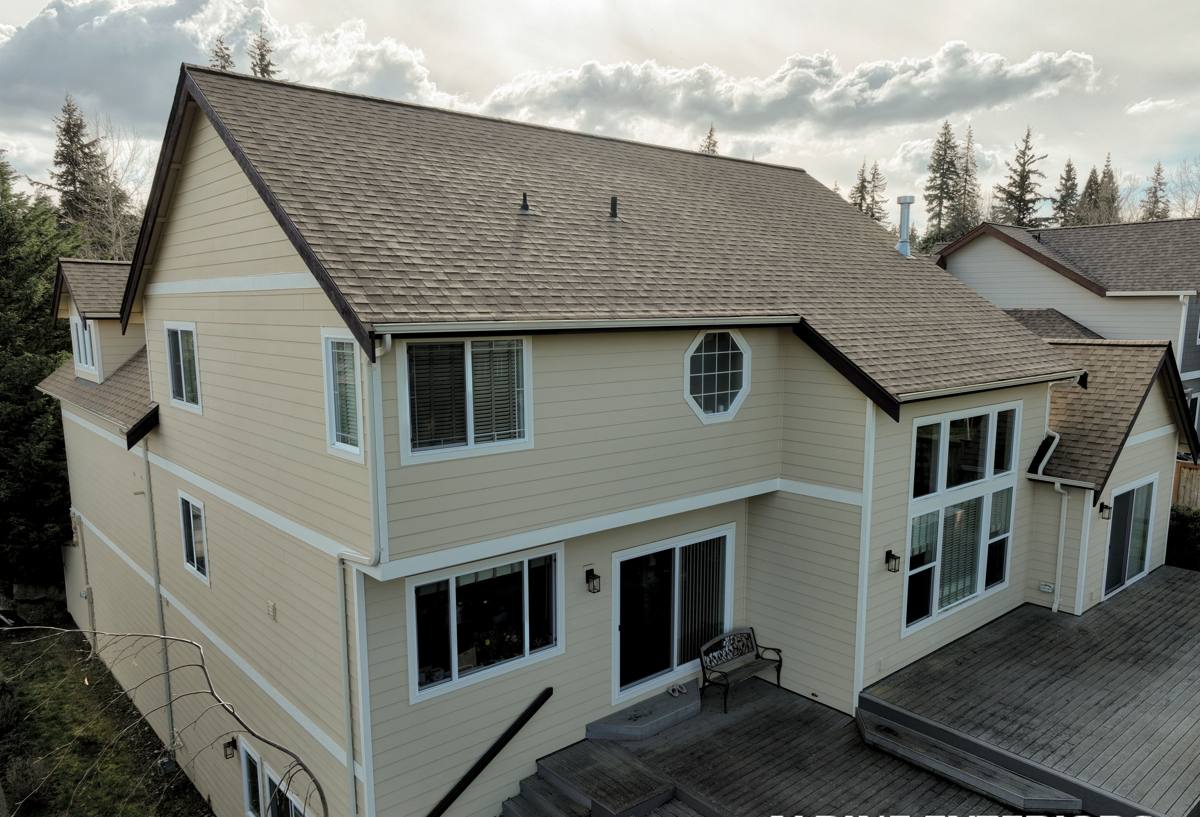
Why York's Climate Is Harder on Roofs Than It Looks
Three things drive most of the shingle roofing problems we see in this area:
Salt Air
Proximity to the water means airborne salt settles on every exterior surface, including the roof. Over time, salt exposure accelerates corrosion on exposed metal fasteners, flashing, and vent components. It doesn't damage the asphalt shingles themselves as directly, but it shortens the life of the metal parts that keep water out — and those are usually the first things to fail on an otherwise sound roof.
Driving Rain
Fairhaven gets wind-driven rain that doesn't fall straight down — it gets pushed sideways and upward under shingle edges, around vents, and into any gap in the flashing. A roof that would shed a light, vertical rain just fine can still leak under these conditions if the underlayment and flashing weren't installed to handle wind-driven moisture specifically.
Moss Season
Whatcom County's long wet season, combined with tree cover and north-facing roof slopes that stay shaded and damp for months, creates ideal moss growing conditions. Moss isn't just cosmetic — it holds moisture against the shingle surface, works its way under shingle edges as it grows, and can lift tabs enough to let water in underneath. Left unchecked for a few seasons, moss growth is one of the most common reasons we see otherwise mid-life shingle roofs failing early in York.
What a Correct Asphalt Shingle Roof Needs Here
A shingle roof is a system, not just a layer of shingles. Every component below the visible surface matters as much as the shingles themselves, especially in a climate like this one.
Underlayment and Ice-and-Water Barrier
We use synthetic underlayment across the full roof deck as the primary water barrier beneath the shingles, with self-adhering ice-and-water shield at the eaves, valleys, and any roof-to-wall transitions — the places most exposed to wind-driven rain and ponding. This is the layer that actually keeps a home dry if wind gets under a shingle edge, which happens periodically in exposed York locations regardless of shingle quality.
Ventilation
Balanced intake and exhaust ventilation keeps the attic space dry and at a stable temperature. Without it, moisture from inside the home condenses against the roof deck, which leads to rot, mold, and premature shingle failure from underneath — a problem that has nothing to do with the shingles' visible condition and everything to do with what's happening in the attic. This matters more here than in drier climates because there's less opportunity for a poorly ventilated roof to dry out between wet spells.
Flashing Details
Chimneys, skylights, roof-to-wall junctions, and valleys all need properly formed and sequenced metal flashing — not just roofing cement patched over a gap. We use corrosion-resistant flashing materials given the salt air exposure, and we install it woven into the underlayment and shingle courses in the correct order, so water is always directed downhill and off the roof rather than trapped against a seam.
Fastening
Shingles need to be nailed with the correct number of fasteners, in the manufacturer's specified nailing zone, driven flush (not overdriven or underdriven). This is a detail that's easy to rush and hard to inspect after the fact, but it's one of the biggest factors in whether a roof holds up in sustained wind.
Choosing the Right Shingle for This Environment
Not every asphalt shingle product performs the same way in a coastal, moss-prone climate. The table below outlines the general trade-offs we walk York homeowners through.
| Shingle Type | Moss/Algae Resistance | Wind Rating | Best Fit For |
|---|---|---|---|
| Standard 3-tab | None built in | Lower | Budget-driven projects on well-ventilated, sun-exposed roof planes |
| Architectural (laminate) | Available with algae-resistant granules | Higher | Most York homes — better durability and appearance for the added cost |
| Algae-resistant (copper/zinc granules) | Built in, most effective on shaded/north-facing slopes | Depends on base shingle | Roofs with heavy tree cover or persistent shade, where moss returns quickly |
| Impact-resistant | Same as base line | Higher, plus impact rating | Homeowners prioritizing long-term durability over upfront cost |
For most York properties, we recommend an architectural shingle with algae-resistant granules on any slope that stays shaded through part of the day. It costs more upfront than a basic 3-tab shingle, but it directly addresses the moss problem instead of just delaying it, and it holds up better in sustained coastal wind.
Our Process for a York Roofing Project
The steps don't change much from job to job, but the details we pay attention to are specific to this area.
1. Inspection and Estimate
We walk the full roof, check the attic for ventilation and moisture signs, and look closely at flashing, valleys, and any areas with moss or standing debris. You get a straight assessment of what's actually needed — not an upsell.
2. Tear-Off and Deck Inspection
We remove the old roofing down to the deck and check the sheathing for soft spots or rot, which is common on older York roofs where ventilation was inadequate or moss was left to sit for years. Any damaged decking gets replaced before anything new goes down — installing new shingles over a compromised deck just hides the problem.
3. Underlayment, Flashing, and Shingle Installation
Ice-and-water shield goes down first at vulnerable areas, then synthetic underlayment across the field, then new flashing at every penetration and transition, then shingles installed to manufacturer spec with correct fastening and nailing patterns.
4. Ventilation Check
We confirm intake and exhaust venting is balanced for the attic space, adding or correcting vents where needed rather than assuming the existing setup was adequate.
5. Cleanup and Final Walkthrough
Full site cleanup, including a magnetic sweep for stray nails, and a walkthrough so you know what was done and what to watch for going forward.
Moss Prevention and Ongoing Maintenance
A well-installed roof still needs some upkeep in this climate. Here's what actually helps:
- Keep gutters and valleys clear of needles and leaf debris, which trap moisture and give moss a place to start
- Trim back overhanging branches to reduce shade and let shaded slopes dry out between rains
- Have moss growth removed properly (not scraped aggressively, which damages granules) before it spreads under shingle edges
- Schedule a roof check every year or two, especially after a heavy moss season, rather than waiting for a visible leak
- Watch for granules collecting in gutters, which signal shingle wear worth having looked at
- Address small flashing or fastener issues early — they're inexpensive to fix and expensive to ignore
What Affects the Cost of a Shingle Roof in York
| Factor | Why It Matters Here |
|---|---|
| Roof size and pitch | Steeper or more complex rooflines take longer and require more safety setup |
| Shingle grade chosen | Algae-resistant and architectural shingles cost more upfront but reduce moss-related maintenance |
| Deck condition | Rot from past moisture or ventilation problems adds repair cost once the deck is exposed |
| Flashing scope | Homes with chimneys, skylights, or multiple roof-to-wall transitions need more flashing work |
| Ventilation upgrades | Correcting inadequate attic ventilation adds cost but prevents underside damage |
| Tear-off layers | Removing multiple existing layers of roofing takes more labor than a single-layer tear-off |
We don't publish fixed prices because every roof is different, but we give a clear, itemized estimate after the inspection so you know exactly what you're paying for and why.
Signs a York Roof Needs Attention
A few things worth having checked sooner rather than later:
- Visible moss or dark streaking on the shingle surface, especially on shaded slopes
- Granules accumulating in gutters or at downspout outlets
- Curling, cupping, or lifted shingle edges, particularly after a windy stretch
- Water stains on interior ceilings or in the attic near roof penetrations
- Visible rust or lifted seams on flashing around chimneys or vents
- A roof approaching or past 20 years old that hasn't had a professional inspection recently
None of these automatically mean a full replacement is needed — sometimes it's a repair. But catching them early is what keeps a repair from turning into a replacement.
Why It Matters Who You Hire in York
Roofing crews that don't work coastal Whatcom County regularly sometimes install the same shingle system they'd use anywhere else — standard underlayment coverage, standard flashing, no particular attention to moss-prone slopes or salt exposure. It often looks fine for the first year or two, and the problems that come from cutting corners on ventilation, flashing, or underlayment coverage tend to show up as leaks or premature wear well after the crew is gone.
Working in York and the surrounding Fairhaven area regularly means we already know which roof orientations hold moss longest, which flashing details fail first under driving rain, and which shingle products actually hold up to salt air exposure over time. That's not a marketing claim — it's just what comes from doing this work in this specific place, on this specific coastline, season after season.
Get a Straight Answer About Your Roof
If you're dealing with moss buildup, an aging roof, or just want an honest read on what your York home's roof actually needs, we're glad to take a look. We'll give you a clear, no-pressure estimate and tell you plainly what we find — whether that's a full replacement, a repair, or just some maintenance to get more years out of what's already up there. Use the form below to request your free estimate.