 Fairhaven Siding
 Window Replacement Built for Birchwood's Coastal Climate
Birchwood sits close enough to the water and to Fairhaven's marine air that windows here age differently than windows fifty miles inland. Salt-laden air works into hardware and finishes, driving rain finds every gap in a poorly sealed frame, and Whatcom County's long, damp moss season keeps wood and vinyl surfaces wet for weeks at a stretch. A window that would last two decades in a drier climate can start failing in half that time here if it wasn't installed correctly in the first place.
This page is about one job, done right, in one neighborhood: replacing windows on Birchwood homes so they actually hold up to what this part of Fairhaven throws at them year after year.
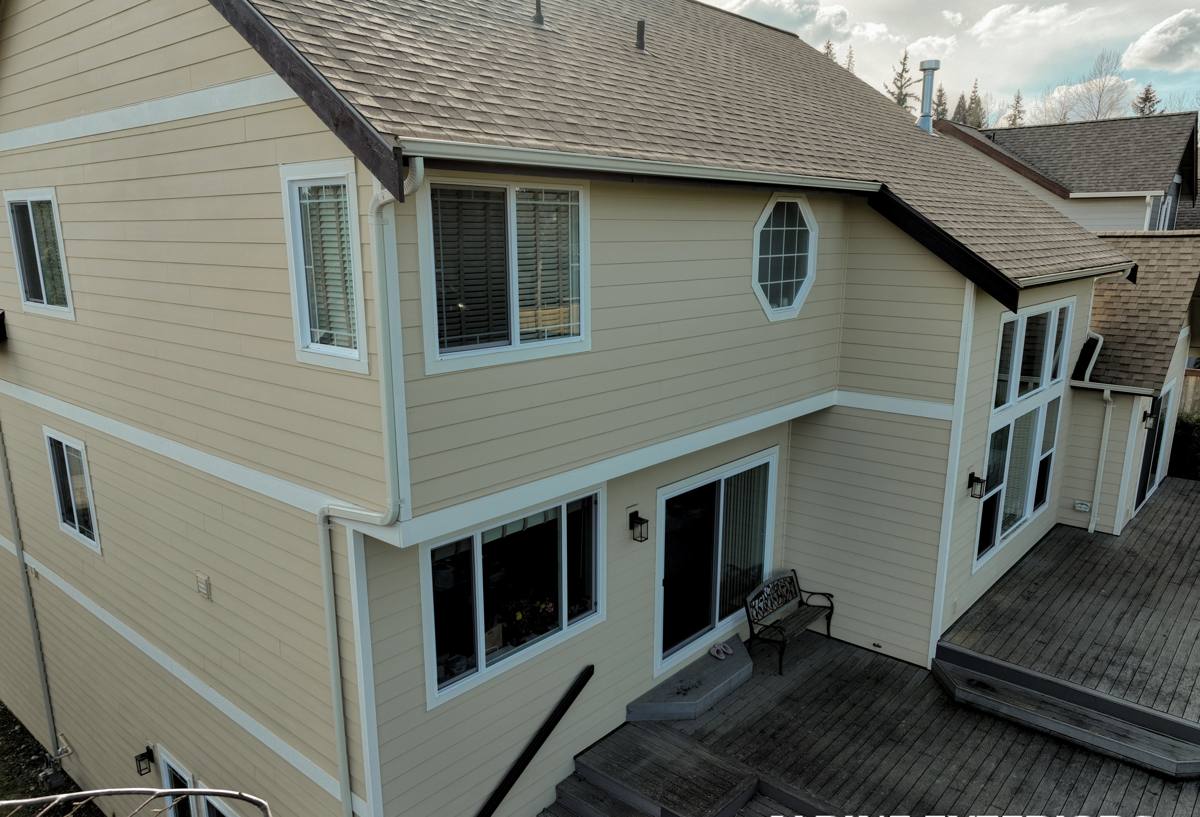
What Salt Air, Rain, and Moss Season Actually Do to Windows
Homeowners often assume window failure is just "old age," but in Birchwood it's usually one of a few specific mechanisms at work:
Salt Air and Hardware Corrosion
Airborne salt accelerates corrosion on window hardware, especially on locks, hinges, and balance mechanisms that aren't rated for coastal exposure. Once hardware starts seizing or pitting, windows get harder to open and close, and the compromised seals around that hardware let in more moisture, which speeds up the damage.
Driving Rain and Wind-Driven Water Intrusion
Fairhaven gets rain that doesn't just fall straight down — wind off the water pushes it sideways into wall assemblies. If a window's flashing and sealant details weren't done correctly during the original install, that wind-driven rain finds its way behind the trim and into the wall cavity, where it can sit unnoticed for years.
Moss, Mildew, and Prolonged Dampness
Whatcom County's moss season isn't just a roof problem. Extended periods of damp, low-light weather keep wood sills and trim wet longer, which is exactly the condition mildew and rot organisms need. Older wood-frame windows without adequate protective detailing are especially vulnerable around the bottom rail and sill.
Signs a Birchwood Home Needs Replacement, Not Just Repair
Not every problem window needs full replacement. But there's a point where repair stops making financial sense and starts just delaying an inevitable bigger repair. Watch for:
- Visible wood rot or soft spots at the sill, bottom rail, or corners
- Fogging or moisture between panes on double- or triple-glazed units (a failed seal that can't be repaired, only replaced)
- Windows that won't stay open, won't latch, or have corroded hardware that no longer functions smoothly
- Persistent drafts or a noticeable temperature difference near the window even when it's fully closed
- Paint or finish that keeps failing on the interior sill despite repainting — often a sign of ongoing moisture intrusion
- Visible daylight or gaps around the frame where it meets the siding
If you're seeing one or two of these, a qualified assessment can tell you whether it's a sealant and hardware fix or a sign the frame itself has failed.
What a Correct Window Replacement Job Involves
Window replacement has a reputation for being simple — pull the old one, drop in the new one. Done that way, it's also one of the most common sources of future water damage. A correct job in a coastal climate like Birchwood's involves several steps that are easy to skip and hard to verify after the fact:
Assessment Before Removal
Before anything is pulled out, the existing opening should be checked for hidden rot or water damage in the surrounding framing. Installing a new window into a compromised opening just seals the problem behind a nice new frame.
Proper Flashing and Weather Barrier Integration
The window needs to be integrated into the home's existing weather-resistive barrier — not just caulked around the edges. Flashing tape and drainage details have to shed water downward and outward, not trap it against the sheathing. This is the single biggest factor in whether a window will leak in five years.
Correct Sealing, Inside and Out
Exterior sealant keeps bulk water out; interior air sealing controls condensation and drafts. Both matter, and they're not interchangeable — a window sealed only on the outside can still trap moisture inside the wall.
Level, Square, and Properly Shimmed Installation
A window that's out of square won't operate smoothly and puts uneven stress on the seals over time, which shortens its service life regardless of how good the unit itself is.
Trim and Finish Work That Matches the Home
The exterior trim detail should shed water away from the window, not channel it toward the frame, and should be finished in a way that holds up to the same salt air and rain exposure as the window itself.
Choosing Materials and Glass for Birchwood's Exposure
There's no single "best" window material for every home — it depends on exposure, budget, and how the home is finished. Here's how the common options hold up in a marine, high-moisture climate like Fairhaven's:
| Material | How It Handles Salt Air & Moisture | Maintenance |
|---|---|---|
| Vinyl | Doesn't corrode or rot; performs well in coastal exposure | Low — occasional cleaning |
| Fiberglass | Very stable, resists moisture-related expansion and contraction | Low |
| Wood (unclad) | Attractive but vulnerable to rot and mildew without diligent upkeep | High — regular painting/sealing |
| Wood-clad (exterior-clad in vinyl, fiberglass, or aluminum) | Exterior face resists moisture; interior keeps a wood look | Moderate |
| Aluminum | Prone to corrosion in salt air unless properly coated; conducts cold | Moderate to high near the water |
For most Birchwood homes, we lean toward vinyl, fiberglass, or a well-clad wood window for anything with meaningful salt exposure, and we're upfront when a homeowner's preferred style comes with a higher maintenance trade-off — that's a decision that's yours to make, not ours to make for you.
Glass Considerations
Double-pane, argon-filled, low-E glass is the practical baseline for this climate — it manages heat loss through our long wet winters and helps with condensation control on cold, damp days. Triple-pane can make sense for north-facing walls or homes closer to open wind exposure, but it adds cost and weight that isn't always necessary.
Our Process for Birchwood Window Replacement
| Step | What Happens |
|---|---|
| 1. On-site assessment | We inspect existing windows, openings, and surrounding trim for hidden damage before quoting anything |
| 2. Honest recommendation | We tell you which windows need replacement, which can be repaired, and why — no upselling units you don't need |
| 3. Material and glass selection | We walk through options suited to your home's exposure and your budget |
| 4. Removal and opening inspection | Old units come out carefully; framing is checked and repaired if needed before the new window goes in |
| 5. Flashing and installation | Weather barrier integration, shimming, and sealing done to hold up against wind-driven rain |
| 6. Trim, finish, and cleanup | Exterior trim finished to shed water; site left clean |
| 7. Final walkthrough | We check operation, sealing, and appearance with you before calling the job done |
Cost Factors for Window Replacement in This Area
Every home is different, and we'll give you a firm number after seeing the actual openings, but a few factors consistently move the price on Birchwood jobs:
- Window material and glass package (vinyl and fiberglass are typically more budget-friendly than clad wood)
- Number and size of openings being replaced
- Whether hidden rot or framing damage is found once the old window is out
- Full-frame replacement versus insert (pocket) replacement, where the existing frame is sound
- Custom shapes, sizes, or historical trim profiles that require extra fabrication
- Access — second-story or hard-to-reach openings take more time and equipment
We'd rather flag a possible cost driver during the estimate than surprise you with it mid-project — that's part of why we inspect openings before quoting rather than pricing off measurements alone.
Why a Crew That Already Works in Birchwood Matters
A contractor who works this neighborhood regularly has already seen how homes here were originally built, what installation shortcuts tend to show up in older openings, and how quickly moss and moisture take hold if a job isn't sealed correctly the first time. That familiarity shortens the assessment, reduces surprises, and means the recommendations you get are grounded in what actually works on Birchwood homes specifically — not a generic install approach lifted from a drier climate.
It also means accountability. A crew based in Fairhaven and working in Whatcom County regularly is one you can call back easily if a question comes up after the install, not one that's moved on to another region.
Maintaining Your New Windows Through Moss Season
A correctly installed window still benefits from basic upkeep, especially given how long our wet season runs:
- Clear debris and organic buildup from sills and tracks periodically, especially after fall leaf drop
- Check exterior caulk lines annually for cracking or gaps, particularly after a hard winter
- Operate hardware occasionally through the off-season so locks and balances don't seize up
- Watch for any new fogging between panes, which signals a seal failure worth addressing early
- Keep gutters and downspouts clear so roof runoff isn't sheeting down across upper windows
Get a Straightforward Estimate
If you're dealing with drafty, foggy, or hard-to-operate windows on a Birchwood home, we're happy to take a look and give you an honest read on what's actually needed — repair or replacement, and why. The estimate is free, there's no pressure attached to it, and you'll get a clear explanation of your options before you decide anything. Reach out using the form below to get started.