 Fairhaven Siding
 Window Installation Built for Puget's Marine Climate
Puget sits close enough to Bellingham Bay that its homes take a different kind of weather beating than houses just a few miles inland. Salt-laden air moves in off the water, driving rain comes in sideways for months at a stretch, and the shaded, damp stretches of the year grow moss on anything that holds moisture. Windows are one of the first components to show the wear from all of it — corroded hardware, swollen sashes, fogged glass, and trim that's gone soft are common call-outs we see on homes in this part of Whatcom County long before they'd show up somewhere drier.
Window installation done right in Puget isn't just about picking a good window. It's about detailing the opening so wind-driven water has nowhere to go, choosing materials that don't corrode or rot in salt air, and installing with a sequence that holds up through a wet Pacific Northwest winter. This page covers what that actually looks like, house by house.
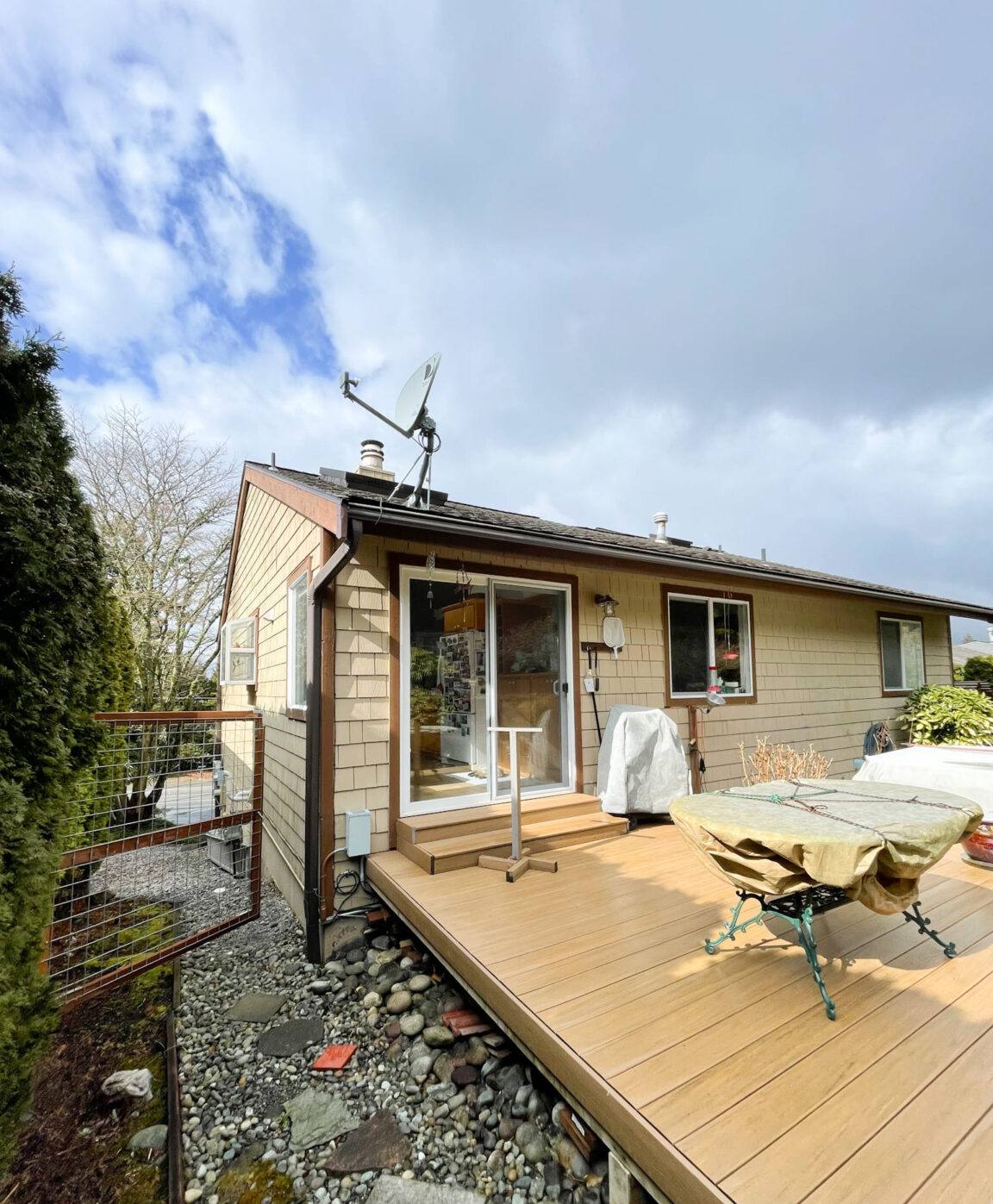
What This Climate Does to Windows Over Time
Salt Air and Hardware
Proximity to Bellingham Bay means airborne salt settles on window exteriors and works into hinges, locks, balances, and screen frames. Untreated steel hardware pits and seizes years earlier here than it would inland. Aluminum components without a marine-grade finish can develop white corrosion (oxidation) at fastener points and weep holes.
Driving Rain
Puget's exposure to wind off the water means rain doesn't just fall on windows — it's pushed into every gap under pressure. A window that would stay dry in a calm rain can leak in Fairhaven if the flashing, sill pan, or sealant detail isn't built to shed water under wind load, not just gravity.
Moss and Sustained Dampness
Shaded elevations and north-facing walls stay damp for long stretches during the region's extended wet season. Moss and algae take hold on window trim, sills, and any wood surface that doesn't dry out between rains, and trapped moisture behind that growth is what eventually causes rot — not the moss itself.
Signs a Puget Home Needs New Windows
Most homeowners don't replace windows on a schedule — they replace them when something starts failing. In this climate, watch for:
- Soft or spongy trim and sills, especially on shaded or north-facing walls
- Visible corrosion or chalky white residue on aluminum frames or hardware
- Locks, cranks, or balances that stick, bind, or no longer hold the sash tight
- Fogging or moisture between panes on double- or triple-glazed units (a failed seal)
- Moss or dark staining building up on trim or sills between cleanings
- Cold drafts near the frame in winter, or condensation forming on the interior glass or sill
- Paint that keeps failing on the same window's trim no matter how often it's redone
Any one of these on its own might just need a repair. Several together, especially paired with a house built before the 1990s, usually points to windows at or past the end of their service life.
What Correct Installation Actually Involves
The window unit itself is often not where installations fail — the opening around it is. A proper install in a wind-driven-rain climate like this one includes:
- Full removal of the old unit and inspection of the rough opening for hidden rot, especially at the sill, before anything new goes in
- A sloped sill pan that directs any water intrusion back out, not into the wall cavity
- Correctly lapped flashing tape integrated with the house wrap or building paper, in the right shingle order — top piece over the sides, sides over the sill pan
- Backer rod and a compatible exterior sealant at the right joints, not sealant used to paper over a gap that should have been flashed
- Shimming and fastening per the manufacturer's instructions so the frame isn't racked, which stresses seals and causes premature hardware wear
- Interior air sealing at the frame perimeter, which matters as much for comfort and condensation control as the exterior work does for keeping water out
Skipping any one of these is usually invisible on install day and shows up as a leak, rot, or a failed seal two to five years later — often blamed on the window itself when the real cause was the opening detail.
Window Material and Frame Options
There's no single "best" window material for every Puget home — it depends on exposure, budget, and how much upkeep you want to take on. Here's how the common options hold up in this specific climate:
| Frame Material | Salt Air / Corrosion | Maintenance | Typical Fit |
|---|---|---|---|
| Vinyl | Doesn't corrode; UV-stable finishes hold up well | Low — occasional cleaning | Most homes; strong value on exposed elevations |
| Fiberglass | Excellent — dimensionally stable, resists pitting | Low | Higher-exposure walls, larger openings |
| Wood / Wood-clad | Interior wood fine; exterior needs a durable clad or diligent upkeep | Moderate to high on exterior wood faces | Homes prioritizing a traditional interior look |
| Aluminum | Needs marine-grade hardware and finish to avoid pitting | Moderate | Specific architectural or commercial-style applications |
For most homes near the water in this area, we steer people toward vinyl or fiberglass on exposed elevations for the simple reason that they don't give salt air or driving rain a foothold. Wood-clad units still make sense in more protected locations or where the interior look matters more than exterior upkeep — that's a trade-off, not a defect in the product, and it's worth deciding with your eyes open.
Glass Packages Worth Considering Here
Beyond the frame, the glass package affects comfort and condensation control more than most homeowners expect:
- Double-pane, low-E, argon-filled — the practical baseline for this climate; keeps heat in and cuts down on interior condensation
- Triple-pane — worth it on north-facing or particularly drafty walls, and for street-noise reduction, though it adds cost and weight
- Warm-edge spacers — reduce the cold edge effect that causes condensation and, eventually, mold at the glass perimeter in a damp climate
Cost Factors for Puget Window Projects
Every job is different, but the factors that move the price on a Puget window replacement are consistent:
| Factor | Why It Matters Here |
|---|---|
| Rot repair at the opening | Damp-climate homes often need sill or framing repair discovered once the old window is out |
| Frame material | Fiberglass and higher-end vinyl cost more upfront but need less upkeep against salt and moisture |
| Number and size of openings | Larger picture windows and multi-unit combinations cost more per opening |
| Exposure of the elevation | Water- and wind-facing walls may warrant upgraded flashing details or glass packages |
| Access and site conditions | Second-story, tight-lot, or scaffold-required openings add labor time |
We won't quote a firm number without seeing the house — anyone who does before checking the openings and exposure is guessing. What we can tell you is that skipping the flashing and sill detail to hit a lower price almost always costs more later in repairs.
How Our Process Works
- Walkthrough and assessment — we check each opening, note exposure to wind-driven rain, and look for existing rot or hardware failure
- Honest recommendation — material, glass package, and detailing suited to that specific wall, not a one-size answer for the whole house
- Written estimate — clear on scope, materials, and what happens if hidden rot turns up once we open the wall
- Removal and opening inspection — old units come out carefully so we can properly assess the rough opening before anything new goes in
- Flashing, sill pan, and sealing — done in the correct sequence so water sheds out, not in
- Installation and interior finish — shimmed level and square, air-sealed at the perimeter, trim finished to match the home
- Final walkthrough — we operate every window with you before we consider the job done
Why Hiring a Crew That Already Works in Puget Matters
A window installer who mostly works drier inland areas can still hang a window level and square — but they may not default to a sloped sill pan, upsized flashing lap, or marine-rated hardware unless something prompts them to. Crews that regularly work Puget and the rest of the Fairhaven area size up wind exposure and moss-prone shade patterns as a matter of habit, because they've seen what happens when those details get skipped on a house exactly like this one.
That local familiarity also shows up in smaller ways — knowing which elevations on a typical local lot take the worst of the weather, recognizing early-stage rot before it's obvious, and not being surprised by the kind of hardware corrosion that's common here but rare thirty miles inland. It's less about any one trick and more about not having to relearn this climate on your house.
Ready for an Honest Look at Your Windows
If your Puget-area home has windows that are drafty, sticking, fogged, or showing wear around the frame, it's worth having someone look before winter's driving rain finds every gap. We offer free, no-pressure estimates — walk the house with us, get a straight answer on what your windows actually need, and decide from there. Use the form below to get started.